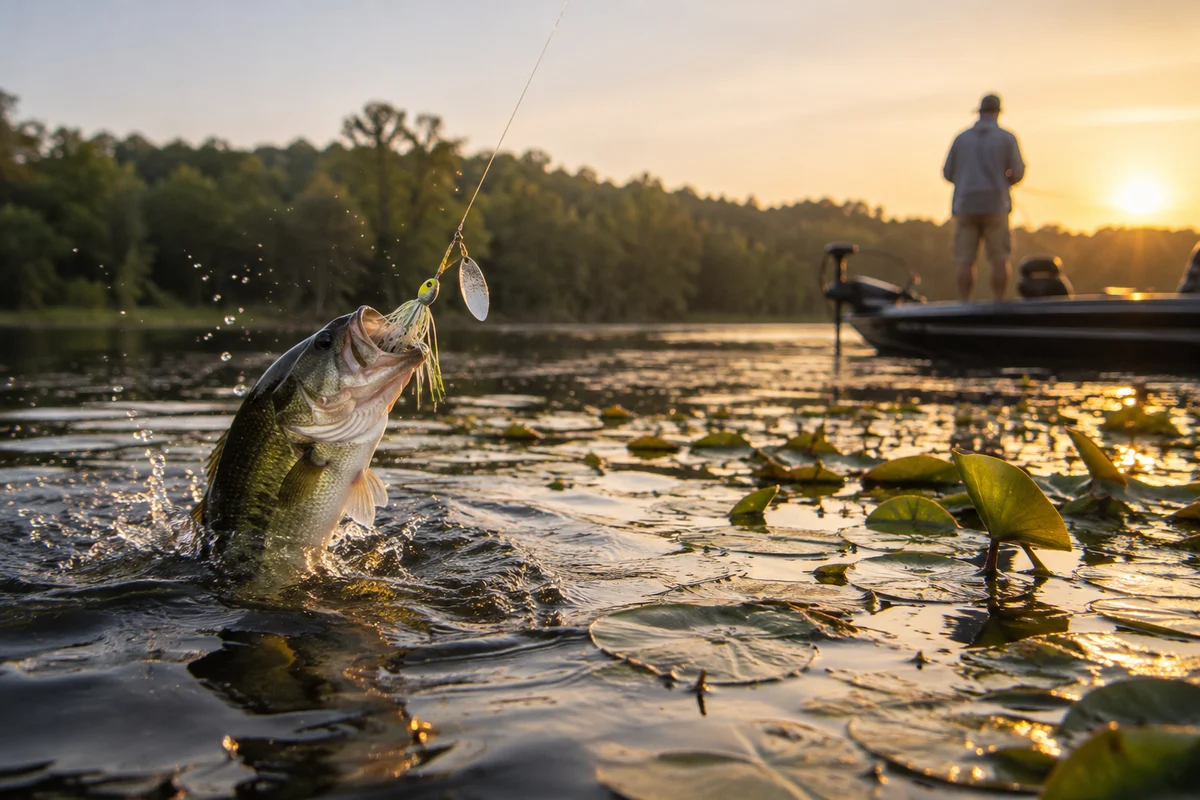
Best bass frog lure choices for fishing heavy cover
The best bass frog lure depends on where fish are holding and how the bait moves through cover. Use this practical guide to choose a style, match it to conditions, and improve hookups without treating any one frog as universally best.
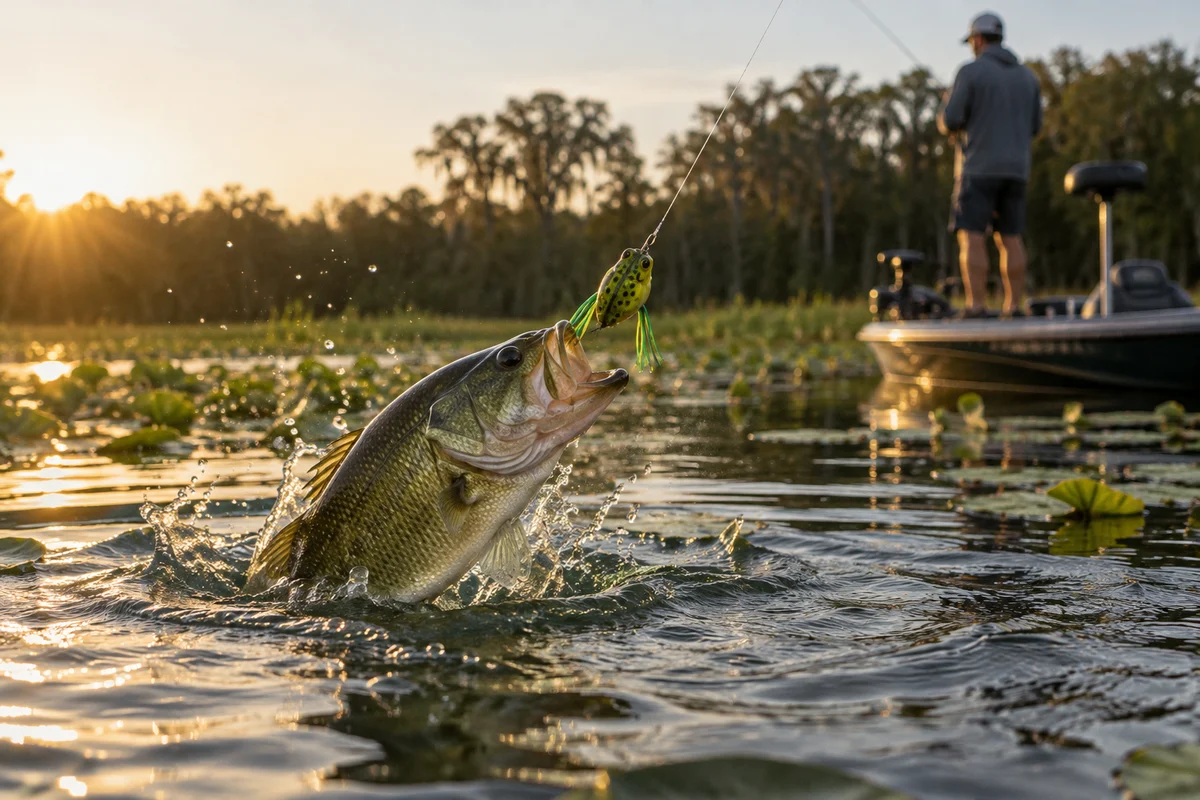
Choosing the best bass frog lure starts with the water you fish, not a brand name. A compact hollow-body frog can slide through matted vegetation, while a cupped-face popper makes more commotion over open pockets and edges. Soft-bodied designs can offer a different silhouette and action, but may be less suited to the thickest weeds. Match the frog’s shape and buoyancy to the cover, then adjust color, retrieve, and tackle to the conditions.
Frog fishing is a surface presentation, so missed strikes are part of the method. A bass may push water or grab the lure without getting both hooks. The goal is to create a believable target, keep the bait moving naturally, and respond to the strike with a controlled hookset—not to assume every blowup means a fish is securely hooked.
What makes a frog lure effective?
A frog lure is useful when bass are feeding near the surface or holding beneath cover that makes many other lures awkward to fish. Its hooks generally ride close to the body, reducing snags among weeds, pads, and brush. That design helps the bait pass through cover, but it also means a fish may not get hooked on every strike.
Three qualities matter most:
- Cover fit: A streamlined body is easier to work through dense vegetation; a more open, splashy design is better where snags are less of a concern.
- Action: Some frogs walk side to side with small rod movements. Others pop, spit, or push water. Choose an action that is visible and audible in the conditions without overwhelming a quiet pocket.
- Hooking geometry: Body firmness, hook position, and how readily the body compresses influence hookups. Designs vary, and no single shape guarantees a better connection.
Consider the entire presentation, too. A lure that is easy to cast accurately and work at the pace fish respond to can be a better choice than a more elaborate bait that is difficult to control.
Hollow-body, popping, or soft-body?
| Frog style | Where it tends to fit | Main advantage | Trade-off |
|---|---|---|---|
| Hollow-body walking frog | Weeds, pads, and cover edges | Slides across cover and can change direction in place | Requires practice to walk consistently; strikes may not connect |
| Popping frog | Open pockets, sparse grass, and edges | Makes a distinct surface disturbance and can be paused | Cups can catch vegetation more readily than a streamlined nose |
| Soft-body frog | Open water or lighter cover, depending on design | Flexible body can produce a different feel and action | Durability and snag resistance vary; check the specific model |
Treat this as a starting point rather than a rigid rule. Manufacturers shape and tune lures differently, and water conditions can change which action fish notice. If the bait gathers grass on every cast, change its style or angle before concluding that bass are not present.
For a walking presentation, keep the rod tip low and use short, controlled twitches with slack between them. That slack lets the lure turn rather than simply pull forward. With a popping model, use a small pop, then allow the rings and disturbance to settle. A pause can be as important as the splash.
How should color and size match conditions?
Begin with a natural, high-contrast idea rather than an exact imitation. Green, brown, and darker patterns can suggest prey or blend with vegetation; a light underside can remain visible against a dark surface. In stained water, low light, or wind chop, a more visible silhouette may help. In clear water and calm conditions, a subtler profile can look less abrupt.
These are practical starting points, not universal fish preferences. Sun angle, water color, local forage, and the lure’s underside all affect what a bass sees. If a frog gets follows or short strikes, change one variable at a time—first cadence or pause, then color or profile—so you can tell what altered the response.
Choose a body size that casts accurately and moves naturally through the target cover. A larger profile can be easier to see in rough water, while a smaller one may fit tight openings or pressured fish. Check the lure’s stated intended use and local rules; dimensions and hook configurations differ among models.
A simple retrieve decision framework
Use the following sequence to make adjustments methodically:
- Start at an edge. Cast parallel to a weed line, pad edge, or shaded bank. A parallel cast keeps the frog in the strike zone longer than a quick cross-cover retrieve.
- Read the surface. In calm water, begin with a quiet walk-and-pause. If wind or surface noise masks the bait, try a more distinct pop or a slightly faster cadence.
- Work openings deliberately. Let the lure settle in a hole, pause briefly, then move it in short increments. Avoid dragging it out of the opening immediately.
- Change the angle before the lure. A new cast path may reveal a lane or pocket the first angle missed. This is especially useful when vegetation blocks the view of fish movement.
- Respond to the result. A visible follow suggests the fish located the lure; try a longer pause or a smaller movement. Repeated short strikes may call for a slower presentation, a different profile, or a check of the hooks and body condition.
Keep a mental note of where strikes happen: on the edge, during a pause, or as the frog enters open water. Repeating the productive portion of a cast is often more useful than changing several tackle choices at once.
Tackle and hookup basics
Frog fishing around dense cover calls for tackle that lets you place the lure accurately and guide a hooked fish away from obstacles. Many anglers use a stout rod and strong line for this purpose, but exact choices depend on the cover, lure, reel, and local conditions. A rod that feels too heavy can make accurate casts and controlled twitches harder; a setup that is too light may struggle in thick vegetation. For more context on rod selection, see our guide to best frog fishing rods.
Check the lure before fishing. Make sure the hooks are not bent or dulled, the body is not torn, and any drainage or weighting features are functioning as intended. Follow the manufacturer’s guidance for care and rigging; designs differ, and improvised alterations can change buoyancy or performance.
When a bass strikes, resist the urge to jerk at the first splash. Keep contact, allow a brief moment for the fish to take the lure, then sweep firmly while maintaining line tension. The exact timing is not mechanical: a fish can hit and release quickly, so watch the bait and line rather than counting a fixed number of seconds. Avoid swinging wildly, especially with nearby anglers or obstacles.
If a fish comes free, inspect the hooks and body and consider whether the lure was moving too quickly or whether the strike happened at an awkward angle. Do not assume that a stronger hookset alone solves every missed fish. A short pause, a better casting lane, or a different frog shape may matter more.
When to choose another bass presentation
A frog is not automatically the best surface bait. If bass are feeding in open water and ignoring a frog, a different topwater profile may be easier for them to track. When fish are holding below the surface or vegetation is too sparse to provide a natural frog target, a subsurface lure may be more appropriate. Our articles on plastic worm rigs for bass and swimming jigs for bass cover alternatives for other situations.
For foundational seasonal and location decisions, see bass fishing for beginners and the broader freshwater bass fishing hub. A frog is most useful when its surface action fits the place and the fish’s behavior; it is not a shortcut around finding bass.
Care, access, and responsible fishing
Frog lures and heavy-cover fishing can bring fish close to vegetation, branches, and shorelines. Use tackle you can control, keep hooks away from hands, and handle fish promptly and carefully. Wet hands before handling a fish, support its body, and return it to the water without unnecessary delay. Where local rules specify seasons, size limits, or access restrictions, follow the regulations for the water you are fishing.
After a session, rinse and dry lures if needed, inspect hooks, and store them so exposed points cannot injure someone. Replace damaged baits rather than relying on a torn body to perform as designed. For current local rules and conservation guidance, consult the responsible state or provincial fisheries agency.
So, what is the best bass frog lure?
For dense vegetation, start with a streamlined hollow-body frog that can pass through the cover you actually fish. For pockets and edges where extra surface disturbance helps, try a popping frog. Choose a soft-body option only after checking its intended cover and care requirements. Then tune the retrieve to the surface: quieter and slower in calm water, more distinct when wind or chop obscures the bait.
The best choice is the one you can cast accurately, keep working through the target zone, and use safely with your tackle. Start with one style, note where fish respond, and make small adjustments. That process is more dependable than chasing a universal winner.
Frequently asked questions
What type of frog lure works best in thick grass?
A streamlined hollow-body frog is a common starting point because it can slide across vegetation. Check the specific design and adjust if it repeatedly collects grass.
Should I use a popping frog or a walking frog?
A walking frog suits a quiet, side-to-side presentation, while a popping frog adds a sharper disturbance. Choose based on cover, surface conditions, and the action you can control.
Why do bass miss frog lures?
A bass may strike without taking the lure fully, and weedless frog designs keep hooks close to the body. Try a brief pause, inspect the hooks and body, and adjust the retrieve or casting angle.
What color frog should I start with?
Start with a natural or clearly visible silhouette that fits the water’s clarity and light. Color preferences vary, so change one factor at a time if fish follow or short-strike.
Sources & further information
Consult these primary sources for current regulations, technical information and local guidance.