How to Fish Alabama Rig: A Practical Bass Guide
An Alabama rig can imitate a small group of baitfish, but success depends on matching its configuration to local regulations, forage, depth, and cover. This practical guide covers setup, retrieves, safe handling, and when to choose a simpler lure.
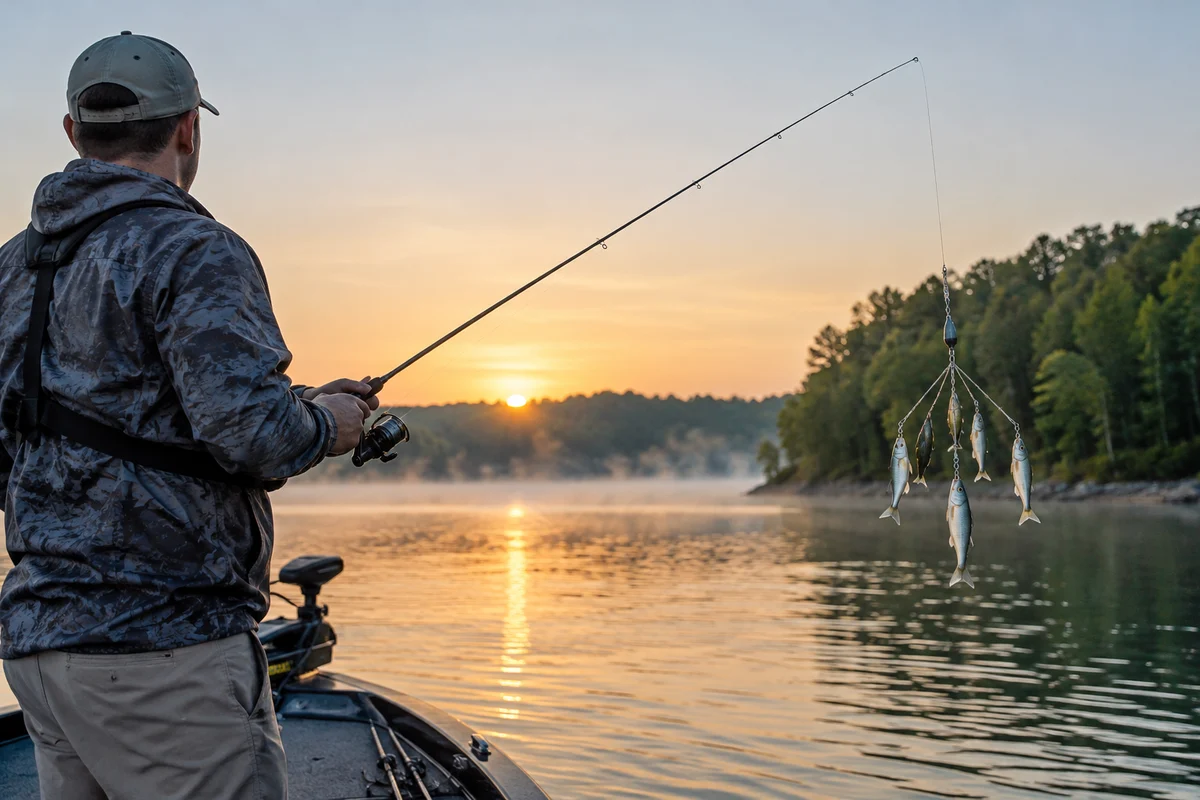
The phrase how to fish Alabama rig usually brings to mind a wire umbrella carrying several baitfish imitations. The basic idea is straightforward: present a compact group of lures that resembles schooling forage, then keep it moving through water where bass are feeding. The details matter, though. Local rules may limit how many hooks or lures can be used, and a large rig is not automatically the best choice for every season, depth, or piece of cover.
This guide explains how to assemble a sensible setup, choose a retrieve, make adjustments based on conditions, and check regulations before fishing. Treat the rig as one option in a broader approach—not a guaranteed shortcut to a bite.
What an Alabama rig does
An Alabama rig, often called an umbrella rig, uses a central frame with several arms. Anglers attach swimbaits, hooks, or hookless attractors to the arms, creating the appearance of a small baitfish group. The arrangement can be useful when bass are following or feeding on schooling fish, particularly in open water or along edges where the rig can be retrieved without snagging.
There is no single universal configuration. Frames differ in arm count, spacing, and intended use; local rules may also restrict the number of hooks or baits. A practical starting point is a legal, manageable setup with a few matching soft-plastic swimbaits. More arms do not necessarily mean more bites: extra hardware adds weight, drag, tangles, and handling complexity.
For a more streamlined presentation, compare the rig with plastic worm rigs for bass. If fish are responding to a single moving bait, how to choose the best spinnerbait for bass offers another way to think through visibility, vibration, and cover.
Check rules before tying on
Regulations can differ by state, waterbody, season, and species. They may define how many hooks, lures, or lines can be used, and some waters have special restrictions. A rig that is legal in one place may not be legal in another. Before fishing, consult the current fishing regulations from the relevant state wildlife agency and check any water-specific notices. Do not rely on an old article, tackle label, or another angler’s recollection as the final word.
Also consider where the rig will be used. Several exposed hooks can create risks around people, pets, boat seats, and landing nets. Keep the rig secured when not in use, handle it with care, and avoid casting when another person is within the arc of the cast. Follow the same safe practices you would use with any multi-hook tackle.
A practical setup checklist
Start with the fish and conditions in front of you rather than adding hardware at random. The following checklist helps keep the setup manageable:
| Decision | Practical starting point | Why it matters |
|---|---|---|
| Frame | Choose a sturdy frame suited to the total lure weight | A loaded rig pulls harder than a single bait |
| Baits | Use similar-sized swimbaits with a consistent profile | A coordinated group looks less haphazard |
| Hooks | Use only the number permitted on that water | Rules vary; hook count also affects snagging and handling |
| Line and rod | Choose tackle rated for the complete rig’s weight | Casting overloads can damage equipment or cause loss of control |
| Connection | Use a sound knot and inspect the line and frame | The rig’s drag puts stress on terminal connections |
| Landing plan | Keep pliers and a suitable landing method ready | Multiple hooks require deliberate, careful handling |
Manufacturers publish specifications for particular rods, line, frames, and lures; consult the actual product information rather than assuming all models share a rating. If the loaded rig feels unwieldy or your rod is not rated for its weight, scale down. A controlled cast matters more than forcing a heavy setup.
Match the soft plastics in size, color, and action when baitfish are uniform. A small variation can be useful when the forage is mixed, but a collection of unrelated profiles may look unnatural. Choose colors based on water clarity and available light: clearer water often calls for less conspicuous, natural-looking choices, while stained water can favor a more visible silhouette. These are starting points, not fixed rules.
How to retrieve an Alabama rig
A steady retrieve is the simplest place to begin. Cast beyond the likely strike zone, allow the rig to reach the desired depth, and reel at a pace that keeps the baits working without spinning or tangling. Watch the line as the rig lands and begins moving; a sudden jump, slack, or change in direction can indicate contact or a fish.
Depth is controlled mainly by the rig’s weight, the time allowed to sink, and retrieve speed. Count the rig down only when you can do so safely and consistently, and avoid letting it settle into snags. Start with a modest sink interval, then adjust in small increments. If the rig ticks bottom too often, retrieve sooner or speed up. If fish are holding deeper and the area is clear, allow a little more sink time or slow the retrieve.
A second option is a stop-and-go retrieve: reel steadily, pause briefly, then resume. The pause can make the baits change direction or fall slightly, which may draw attention from following fish. Use pauses sparingly around submerged wood, vegetation, or other snag-prone cover. In open water, a controlled change in speed can help you learn whether fish prefer a faster or slower presentation.
Avoid violent rod sweeps or sudden changes that make the rig difficult to control. If a fish strikes, keep the line tight and use a smooth, controlled hook-setting motion appropriate to the tackle and hooks. Bring the fish alongside before reaching for it, and keep the remaining hooks pointed away from your hands and other people.
Where and when to use it
Look for signs that bass are relating to baitfish: surface activity, birds working over forage, bait showing on electronics, or fish following a school. The rig can be useful over open water, along channel edges, around points, or beside deeper structure where a multi-bait presentation can travel freely. These are search areas, not guarantees; fish location changes with weather, water conditions, forage, and fishing pressure.
In colder periods, bass may follow bait in open water, but a slower, deeper presentation can be more appropriate than a fast retrieve. In warmer conditions, active fish may chase a quicker-moving group near a point or a school of forage. During either season, use observed fish behavior as your guide. If bites or follows stop, adjust depth and speed before assuming the color is wrong.
The rig is less convenient in thick vegetation, brush, timber, and narrow spaces where multiple arms and hooks can snag. A single lure may be more efficient there. For early-season options that cover water with less hardware, see early season bass lipless crankbaits. For another moving-bait comparison, spring bass with Wiggle Warts discusses a different way to search seasonal water.
Troubleshooting common problems
The rig spins or tracks crooked. Check that the baits are seated straight and that the arms are not bent out of alignment. Uneven trailers can make the whole frame roll. Replace damaged plastics and retrieve at a controlled pace.
The rig tangles during the cast. Use a smooth cast rather than a sharp snap, allow the rig to extend, and avoid casting into a strong crosswind if it compromises control. Confirm that hooks and baits are spaced so they do not constantly catch one another.
You see fish but get no response. Change one variable at a time: depth, speed, bait size, or color. Fish may be feeding on smaller forage, holding beyond the rig’s path, or simply not responding to a group presentation. Try a single swimbait, a worm, or another compact lure rather than repeating the same pass indefinitely.
You lose confidence around cover. That is useful information. A rig that is likely to snag is not a good search tool for that location. Switch to a lure that can be worked through the cover more cleanly, and keep the Alabama rig for open lanes and edges.
A simple decision framework
Before the next cast, ask three questions:
- Is the rig legal here? Verify current local limits on hooks, lures, and tackle.
- Can it travel through this area cleanly? Favor open water and clear edges; choose a simpler lure in dense cover.
- Does it match what bass are eating and where they are holding? Adjust bait size, depth, and speed to the observed forage and fish activity.
If all three answers are yes, make a controlled cast and begin with a steady retrieve. If one answer is no or uncertain, resolve the issue or choose another presentation. This approach keeps the rig practical and helps avoid treating a visually impressive lure as a solution to every bass-fishing problem.
Safe handling and care
Multi-arm rigs can carry several exposed hooks, so keep them away from loose clothing and fingers. Use a lure retainer or secure storage compartment, and do not leave the rig loose in a boat or tackle bag. When unhooking a fish, maintain control of the rig and use suitable tools; avoid putting a hand near dangling hooks. Inspect the frame, line, and knots after a snag or hard strike, and retire damaged components rather than trusting them on the next cast.
The best way to fish an Alabama rig is to use it selectively: verify the rules, keep the setup balanced, control its depth, and fish it where the arms can move freely. When the conditions do not fit, changing to a simpler lure is sound decision-making—not a failure of the rig.
For more, explore our bass fishing fishing freshwater guides.
Frequently asked questions
How many hooks can I use on an Alabama rig?
Hook limits vary by state and sometimes by waterbody. Check the current local fishing regulations before rigging; do not assume a setup legal elsewhere is allowed where you fish.
What is a good retrieve for an Alabama rig?
Begin with a steady, controlled retrieve that keeps the baits working. Adjust speed and sink time gradually to find the depth and pace fish respond to.
Where should I fish an Alabama rig?
It is generally easiest to use in open water, along points, or beside clear edges where multiple arms can move without snagging. Dense cover often calls for a simpler lure.
Can an Alabama rig damage my fishing rod?
A heavily loaded rig can exceed a rod’s lure-weight rating. Check the rod and rig specifications and use tackle rated for the complete setup; scale down if casting feels uncontrolled.
Sources & further information
Consult these primary sources for current regulations, technical information and local guidance.