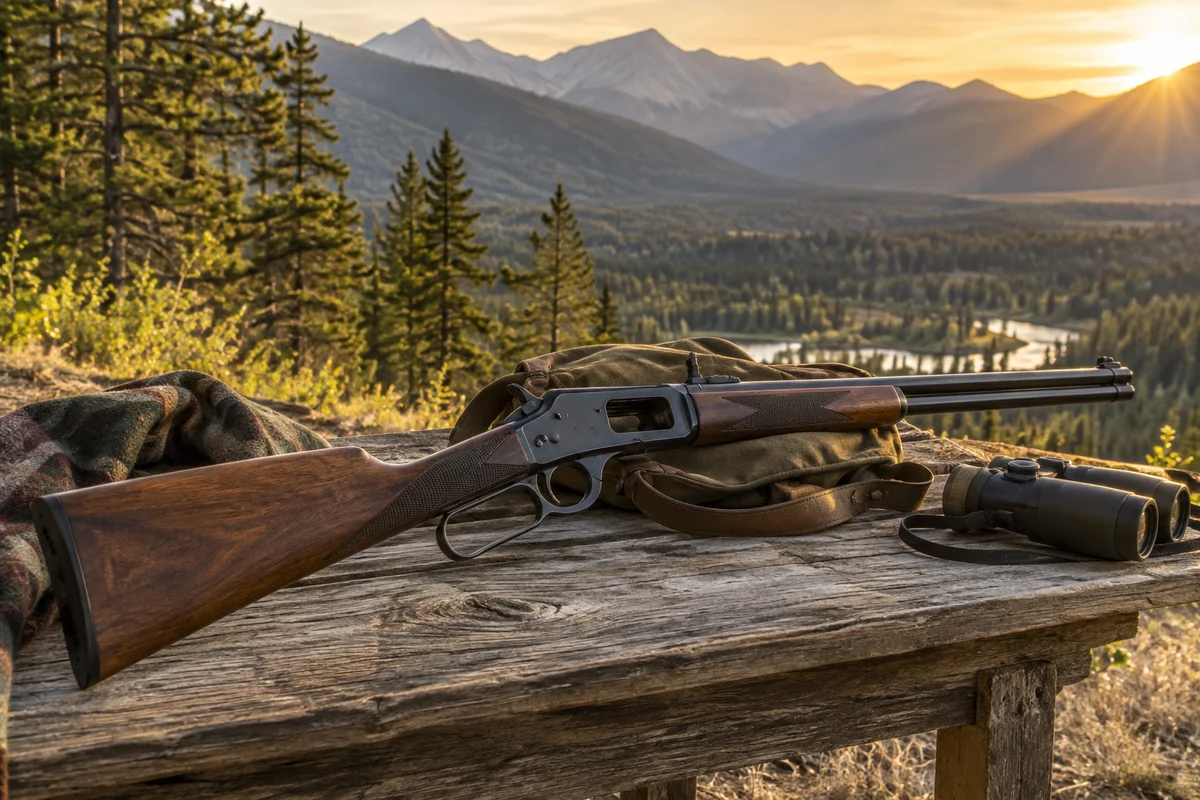
Buffalo Revolver: History, Identification and Safe Context
“Buffalo revolver” is an informal phrase, not a single standardized model name. This guide explains how it relates to the 1858 Remington design and commemorative editions, what details to verify, and why safe handling and documentation matter.
The phrase buffalo revolver can point to more than one thing: a large-bore revolver associated with frontier imagery, a replica of a 19th-century design, or a commemorative model whose name invokes the American West. It is not, by itself, a precise technical category. That distinction matters when researching an Uberti USA 1858 Buffalo Bill limited-edition revolver: the name suggests a historical theme, but the exact configuration, production details, and status of a particular example must be established from its markings and reliable documentation.
This is an informational overview, not a product endorsement. A commemorative firearm should be treated as a firearm, regardless of its presentation, age, or collectible appeal. Keep it secured, follow applicable laws, and have an appropriately qualified professional assess any uncertain example.
What does “buffalo revolver” mean?
There is no universally accepted model specification attached to the phrase. “Buffalo” may be used in a product name or marketing description, as shorthand for a particular historical or sporting association, or simply as a search term for a revolver depicted in Western settings. It does not establish caliber, mechanism, loading method, materials, or compatibility with any particular ammunition or components.
The 1858 reference usually points toward the Remington New Model Army revolver, a percussion-era design introduced during the 19th century. Modern reproductions made by companies such as Uberti are distinct from original period firearms. Nor does a themed or limited-edition label prove that a gun is mechanically identical to a historical example. Product names can cover variants, and specifications can differ across production runs and markets.
For broader context on firearm topics, see the ODU Magazine guns hub. Its material is informational; it does not replace a manual, legal advice, or an in-person safety assessment.
How should you identify an 1858 Buffalo Bill edition?
Start with the object, not the nickname. Record visible markings without altering, cleaning, or disassembling the revolver. Photograph the markings and overall appearance only when the firearm has been confirmed unloaded and the activity can be done safely. If you are unsure how to establish that safely, do not handle it; contact a qualified professional.
Look for documentation that can be independently checked: the maker or importer identification, model designation, serial or assembly markings, country-of-origin marking, original packaging, and any accompanying certificate or manual. A certificate may describe a commemorative issue, but it does not alone establish originality, completeness, or mechanical condition. A box can be separated from a firearm, and paperwork can be lost or mismatched.
| Detail to verify | What it may clarify | What it cannot prove alone |
|---|---|---|
| Manufacturer or importer marks | Who placed the firearm in commerce or identified its origin | That every part is original or correctly paired |
| Model and serial markings | Which designation or production record may apply | Current safety or mechanical condition |
| Manual and accompanying paperwork | Intended configuration and manufacturer guidance | That the manual belongs to this exact example |
| Finish and commemorative markings | Whether the piece has a themed presentation | Rarity, authenticity, or market value |
| Professional inspection | Present condition and safety concerns | Historical provenance without supporting records |
Do not infer a precise production count, date, or feature set from the words “limited edition.” Those claims require manufacturer records or trustworthy documentation specific to the edition. If the original manufacturer’s information is unavailable, say so rather than filling gaps with assumptions. Specifications and availability can vary; consult the original manual or manufacturer where possible.
What is the historical connection to the 1858 design?
The Remington New Model Army is commonly associated with the 1858 date and the percussion revolver era. Its historical significance is part of why modern replicas and commemorative treatments attract interest. But a modern reproduction is a product made in a different period, under a different manufacturing and regulatory context. A historic model name is not evidence that a particular example was made in 1858, used in a specific event, or connected to a famous person.
The “Buffalo Bill” name invokes William F. Cody’s stage persona and the broader popular culture of the American West. The use of a famous name on a commemorative object does not establish personal ownership, endorsement, or direct historical association. For a specific claim, look for provenance supported by credible records rather than relying on decoration or a seller’s description.
ODU Magazine’s informational firearm coverage places historical and product context alongside safety and legal-awareness topics. For a contrasting modern product overview, see our article on the Bergara chassis; it concerns a different kind of firearm and should not be treated as evidence about an 1858-style revolver.
What should you know about safety and legal awareness?
A replica, antique, or display piece should never be presumed harmless. Its condition, prior maintenance, missing parts, corrosion, or undocumented alterations can affect safety. Do not attempt to test-fire an uncertain revolver or determine its compatibility by trial and error. A qualified gunsmith or other appropriate professional can assess the firearm and direct you to the correct manufacturer documentation.
When handling is appropriate and lawful, follow the basic principle of treating every firearm as loaded until its status has been confirmed by a competent person using safe procedures. Keep the muzzle pointed in a direction where an unintended discharge would not endanger anyone, keep fingers away from the trigger, and avoid handling when distracted or impaired. Do not rely on appearance, a display stand, or a previous owner’s assurance.
For storage, use a secure locked location that prevents access by unauthorized people, especially children. Store ammunition separately where required or prudent, and follow local law and the manufacturer’s instructions. Laws governing antique, replica, black-powder, and modern firearms vary by jurisdiction and can depend on definitions that are not obvious from a product name. Check current rules with the relevant authorities rather than assuming an exemption applies.
The U.S. Fish and Wildlife Service provides federal wildlife information; hunting regulations and firearm rules are also shaped by state and local authorities. If a revolver is being considered in a hunting context, confirm that the method, season, equipment, and any applicable licensing requirements are legal where the activity would occur.
How can you assess a commemorative claim responsibly?
Use a simple evidence ladder. First, distinguish what is directly visible from what is asserted: an engraved name is visible; a claim of a numbered run needs documentation. Second, compare the markings and configuration with a manufacturer catalog, manual, or other primary record, if available. Third, seek an independent assessment when authenticity, condition, or provenance has practical consequences. Keep the record of what is known separate from what remains uncertain.
A careful description might identify the maker and model as marked, note that a commemorative inscription is present, and state that an edition or ownership claim has not been independently verified. Avoid assigning a rarity rank or value without reliable, current evidence. This approach is useful for family collections, museum labels, insurance inventories, and historical research alike.
For additional context on how firearm designs differ, ODU Magazine’s overview of the Benelli Ethos 28-gauge model covers a contemporary shotgun rather than a percussion revolver. Comparing unlike mechanisms can help readers see why broad labels and nostalgic names are not substitutes for model-specific records.
A practical field decision framework
If you encounter a revolver described as an 1858 Buffalo Bill edition, use these questions before drawing conclusions:
- Is it safe to handle? If its status or condition is uncertain, stop and ask a qualified professional.
- What do the markings actually say? Transcribe them carefully; do not expand a nickname into a technical specification.
- Is the edition claim documented? Look for manufacturer records or credible paperwork tied to the exact example.
- Does the documentation match the object? Check identifiers and configuration without disassembly.
- What remains unknown? State uncertainties plainly, especially about provenance, originality, and condition.
- Are local rules understood? Verify current requirements with relevant authorities before transport, transfer, display, or use.
This framework keeps historical interest separate from assumptions about operation or value. It also makes room for the most honest answer: sometimes the available evidence cannot confirm the exact edition or history.
The takeaway
“Buffalo revolver” is a useful search phrase but an imprecise description. An 1858-style Buffalo Bill commemorative should be identified through markings and reliable records, not its theme alone. Treat it as a firearm, prioritize secure storage and professional assessment, and consult primary documentation for details that cannot be confirmed from the object itself.
Frequently asked questions
Is “buffalo revolver” an official firearm category?
No. It is an informal phrase that may refer to a themed product, historical association, or search term; it does not specify a standard model or configuration.
Does “1858 Buffalo Bill limited edition” prove a revolver is historically rare?
No. A commemorative name or limited-edition claim needs supporting manufacturer records or reliable documentation tied to the specific example.
Can an old or replica revolver be assumed safe to handle?
No. Age and replica status do not establish condition. If its status or safety is uncertain, avoid handling it and consult a qualified professional.
Sources & further information
Consult these primary sources for current regulations, technical information and local guidance.