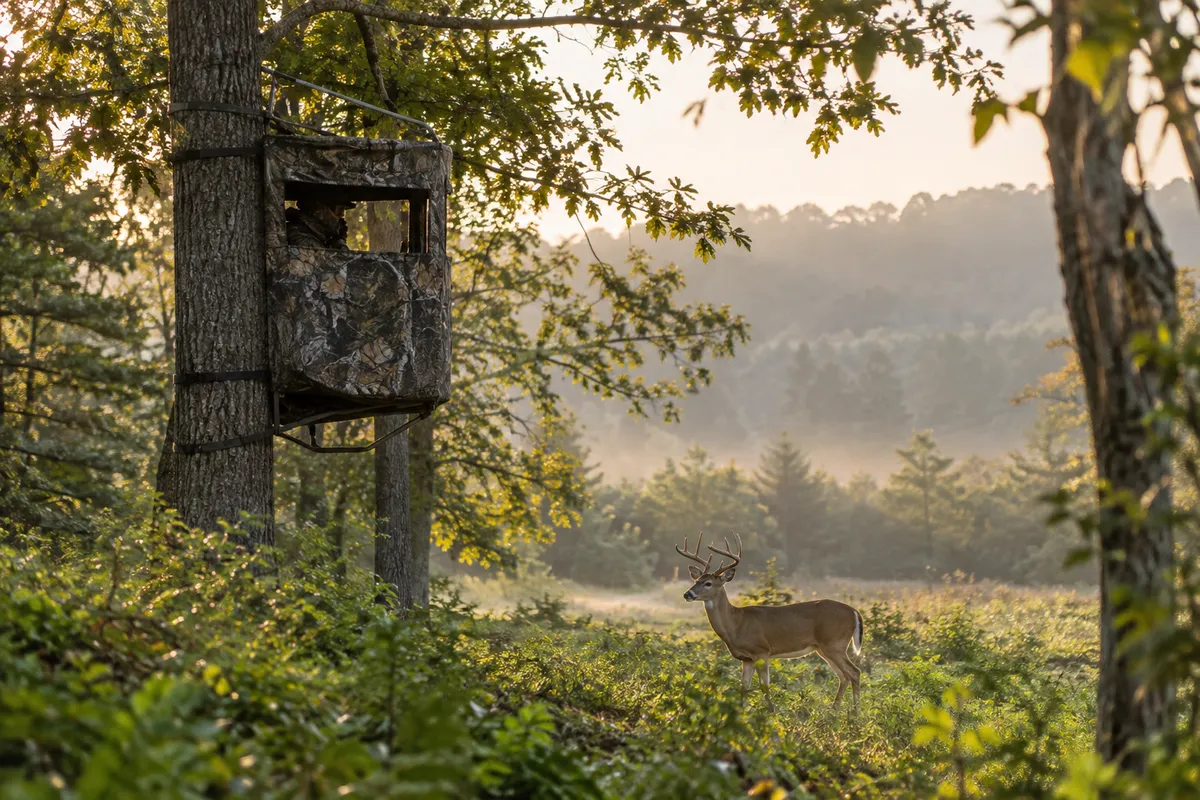
Scentite Blinds: What Scent Control Can—and Can’t—Do
Scentite blinds are best evaluated as a combination of physical concealment and scent-management approach, not as a substitute for wind awareness. This guide offers a practical checklist for assessing claims, choosing a site, and hunting responsibly.
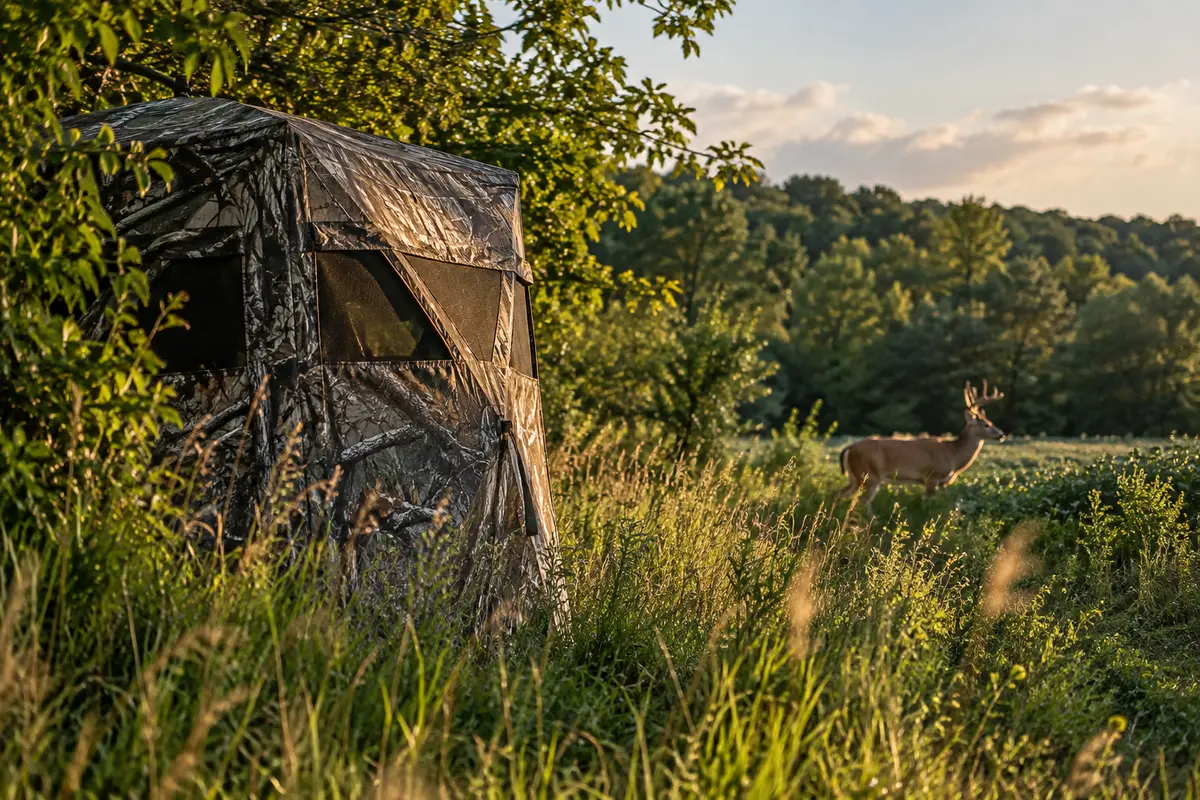
Scentite blinds are a product-specific way to think about a broader hunting question: can a ground blind help manage human scent as well as conceal movement? The answer depends on the blind’s actual materials and construction, how it is set up, and conditions at the site. The name alone does not establish what a particular model does. Treat scent-control language as a claim to verify in the manual or with the manufacturer, and plan as though deer may still detect you.
For a broader look at hunting and archery topics, visit the hunting and archery hub. The most useful way to assess Scentite blinds is to separate ordinary concealment from scent management, then consider how wind, access, and safe placement affect the whole setup.
What does “scent control” mean in a blind?
A ground blind can interrupt an animal’s view of a hunter and help conceal small movements. Scent control is a different issue: people continuously release odor, and air moving through a blind may carry that odor outside. A fabric, coating, or enclosed design might be marketed as limiting odor transfer, but the exact mechanism and performance should not be assumed from a product name.
Look for concrete, model-specific information in the original manual or manufacturer materials. Does the maker describe a particular treated fabric, sealed panel, or ventilation design? Are there stated care instructions or limits? If those details are not available, regard the scent claim as unverified rather than translating it into a guarantee of invisibility. Product specifications and availability can vary over time; consult the manufacturer for current, model-specific information.
Even a blind that reduces some odor under certain conditions cannot make wind irrelevant. Air can move through openings, around edges, and across the surrounding terrain. A shift in wind direction can carry scent toward the area where animals approach. The practical goal is to make sound decisions about wind and access, not to rely on a piece of equipment to overcome them.
How should you evaluate Scentite blinds before using one?
Start with fit for your hunting location and season. A blind that is stable, appropriately sized, and easy to use safely may be more valuable than a feature you cannot verify. Compare the actual model’s documentation—not a secondhand description—with the conditions you expect to encounter.
| Question | What to check | Why it matters |
|---|---|---|
| Which model is it? | Model name, manual, and current manufacturer information | Features can differ between versions |
| What is the scent claim? | Specific construction or care details, if documented | A product name is not performance evidence |
| Can it be ventilated safely? | Openings, visibility, and the maker’s directions | Airflow and safe observation both matter |
| Will it fit the site? | Footprint, ground conditions, and permitted placement | A poor fit can create instability or disturb the area |
| Can it be maintained? | Cleaning, drying, storage, and repair instructions | Incorrect care may damage materials or alter performance |
Do not infer a product’s capabilities from another blind with a similar name. If the manual is unavailable, ask the manufacturer for the correct model documentation. Avoid treating marketing terms as a measurable guarantee unless the maker supplies clear, applicable evidence.
Where and how should a ground blind be placed?
Choose a location based on lawful access, safe visibility, wind, and the likely approach of people and wildlife. Check landowner permission and local regulations before placing equipment. On public land, determine whether unattended blinds, stakes, or overnight placement are allowed; rules differ by jurisdiction and may change by season.
Before settling on a spot, consider how you will enter and leave. A route that crosses the area you hope to hunt can leave disturbance or carry scent through it. Where the terrain and rules allow, choose an access path that minimizes unnecessary movement near likely wildlife travel. Avoid blocking trails, roads, or other users’ access, and make the blind readily identifiable to other people where required.
Use a weather forecast as a planning aid, then observe conditions at the site. Wind near ground level can behave differently from a forecast or a reading taken elsewhere. If the wind repeatedly carries air from the blind toward the area you expect animals to use, select another position or wait for more suitable conditions. Do not assume a blind’s scent-control feature changes that decision.
Set up early enough to avoid hurried movement and noise. Secure the structure according to its instructions and inspect the surroundings for hazards, including unstable ground, low branches, and nearby paths. Keep doors and windows arranged so you can observe your surroundings and handle any lawful hunting equipment safely. Never create an obstructed or unsafe line of sight simply to make the blind more concealed.
What should you do about clothing and scent?
Use clean clothing and follow any care labels or manufacturer directions for the blind and associated gear. Keep hunting clothing separate from strongly scented household products where practical. Store it in a clean, dry place, and avoid handling the interior immediately after working with fuels, food, or other strong odors. These are sensible hygiene steps, not a promise that human scent disappears.
A scent-control routine can become counterproductive if it distracts from wind, safe positioning, or local rules. Keep the process simple and repeatable. Do not apply chemicals or treatments to a blind unless the product directions say they are appropriate for its materials and use. Unapproved treatments could damage fabric or create a hazard.
The related guide to scent control for deer hunting discusses the wider subject of managing odor without treating any single device as a guarantee. For concealment choices that do not depend on a branded scent claim, compare the considerations in natural ground blinds for deer hunting. Both approaches still depend on the site, conditions, and lawful, safe practice.
What are the limits of scent-control claims?
Wildlife behavior is variable. Wind, terrain, temperature, vegetation, and an animal’s route all influence whether odor reaches it. A hunter cannot reliably know from a product label alone how a blind will perform in every combination of those conditions. Nor does a lack of visible reaction prove that an animal did not detect a person.
For that reason, assess Scentite blinds as one part of a setup. Their possible value should be weighed alongside durable construction, workable access, appropriate visibility, and fit for your hunting method. If a manufacturer makes a strong performance claim but does not explain its basis, ask for clarification and make decisions conservatively. Do not interpret an absence of evidence as evidence of a specific level of scent reduction.
Regulations and access requirements are separate from equipment features. Consult the relevant state wildlife agency for current seasons, land rules, and hunting requirements. The U.S. Fish and Wildlife Service provides federal wildlife and conservation information, while state agencies administer many day-to-day hunting rules. Follow the laws that apply to the location where you hunt.
A field decision framework
Use this quick check before committing to a blind location:
- Confirm permission and rules. Verify access, placement, and visibility requirements with the landowner or applicable agency.
- Identify the exact blind. Read the correct manual and establish which features are documented for that model.
- Assess wind at the site. If conditions repeatedly carry scent toward the intended approach, change the position or postpone.
- Check access and safety. Choose a route and setup that reduce disturbance without compromising safe observation or access for others.
- Keep expectations realistic. Treat scent-control features as potential aids, not as a replacement for wind-aware decisions.
- Inspect and maintain. Secure the blind and follow the maker’s cleaning, drying, and storage directions.
The best answer to whether Scentite blinds are right for a hunt is therefore conditional. A specific model may suit a particular site and routine, but a name or general scent-control claim cannot settle that question. Verify what is documented, use sound wind and access judgment, and let safety and local regulations govern the setup.
Frequently asked questions
Do Scentite blinds eliminate human scent?
Do not assume that they do. Check the exact model’s manufacturer documentation for specific scent-related claims, and continue to account for wind and airflow.
How can I verify what a Scentite blind is designed to do?
Identify the precise model and consult its original manual or the manufacturer’s current information. Do not infer features from the product name or from another model.
Does a scent-control blind mean wind direction no longer matters?
No. Air can move through or around a blind, so wind and site conditions remain important considerations.
Sources & further information
Consult these primary sources for current regulations, technical information and local guidance.