Best Flashlights for Hunting: Choosing Light for the Field
The best flashlight for hunting is not necessarily the brightest one. This guide compares useful light characteristics and explains how to choose a dependable primary light, backup and tracking setup without relying on unverified product rankings.
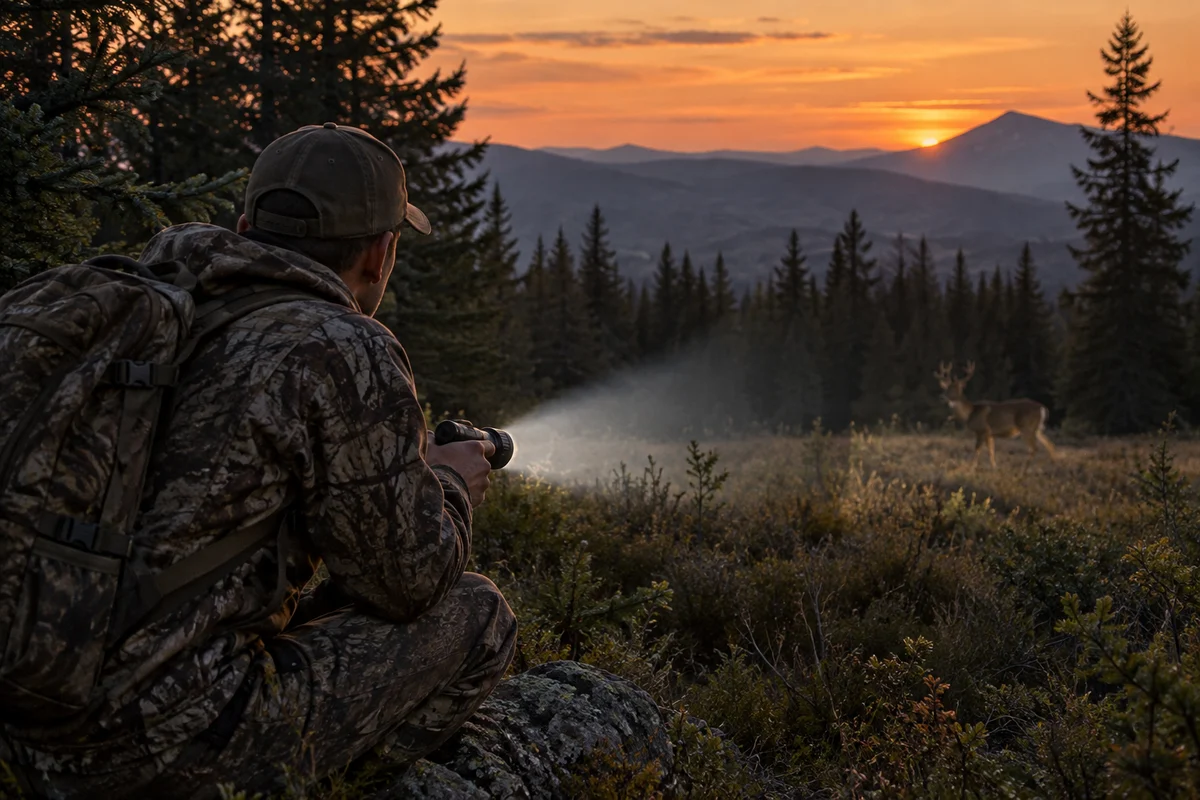
When comparing the best flashlights for hunting, start with the work the light must do: illuminate a trail, help you find equipment, or assist with a lawful recovery after a shot. A single high-output number cannot tell you whether a light will be comfortable to carry, easy to control, or useful at close range. The right choice depends on terrain, weather, local rules and whether you need a handheld or hands-free option.
This is a selection framework, not a tested ranking of four current models. Flashlight models and specifications change; confirm current details in the manufacturer’s documentation. Most importantly, check local hunting and wildlife regulations before using artificial light. Restrictions can differ by location, species, season and activity.
What should a hunting flashlight do?
Think in tasks rather than maximum brightness. A broad, moderate beam can be useful for walking and organizing gear. A more focused beam may help reveal features farther along a route, but it can be less convenient when looking at something close by. Neither kind replaces careful navigation, a map, or daylight scouting.
A hunting light should have controls you can operate without fumbling, a secure way to carry it, and a dependable power source. Consider whether you need a simple on/off mode or several settings. Extra modes are only useful if you can reach the one you need quickly and avoid accidentally activating a disorienting high setting.
For related planning, the hunting and archery hub collects practical outdoor topics. A flashlight is one part of preparation; learn your route and identify safe stopping points before darkness makes those decisions harder.
How do beam pattern and brightness affect field use?
Manufacturers commonly describe output in lumens and sometimes publish beam distance, runtime and intensity figures. These measurements can help compare products, but they do not guarantee identical results in every setting. Beam shape, optics, battery condition, temperature and the way a manufacturer measures performance all matter. Treat headline figures as a starting point, not a promise about what you will see in brush or fog.
A flood-style beam spreads light over a wider area. It is often comfortable for camp tasks, close-up gear checks and walking on a familiar path. A more concentrated beam puts more light into a smaller area and may help inspect a distant trail marker or terrain feature. In dense woods, a narrow beam can be obstructed by nearby branches; in open country, a wide beam may not show distant detail clearly.
| Field need | Useful characteristic | Trade-off to consider |
|---|---|---|
| Walking on a known trail | Even, wide illumination | Less emphasis on distant detail |
| Checking a route feature | More focused center beam | Narrower view close at hand |
| Hands-free camp tasks | Headlamp with stable fit | Beam follows head movement; use care around others |
| Backup for a long outing | Compact, simple light | Smaller battery may mean shorter useful runtime |
| Wet or cold conditions | Sealed construction and glove-friendly controls | Check the actual rating and operating limits |
Avoid assuming a brighter light is always safer. Strong direct light can impair another person’s night vision, and glare or reflection can make visibility worse. Point a light toward the ground or the task rather than into another person’s eyes. Never use a flashlight to identify a target for a shot; positive identification and safe backstop assessment must happen before any shot, in accordance with applicable law and training.
Handheld, headlamp or both?
A handheld flashlight is versatile: you can direct it independently of your gaze, set it down, or use it to inspect an object. Its main drawback is that it occupies a hand. A headlamp keeps both hands available for tasks such as handling a map or organizing non-weapon gear, but its beam points wherever you look. That makes awareness of companions especially important.
For many outings, a modest headlamp plus a separate handheld backup is more resilient than relying on one device. Keep the backup accessible, not buried beneath packed gear. A headlamp should fit securely over a hat or hood without slipping, and its controls should be understandable by touch. If you carry a handheld, consider whether its switch can be activated accidentally in a pocket or pack.
Do not treat any light as a substitute for safe firearm handling. Keep firearms secured and pointed in a safe direction; do not handle or load one in darkness simply because a light is available. For broader field preparation, the article on natural ground blinds for deer hunting offers a separate look at choosing and situating concealment, while trail-camera planning concerns observation before an outing.
Which power source makes sense?
Common options include disposable alkaline cells, rechargeable lithium-ion batteries and lights with built-in rechargeable packs. There is no universally best format. Disposable cells can be convenient to replace in remote locations, while rechargeable systems can be practical when charging is available and the battery is compatible with your routine. Built-in packs may simplify charging but can limit replacement options if the cell ages or fails.
Check the manufacturer’s stated runtime for each output mode, not just the brightest setting. Cold weather can reduce battery performance, and a light left switched on in a pack can drain unexpectedly. Carry compatible spares in a way that protects them from moisture and accidental contact with conductive objects. Do not mix battery types or use damaged cells; follow the light and battery makers’ instructions for charging, storage and disposal.
What matters in rain, cold and rough handling?
Look for an ingress-protection rating if the manufacturer provides one, and understand what it means rather than treating “waterproof” as a universal guarantee. A rating describes defined test conditions; it does not mean a device is indestructible. Inspect seals, ports and lenses, especially after exposure to grit or water. Dry the light before storing it and follow the maker’s maintenance guidance.
Controls matter in gloves. A small recessed switch may resist accidental activation but be difficult to find by feel. A prominent switch can be easier to operate but may turn on inside a bag. If possible, handle the light with the gloves you expect to wear. Check that the body is easy to grip when damp and that a lanyard or clip does not snag on clothing.
A simple pre-trip light checklist
- Confirm local rules on artificial light and the activity you plan to undertake.
- Test the primary light, backup and all intended settings before leaving.
- Charge or replace batteries; pack compatible spares separately and safely.
- Check the beam at close range and along the route in a non-hunting setting.
- Keep the light accessible, protected from accidental activation and weather.
- Tell companions how you will signal or communicate if separated.
- Set a turnaround time and carry navigation tools independent of the flashlight.
A light’s advertised runtime is not a reason to skip a backup or route plan. If the primary light fails, stop somewhere safe, use the backup, and reassess rather than pressing on without adequate visibility.
How should you choose among four flashlight types?
Instead of chasing a “top four” list built around brand claims, compare four practical categories. A compact handheld suits someone who prioritizes pocketable utility. A larger handheld may offer easier gripping or longer stated runtime, at the cost of bulk. A headlamp is useful when hands-free illumination matters. A headlamp-and-handheld pair offers redundancy, though it adds weight and requires maintaining two power systems.
Before choosing, write down the route, expected weather, length of outing and tasks you will perform after dark. Then compare current manufacturer information for beam pattern, controls, battery format, stated runtime, ingress rating and warranty terms. Check that replacement batteries or charging equipment are realistically available to you. If a product’s documentation is vague, do not fill gaps by guessing from its name or appearance.
The best flashlight for hunting is the one you can operate reliably, maintain, and use lawfully for the specific outing. Favor predictable controls, a suitable beam and a backup plan over a single impressive specification. Confirm current rules with the relevant wildlife agency, and consult the flashlight manufacturer for exact performance and care guidance.
Frequently asked questions
Is a brighter flashlight always better for hunting?
No. Beam shape and comfortable control matter as much as output. Excessive glare can hinder night vision, so choose light suited to the task and avoid shining it into another person’s eyes.
Should I carry a headlamp or a handheld flashlight?
A headlamp keeps hands free, while a handheld can be aimed independently. Many people prefer one primary light and a separate backup; test both before the outing.
Can I use a flashlight while hunting at night?
Rules vary by location, species, season and activity. Check the current regulations from the wildlife agency responsible for the area before using artificial light.
Sources & further information
Consult these primary sources for current regulations, technical information and local guidance.