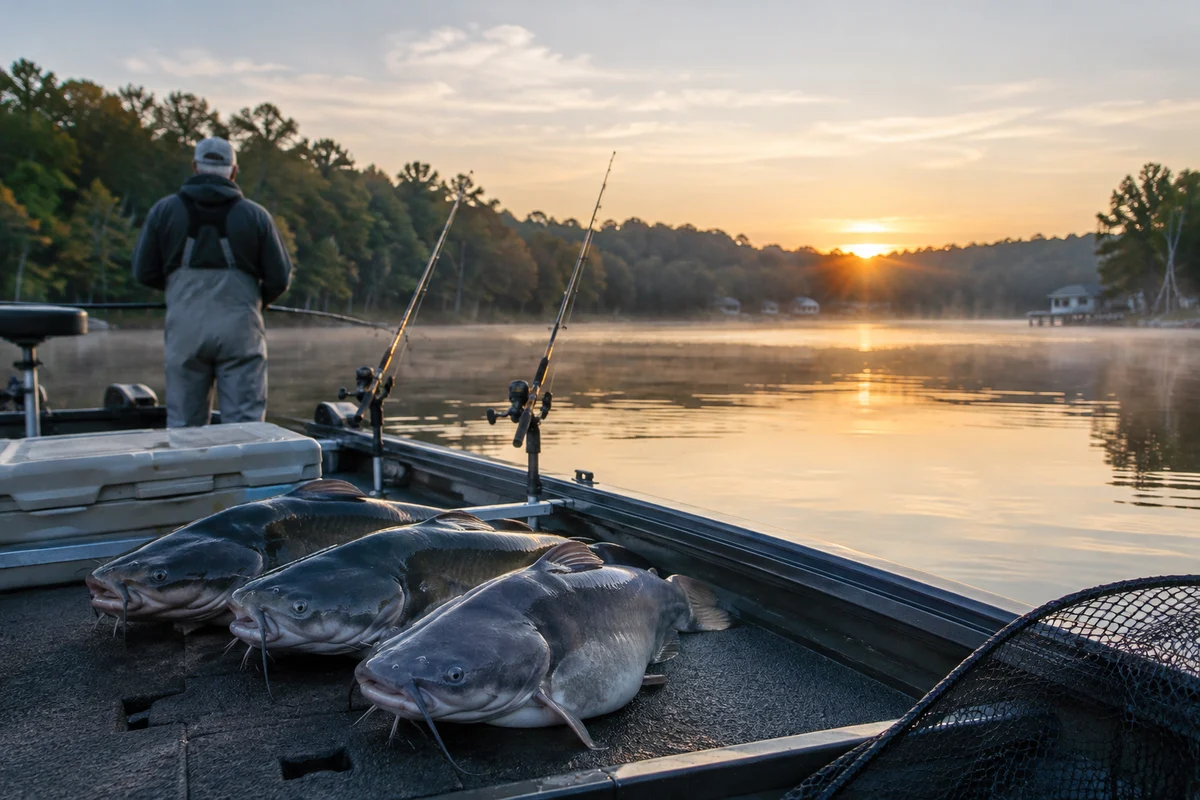
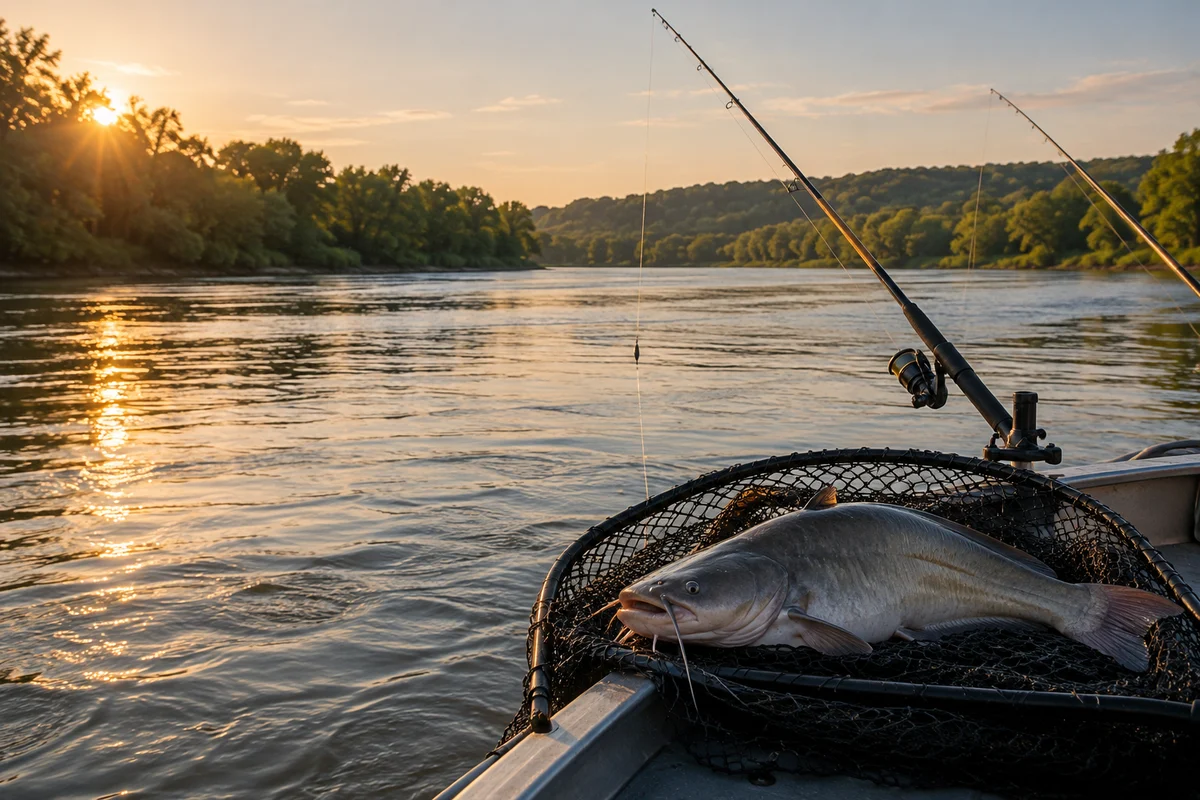
National Noodling Record Catfish: What Counts as Proof?
A large catfish reported from noodling is not automatically a verified record. Learn what the claim must establish, how record categories differ, and where to check the rules before repeating a number.
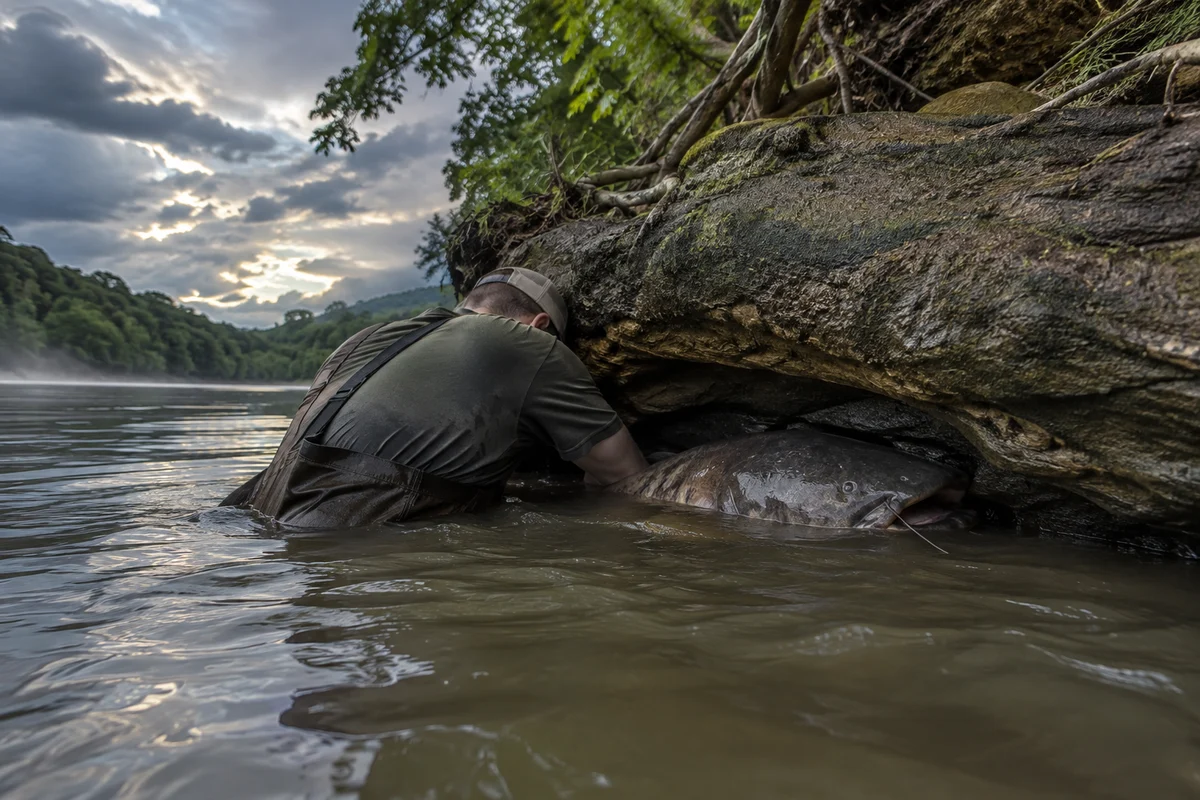
A national noodling record catfish claim needs more than an impressive weight or a dramatic account. To assess one responsibly, first establish which fish was caught, how it was taken, which record system is being claimed, and whether that system verified the catch. The phrase “85-pound catfish” by itself does not answer any of those questions. It may describe a reported fish, but a report and an official record are different things.
Noodling is a form of hand fishing in which a person attempts to take a catfish by hand, often from a submerged cavity or similar cover. Rules, permitted methods, seasons, and record categories vary by jurisdiction and organization. Here is how to separate a notable catch story from a record that can be checked.
Why doesn’t a big reported catfish automatically set a record?
A record is a claim measured against a defined set of rules. “Biggest catfish” could mean a state record, a national record, a world record, or simply the largest fish reported in a local story. It could also refer to a particular species or method. Without that context, two numbers may not be comparable at all.
The method matters. A fish taken by hand may not qualify for a category defined around rod-and-reel angling, and a record organization may have its own accepted methods and documentation requirements. Do not infer eligibility from the word “record” in a headline. Check the rules of the specific authority and the category it maintains. The International Game Fish Association’s record program is one place to review when a claim invokes IGFA recognition; it should not be treated as proof that a particular noodling catch was accepted.
The species matters, too. Catfish species can look similar to people unfamiliar with them, while official records are generally organized by named species or categories. A reliable claim identifies the fish rather than relying on a broad label such as “catfish.”
What does noodling mean in a record claim?
Noodling is commonly used for hand fishing for catfish, particularly flatheads, but the name alone does not identify the exact technique or establish that it was legal where the catch occurred. A report should say plainly that the fish was taken by hand, give the location at least at the jurisdiction level, and name the species if it has been reliably identified.
That distinction is useful when comparing a noodling claim with other catfish records. A fish caught on a line and a fish taken by hand may be discussed in the same news coverage, yet they can fall under different rules—or one method may not fit a given record category. Readers interested in the basic practice can start with this guide to what noodling is and how it relates to flathead catfish. It offers context, but the regulations where a person fishes remain the controlling source for legality.
A report that omits the method is incomplete, not necessarily false. It simply leaves readers unable to determine which standards apply. The same is true when a story gives a weight but does not specify the fish’s species or the record authority.
Which details should an 85-pound claim provide?
Treat a number such as 85 pounds as a reported measurement until the supporting details are available. Useful documentation links the fish, the measurement, and the stated record category together. Look for the following:
- Species identification: Is the fish identified by a knowledgeable source or record authority, rather than only by a casual caption?
- Measurement details: Does the report explain how and when the weight was obtained, and identify the scale or weighing procedure?
- Location and date: Are enough details given to determine which state or other jurisdiction’s rules apply?
- Method: Does the account say the fish was noodled, caught on a line, or taken another way?
- Category and authority: Does it name the record organization and the exact category being claimed?
- Verification: Is there confirmation from that organization or the relevant fish and wildlife agency, rather than only a social post or retelling?
Photos can help show a fish’s appearance and provide context, but a photograph alone cannot establish an exact weight, species, or accepted record status. Likewise, a witness statement may support an account without replacing the official process. If the documentation is not available, the careful wording is “reported as” or “claimed,” not “the national record.”
How do state, national, and world records differ?
These labels are not interchangeable. State agencies or other state-designated authorities may maintain records under their own definitions and application procedures. A national or international organization may maintain a separate list with different eligible species, methods, and evidence requirements. A state record does not automatically become a national or world record, and one organization’s recognition does not necessarily establish another’s.
Start with the precise claim. If it is a state record, find the official record program for the state where the fish was caught. The Texas Parks and Wildlife Department and the Illinois Department of Natural Resources illustrate the kinds of state agencies readers can consult; their general sites are starting points, not confirmation of a particular fish. Search the agency’s official site for its current fishing-record rules and contact information. For an organization-level claim, use that organization’s own current rules and record listings.
Pay attention to whether the listing distinguishes species, location, or method. A database entry can verify a record only for the category it actually names. If no category accepts noodling, a large hand-caught fish may remain an extraordinary catch without being a record in that system.
What safety and legal questions matter before noodling?
Record interest should never eclipse personal safety or local law. Hand fishing can involve underwater obstructions, poor visibility, current, entanglement hazards, and difficulty reaching the surface. A person entering a cavity or reaching into concealed cover cannot reliably see what is inside. The danger is not limited to the fish, and a large catch is not worth taking an avoidable risk.
Before considering the activity, consult the current fishing regulations for the exact jurisdiction and waterbody. Rules can address whether hand fishing is permitted, what species or seasons apply, and what licensing or harvest requirements exist. Do not assume that a practice legal in one state is legal in another, or that a method allowed in one waterbody is allowed everywhere. The state agency links above are starting points for official information, not a substitute for the rules in force at a particular location.
If a fish is caught, handling and release decisions also matter. The general principles in this guide to catch-and-release catfish can help readers think about minimizing handling stress, but follow any applicable local requirements and the circumstances of the fish. No record pursuit should take priority over a person’s safety or lawful fishing.
How can readers check a record rather than repeat a rumor?
Work backward from the strongest source. Find the record authority named in the claim, then look for the relevant species and method in its official listing or application rules. If the story names no authority, search the appropriate state agency’s record program and compare the category definitions. An official listing or direct confirmation is stronger evidence than a repost, a headline, or a social-media caption.
Keep the terms precise when sharing what you find. “A fish was reported at 85 pounds” describes a report. “The agency lists it as a state record for [named category]” describes a specific official listing, if that listing exists and can be checked. Avoid converting one into the other through repetition. When no verification appears, say that the claim is unconfirmed rather than filling gaps with guesses.
For broader catfish information, the freshwater catfish fishing hub brings together related species, tackle, and fishing guidance. Use it for background, then return to the responsible agency or organization for current rules and any record status.
What can be concluded about the “national noodling record” claim?
A headline or legacy page referring to an 85-pound catfish is not, on its own, evidence that the fish was weighed under an accepted procedure or recognized as a national record. The sound conclusion depends on verifiable details: species, method, measurement, jurisdiction, category, and confirmation by the authority responsible for that record.
Until those pieces line up, treat the number as an unverified report—not a settled record. That distinction preserves the interest of a remarkable catch while giving readers a fair standard for deciding what the claim actually proves.
Frequently asked questions
Does an 85-pound noodled catfish automatically qualify as a national record?
No. A reported weight alone does not establish species, measurement procedure, eligible method, record category, or acceptance by a record authority. Check the organization or agency named in the claim.
Can a hand-caught catfish qualify for a fishing record?
It depends on the rules of the specific record program. Check whether the program accepts hand fishing and whether it has a category for the species and method; do not assume line-fishing rules apply.
Where should I verify a catfish record claim?
Start with the official state fish and wildlife agency for a state-record claim, or the named record organization for a national or international claim. Verify the exact species and category in its current rules or listings.
Sources & further information
Consult these primary sources for current regulations, technical information and local guidance.