Hunting Blind Platforms: Choose and Set Up a Stable Base
A hunting blind platform is only as useful as its footing, access, and fit with the blind and terrain. This guide compares common platform approaches and lays out a practical safety-first selection checklist.
Choosing hunting blind platforms starts with the ground beneath them—not with the blind model or a preferred height. A platform must suit the site, support the blind and its occupants within its rated limits, and allow safe entry and exit in the conditions you expect. Whether you are planning a ground-level base or an elevated setup, the sound approach is to check local rules, inspect the terrain, and follow the platform and blind manufacturers’ instructions.
A platform does not make a location safe by itself. Soil can shift, tree limbs can fail, water can rise, and weather can change. Treat stability and access as essential parts of the plan, and do not use a structure that feels loose, damaged, or beyond its stated capacity.
What counts as a hunting blind platform?
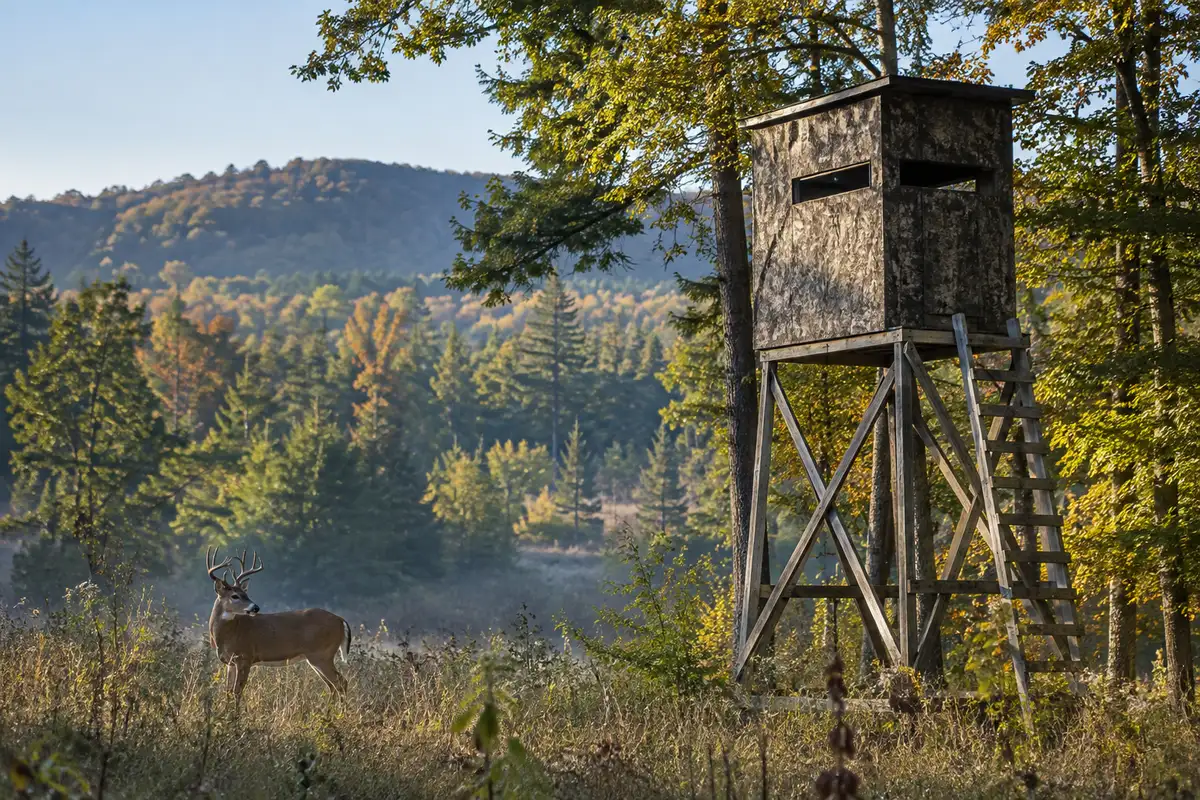
The term covers several kinds of bases. A ground-level platform may be a prepared, level surface that keeps a blind from sitting in mud or standing water. A raised platform may support a blind above the ground, often on a purpose-built frame. Some hunters use an existing, lawful structure, while others select a freestanding system made for a particular blind.
These options are not interchangeable. An elevated base adds fall risk and puts extra importance on structural condition, access, and weather. A simple ground base avoids climbing but still needs firm, level footing and drainage. Never assume a product intended for one blind, site, or load will be suitable for another; check its instructions and stated limits.
For broader context on planning a lawful outing and choosing equipment, visit the archery hunting hub. The same habit of matching equipment to the user and conditions applies when reviewing beginner bow hunting tips or learning about the benefits of archery.
Ground-level or elevated: which approach fits?
Start by asking what the site requires, rather than assuming more height is better. Ground-level setups can be simpler to access and inspect. They may work well where vegetation, terrain, and the blind’s design allow a clear, safe position. Their main concerns include uneven ground, dampness, drainage, and the possibility that the blind or base may shift.
An elevated platform can change sightlines and keep a blind away from shallow surface water, but it also introduces more demanding safety considerations. Height increases the consequences of a fall. A ladder or other access system must be suitable, secure, and used as directed. Wind exposure may be greater, and a raised structure can be affected by soft soil, slope, or changing ground conditions. Elevation is not a substitute for concealment, lawful placement, or sound judgment.
| Site or need | Ground-level base | Elevated platform | What to verify |
|---|---|---|---|
| Firm, level ground | Often a straightforward option | May add complexity without a clear need | Stability, drainage, blind fit |
| Sloping or soft ground | Can be difficult to level safely | Also challenging; supports may settle | Manufacturer guidance and site suitability |
| Frequent entry and exit | Usually simpler access | Climbing adds risk and effort | Safe route, footing, mobility needs |
| Exposure to wind or water | Check runoff and pooling | Check wind exposure and structural limits | Local conditions and product instructions |
| Existing trees or structures | Avoid damaging or trespassing | Do not assume a tree or structure is sound | Permission, condition, and applicable rules |
This is a decision aid, not an engineering assessment. If a site needs structural work or the instructions do not clearly cover the situation, consult a qualified professional or choose another location.
How to assess a site before placing a platform
Walk the site in daylight and look beyond the exact footprint. Check for a firm, reasonably level area and note slopes, erosion, loose soil, roots, rocks, standing water, and drainage paths. A location that appears dry during one visit may change after rain, snowmelt, or a seasonal rise in water. Avoid placing a platform where runoff will undermine it or where a changing watercourse could create a hazard.
Look overhead and around the approach. Dead or broken limbs, leaning trees, and unstable branches can be dangerous, especially in wind or ice. Leave room for safe access and movement without trampling sensitive vegetation or blocking other users. Confirm landowner permission and check current state and local regulations, including rules for structures, access, public land, and hunting seasons. Rules differ by place and can change; consult the relevant wildlife agency rather than relying on a general online summary.
Consider how you will reach the site in poor light or changing weather. A route that is manageable on a clear afternoon may be slippery, flooded, or difficult to see at another time. Keep the setup away from hazards that could interfere with safe access, and make sure the location does not create a risk to other people.
A practical selection checklist
Before settling on a design or location, work through these questions:
- Is the placement lawful? Confirm permission, land-use conditions, and applicable hunting and structure rules with the land manager or wildlife agency.
- Does the base match the blind? Check the blind and platform instructions for compatibility, intended use, assembly, and load limits. Do not infer capacity from appearance.
- Is the ground suitable? Look for stable footing, drainage, and signs of erosion or settlement. Reconsider soft, steep, or changing ground.
- Can everyone use it safely? Account for the users’ mobility, visibility, footwear, and ability to enter and leave. A raised platform requires particular attention to safe access and fall risk.
- Can you inspect it regularly? Plan to check for loosened connections, damage, corrosion, rot, settling, and weather-related changes before each use and as the manufacturer advises.
- What happens in bad weather? Wind, rain, ice, and snow can change both footing and structural loads. Follow product guidance and postpone use if conditions are outside the safe operating range.
If any answer is uncertain, pause and get reliable guidance. Do not improvise structural changes or exceed a stated limit. A platform’s appearance is not proof that it is safe.
Setup, access, and ongoing checks
Assemble a product exactly as directed, using its specified components and fastening approach. Keep instructions available and do not substitute parts unless the manufacturer says they are compatible. Set the blind and platform only on a surface and in a configuration the product is intended to support. A mismatch can create instability even when each component is sound on its own.
For elevated setups, follow the access system’s instructions and use it as designed. Keep hands and footing secure, avoid climbing while carrying awkward loads, and do not use a structure when it is wet, icy, damaged, or moving. These are general precautions, not a replacement for the manufacturer’s directions or training. If anyone cannot use the access safely, choose a ground-level alternative or a different site.
Inspect before use and after severe weather or a long period unattended. Look for movement, settling, damaged or missing components, loose connections, and changes to nearby trees or ground. Clear the area of trip hazards without damaging habitat or violating land rules. If anything seems compromised, keep off the platform until it has been properly assessed and repaired according to the manufacturer’s guidance.
Concealment, comfort, and responsible placement
A stable platform is not automatically a good blind location. Think about prevailing conditions, natural cover, visibility from trails or neighboring properties, and the effect of the setup on wildlife and other land users. Avoid blocking access, disturbing protected areas, or cutting vegetation where prohibited. Use only lawful materials and methods, and pack out what you bring in.
Comfort matters, but it should not override safety. A level floor, adequate room, and a clear exit can make a long sit more manageable. Keep the interior organized so gear does not obstruct movement. Make sure the blind’s openings and the platform layout work together without requiring awkward reaching or unsafe leaning. For archery-related planning, equipment fit and practice are important themes in beginner bow hunting tips; a platform should support a safe, controlled setup rather than encourage a risky position.
Common mistakes to avoid
The most common planning errors are choosing height before evaluating the site, treating a tree or improvised support as dependable without assessment, overlooking drainage, and assuming a platform’s dimensions or capacity from a photograph. Another mistake is leaving a setup unattended without checking local rules or inspecting it after storms and seasonal changes.
Avoid modifying a platform or blind to force a fit. Do not use damaged equipment, climb in unsafe weather, or allow children or guests to use an elevated structure without appropriate supervision and clear rules. When conditions are uncertain, the conservative choice is to use another location or not use the platform.
The bottom line
Good hunting blind platforms are selected for the actual site, the specific blind, and the people who will use them. Compare ground-level and elevated options honestly, confirm permission and regulations, follow manufacturer instructions, and build in routine inspections. No general guide can verify a particular structure or replace local rules, site-specific assessment, or professional advice. If stability or safe access is in doubt, do not climb on it.
Frequently asked questions
Are hunting blind platforms required to be elevated?
No. A stable ground-level base may suit some sites and blinds. Choose elevation only when the site and product instructions support it, and account for added access and fall risks.
How do I know whether a platform can support my blind?
Check the platform and blind manufacturers’ instructions for compatibility, intended use, assembly, and stated limits. Do not estimate capacity by appearance or modify the setup to force a fit.
Can I put a hunting blind platform on public land?
Rules vary by agency, land unit, and season. Check the current land manager and wildlife agency regulations for permission, structures, removal requirements, and access before placing anything.
How often should I inspect a hunting blind platform?
Inspect it before use and after severe weather or extended periods unattended, while following the manufacturer’s maintenance guidance. Do not use it if it is damaged, shifting, or otherwise questionable.
Sources & further information
Consult these primary sources for current regulations, technical information and local guidance.