Palomar Knot Fluorocarbon: How to Tie It Securely
The Palomar knot is a compact, approachable connection for many hooks and lures, but fluorocarbon’s stiffness makes careful threading and seating especially important. Follow this step-by-step method, then inspect the finished knot before every outing.
The palomar knot fluorocarbon connection is a useful option when you want a simple loop knot for a hook, swivel, or lure with a closed eye. Fluorocarbon can feel stiffer and springier than many monofilament lines, so the key is not a special secret knot: it is threading the line without twists, keeping the knot open while tying, and seating it with steady pressure. The method below helps you do that consistently while recognizing when another connection may suit your tackle better.
What the Palomar knot does—and when it fits
A Palomar knot attaches line to an object with a closed eye. You double a section of line, pass the loop through the eye, tie a loose overhand knot with the doubled line, pass the hook or lure through the resulting loop, and tighten. Its uncomplicated sequence makes it easy to learn and inspect.
It is not a universal answer. The doubled line must pass through the eye, and the object must fit through the loop during tying. Small or crowded eyes, bulky hardware, and certain rigging arrangements can make the knot awkward. Fluorocarbon’s stiffness may also encourage a loop to cross itself or the line to kink if you pull it tight too quickly.
For general fishing advice and other knots and tackle topics, visit the freshwater fishing tips hub. Your choice of knot is only one part of a reliable setup: line condition, a clean hook eye, and suitable tackle all matter.
How to tie a Palomar knot in fluorocarbon
- Check the line and eye. Cut away any abraded or flattened section. Look for a burr or sharp edge on the hook or lure eye; damaged hardware can weaken line regardless of knot.
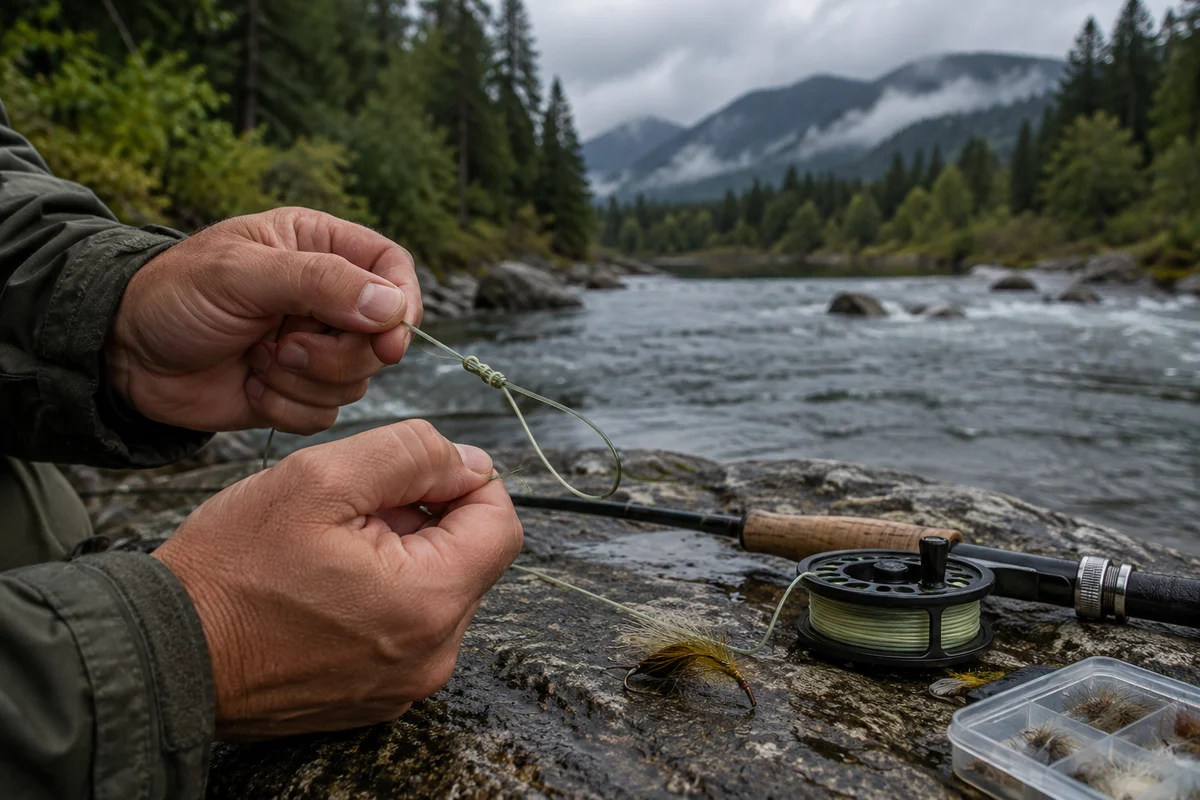
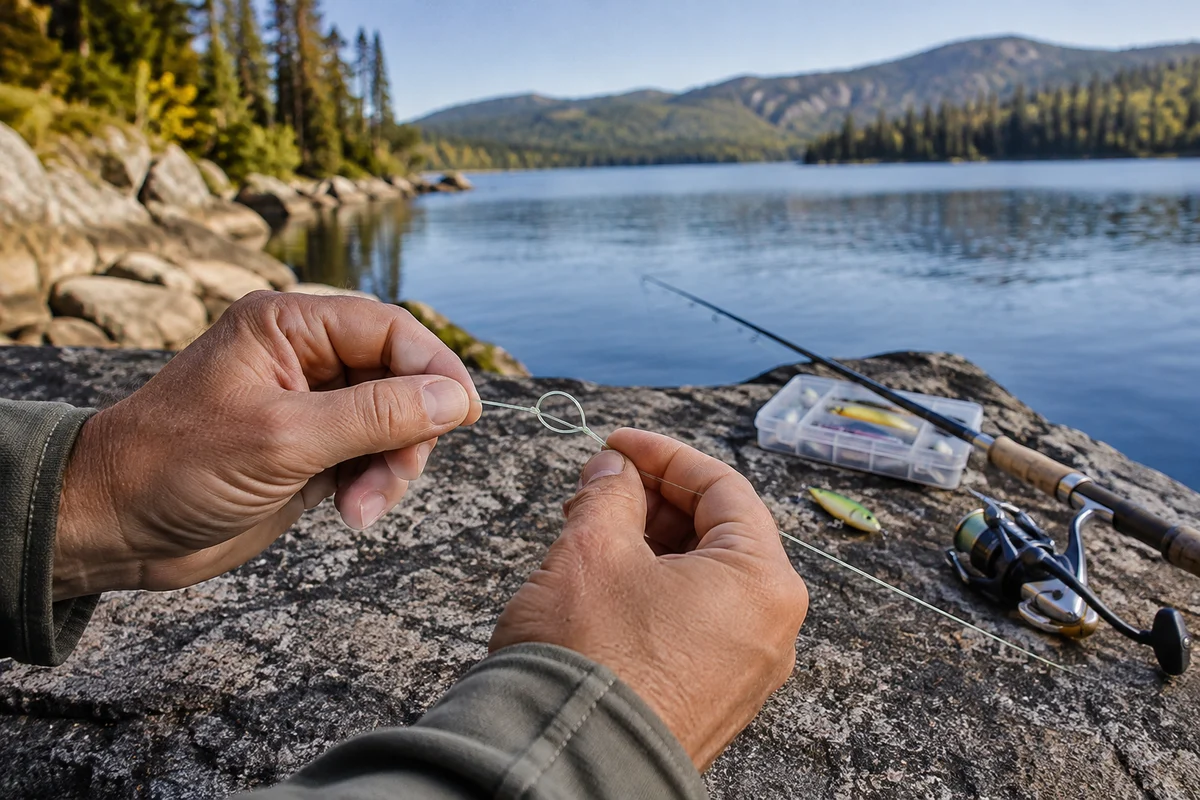
- Double the line. Bring the tag end back alongside the standing line to form a loop several inches long. Keep the two strands parallel rather than twisting them together.
- Pass the loop through the eye. Feed the doubled section through the hook or lure eye. If it will not pass comfortably, do not force it or scrape the line against the metal. Choose a connection method that suits the eye and rig.
- Make a loose overhand knot. With the doubled section, form a simple overhand knot around the standing line and tag end. Keep it loose enough that the hook or lure can pass through the loop. Avoid pulling the knot down against the eye at this stage.
- Pass the hook or lure through the loop. Bring the entire hook or lure through the large loop you formed. Keep the loop from catching on a point, barb, split ring, or other sharp edge. On a lure with several exposed hooks, control the hardware carefully so the line does not snag.
- Dress the knot. Remove visible crossings and arrange the doubled strands so they lie neatly together. The loop should encircle the connection without wrapping around a hook point or becoming trapped on the lure body.
- Moisten and tighten gradually. Wet the knot with clean water, then pull the standing line and tag end in a controlled manner to draw it toward the eye. Avoid jerking or using heat. Fluorocarbon can be damaged by abrasion and sharp bends, so steady pressure is preferable to a sudden hard pull.
- Inspect and trim. Check that the knot is compact, evenly seated, and not visibly crossed or frayed. Leave a modest tag end rather than trimming flush; a short allowance helps you identify later slippage. If the knot looks uneven or the line has been nicked, cut it off and retie.
The most common mistake is trying to cinch the knot before the hook or lure has passed through the loop. Another is letting the doubled strands cross while tightening. If the knot bunches, slips, or looks irregular, do not try to rescue it by pulling harder: cut it off and start again with undamaged line.
A quick tying and inspection checklist
| Checkpoint | What to look for | If it is wrong |
|---|---|---|
| Before tying | Clean line section and smooth eye | Retie on fresh line or use undamaged hardware |
| During threading | Loop passes freely; strands stay parallel | Stop rather than forcing or scraping the line |
| Before tightening | Hook or lure has passed through the loop | Re-form the loose knot if it has not seated |
| While seating | Knot draws down steadily after wetting | Ease pressure and remove twists or crossings |
| After tightening | Compact knot, intact line, visible tag end | Cut away and tie a new knot |
This checklist is deliberately visual. There is no single appearance that proves a knot will hold under every load, and a tidy knot cannot compensate for damaged line or an unsuitable setup.
Fluorocarbon-specific details that matter
Fluorocarbon products differ in diameter, stiffness, coating, and intended use. Heavier or stiffer material can be harder to double through a small eye and may resist forming a neat loop. Thin, supple material can be easier to handle but still needs inspection for nicks and abrasion. Follow the line maker’s guidance for the particular product rather than assuming all fluorocarbon behaves identically.
Use enough doubled line to handle the loop without struggling, but avoid making an unnecessarily huge loop that catches on nearby hardware. Keep fingers clear of sharp hooks while passing the lure through. If the eye is too small for the doubled line, a different knot may be more practical; forcing the Palomar through can scrape or kink the line.
Water, weeds, rocks, and repeated casting can all affect line condition. Check the section near the lure after contact with cover or a suspected snag. Replace line that feels rough, looks cloudy or flattened, or has a pronounced kink. For broader considerations about choosing tackle and preparing a fishing kit, see our guide to the best tackle backpack and our overview of fishing spoons.
Limits, testing, and knot choice
Knot strength is not a fixed number that can be promised for every angler’s setup. Results vary with line brand and condition, line diameter, eye shape, tying consistency, and how force is applied. A knot that appears sound in your hands may behave differently under repeated strain, abrasion, or a sudden shock. Avoid relying on unverified strength percentages or assuming a particular knot is strongest in every situation.
If you need to compare knots for a specific line and application, use the line manufacturer’s instructions and conduct cautious, controlled checks with appropriate equipment—not by pulling a sharp hook toward yourself or another person. Keep hooks pointed away, protect your hands, and dispose of cut line responsibly. This is a practical handling check, not a substitute for laboratory testing or a guarantee of performance.
The Palomar is a reasonable choice when the doubled line passes easily through the eye and the lure can pass through the loop. Consider another suitable knot if the eye is too small, the lure’s hardware makes the loop difficult to pass, or the finished knot repeatedly seats irregularly. The best choice is one you can tie correctly with the actual line and hardware you use.
Troubleshooting common problems
- The knot slides toward the eye or loosens: Inspect whether the overhand knot was dressed correctly and whether the tag end was left long enough to spot movement. Retie rather than relying on a slipping connection.
- The line looks rough after tightening: It may have rubbed against an edge or been pulled across itself under excessive friction. Cut back to clean line and check the eye for damage.
- The doubled section will not fit: Do not force it. Use a knot compatible with the eye, or suitable hardware designed for the connection, while following the tackle maker’s recommendations.
- The loop catches on hooks or a split ring: Control the lure and guide the loop around the hardware slowly. If the arrangement makes the knot impractical, choose a more suitable connection.
- You are unsure whether it is seated: Retie. A few extra moments at the bank are preferable to trusting a visibly questionable connection.
Make the knot part of a routine
Tie the knot with enough light to see the doubled strands, and take time to inspect it before casting. After catching a fish, freeing a snag, or dragging the line through rough cover, check the knot and the first section of line again. Replacing a short damaged section is a simple precaution; continuing with a compromised connection is not.
The Palomar knot does not require elaborate equipment, but care matters—especially with a stiff fluorocarbon. Keep the line clean, pass the loop without forcing it, wet and seat the knot gradually, and retie whenever its appearance or the line itself raises doubt. That repeatable process is more useful than treating any knot name as a guarantee.
Frequently asked questions
Can you use a Palomar knot with fluorocarbon?
Yes. It can work when the doubled line passes freely through the eye and the hook or lure fits through the loop. Tie it carefully and inspect the finished connection.
Should you wet fluorocarbon before tightening a Palomar knot?
Moisten the knot before drawing it tight. Then use steady pressure and check that the doubled strands seat neatly without visible crossings or damage.
How much tag end should I leave on a fluorocarbon Palomar knot?
Leave a modest visible tag rather than trimming flush. The exact amount depends on the line and hardware; inspect for slippage and retie if uncertain.
What if fluorocarbon will not pass through a small hook eye doubled?
Do not force it, since scraping or kinking can damage the line. Choose a different knot compatible with the eye and follow the line maker’s guidance.
Sources & further information
Consult these primary sources for current regulations, technical information and local guidance.