How to Catch Walleye: A Seasonal Guide to Finding and Fishing Them
Walleye fishing gets more predictable when you match presentation to season, light, depth, and the structure fish are using. This guide lays out a flexible process for choosing water, tackle, and techniques without assuming one method works everywhere.
Walleye can be challenging because their location and willingness to feed change with season, light, water temperature, forage, and fishing pressure. The most reliable answer to how to catch walleye is not a single lure or secret spot: find likely fish-holding structure, make a controlled presentation at the right depth, and adjust one variable at a time. This approach works from shore or boat, though local rules and conditions determine what is practical.
Start by learning the lake, river, or reservoir you plan to fish. A bathymetric map, public access information, and local fisheries guidance can help identify points, breaks, reefs, current seams, and safe routes. Walleye behavior varies by waterbody, and seasonal patterns are guides—not guarantees.
Find walleye by season and structure
In spring, walleye may relate to spawning areas and nearby travel routes. The timing and location differ by latitude, water conditions, and regulations. Respect seasonal closures and protected areas; do not assume that a visible spawning location is open to fishing. After spawning, fish may spread from shallow areas toward adjacent breaks, flats, and forage.
During warmer months, look for transitions: the edge of a flat, a point that drops into deeper water, a reef beside a basin, or a current break near a channel. Walleye may feed shallow during low light and shift deeper or suspend as conditions change. On rivers, current seams, eddies, and the downstream side of obstructions can offer reduced-current holding water, but depth and current safety matter.
In fall, cooling water and changing forage can make fish movement less predictable. Check several depth zones rather than assuming all walleye have moved shallow. In winter, ice can provide access to deep or mid-depth structure, but ice thickness and quality vary. Never treat a calendar date, a nearby angler’s report, or a single measurement as proof that ice is safe.
| Conditions or clue | First area to investigate | A useful first adjustment |
|---|---|---|
| Low light or overcast sky | Shallow breaks, points, or shore-adjacent cover | Try a moving bait or a jig at a controlled pace |
| Bright, calm conditions | Deeper edge, nearby basin, or shaded structure | Slow down and keep the bait close to the bottom or fish marks |
| Current present | Seams and slack water beside the main flow | Reduce line belly and keep the presentation controlled |
| Fish marks at a consistent depth | The same depth band nearby | Match that depth before changing lure color |
| No marks or bites after a careful pass | A different depth or adjacent structural feature | Move methodically rather than repeating the same drift |
These are starting points, not rules. Water clarity, forage, wind, and fishing pressure can reverse the expected pattern.
Choose a presentation you can control
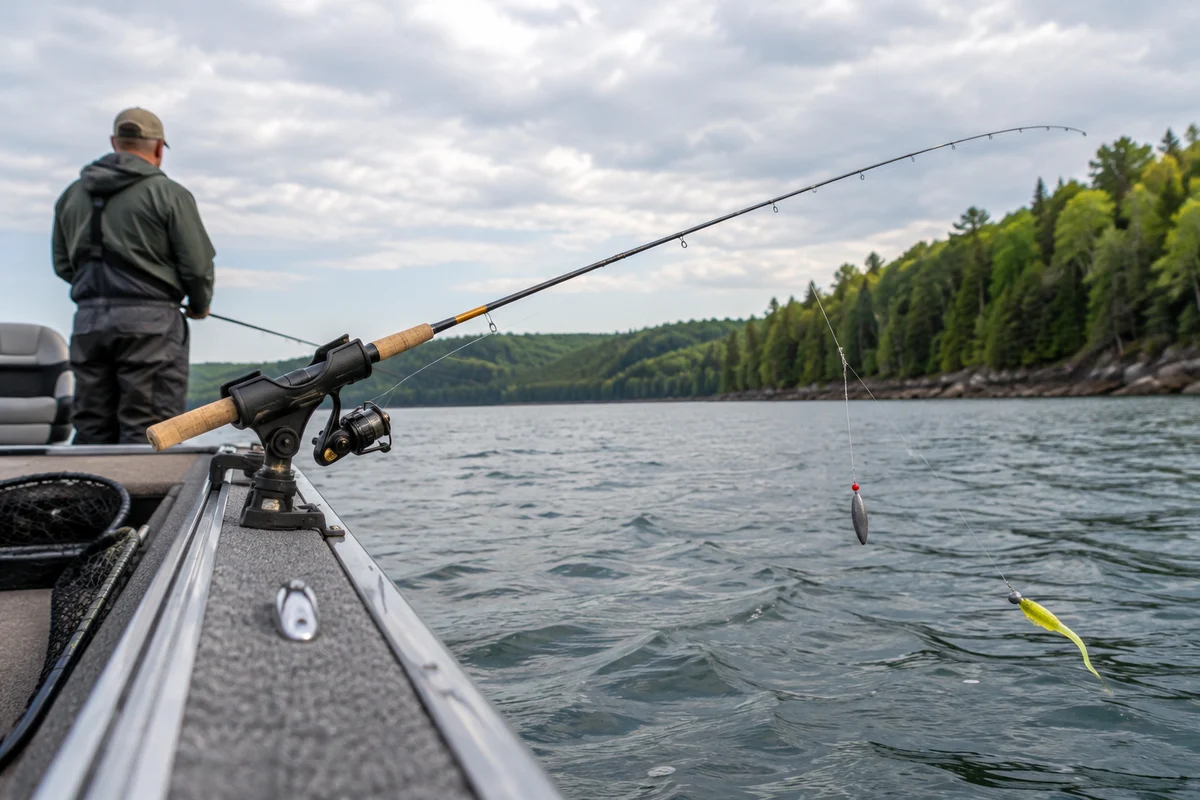
A jig is a versatile starting option. Pair it with a soft-plastic bait, minnow-shaped trailer, or live bait where legal. The important part is maintaining contact or a clear sense of the lure’s position without dragging it uncontrollably. Cast beyond a break and work the jig down the slope, or use a vertical presentation when fish are beneath the boat. On a river, cast across or slightly upstream and manage the drift so the lure tracks through likely holding water.
A bottom-bouncer system can help keep a bait near the bottom while trolling or drifting, especially over a broad contour. Keep the setup simple and confirm local rules on hooks, bait, and trolling. For a focused walkthrough, see how to set up a bottom bouncer. The method is less useful when snags are dense or when you cannot maintain a consistent path and depth.
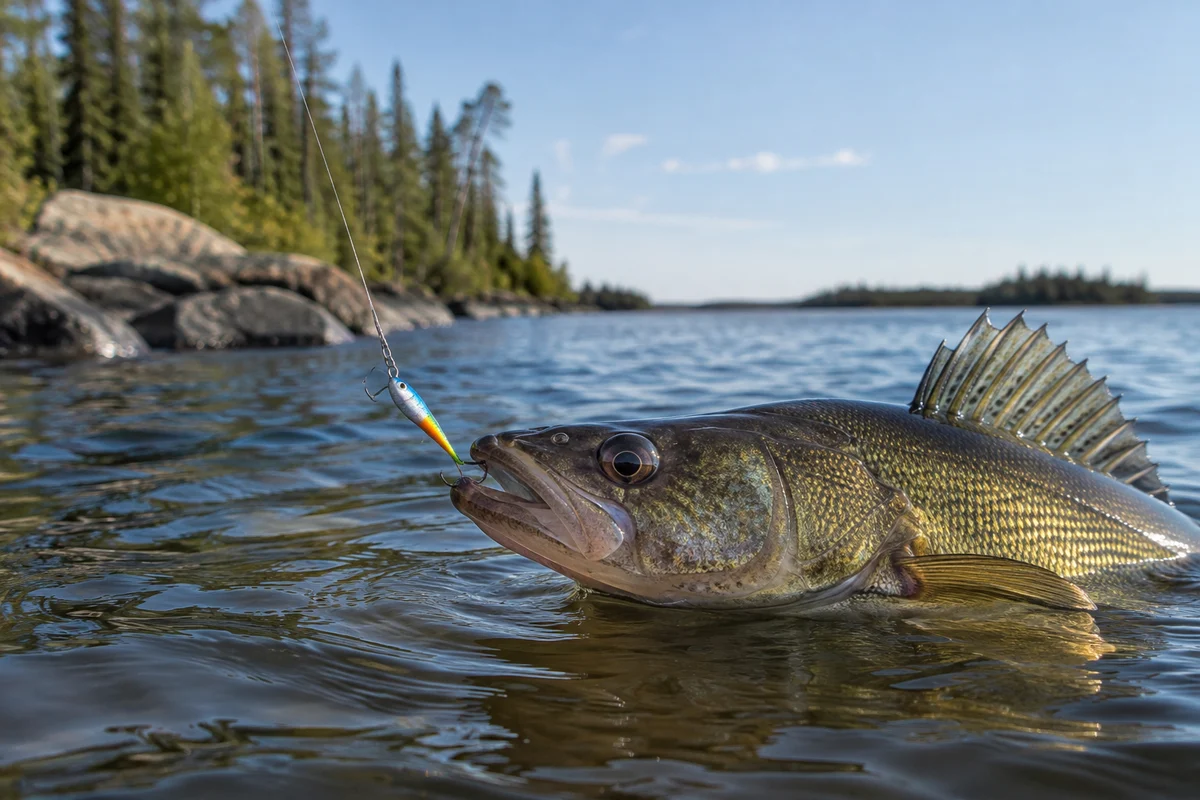
When fish are active or spread across a flat, a crankbait or other moving lure can cover water efficiently. Start with a path that crosses a depth change, then alter speed or depth if the lure is not reaching the zone. Blade baits can be useful in some colder-water situations; the retrieve should keep the lure in contact with the intended depth rather than bouncing wildly without control. Compare seasonal approaches in blade baits for fall walleye.
For ice fishing, use a jigging presentation or a stationary bait where permitted, and keep track of the lure’s depth. Small changes in cadence—short lifts, pauses, or a restrained quiver—are easier to evaluate than changing several things at once. The guide to ice fishing lures for walleye offers another starting point for building a compact selection.
Match tackle to the water
A medium-light or medium spinning outfit is a practical all-around choice for many jigging and casting situations, but rod power, line, and leader should fit the lure, cover, depth, and local conditions. A sensitive rod helps detect light bites and bottom contact; a rod that is too stiff can make small presentations difficult to manage. If you are comparing options, this overview of walleye fishing rods can help frame what to consider without treating any one model as essential.
Use line that lets you feel the presentation and safely handle likely fish. Braided main line can transmit contact well, while a leader may offer abrasion resistance or a less visible connection in clear water. The best choice depends on snags, water clarity, lure weight, and personal skill. Check knots before fishing and retie after abrasion or a hard snag.
Carry a small range of weights and lure profiles. If the lure will not reach the target depth, change weight or line angle. If it reaches bottom but hangs up repeatedly, use a lighter presentation, alter the angle, or move to a cleaner route. Color can matter in some conditions, but depth, location, and speed usually deserve attention first. For a broader look at color choices, read walleye lure colors.
Use a repeatable search process
A disciplined search saves time and makes it easier to learn a new waterbody:
- Choose a feature. Select a point, break, reef edge, current seam, or other identifiable transition.
- Pick a depth range. Use a map, sonar if available, or shoreline contours to define a manageable band.
- Make several controlled passes or casts. Keep speed, lure, and depth reasonably consistent while checking the feature.
- Change one variable. If there is no response, adjust depth, speed, or presentation—not all three at once.
- Move when evidence is weak. A new adjacent feature can be more productive than endlessly repeating an unproductive pass.
A fish finder can show depth, bottom changes, and possible fish, but marks are not guaranteed identifications. Without electronics, use map contours, visible current, wind direction, and repeated casts to learn where the bottom changes. Record your own observations—conditions, depth, and what worked—rather than relying on a universal recipe.
Account for light, weather, and water clarity
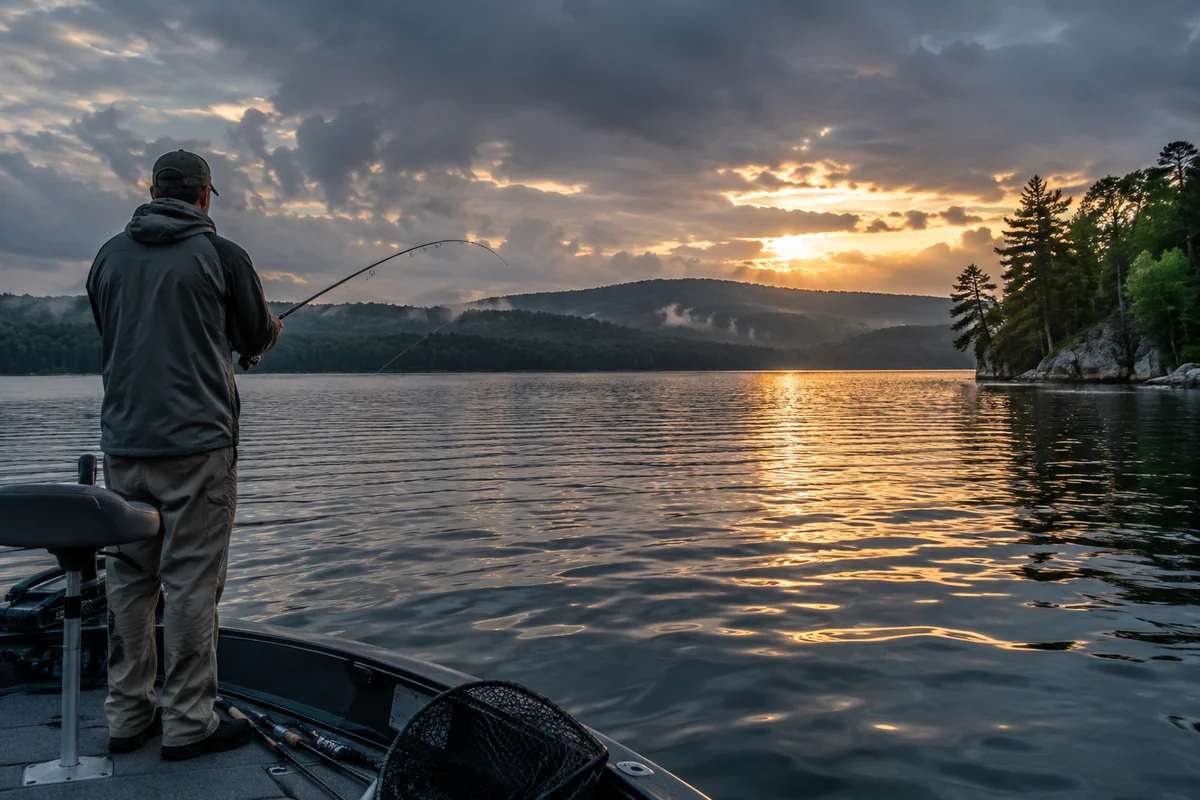
Walleye often feed more comfortably in low light, so dawn, dusk, and cloudy periods are worth testing. That does not mean midday fishing is futile: fish may be deeper, near cover, or responding to forage. Wind can push bait and create useful drift conditions, but strong wind also makes boat control and safe navigation harder. Choose a protected area or stop if conditions exceed your ability and equipment.
In stained water, a larger profile or stronger vibration may help a fish locate a lure; in clear water, a more subtle presentation may be appropriate. Treat these as experiments. Observe water clarity and forage, then change only one aspect so you can tell whether the adjustment helped.
Set the hook, handle fish responsibly, and follow regulations
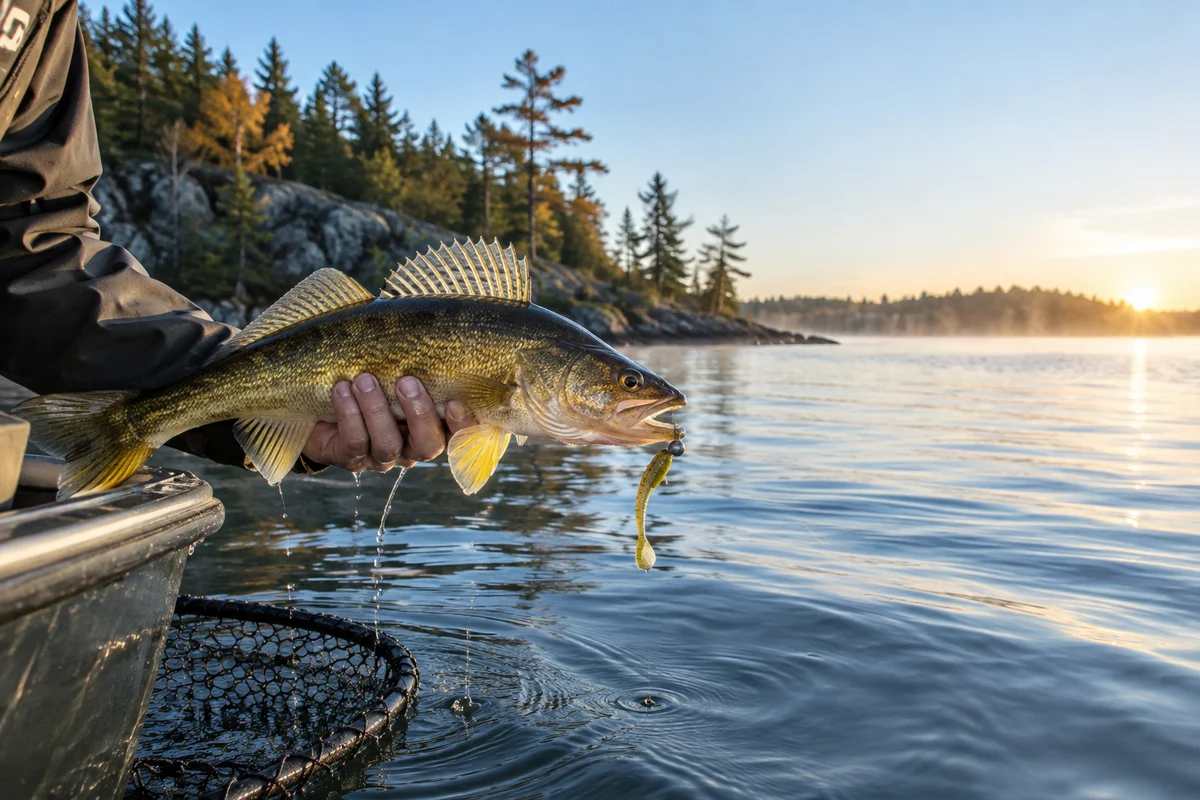
When you feel a bite, maintain contact and respond smoothly rather than making an uncontrolled swing. Keep a landing net available when appropriate. Wet your hands before handling a fish, support its body, and minimize time out of water if you intend to release it. Use tackle strong enough to avoid unnecessarily prolonged fights. If a fish is deeply hooked or injured, follow local guidance on humane handling and harvest rules.
Walleye seasons, size limits, possession limits, bait rules, and special waterbody restrictions vary by jurisdiction and may change. Check the current regulations from the relevant state, provincial, tribal, or territorial authority before fishing. Also verify access rules, boating requirements, and any restrictions on live bait or transport. General advice cannot replace the rules for the water you are actually fishing.
A practical takeaway
To catch walleye, identify a seasonal location, choose a presentation you can keep in the target zone, and search systematically. Start with structure and depth; then tune speed, lure profile, and color to the conditions. Keep safety and local regulations part of the plan, and treat each outing as a chance to learn how that particular waterbody behaves.
For more, explore our walleye fishing fishing freshwater guides.
Frequently asked questions
What is the easiest way to start catching walleye?
Begin with a mapped point, break, or other depth transition and fish a jig or moving lure at a controlled depth. Change one variable at a time and move if the area shows no signs of fish.
Are walleye easier to catch at night?
Low light can encourage walleye to feed in shallower water, but night fishing is not universally better. Location, season, forage, weather, and safety conditions all affect results.
What depth should I fish for walleye?
There is no single best depth. Check the season, structure, and observed fish or forage, then test a defined depth band and adjust as conditions change.
What lure should I use for walleye?
A jig is a versatile starting choice, while crankbaits, blade baits, and other presentations can suit different conditions. Choose a lure you can keep in the fish’s likely depth zone.
What should I check before keeping a walleye?
Consult the current local fishing regulations for season dates, size and possession limits, and any waterbody-specific rules. Regulations differ by jurisdiction and can change.
Sources & further information
Consult these primary sources for current regulations, technical information and local guidance.