Choosing Walleye Lure Colors for Light, Water, and Conditions
The best walleye lure colors depend less on a universal rule than on visibility and contrast. Use a simple starting framework, then change one variable at a time as light, water, and depth shift.
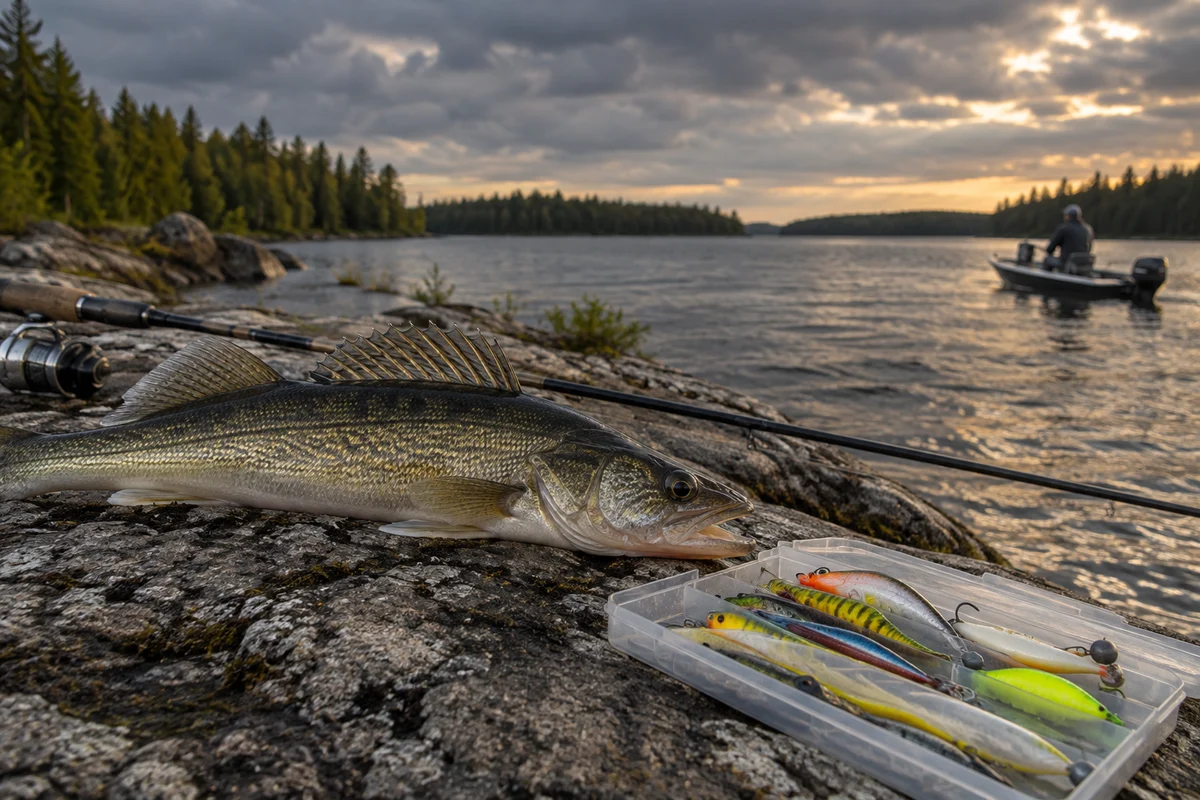
Color can help you make a lure easier for a walleye to notice, but there is no single shade that consistently outperforms the rest. Choosing walleye lure colors is best treated as a practical visibility decision: consider how much light reaches the fish, how clear the water is, and whether your lure needs to stand out or blend into the forage. Start with a small set of contrasting options, observe the conditions, and change colors methodically rather than cycling through a whole tackle box at random.
Color is only one part of presentation. Depth, speed, lure action, location, and the fish’s willingness to feed can matter just as much—or more. A bright lure cannot compensate for fishing above the fish, and a subtle pattern will not solve a problem caused by an unsuitable retrieve. For related approaches, see our guides to drift jigging for walleye and slip bobbers for walleye fishing.
What does lure color actually change?
A lure’s color affects its appearance to an angler and, depending on light and water, may affect how noticeable it is to a fish. Underwater, colors do not remain equally vivid at every depth. As light is absorbed and scattered, some hues lose brightness or shift in appearance; suspended sediment and algae can further alter contrast. The exact effect varies with water, weather, depth, and the lure’s finish, so color charts should be treated as rough guides—not guarantees.
Think first about contrast. A dark silhouette may be easy to see against a bright surface or open water. A light or vivid lure may be more noticeable against a darker background or in stained water. Natural patterns can look convincing when forage is visible and conditions allow detail to show. Metallic or reflective finishes can flash when light reaches them, but that flash can be less apparent in deep, dim, or heavily stained water.
A useful distinction is between a lure that looks natural up close and one that can be found from a distance. Neither is always better. If fish are actively feeding, a distinct profile or flash might help. If they appear cautious in clear, bright conditions, a restrained pattern can be a sensible first choice.
A simple starting framework for walleye lure colors
Use this table to choose a first color family, not to predict a guaranteed bite. Keep the lure type and presentation stable while you evaluate a color change.
| Conditions | First color direction | What to watch |
|---|---|---|
| Clear water and bright skies | Natural, translucent, or forage-like patterns | Whether fish follow without striking; consider a subtler profile |
| Clear water and low light | Natural pattern with a visible accent, or a modest flash | Whether the lure remains easy to track at the fishing depth |
| Stained water | Strong contrast or a brighter solid pattern | Whether fish can locate the lure; avoid assuming brighter is always better |
| Overcast skies or dusk | A distinct silhouette or contrast against the surroundings | Whether visibility changes as ambient light falls |
| Deep water or a lure near bottom | High-contrast pattern or a finish with noticeable profile | Depth and lure control; color alone cannot restore lost light |
| Unknown conditions | Start with a familiar natural pattern and one contrasting alternative | Compare results over similar locations and presentations |
The categories intentionally overlap. “Stained” water ranges from a slight tint to conditions where visibility is sharply reduced, and a lure that stands out in one lake may disappear against another background. If you can see the lure only at close range beside the boat, that does not tell you exactly how a walleye perceives it at depth—but it can remind you that the lure’s appearance changes with distance and light.
How to adapt color to water clarity
In clear water, detail and subtlety may be more visible, particularly in shallow water or bright conditions. Start with a pattern that resembles common local forage, if you know what fish are feeding on. If fish follow the lure but turn away, try a less conspicuous shade or a smaller visual accent while keeping the same depth and speed. A follow is a clue, not proof that color is the issue; the fish may also be responding to speed, action, or the route of the lure.
In stained water, a stronger silhouette or more obvious contrast is a reasonable experiment. Try a vivid or solid pattern, but compare it with a dark option: both can create contrast, depending on the background. In heavily colored water, visibility may be limited enough that vibration, movement, and accurate placement matter more than subtle color distinctions. Keep the lure in the strike zone and make it detectable through its profile and action.
If you fish water with changing clarity—such as a river after rain—reassess as conditions change. A color choice that made sense in clear water may no longer be the easiest to locate after runoff. Check current local conditions and follow any applicable advisories, especially where water conditions or access have changed.
How light and depth affect your choice
Bright midday light, cloud cover, shade, and dusk all change the light available to a lure. Depth adds another variable: the deeper the presentation, the less useful it is to assume a surface color will look the same below. Rather than trying to memorize a universal color-depth chart, use the light at the fishing depth as a reason to simplify. In low light or deep water, favor a pattern with a readable outline or contrast; in clear, brighter shallows, a natural or more restrained pattern may be a useful starting point.
At night, visibility and lure detection involve more than color. A clear silhouette and a controlled presentation can matter, while local regulations and safe navigation should guide when and where you fish. Our guide to night fishing walleyes covers the broader considerations.
A reflective finish can be useful when there is light to reflect, but do not assume metallic means visible in every condition. Likewise, glow or fluorescent finishes should be evaluated according to the product’s actual design and the conditions; do not rely on a label as a promise of fish response. Manufacturers’ descriptions can clarify what a finish is intended to do, but field results remain conditional.
A practical color-change checklist
When a lure is not producing, work through this sequence before changing everything at once:
- Confirm depth and location. Are you presenting near the fish or likely holding area? If not, correct that first.
- Check water and light. Note clarity, cloud cover, time of day, shade, and approximate depth.
- Choose a contrast direction. Try natural/subtle versus bold/high-contrast, rather than swapping among nearly identical shades.
- Hold the presentation steady. Keep lure type, retrieve speed, and depth as consistent as practical while testing color.
- Give each option a fair comparison. Fish similar water or repeat a drift before deciding that a color helped or hurt.
- Record the context. Note color, clarity, light, depth, and presentation. A brief log helps distinguish a pattern from a memorable but isolated catch.
If you have a partner, you can compare two colors while using similar lures and presentations. Keep the comparison fair: different depths, speeds, or locations can easily explain different results. One fish is not a reliable color test, and a slow period does not prove a shade is wrong.
Match color to the lure and presentation
Color does not operate separately from lure shape and movement. A compact jig, a swimming hard bait, and a blade bait create different profiles and signals. A high-contrast pattern on a rapidly moving lure may be more conspicuous than the same colors on a small, subtle presentation. Consider the whole package: silhouette, flash, vibration, speed, and how long the lure stays in view.
When choosing a jigging lure, begin with a manageable selection that offers a natural pattern, a dark or strong-contrast option, and a brighter or more reflective alternative. Then adjust weight or lure style as needed to maintain control at the depth you are fishing. For a focused look at another presentation, read our article on the jigging Rap for walleye. The same decision-making principle applies: make purposeful comparisons and avoid attributing every change in catch rate to paint color.
Common mistakes to avoid
Treating a color rule as universal. Local forage, water color, depth, and light differ. A pattern that works on one outing may not be the best starting point elsewhere.
Changing too many variables. If you switch lure, depth, speed, and color at once, you will not know which change mattered. Establish a productive presentation first, then test color.
Overvaluing the shade name. “Perch,” “gold,” or “glow” can describe different finishes across manufacturers. Look at the actual lure and its contrast rather than assuming names mean identical colors.
Ignoring fish location. Color cannot make an out-of-zone lure effective. Find likely structure or forage and maintain the intended depth before fine-tuning appearance.
Mistaking coincidence for a pattern. Conditions can change while you fish, and a single catch is not proof that one color is superior. Track repeated results under comparable conditions.
The takeaway
Choose walleye lure colors by asking what will be visible in the water and light you are fishing, then test a clear contrast—natural versus bold, or light versus dark—without changing the rest of your presentation. Treat every color choice as a starting hypothesis. Observing conditions, controlling depth, and making fair comparisons are more dependable than any one “best” color list.
For more, explore our walleye fishing fishing freshwater guides.
Frequently asked questions
What color lure is best for walleye?
There is no universal best color. Start with a natural pattern in clear water or a contrasting pattern in stained or low-light conditions, then compare options while keeping depth and presentation steady.
Are bright lures better in stained water?
They can be easier to notice, but a dark silhouette may also create strong contrast. Test a bright and a dark option in the actual water rather than relying on a fixed rule.
Does lure color matter at night for walleye?
It can affect silhouette and contrast, but presentation, depth, and safe, lawful access matter too. Choose a lure that is easy to control and assess in the conditions.
How many walleye lure colors should I carry?
A compact selection is enough to test broad differences: a natural pattern, a dark or high-contrast option, and a brighter or reflective alternative. Add colors based on local conditions and experience.
Sources & further information
Consult these primary sources for current regulations, technical information and local guidance.