Giant Wels Catfish: Size, Habitat, and Responsible Angling
A practical guide to the giant wels catfish, from its European freshwater habitat and feeding ecology to responsible handling and evaluating size claims. Learn what anglers can—and cannot—conclude from a reported catch.
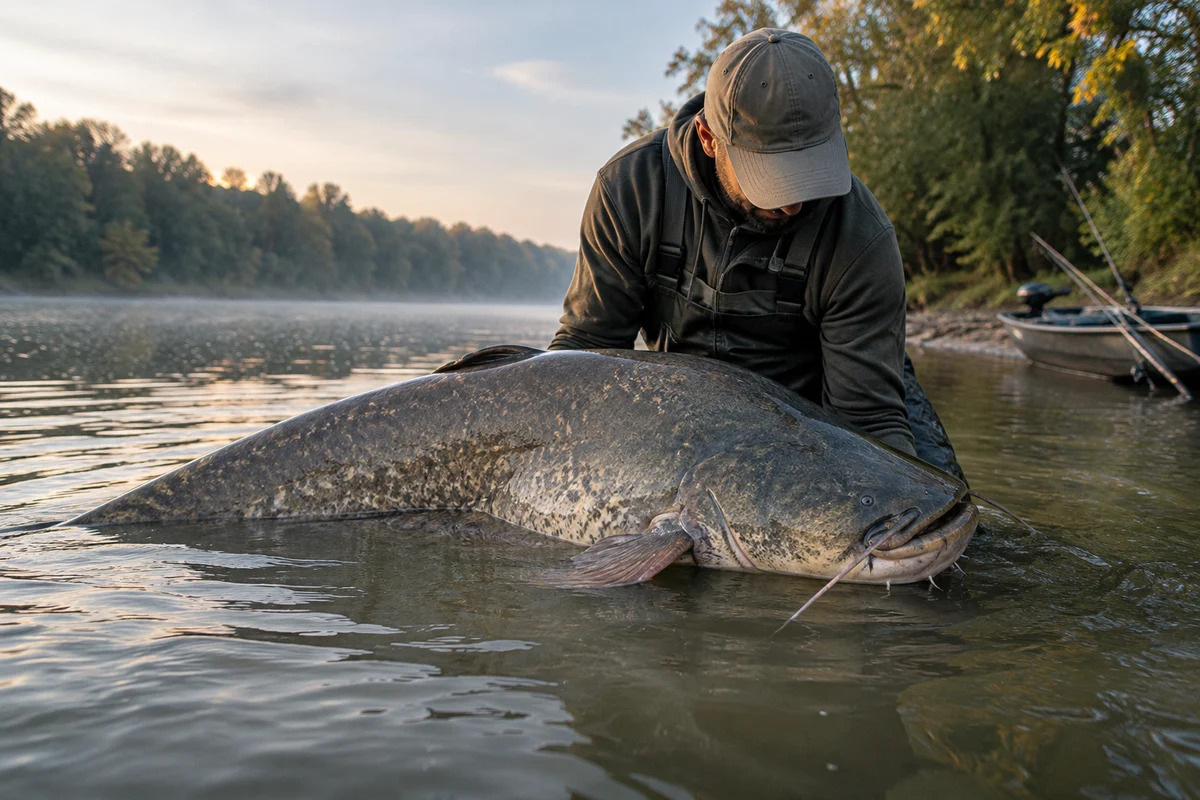
The giant wels catfish is one of Europe’s largest freshwater fish, but the phrase can mean more than a particularly large individual: it can refer to the species itself, Silurus glanis, or to an exceptional fish whose size needs careful documentation. Knowing the difference helps anglers interpret dramatic reports, understand where the species lives, and make sound decisions around fishing and fish welfare. As with any large catfish, habitat, handling, and local rules matter more than a headline-sized claim.
What is a giant wels catfish?
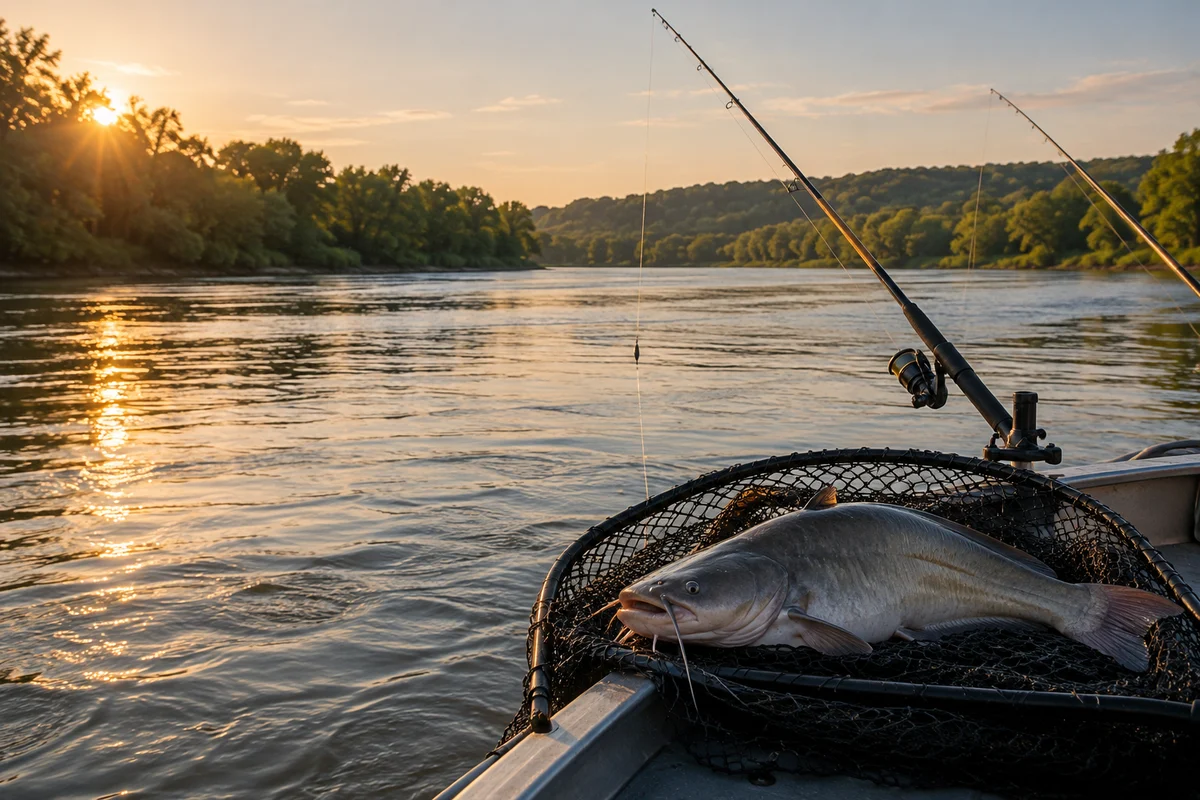
The wels catfish, also called the European catfish, is a large-bodied freshwater species native to parts of Europe and western Asia. Its broad head, prominent mouth, whisker-like barbels, and long, scaleless body make it recognizable. “Giant” is a descriptive term, not a separate species or a standardized size class. A report should identify the fish as a wels catfish and provide verifiable measurements before its size can be meaningfully compared with other catches.
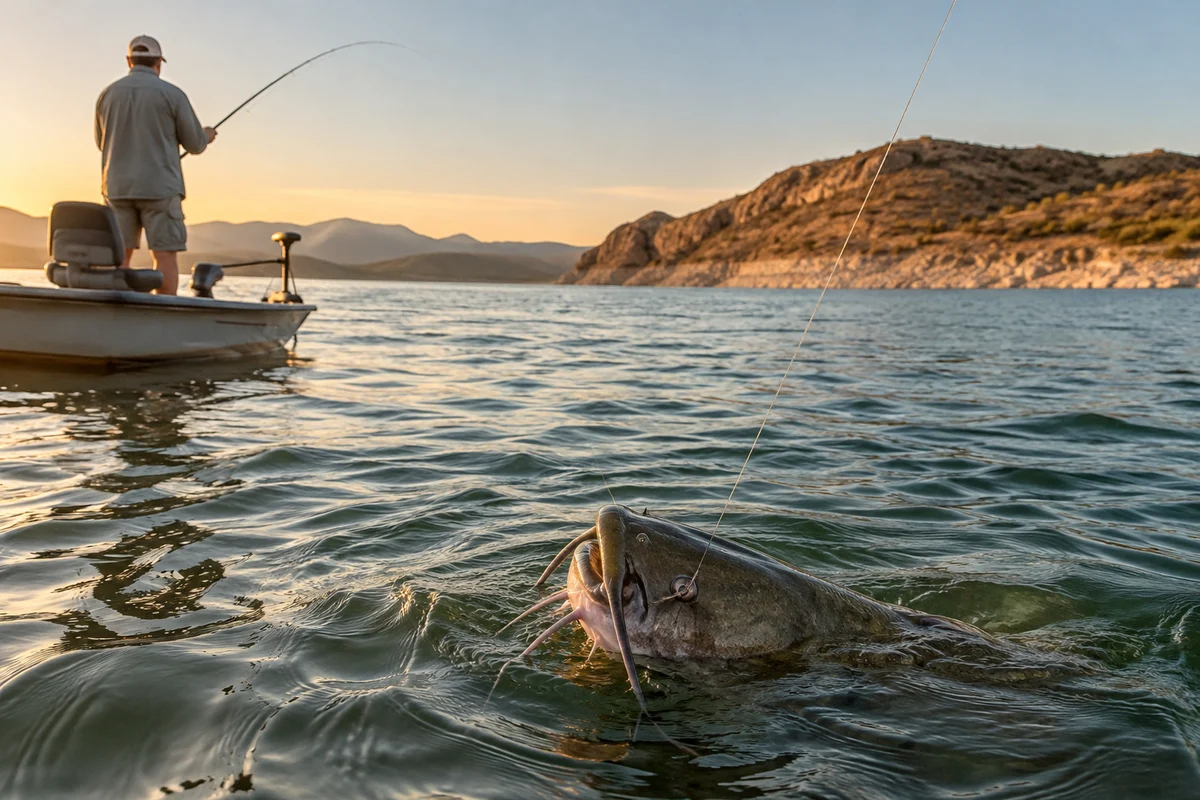
Wels catfish are predators, but their diet and behavior vary with their environment and the food available. Fish are important prey; they may also take other animals that they can capture. They often use cover, depth changes, and low-light periods, though there is no single schedule that applies in every water. A river’s flow, temperature, season, and prey activity all affect when and where fish feed.
For context on the broader family and practical freshwater approaches, visit the catfish-fishing hub. Its recommendations should not be treated as a species-specific substitute for local European regulations or guidance.
Where do wels catfish live?
Wels catfish occupy rivers, lakes, reservoirs, and connected waters. They are associated with substantial freshwater systems and can use a range of habitats, including deep channels, sheltered margins, submerged structure, and areas where prey gathers. Conditions differ considerably between a clear lake, a slow river reach, and a large, turbid river, so a location that holds fish in one system may be unproductive in another.
The species has also been introduced beyond parts of its original range. Introduced populations can raise ecological and management questions, and rules differ by country, waterbody, and sometimes by species status. Do not assume that a fish may be transported, released, or retained simply because those actions are allowed elsewhere. Check the responsible fisheries or environmental authority for the specific water before fishing.
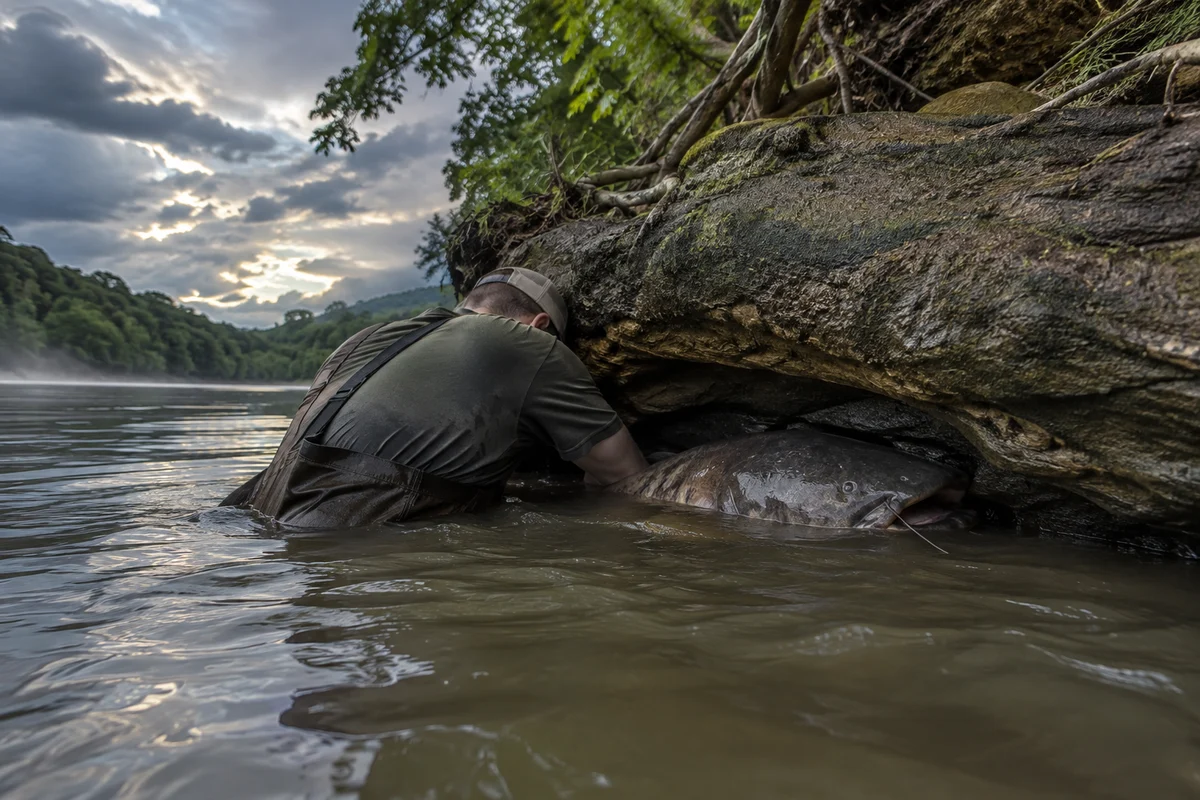
A useful location plan begins with maps and regulations, not a claim about a “secret” spot. Look for public information about depth, current, access, and seasonal restrictions. When fishing a river, account for changing water levels and safe access to banks. Avoid entering water or climbing unstable structures to reach a suspected holding area.
How to understand size claims
Large-fish stories are memorable, but a photograph alone rarely establishes a record. Perspective, lens distance, body posture, and the absence of a scale can all distort apparent size. Length and weight are different measures, and a fish’s condition or measurement technique can affect comparisons. Some organizations recognize records only when specific documentation and procedures are followed.
| What a report provides | What it can support | What remains uncertain |
|---|---|---|
| A photograph without a scale | The fish was present and its general appearance | Exact length, weight, date, and location |
| A stated length with a visible measuring reference | A more checkable length estimate | Whether the tool is accurate or the fish was measured consistently |
| A weight and a documented scale reading | A more useful weight claim | Scale calibration, handling conditions, and official eligibility |
| Independent witnesses and complete documentation | Stronger verification for an organization’s review | Whether the catch meets that organization’s current rules |
For a record claim, consult the official recordkeeper and its current rules. Do not repeat an unverified number as an established record. A responsible account distinguishes “reported,” “documented,” and “officially recognized,” and gives the organization and category when known. Record categories may be divided by method, jurisdiction, or other criteria, so apparently competing claims can refer to different things.
Planning a responsible fishing trip
Before fishing, establish that the species and method are legal at the chosen water. Check seasons, permits, gear restrictions, access rules, and any special requirements for non-native or protected species. If guidance is unclear, contact the local fisheries authority rather than relying on an old forum post or a rule from another region.
A simple decision framework helps keep preparation practical:
- Confirm the water and rules. Identify the exact waterbody and jurisdiction; check current official guidance and access conditions.
- Match the approach to conditions. Consider current, depth, structure, likely prey, weather, and a safe place to land a fish. Adapt to local advice rather than assuming one method works everywhere.
- Plan fish care before casting. Decide how you will minimize time out of water, keep the fish supported, and release it promptly where release is legal and appropriate.
- Set a stop condition. Stop if rising water, heat, poor footing, equipment problems, or fatigue make landing and handling unsafe.
For general technique context, see how to catch catfish and catfishing tips and techniques. Those articles address broad catfish angling; local rules and the welfare needs of a very large fish should guide any adaptation.
Handling a large catfish with care
A large fish can be difficult to control, and rough handling can injure both the fish and the angler. Prepare a clear landing area and suitable, fish-safe handling equipment before the fish is brought close. Keep hands and gear away from the gills and eyes, support the fish’s body rather than suspending it by the jaw, and avoid dragging it over dry or abrasive ground. Do not attempt a lift that exceeds your ability or requires an unsafe position.
Keep the fish in the water as much as possible. If a photograph or measurement is permitted and can be completed safely, have the equipment ready first and keep the process brief. Wet hands and a wet, supportive surface can reduce damage to the fish’s protective coating. If the fish appears exhausted or injured, follow local fisheries guidance and prioritize its welfare over a photograph or record attempt.
Catch-and-release rules are not universal, and release may not be appropriate or lawful everywhere. Read the current rules for the water, including any requirements for invasive species. Where release is allowed, a careful, prompt return to the water is generally preferable to prolonged handling. The catch-and-release catfish guide offers additional general handling considerations.
What anglers should know about the species’ impact
Wels catfish can be part of native freshwater ecosystems, while populations outside their native range may be managed differently. Their ecological effects depend on the waterbody, food web, population, and local history. Broad claims that the fish is either harmless everywhere or damaging everywhere oversimplify a complex issue.
Anglers can help by following official reporting and harvest requirements, not moving live fish or water between systems, and avoiding the release of bait or aquarium species. If a fish is caught in a jurisdiction with special rules, follow those rules even if they differ from familiar practice. The relevant national or regional environment agency is the best source for current species status and management advice.
A useful way to read the next giant-fish headline
Ask four questions: Is the species identified clearly? Is the measurement documented? Is the claim tied to a named record category and current rules? Does the account explain the fish’s handling and disposition? If those details are missing, treat the size as unverified rather than repeating it as fact.
The giant wels catfish is compelling because it combines unusual scale with a real, varied freshwater ecology. A good account does more than celebrate size: it identifies the fish accurately, respects uncertainty, checks the rules, and puts fish welfare first. That approach makes the story more useful whether you are planning a trip, researching the species, or evaluating a record claim.
Frequently asked questions
Is “giant wels catfish” a separate species?
No. It usually describes a large wels catfish, *Silurus glanis*, rather than a distinct species or official size category.
Where do wels catfish live?
They live in freshwater rivers, lakes, reservoirs, and connected waters across parts of Europe and western Asia; introduced populations occur elsewhere.
How can I verify a giant wels catfish record claim?
Check the official recordkeeper’s current rules and look for documented measurements, supporting evidence, and the exact record category. A photo alone does not establish a weight or record.
Can I release a wels catfish after catching it?
That depends on the waterbody and local rules, especially where the species is non-native. Check official regulations before fishing and follow applicable handling or reporting requirements.
Sources & further information
Consult these primary sources for current regulations, technical information and local guidance.