Crappie Fishing Tips: Find Fish and Get More Bites
A practical guide to locating crappie, choosing a presentation, and adapting to changing water, weather, and seasons. Start with structure and depth, then let fish response guide each adjustment.
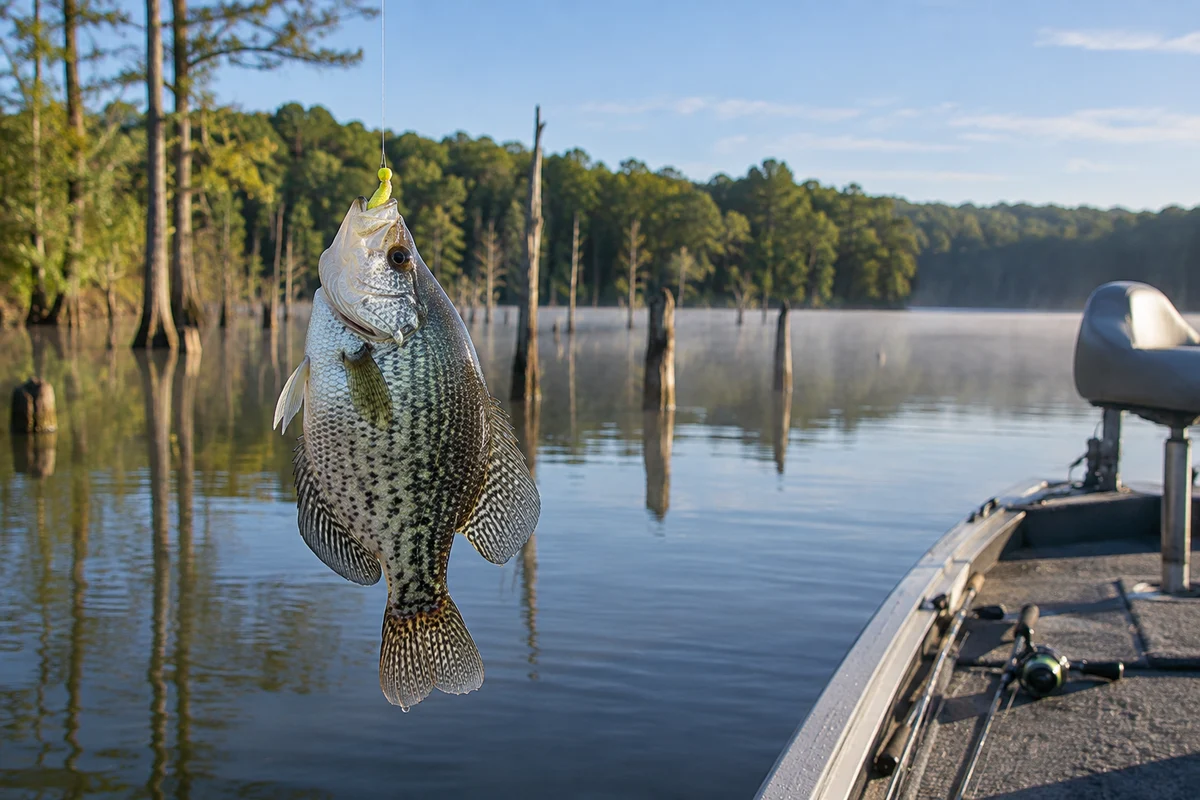
Crappie fishing tips work best when they help answer one question at a time: where are the fish, what depth are they using, and will they respond to a moving lure or a slower presentation? Crappie often gather around cover or bait, but their location can change with season, water clarity, weather, and fishing pressure. Rather than treating one lure or depth as a year-round answer, use a repeatable search plan and adjust from what the water tells you.
Start with seasonal location, not a favorite lure
In spring, crappie may move toward protected shallows to spawn, but timing varies by region and year. Water temperature can provide context, not a universal switch: cold fronts, wind, and local conditions may delay or interrupt movement. Look for gradual transitions between deeper water and shallow flats, including creek channels, points, submerged vegetation, and docks where access is legal.
During summer, fish commonly use deeper or shaded areas, especially when bright sun warms shallow water. In fall, baitfish movement can pull crappie toward creek arms and other feeding areas. In winter, they may hold in deeper basins, channel edges, or submerged cover. These are starting patterns, not guarantees. A nearby lake can behave differently from another because of depth, water clarity, forage, and weather.
Before leaving home, check the current regulations for the water you plan to fish. Seasons, size limits, possession limits, and permitted methods vary by jurisdiction and may change. State wildlife agencies are the reliable source for local rules; the U.S. Fish and Wildlife Service provides broader information about fisheries and aquatic habitat.
Find likely cover and confirm the depth
Use a lake map or chart to identify channel bends, creek mouths, points, weed edges, and submerged humps. These features give you places to begin, but they do not prove fish are present. On the water, look for visible cover such as brush, standing timber, docks, and vegetation. If you use sonar, treat it as a locating aid rather than a fish-identification guarantee; suspended marks may be bait or other species.
Crappie can suspend above bottom instead of sitting directly in cover. When you find fish or promising structure, note the depth and the relationship to nearby cover. Then repeat that presentation at similar features. If the first area is empty, move rather than spending too long trying to make unproductive water work.
A simple search sequence keeps the day organized:
- Choose a seasonal area, such as a protected creek arm or a channel edge.
- Check a small group of likely features rather than fishing the entire shoreline at random.
- Test a few depths, starting near visible cover or marks and moving above or below them.
- Once you get a bite, record the depth, cover type, and presentation.
- Check a similar nearby feature to see whether the pattern repeats.
Choose a presentation you can control
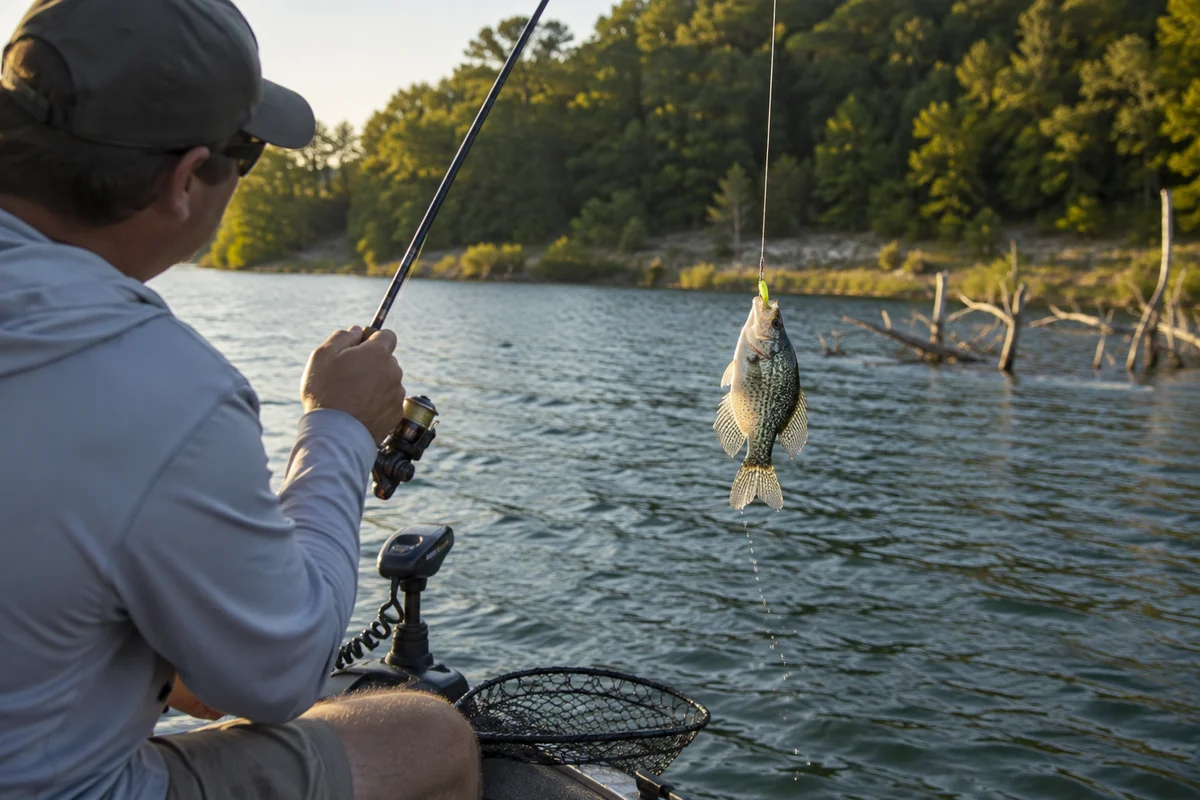
Small jigs are versatile because you can cast them, swim them steadily, or work them slowly around cover. The important part is maintaining contact with the lure and knowing roughly where it is. If fish are suspended, count the lure down consistently and repeat the same retrieve. If you are fishing close to brush, a vertical presentation can reduce snags, but keep enough distance to avoid disturbing the area.
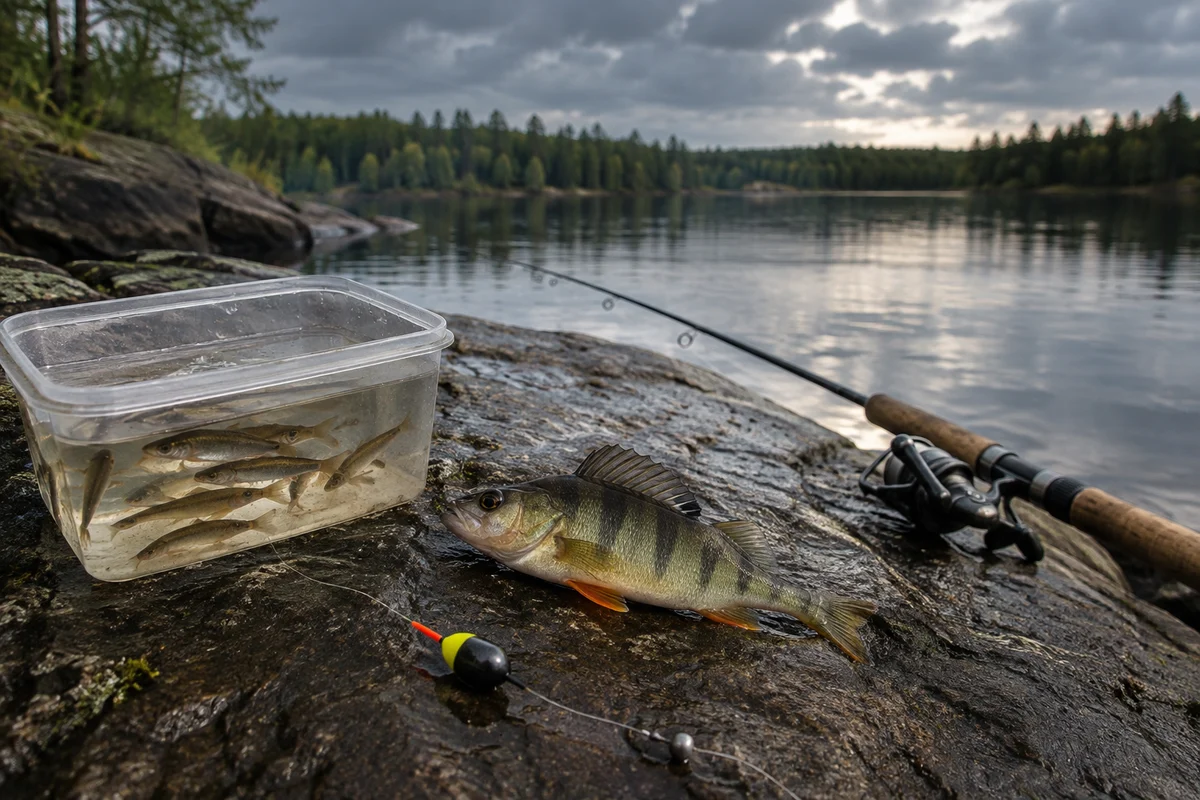
A minnow under a float is another useful option, particularly when fish are holding at a fairly consistent depth or a slow presentation is needed. Set the float so the bait fishes near the depth where bites or marks occur, then adjust in small increments. Use tackle and hooks suited to local regulations and the fishery, and handle live bait responsibly. For more on choosing that approach, see our guide to crappie fishing with minnows.
Color is a variable, not a rule. In clear water or bright conditions, subtle colors may be less conspicuous; in stained water, a more visible contrast can help you track a lure. These are practical experiments, not fixed laws. Change one factor at a time—color, size, speed, or depth—so you can tell what affected the response. For a closer look at lure options, read our overview of crappie jigs.
| What you observe | First adjustment to try | What to watch for |
|---|---|---|
| Marks or bites at one depth | Hold the lure at that depth | Whether bites repeat on nearby cover |
| Fish follow but do not bite | Slow down or pause briefly | Whether a pause triggers a response |
| No contact around visible cover | Change depth, then move to similar cover | Whether the feature is empty or the fish are suspended |
| Snags occur repeatedly | Keep the lure above cover or try a float | Whether control improves without losing contact |
| Conditions change after wind or a front | Recheck protected and deeper areas | Whether fish shifted rather than stopped feeding |
Adjust for wind, light, and water clarity
Wind can make boat control and casting less comfortable, but it can also push surface food and affect where fish feed. If a bank is exposed, try a protected side or a point where you can maintain control. Do not fish beyond your ability to keep the boat or shoreline position safe. On small craft, wear a properly fitted personal flotation device and account for changing weather.
Light and clarity influence how far fish can see and how easily you can detect a bite. In clear water, approach quietly, avoid casting a shadow over shallow fish, and consider longer casts. In stained water, a float or a lure with visible contrast can make tracking easier. If a lure becomes hard to see, that does not necessarily mean fish cannot find it; use controlled retrieves and watch the line or float for subtle changes.
Use a kayak or bank access thoughtfully
A kayak can reach pockets and shorelines that are difficult to approach from a larger boat, but quiet movement and safe positioning matter more than covering water quickly. Plan how you will land or release fish before fishing around branches, docks, or tight banks. Keep clear of navigation channels and respect private property. Our related piece on crappie fishing from a kayak explores access and positioning from that perspective.
From shore, focus on accessible points, piers where fishing is allowed, and openings in vegetation. A longer cast can reach a drop-off or submerged cover, but avoid casting into areas where people are swimming or boating. If a spot is crowded, give other anglers room and move to another feature rather than repeatedly casting across their lines.
Handle fish and keep useful notes
Crappie can be delicate, especially in warm water. Keep fish intended for release in the water when practical, minimize handling, and use wet hands. If keeping fish, follow local limits and promptly place the catch in an appropriate environment. Do not assume a familiar rule still applies: verify current regulations before each trip.
A short fishing log can turn scattered observations into a useful pattern. Note the date, general area, weather, water clarity, approximate depth, cover, and presentation. Avoid treating one successful trip as proof that the same method will work everywhere. Repeated observations across different conditions are more informative.
A practical plan for a slow day
When bites stop, resist changing everything at once. First, check whether the fish may have shifted depth. Then change retrieve speed or pause length. Next, test a different color or presentation. If those changes do not help, move to comparable structure in another part of the lake. This order keeps the search efficient and makes each result easier to interpret.
For broader panfish information and related seasonal approaches, visit the freshwater panfish fishing hub. The most dependable crappie fishing tips are not secret formulas: they are a disciplined way to locate fish, make controlled adjustments, respect local rules, and learn from the conditions on each outing.
Frequently asked questions
What is a good starting depth for crappie?
There is no universal depth. Begin near seasonal cover or fish marks, then test above and below that level until you find consistent contact.
Are jigs or minnows better for crappie?
Either can work. Jigs are flexible for searching and controlling depth; minnows can suit a slower presentation. Let conditions and fish response decide.
How does weather affect crappie fishing?
Wind, light, and fronts can change comfort, visibility, and fish location or activity. Recheck depth and protected areas instead of assuming the fish have disappeared.
What regulations should I check before crappie fishing?
Check the current rules for the specific state or waterbody, including seasons, size and possession limits, and permitted methods.
Sources & further information
Consult these primary sources for current regulations, technical information and local guidance.