Where to Find Fish: Read Water, Weather, and Seasonal Clues
Fish location is rarely random: season, water conditions, food, and structure narrow the search. Use this practical framework to identify promising water, adjust when conditions change, and fish responsibly.
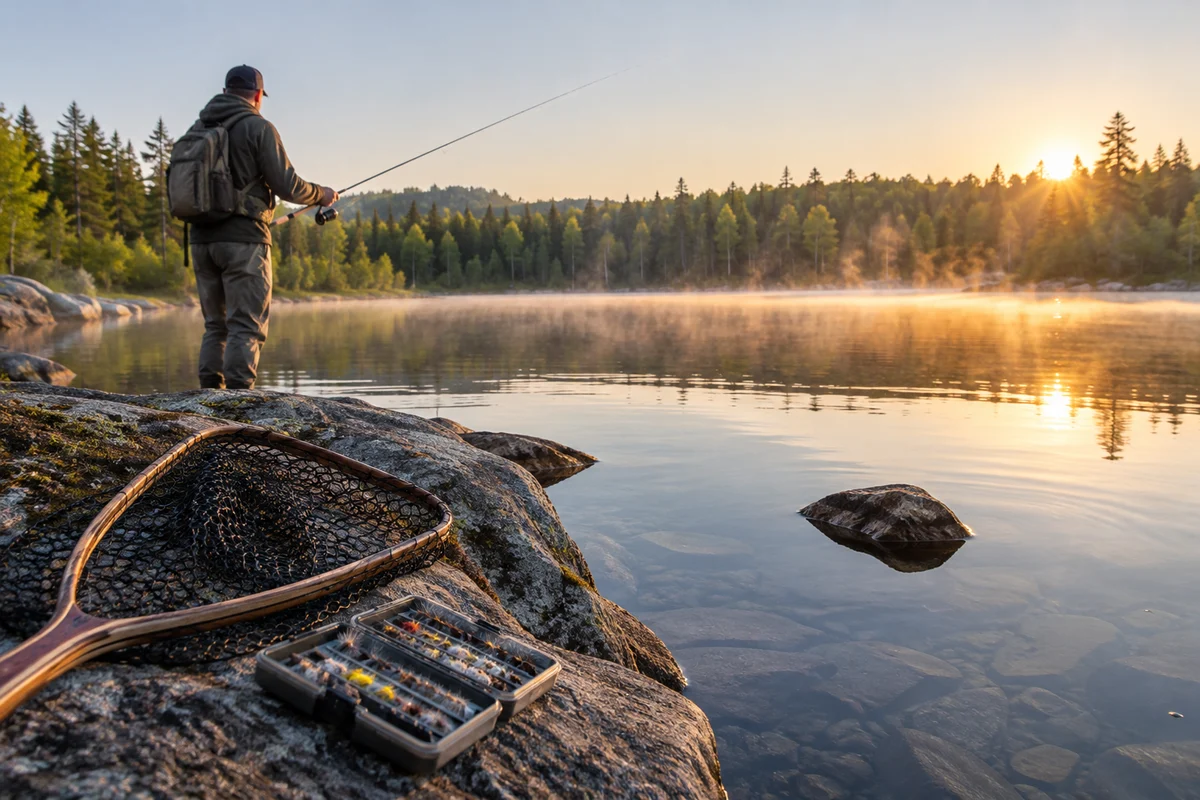
Finding fish starts with a better question than “Where should I cast?” Ask instead: what conditions would make a fish comfortable and give it access to food right now? Where to find fish depends on season, water temperature, oxygen, available prey, depth, cover, and current. These clues apply to ponds, lakes, rivers, and reservoirs, though the details vary by species and region.
No map, fishfinder, or rule of thumb can guarantee a bite. Fish move, waters differ, and an apparently ideal spot may be empty. The goal is to make a reasoned first choice, observe what the water tells you, and change one variable at a time.
Start with the season, not a favorite spot
Seasonal patterns provide a useful first approximation because fish respond to changing water temperature, daylight, and food availability. They are not a fixed calendar: a cold spring, a heat wave, a deep lake, or a warm-water discharge can shift the pattern substantially.
In spring, many freshwater fish move toward warming, shallower areas, especially protected coves and flats near deeper water. These places can warm sooner and offer food or spawning habitat. Respect closed seasons, spawning restrictions, and any rules against disturbing nests. A fish visible in shallow water is not an invitation to target it if regulations or conservation guidance say otherwise.
During summer, fish may use deeper water, shade, vegetation, inflows, or places with better oxygen. Early morning and evening can bring some species shallower to feed, but the pattern depends on weather and waterbody. In the heat of the day, look for a route between feeding areas and refuge rather than assuming the deepest point is always best.
In fall, cooling water and changing prey movements can concentrate fish near bait, points, channels, and other travel routes. In winter, activity often slows in cold regions, and fish may hold near stable depths or cover. Ice fishing has additional hazards; verify ice conditions locally and never treat a general thickness guideline as a guarantee of safety.
Read the water: depth, cover, and access
Fish use structure—underwater features such as points, drop-offs, channels, humps, and weed edges—as routes and feeding areas. Cover means something that can conceal or protect them, including aquatic plants, fallen trees, rocks, docks, and overhanging vegetation. A productive-looking place often combines both: a drop-off beside a weed edge, for example, or a current seam beside a rock shelf.
Look for transitions. A gradual flat meeting a sharp break gives fish options as light, temperature, and feeding activity change. On a river, a slower pocket beside faster current can let fish hold with less effort while watching food drift past. On a lake, a point reaching into deeper water can connect shallow feeding grounds to a nearby refuge.
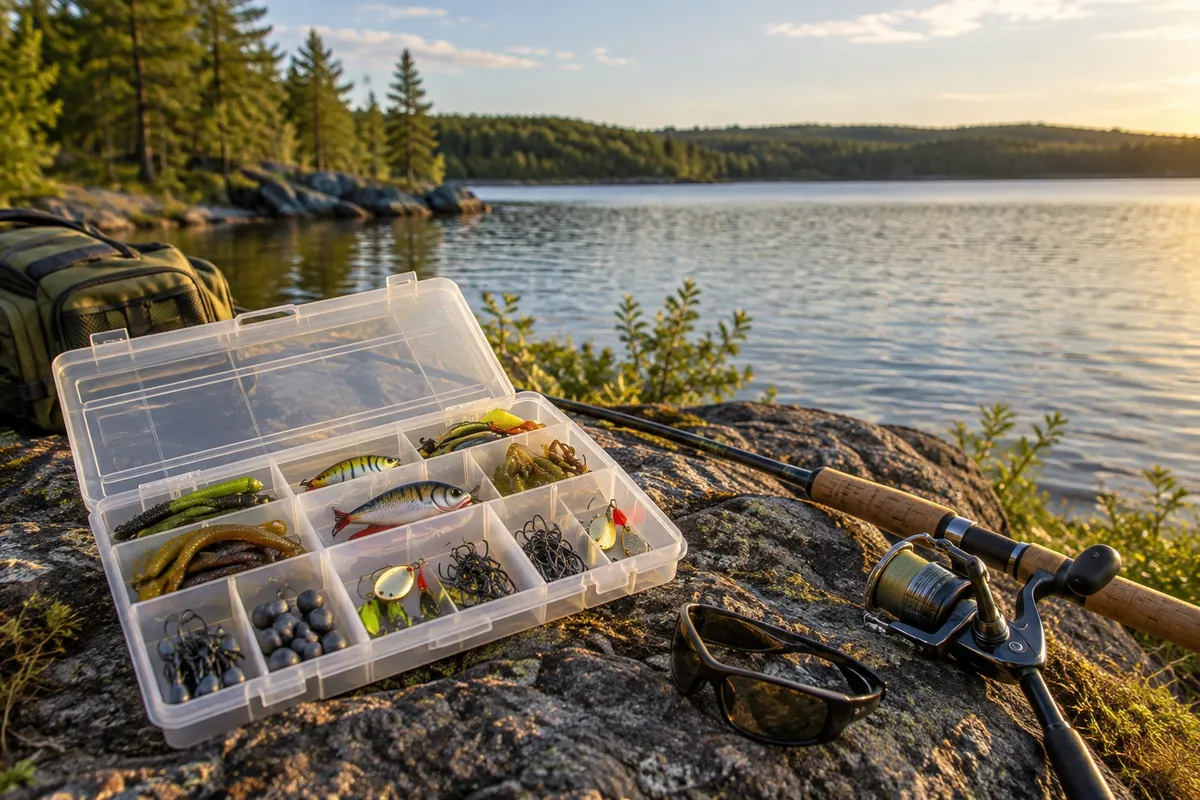
From shore, use visible clues: a change in bank slope, a creek mouth, a line of vegetation, shade, riprap, or a wind-facing bank. A pair of polarized sunglasses can help reveal shallow features in suitable light, but glare, depth, water color, and angle limit what you can see. Avoid trampling banks or entering sensitive vegetation to reach a speculative casting lane.
Use temperature, oxygen, and weather carefully
Temperature is a clue, not a universal fish-finding number. Different species have different preferences, and the same species may use different depths depending on season, oxygen, food, and acclimation. If you have a reliable thermometer, compare readings at a few accessible places or depths rather than treating one measurement as definitive.
Warm water holds less dissolved oxygen than cold water. In summer, that can make oxygen-rich inflows, wind-mixed areas, or plant edges worth checking, while some deep water may have poor oxygen. But a stream inflow can also be muddy, unusually warm, or otherwise unattractive; observe conditions rather than assuming every inflow is productive.
Wind can push surface food and small prey toward a bank, making a windward shore worth investigating. Strong wind can also make casting, boating, and wading unsafe. Choose a protected alternative when conditions demand it. After heavy rain, water may become stained, current may rise, and familiar access points may be hazardous. Check local advisories and avoid flooded banks and swift water.
A practical spot-selection framework
Use this sequence to choose a starting area, then move if evidence does not support your guess.
| Clue | What to look for | Useful first move |
|---|---|---|
| Season | Warming or cooling water; spawning restrictions | Compare shallow access with nearby deeper refuge |
| Structure | Points, channels, breaks, creek mouths | Cover the transition rather than only the feature’s center |
| Cover | Weeds, rocks, wood, shade, docks | Fish the outside edge first; avoid snagging or damaging habitat |
| Current or wind | Seams, eddies, windward banks, inflows | Start where food may collect, if conditions are safe |
| Signs of life | Baitfish, insects, birds feeding, surface activity | Approach quietly and test the nearby depth range |
| No response | No activity or bites after a deliberate presentation | Change depth, location, or pace—one at a time |
A simple checklist helps keep the search systematic:
- Confirm access, species regulations, closures, and weather.
- Identify one seasonal pattern that seems plausible for the waterbody.
- Choose a feature that connects food, cover, and a depth change.
- Begin with a quiet approach and make a few casts at different angles.
- If there is no sign, adjust depth or move to the next nearby transition.
- Note conditions and results so future trips build on observation, not guesswork.
Match the search to the waterbody
In a small pond, fish may relate to a limited number of features: the deepest basin, a weed edge, an inlet, or shade. Start by walking slowly and observing before casting. Repeatedly covering every shoreline section can be less useful than testing a few distinct habitat types.
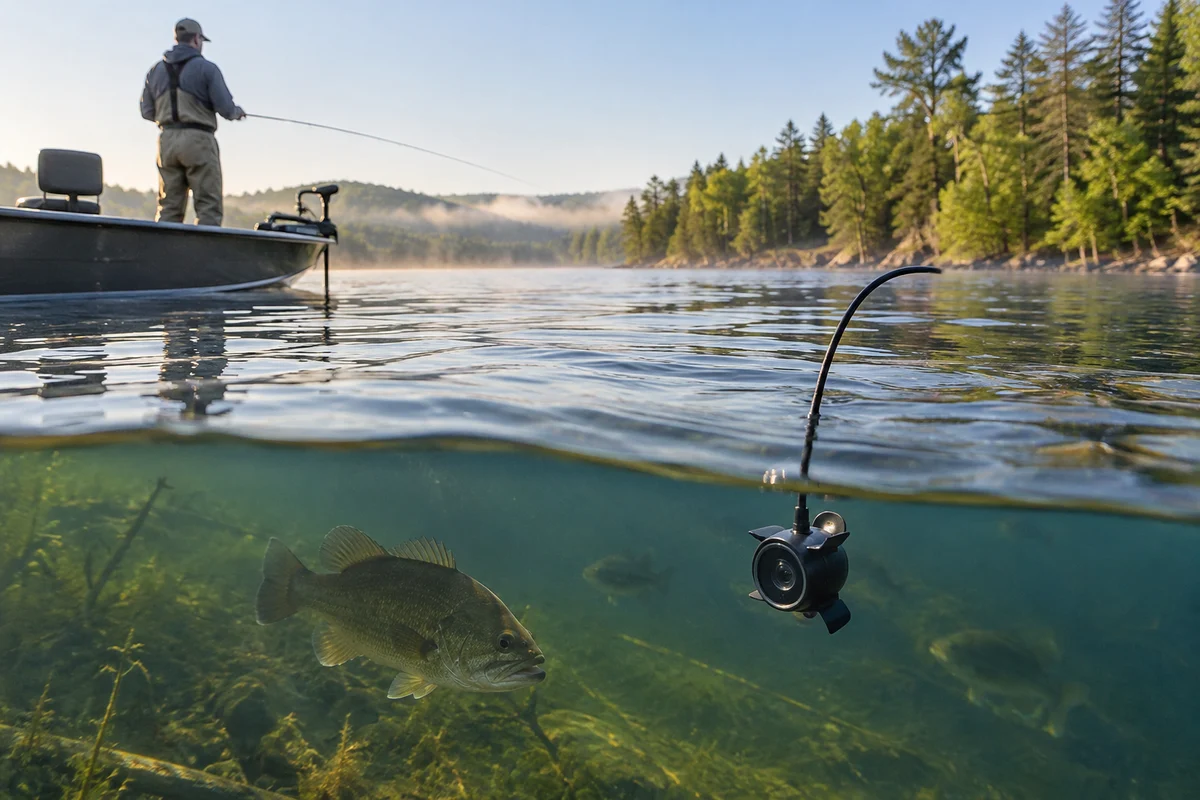
In a large lake or reservoir, prioritize structure that connects shallow and deep water. A map can help identify points, channels, and submerged rises; a fishfinder can show depth and bottom changes, but it does not identify every mark as a fish. Learn how to interpret its limits with this guide to fishfinder readings and trust. Verify uncertain details on the water rather than treating screen symbols as a catch forecast.
On rivers and streams, think in terms of current and energy. Fish may hold behind boulders, along seams, in pools, or near bends where food is carried past. Water level and flow can change these locations quickly. Wading requires particular caution: use appropriate footwear, avoid crossing fast or rising water, and turn back when footing is uncertain.
Let evidence refine the plan
Signs such as baitfish dimpling the surface, insects hatching, birds feeding, or a sudden change in water color can help narrow the search. They are clues, not proof. A surface disturbance might be wind or a non-target species; a quiet spot may still hold fish below. Keep a modest log of date, approximate conditions, water clarity, location type, and what worked. Over time, your own records can reveal patterns in a particular waterbody.
When fish are present but not responding, location may not be the only issue. Try a different depth, retrieve speed, or presentation before abandoning a promising area. If that does not help, move to a nearby feature. For lure choices around changing conditions, see our overview of the best spoon for fishing. The useful lesson is not that one lure works everywhere, but that presentation should suit the target species, forage, and water conditions.
Do not assume that a famous destination or a reported catch guarantees success. Access, conditions, and regulations matter as much as reputation; our guide to best fishing destinations offers a broader way to think about choosing water. For local regulations and species-specific guidance, consult the relevant state or provincial wildlife agency. For freshwater habitat and fish conservation information, begin with the U.S. Fish and Wildlife Service.
Keep fish and fishing places in good condition
Follow size, possession, season, and gear rules, which can differ by waterbody and change over time. Handle fish carefully, wet hands before contact, minimize time out of water, and use appropriate tackle to avoid unnecessarily prolonged fights. If releasing a fish, follow local agency guidance for that species and avoid handling it over rocks or dry ground.
Pack out line, hooks, packaging, and other waste. Clean, drain, and dry boats and equipment as required to reduce the spread of aquatic invasive species. Respect private property, posted closures, spawning areas, and other anglers’ space. Good location choices include the places you decide not to disturb.
The short answer: where to start
Look first for a seasonal route that joins feeding opportunity, cover, and a suitable depth. Then use wind, current, water clarity, and visible activity to rank nearby options. Test the spot methodically, change one factor at a time, and move when the evidence points elsewhere. That process will not make every trip successful, but it turns “Where are the fish?” into a question you can answer more reliably with each outing.
For more, explore our fishing tips fishing 2 guides.
Frequently asked questions
Where do fish usually go in a lake?
They often use transitions where depth, cover, and food meet, such as points beside deeper water or weed edges. The best location varies with species, season, oxygen, and weather.
Are fish always in deeper water during summer?
No. Some fish use deeper refuge, while others feed in shallow shade, vegetation, current, or wind-driven areas. Water temperature and oxygen can shift the pattern.
How can I find fish from shore without a fishfinder?
Look for bank-slope changes, points, creek mouths, vegetation edges, shade, current seams, and signs of prey. Observe quietly and test a few depths and angles.
Does a fishfinder show exactly where fish are?
It displays sonar information that requires interpretation; marks can be fish or other objects, and settings and conditions affect the display. Use it alongside habitat and on-water observations.
What should I check before fishing a new spot?
Confirm access, current local regulations, weather, water conditions, and any closures. For boating, wading, or ice, assess safety locally rather than relying on general rules.
Sources & further information
Consult these primary sources for current regulations, technical information and local guidance.