How to Choose and Use Hub Ice Shelters
Hub ice shelters create roomy, portable cover for ice anglers, but wind exposure, anchoring, ice conditions and transport all affect how well they work. Use this guide to compare designs, set up thoughtfully and make a conservative trip plan.
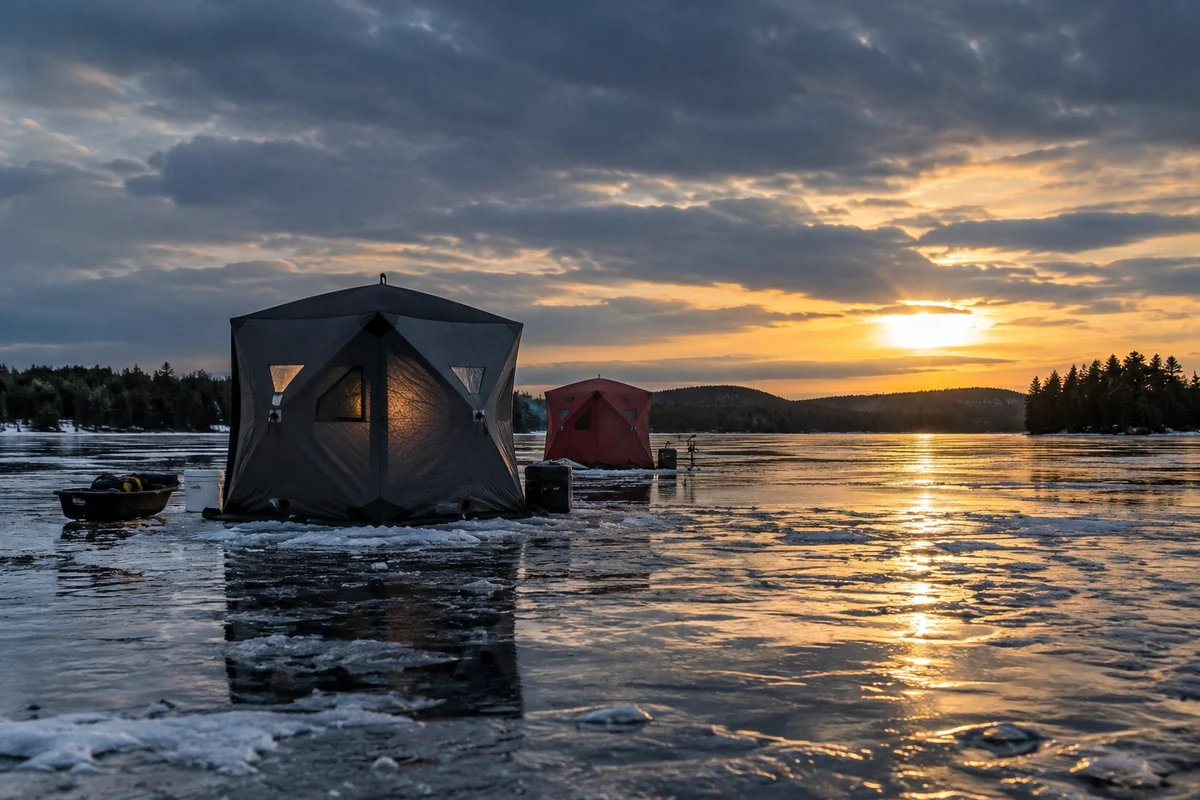
A good shelter makes a long day on the ice more comfortable, but a roomy design also catches wind and takes up space in a vehicle. Hub ice shelters—portable fabric enclosures whose frames expand from a compact bundle—can provide generous floor area without the weight and towing demands of a permanent fish house. The right choice depends on how many people will use it, where it will be set, how often it must move and whether the forecast supports the outing.
Think of a hub as a temporary windbreak and workspace, not as protection from every winter hazard. Shelter walls do not make unsafe ice safe, and a stove or heater can introduce fire and carbon-monoxide risks. Before choosing a model, map out the whole day: access route, ice conditions, wind, anchoring, ventilation, gear and a plan to leave if conditions change. For broader seasonal context, start with the freshwater ice-fishing hub.
What makes a shelter a hub?
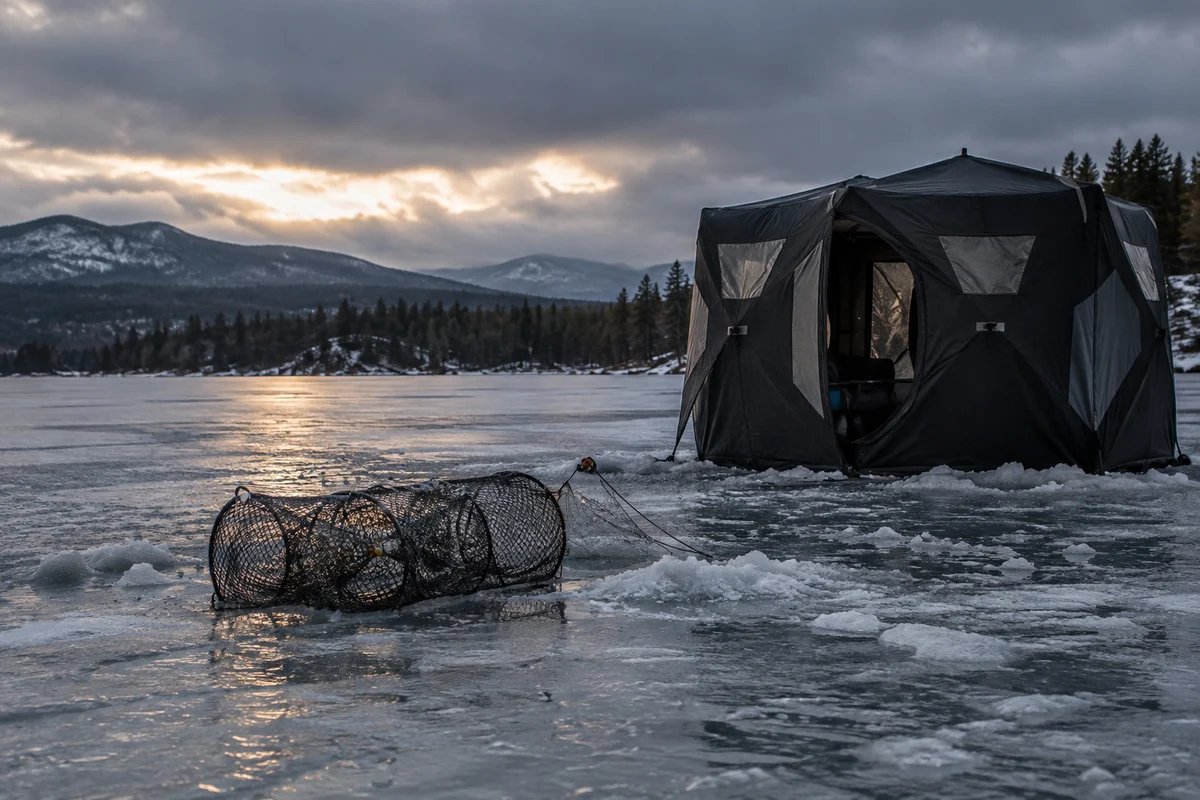
A hub shelter uses flexible poles and a central junction—or hub—to spread a fabric shell into a roughly square, rectangular or sometimes hexagonal room. When collapsed, the frame folds into a transportable bundle. Many models include windows, vents, pockets, tie-down points and removable or roll-up panels, but features differ by manufacturer and model. Confirm the current configuration in the maker’s documentation rather than assuming that similarly named shelters have identical parts.
The defining tradeoff is interior room versus wind resistance and setup footprint. A hub can accommodate several anglers and spread-out equipment, yet its broad walls present more surface to gusts than a low-profile shelter. It is portable, but not necessarily effortless to carry: packed length, weight, shape and the distance from vehicle to fishing spot matter as much as a capacity label.
How to choose a size and layout
Start with the actual people and equipment, not the advertised maximum occupancy. Capacity descriptions can be optimistic for anglers who want chairs, holes, rods, buckets and space to move. Sketch a simple floor plan: mark each fishing hole, chair, heater location if used, door swing, gear zone and clear path to the exit. Preserve room to move without stepping over hot equipment or tangled lines.
| Use case | What to prioritize | Tradeoff to consider |
|---|---|---|
| One or two anglers | Compact packed size, quick handling, enough room for chairs and holes | Less space for guests or bulky equipment |
| Small group | Door placement, usable floor area, multiple anchor points | Larger walls demand more attention in wind |
| Long stationary session | Ventilation options, pockets, windows and room to organize | More setup and more fabric to manage |
| Frequent moves | Carrying system, manageable frame and fast pack-down | A roomy footprint may be cumbersome between spots |
| Vehicle-based day | Packed dimensions and transport protection | A long bundle may not fit easily in every vehicle |
Measure your vehicle’s cargo opening and storage space, not just the available cargo volume. A long, rigid-looking bundle may be awkward to load even when it is relatively light. Also check whether the shelter’s carry bag leaves enough room for anchors and other components, and whether the packed frame can be transported without pressure that bends or damages it.
Look at floor dimensions and wall shape together. The footprint tells you how much ice the shelter occupies; the shape affects where people and gear fit. Consider door position relative to the likely wind direction and walking route. Windows can help with daylight and visibility, but they should not substitute for safe ventilation or awareness of changing outdoor conditions.
Fabric, frame and useful details
Compare construction using the manufacturer’s published information. Fabric denier or coating descriptions, frame materials and claimed weather resistance vary, and a label alone does not establish how a shelter will perform in a particular storm. Inspect seams, stress points, zippers and attachment areas when practical. Ask how replacement parts are handled and whether the maker provides setup instructions and care guidance.
Features should solve a real problem. Interior pockets can keep small items off the ice; vents and windows may support airflow and visibility; removable panels can make packing and drying easier. A dark or insulated shell may help with comfort in some conditions, but insulation does not eliminate condensation, heat loss or the need for safe ventilation. Avoid treating any shelter rating or marketing description as a guarantee against severe weather.
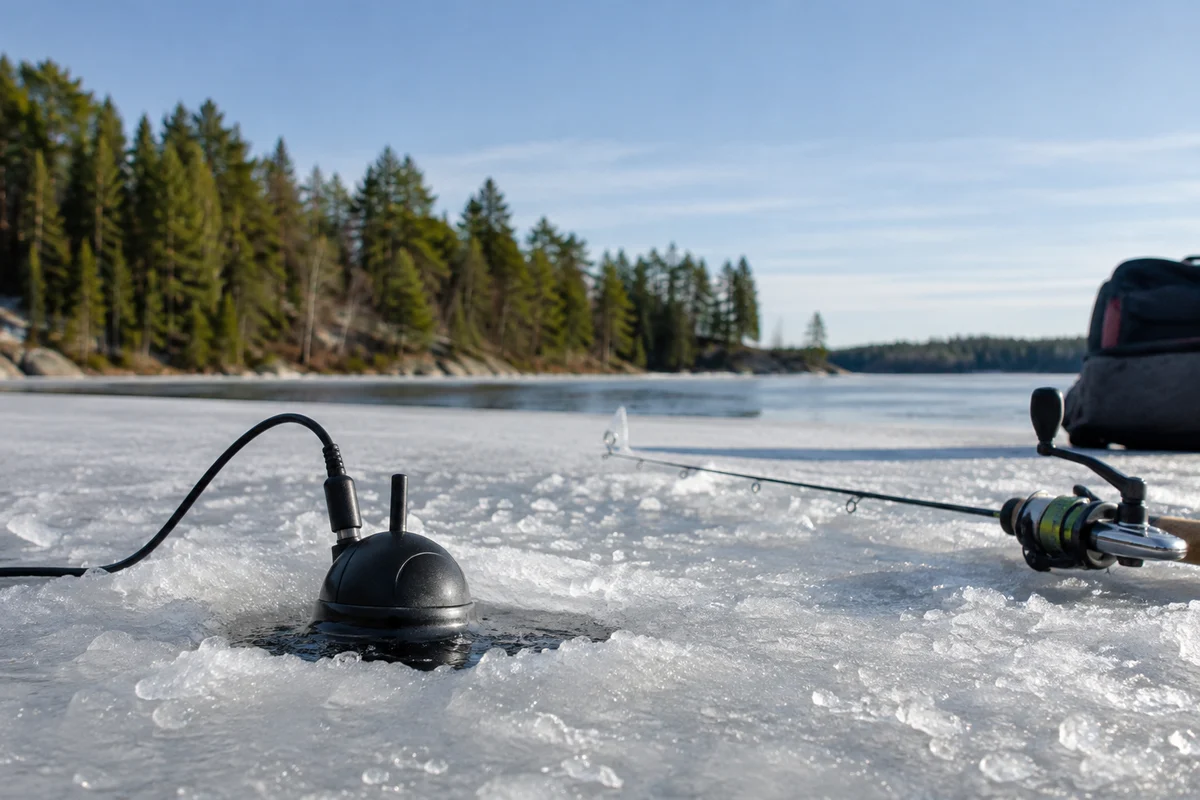
If your setup involves electronics, organize cables and equipment so walkways and exits remain clear. A fish-finding camera system can add useful underwater visibility, while a flasher-style sonar overview can help explain another common way anglers monitor activity. These tools are optional; they do not replace local knowledge, cautious ice assessment or attention to other people on the ice.
Anchoring and wind: the critical setup task
A hub’s broad fabric walls can behave like a sail. Secure it using the manufacturer’s intended anchor points and compatible anchors, following the instructions for the particular surface and conditions. Keep the shelter low and stable during setup, and do not assume that a single anchor or a heavy object inside will hold it during a gust. Inspect anchor lines and attachment points before settling in, and reassess if wind direction or strength changes.
Choose a location with room to work around the shelter and avoid blocking a travel route. Set up away from hazards and other anglers’ lines, and maintain access to the door. Do not place the shelter where drifting snow, shoreline obstacles or crowded conditions could make a quick exit difficult. If wind is rising or the shelter cannot be anchored securely, pack up and leave rather than trying to outlast conditions.
The order of pole movement varies by design. Follow the model-specific instructions; forcing a hub or pulling one point unevenly can stress the frame. Practice opening and folding it at home before the first trip. On the ice, keep fingers clear of folding joints, watch for ice and snow on the fabric, and have a second person help manage the shell when wind makes it difficult to control.
Ice safety comes before shelter comfort
No shelter, sonar unit or local anecdote can certify ice as safe. Ice thickness and quality can vary over short distances and change with currents, springs, pressure cracks, snow cover, temperature and other local factors. Use current guidance from local authorities and fisheries or natural-resource agencies, check conditions for the specific waterbody, and carry appropriate safety equipment. Never rely on a single thickness figure as a universal guarantee.
Travel with a partner when possible, tell someone where you are going and when you expect to return, and establish a check-in plan. Carry a means of communication protected from cold and moisture. Know the route back and identify changing conditions that mean it is time to turn around. If you are uncertain about ice, do not go out. A shelter adds wind cover, not buoyancy or rescue capability.
Once inside, keep exits and pathways unobstructed. Do not let bags, cords, chairs or fishing lines create trip hazards. Keep children and pets under close supervision around holes, heaters and tools. If someone falls through, call emergency services and follow established cold-water rescue guidance; do not rush onto questionable ice and create another casualty.
Heating, ventilation and condensation
Treat any fuel-burning heater or stove as a serious safety decision. Use only equipment approved for the intended setting, follow its instructions and applicable local rules, and maintain the ventilation the manufacturer requires. Carbon monoxide has no reliable warning smell; a shelter’s fabric walls do not make combustion safe. A carbon-monoxide alarm suitable for the environment can be an added safeguard, but it does not replace proper ventilation, equipment instructions or leaving immediately if anyone feels unwell.
Keep flames and hot surfaces away from fabric, clothing, fuel, paper and other combustibles. Stabilize equipment, maintain required clearances and never leave a running heater unattended. Do not use a cooking appliance as a heater unless its instructions specifically permit that use. If ventilation cannot be maintained, the equipment malfunctions, or occupants develop headache, dizziness, nausea, confusion or unusual fatigue, shut down if it is safe to do so, get everyone into fresh air and contact emergency services as appropriate.
Warm, moist air from people, wet clothing and cooking can condense on cold fabric and freeze. Ventilation, sensible clothing layers and keeping wet gear organized can help manage moisture, but no setup prevents all condensation. Keep sleeping bags and electronics away from damp walls, and dry the shelter fully after the trip to reduce mildew and material damage.
A practical pre-trip checklist
Use this decision framework before leaving. If a key safety question has no clear answer, postpone or change the plan.
- Conditions: Have you checked current local ice and weather information? Is the route and return plan appropriate for the conditions?
- People and layout: Does the shelter have usable room for the actual group, holes, chairs and essential gear without blocking the exit?
- Transport: Does the packed shelter fit the vehicle, and can you carry it safely to the site?
- Setup: Have you practiced the model’s opening, folding and anchoring sequence? Are all parts present and serviceable?
- Wind: Can you anchor the shelter as directed, and do you have a clear threshold for packing up if gusts increase?
- Heat and air: Are any appliances approved for this use, operated exactly as directed and adequately ventilated? Is a suitable carbon-monoxide alarm available where appropriate?
- Emergency plan: Does someone know your destination and return time? Do you have communication and safety equipment suited to the outing?
A simple go/no-go rule is useful: go only when ice information, weather, equipment and the group’s experience all support the plan. A comfortable forecast does not compensate for uncertain ice, and a capable shelter does not make a marginal forecast acceptable.
Setup, care and storage
At home, lay out the shelter and compare its parts with the included instructions. Check fabric, zippers, seams, poles, hubs, anchor loops and carry bag for wear or damage. Learn how the frame folds before trying to pack it in cold, wind or low light. Keep a small repair kit appropriate to the maker’s recommendations, but do not rely on a field patch to make a damaged structural component safe.
At the site, clear sharp objects and loose ice from the setup area where practical. Open the shelter according to the maker’s sequence, secure it before organizing the interior, and keep anchors visible enough to avoid tripping. Before moving, remove gear, release anchors carefully and fold the frame as instructed. Do not yank fabric or force a joint that resists; inspect it for a snag or ice buildup first.
Afterward, remove snow and ice without aggressive scraping. Dry the fabric and frame completely before long-term storage, and store them as directed. Check for damaged coatings, stretched anchor points, corrosion or bent components before the next outing. Contact the manufacturer for model-specific replacement parts and current care advice; availability and specifications can change over time.
When a hub is—and is not—the right choice
A hub is a sensible option when portability and shared interior space matter more than a rigid structure, and when the user can manage setup and anchoring in the expected conditions. It can be less suitable when the route requires a long carry, the site is exposed to strong or shifting winds, or repeated moves make a larger shelter cumbersome. A compact shelter, a different style of portable cover or simply fishing without an enclosure may be a better fit depending on the day.
Compare total practicality, not just floor area: packed dimensions, setup effort, anchor design, repair support, ventilation, door arrangement and storage all affect ownership. Match the shelter to the anglers who will use it and the places they fish, then treat weather and ice conditions as separate decisions. The best shelter is the one you can transport, secure, ventilate and leave safely when conditions call for it.
Frequently asked questions
What is a hub ice shelter?
It is a portable fabric shelter with a folding frame that expands around central hubs to create an enclosed space for ice fishing.
How many people fit in a hub shelter?
Capacity depends on the model and how much room people need for chairs, holes and gear. Use floor dimensions and a planned layout rather than relying only on the advertised maximum.
Are hub shelters safe in strong wind?
No shelter is safe in every wind condition. Anchor it as the manufacturer directs, monitor changing weather and leave if it cannot be kept secure or conditions worsen.
Can I use a heater inside a hub shelter?
Only use equipment approved for the setting, follow its instructions and maintain required ventilation. Combustion can produce carbon monoxide, so never treat fabric walls as protection.
Does a hub shelter make ice safer?
No. A shelter provides cover, not protection from thin or changing ice. Check current local guidance and conditions, carry safety equipment and stay off ice when uncertain.
Sources & further information
Consult these primary sources for current regulations, technical information and local guidance.