Crankbaits for Catfish: When and How to Fish Them
Crankbaits are not a universal catfish bait, but they can draw strikes from active fish in the right places. Learn how to choose, present, and troubleshoot them—and when natural bait is a better call.
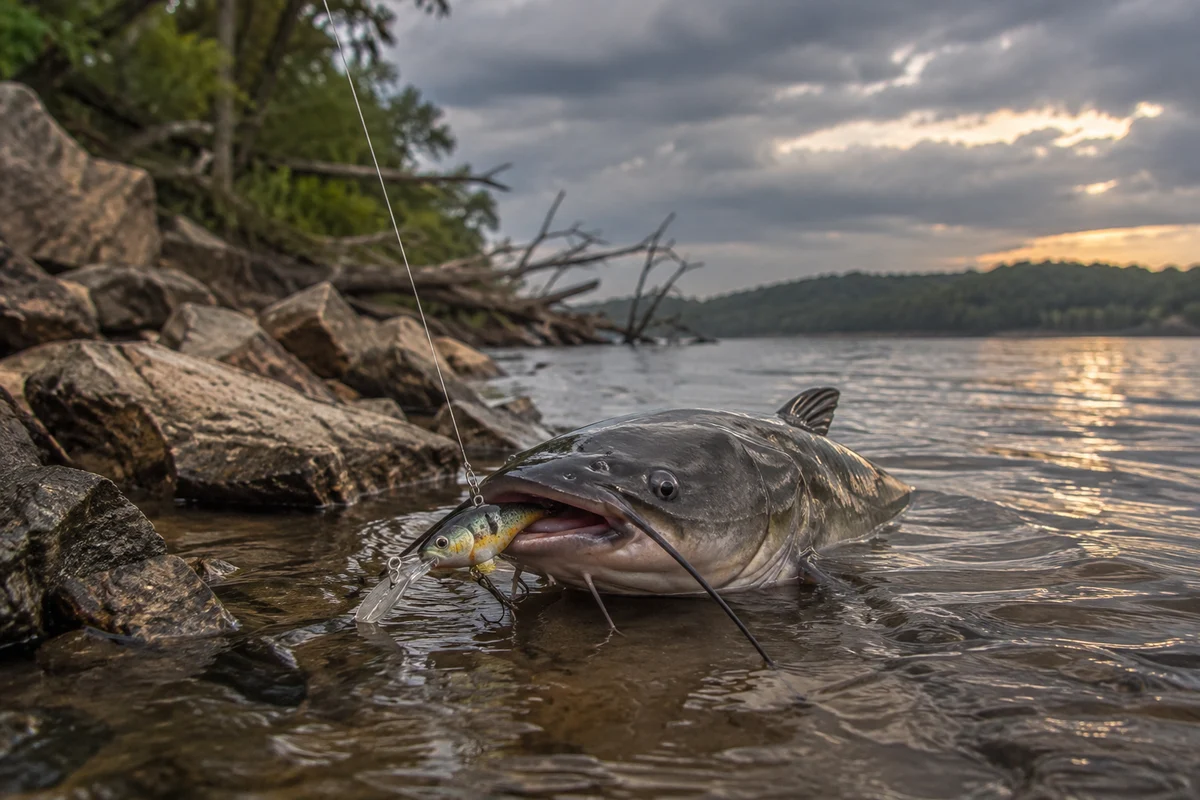
Catfish anglers usually reach for cut bait, worms, or prepared baits, but crankbaits for catfish can be useful when fish are actively hunting along shallow edges, rocky banks, or other feeding lanes. The key is to treat a crankbait as a situational search lure, not a guaranteed substitute for familiar catfish offerings. Its wobble, vibration, and movement can help locate willing fish, especially when they are feeding in relatively shallow water.
Success depends on matching the lure’s running depth and size to the water, moving it through likely cover without snagging constantly, and recognizing when catfish simply are not responding. Begin with a modest plan: find a plausible feeding area, make controlled casts, and change one variable at a time.
Do catfish actually hit crankbaits?
Yes, catfish can take artificial lures, including crankbaits. A fish may strike while pursuing prey, reacting to a lure entering its space, or feeding opportunistically. This does not mean every catfish species, season, or waterbody will produce consistent crankbait action. Catfish behavior changes with temperature, current, light, forage, and local conditions, and anglers may encounter other species while working a lure.
Crankbaits make the most sense when fish are likely to be moving and feeding rather than settled in a deep holding area. Shallow flats near deeper water, riprap, channel edges, creek mouths, and submerged structure can all be worth exploring, depending on the lake or river. Look for signs such as baitfish activity, current seams, or a gradual drop nearby, but avoid assuming that one feature guarantees fish.
If you are learning the broader basics, how to catch catfish provides a useful starting point for choosing locations and adapting to conditions. For a more general approach to presentation and setup, review these catfishing tips and techniques.
Choose a crankbait by depth and water conditions
The most important choice is often how deep the lure runs, not its paint pattern. A bait that repeatedly digs into bottom debris can foul or snag; one that runs far above the fish may pass unnoticed. Use the manufacturer’s stated running-depth range as a guide, recognizing that line diameter, casting distance, retrieve speed, and rod angle can change the actual path.
| Situation | Starting crankbait choice | Presentation adjustment |
|---|---|---|
| Shallow bank, flat, or riprap | Shallow-running model | Cast parallel to the edge and keep the lure clear of persistent snags |
| Gradual drop or submerged contour | Medium-running model suited to the depth | Fan-cast across the transition, varying speed modestly |
| Clear water and visible forage | Natural or subdued color | Make longer casts and avoid unnecessary boat or bank disturbance |
| Stained water or low light | Strong contrast or a more visible profile | Use a steady retrieve that lets the lure’s vibration remain consistent |
| Heavy wood, weeds, or rock | A lure that can be worked above or beside cover | Prioritize clean passes and change angles rather than forcing contact |
These are starting points, not fixed rules. Manufacturer labels differ, and a lure’s action can vary. Read the package or product information, then observe how the bait behaves in shallow water before casting it into a snag-prone area. Color is usually a secondary adjustment: start with a finish that is visible in the conditions and resembles common local forage, then experiment if fish follow or ignore it.
A practical retrieve for catfish
Begin with a steady retrieve. A crankbait’s built-in action does much of the work, and a consistent pace makes it easier to identify where the lure runs and whether it is contacting cover. Cast beyond the target zone when possible, let the bait settle into its running depth, and bring it across an edge rather than directly into the thickest obstruction.
Make several casts from different angles. A lure approaching a rock line or current seam from one direction may look different from one crossing it at a sharper angle. If the spot allows, cast parallel to shore or structure; this keeps the lure in the likely strike zone longer. In current, try a controlled retrieve that maintains tension without racing the lure unnaturally downstream.
After establishing a baseline, change one element at a time: retrieve speed, casting angle, depth, or lure profile. This simple decision framework helps distinguish a location problem from a presentation problem:
- No signs of activity: Move to another likely edge or feeding lane rather than endlessly changing colors.
- Lure fouls or hits bottom repeatedly: Choose a shallower-running bait, raise the rod angle, or alter the cast line.
- Fish follow but do not commit: Slow slightly, change the angle, or try a different size or silhouette.
- A strike occurs: Repeat the same pass and retrieve before making multiple changes.
- No response after a fair set of passes: Switch to a different lure or a natural-bait approach suited to the location.
Avoid exaggerated rod sweeps while a fish is hooked. Keep steady pressure, use a smooth reel-down, and let the rod absorb movement. Treble hooks can catch hands and clothing, so use pliers or a hook-removal tool, keep fingers clear, and handle the fish over a stable surface. Follow local regulations for seasons, limits, gear, and protected waters.
Tackle and safe handling
A crankbait setup should cast the lure comfortably and control a fish around the cover present. A balanced rod and reel matter more than choosing equipment marketed specifically for catfish. Check the lure’s recommended line range and your rod’s lure rating; avoid forcing a lure that is too heavy for the outfit. Inspect line for abrasion after contact with rocks, wood, or concrete, and retie if it is nicked.
If you expect larger fish or fish near snags, use tackle with enough strength to steer a fish away from hazards, while keeping the outfit manageable for the lure. A rod with a forgiving tip can help keep treble hooks pinned during a steady fight. Match hook size and split-ring changes to the lure maker’s guidance, since replacing components with heavier hardware can alter a small crankbait’s action.
Wet hands before handling fish, support the body, and keep a fish in the water as much as practical if releasing it. Remove hooks carefully; if a hook is deeply embedded or the fish is injured, follow local fisheries guidance rather than pulling forcefully. Regulations and best practices vary by species and jurisdiction.
When another catfish method is better
Crankbaits are most useful when covering water and looking for active fish. They are less convenient when catfish are holding deep, feeding selectively on a stationary food source, or occupying dense cover where treble hooks snag. In those conditions, anglers often choose a bait and rig that can stay near a specific location with fewer hang-ups.
A natural-bait setup can also be the more practical choice when current, depth, or a limited casting lane makes it difficult to keep a crankbait in the strike zone. Compare the approach with this overview of catfish bait, then select a method that fits local rules and the fish’s likely position. No lure category is automatically superior; the useful question is whether it can be presented cleanly where fish are feeding.
Keep expectations realistic. Catch rates depend on waterbody, season, fish activity, and angler presentation, and there is no universal crankbait color or retrieve that works everywhere. A crankbait is a tool for searching and triggering active fish—not a promise of a bite. Record where and how you get follows or strikes, and use those observations to refine your next trip.
Frequently asked questions
What kind of crankbait should I start with for catfish?
Start with a model that runs at the depth of the bank, flat, or contour you plan to fish. Use the manufacturer’s depth guidance and adjust for your line and retrieve.
What color crankbait works best for catfish?
There is no universal best color. Choose a visible profile that makes sense for water clarity and local forage, then prioritize location and depth before making color changes.
Can I use crankbaits for catfish in deep water?
You can try a deeper-running model if it reaches the fish without snagging, but crankbaits are often most practical when fish are actively feeding in a reachable lane. A different presentation may work better for fish holding deep.
Are treble hooks safe for catch-and-release catfish?
They can be used carefully, but treble hooks require attentive handling. Keep fingers clear, use pliers, minimize time out of water, and follow local handling guidance. Consider the hook configuration and fishing conditions before choosing a lure.
For more, explore our catfish fishing guides.
Frequently asked questions
What kind of crankbait should I start with for catfish?
Start with a model that runs at the depth of the bank, flat, or contour you plan to fish. Use the manufacturer’s depth guidance and adjust for your line and retrieve.
What color crankbait works best for catfish?
There is no universal best color. Choose a visible profile that makes sense for water clarity and local forage, then prioritize location and depth before making color changes.
Can I use crankbaits for catfish in deep water?
You can try a deeper-running model if it reaches the fish without snagging, but crankbaits are often most practical when fish are actively feeding in a reachable lane. A different presentation may work better for fish holding deep.
Are treble hooks safe for catch-and-release catfish?
They can be used carefully, but treble hooks require attentive handling. Keep fingers clear, use pliers, minimize time out of water, and follow local handling guidance. Consider the hook configuration and fishing conditions before choosing a lure.
Sources & further information
Consult these primary sources for current regulations, technical information and local guidance.