Catfish Bait: Choose the Right Offering for the Water
The best catfish bait depends less on a magic recipe than on where fish are feeding and how your offering behaves in the water. Learn how to choose, present, and handle bait for channel, blue, and flathead catfish.
Catfish bait is often discussed as if one pungent mixture works everywhere, but the useful choice depends on the fish, the water, and the way you plan to present it. Channel catfish commonly take prepared and natural offerings; blue catfish often respond to fresh cut bait; and flatheads are strongly associated with live prey. Those are broad patterns, not guarantees: local forage, water temperature, current, and fishing pressure all matter.
Start by identifying the likely species and the structure you can fish safely. Then choose bait that stays on the hook, carries an appropriate scent or movement, and can be handled without mess or unnecessary harm to fish. The freshwater catfish fishing hub has more catfish techniques and related guides, including catch and release catfish and the basics of catfish rigs.
Match catfish bait to the species
Channel catfish: adaptable feeders
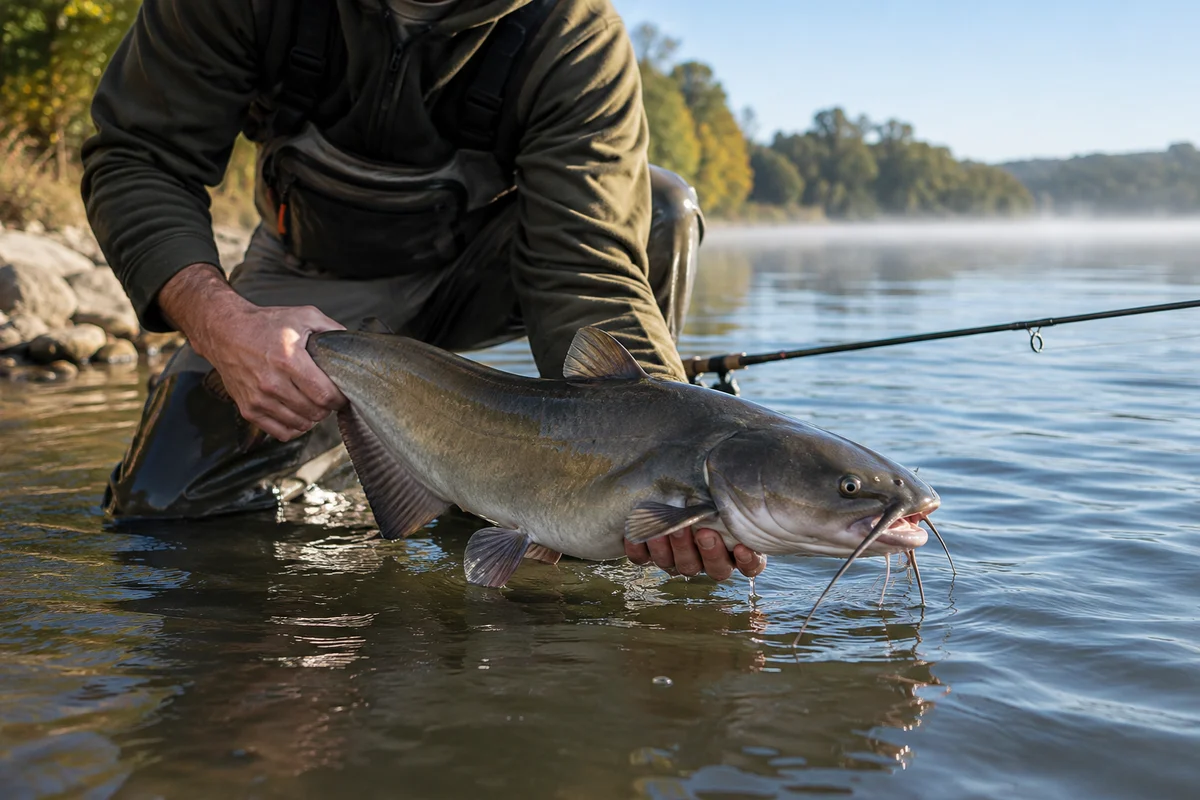
Channel catfish eat a wide range of animal and plant material. Prepared dough, punch, or dip baits are popular because they release scent and can be molded or held on a treble or bait-holder hook. Nightcrawlers, cut fish, and other locally available natural baits can also work. In clear, heavily fished water, a smaller, tidy presentation may be more practical than a large, strongly scented one.
Prepared bait is especially useful when you want repeatable casting and a bait that stays in place. Follow the product label for storage and handling; recipes and consistency vary. A bait that is too soft may come off during a cast, while an overly firm ball may release little scent. Adjust the amount and packing around the hook rather than assuming more bait means more bites.
Blue catfish: fresh cut bait is a common choice
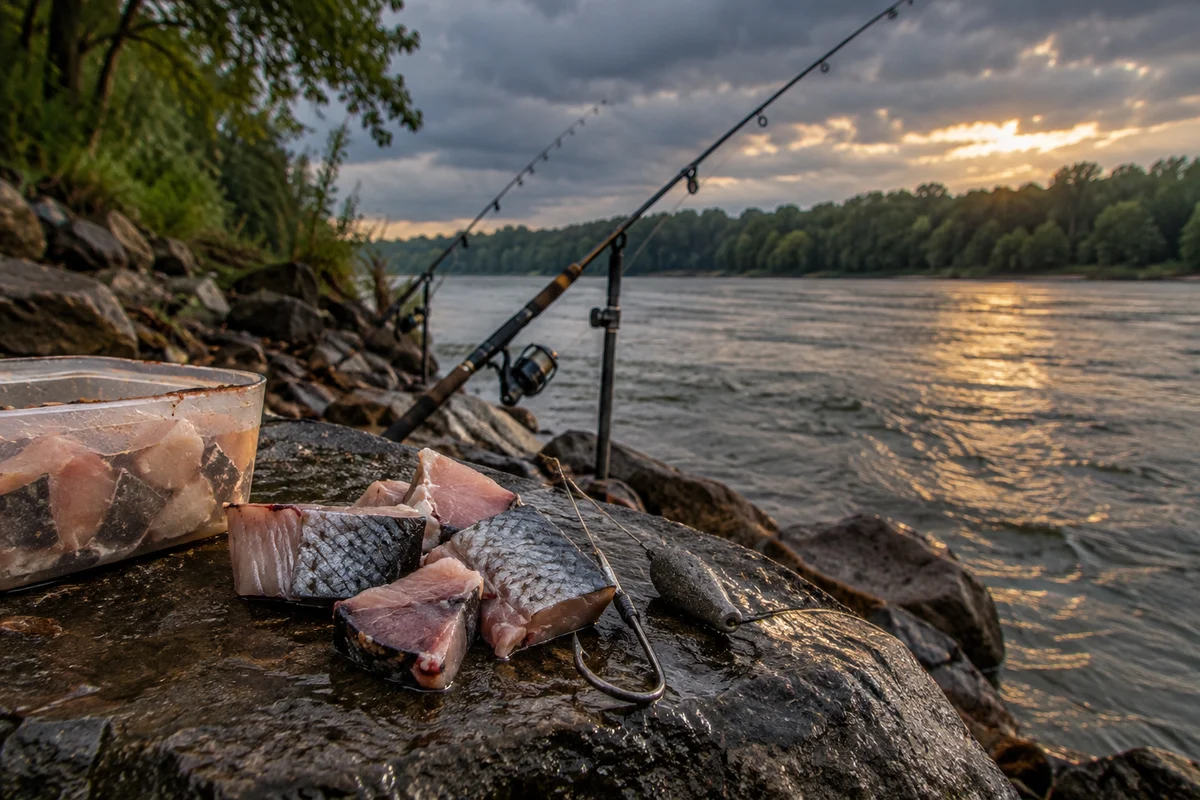
Blue catfish often feed on fish, and cut bait is a widely used option where regulations allow it. Use legal bait species from a clean, local source and keep it cool until use. A fresh piece can offer both scent and a natural profile; a deteriorating piece may be less appealing and can create avoidable sanitation problems.
The size and shape should suit the hook and current. A compact piece is easier to cast and hold in place; a larger chunk may be appropriate when targeting bigger fish, but it also creates more resistance and can be difficult to keep secured. Avoid assuming that a bigger bait automatically selects larger fish.
Flathead catfish: think about prey and location
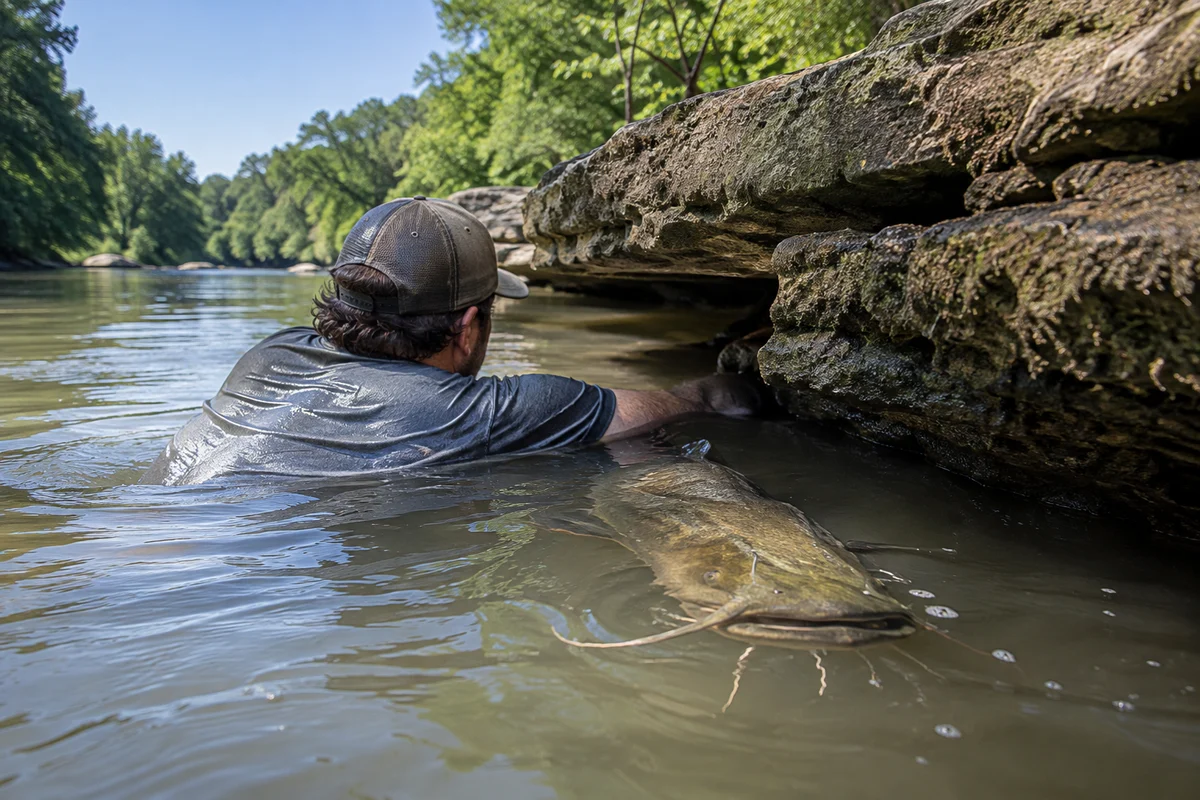
Flatheads are predators, and anglers often use live fish where permitted. Their feeding behavior varies with waterbody, season, and conditions, so live bait is not a universal answer. Check rules on baitfish species, collection, transport, and use before fishing. Some waters prohibit particular species or require bait to come from the same waterbody.
If using live bait is legal, keep it in good condition and handle it as little as possible. Use appropriate tackle and a hook arrangement that allows a responsible, secure hookup. Never release unused baitfish into a different waterbody; doing so can spread invasive species and disease.
A quick bait-selection framework
| Situation | Bait to consider | Why it may fit | Check before fishing |
|---|---|---|---|
| Channel cats in still water | Prepared bait, worm, or cut bait | Easy to present with controlled scent | Does it stay on the hook? Is bait use allowed? |
| Blue cats near a channel edge | Fresh cut bait | Offers a familiar fish profile and scent | Is the species legal as bait? Can the rig hold in current? |
| Flatheads near cover | Legal live bait or suitable natural bait | Matches a predatory feeding style | Are live bait and the bait species permitted? |
| Strong current | Firm, compact bait | Resists washing off and casts more predictably | Is the weight safe and appropriate for the flow? |
| Warm weather or long sessions | Bait kept chilled and shaded | Helps limit spoilage and odor on hands and gear | Is it still fresh, and can waste be contained? |
This framework narrows choices; it does not promise a catch. Water level, oxygen, forage, and fish activity can outweigh bait selection. If bites are absent, make one change at a time: location, depth, bait size, then bait type. That makes it easier to learn what the conditions are telling you.
How to present bait so it stays effective
Use a hook sized for the bait and expected fish, not merely the largest hook in the tackle box. Leave enough hook point exposed for reliable penetration, and avoid piling on so much material that the hook cannot work. Check bait after a cast or after a period without action; current, small fish, and repeated casting can strip it away.
For prepared baits, a bait-holder hook, spring, or mesh holder may help retain a soft mixture. Use only tackle you can safely manage, and keep hooks covered when moving around a boat or bank. For cut bait, make a clean cut with a dedicated tool and keep the bait secured. Do not use a bait that is so large or awkward that it prevents safe casting or creates an unreasonable chance of deep hooking.
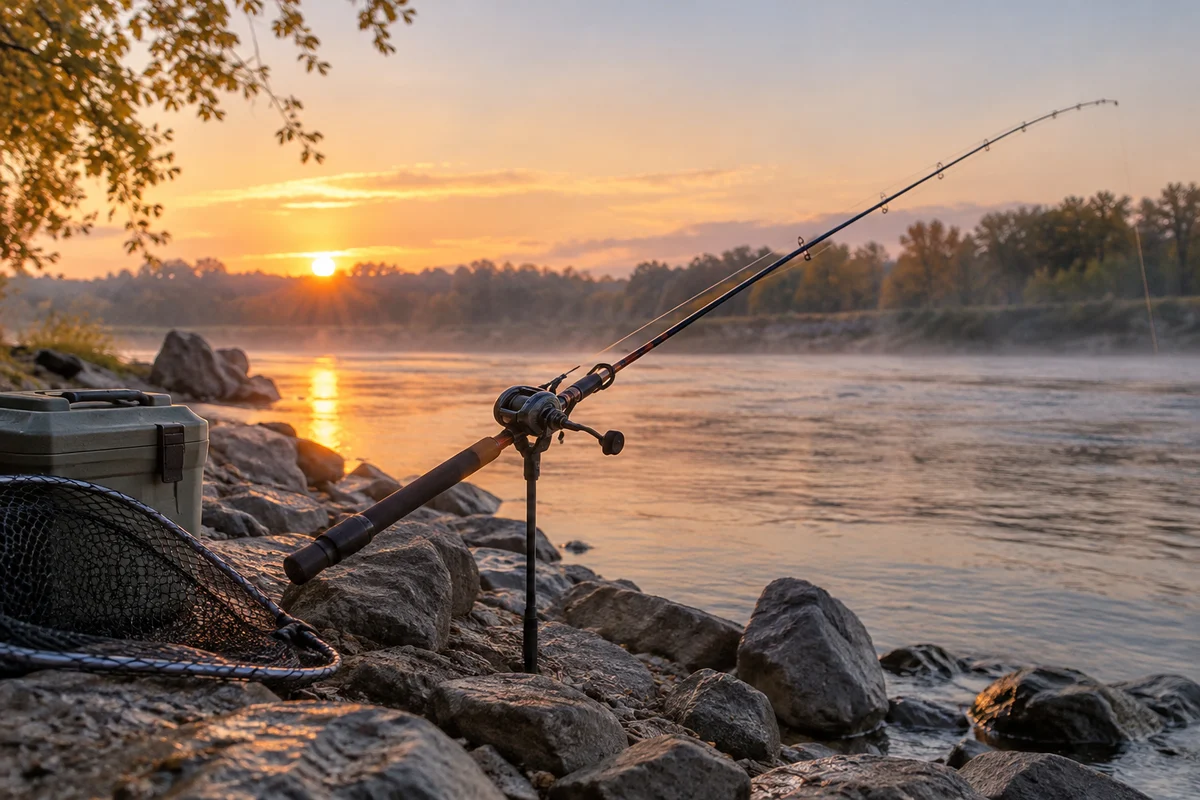
In current, position the rig so it reaches the intended depth without being swept into snags or unsafe water. A heavier sinker is not automatically better: use the lightest practical weight that holds where needed and comply with local rules. In still water, a simpler, lighter setup may keep the bait from burying in soft bottom or tangling in weeds. The catfish rig overview can help compare common presentations; adapt any rig to local conditions and regulations.
Scent, freshness, and seasonal expectations
Scent can help fish locate bait, but strong odor is not a substitute for placing it near feeding fish. Prepared baits are designed to release odor, while fresh cut bait combines scent with a natural food signal. Store bait in sealed containers, keep it separate from food, and wash hands and tools after handling. Dispose of scraps in a suitable trash receptacle rather than leaving them on shore or tossing them into another waterbody.
Season affects fish movement and feeding, but there is no simple calendar that applies to every lake or river. During warmer periods, catfish may feed actively but bait can spoil quickly. In cold conditions, fish may be less active or concentrated in different areas, and a smaller or more stationary presentation may be worth trying. Monitor water conditions and prioritize safe access; high flows, cold water, and slippery banks can make a productive-looking spot hazardous.
Common bait mistakes to avoid
- Changing everything at once: If you switch bait, depth, and location together, you cannot tell what helped. Alter one variable at a time.
- Using bait that will not stay put: Test the attachment with a short cast before committing to a long one.
- Ignoring bait regulations: Rules may govern live bait, fish parts, transport, and bait collection. Review the current regulations for the exact waterbody.
- Leaving bait in heat: Spoiled bait is unpleasant to handle and can contaminate equipment. Keep it contained and cool when appropriate.
- Fishing a good bait in an unproductive place: Look for access, depth changes, current seams, or other likely feeding areas, while avoiding restricted or unsafe locations.
- Handling a fish carelessly: Wet hands when practical, support the fish, minimize time out of water, and use suitable tools to remove the hook. See our guide to catfish catch and release.
A practical pre-trip checklist
- Identify the likely catfish species and check the current local fishing and bait regulations.
- Choose one primary bait and one backup that suit the species and conditions.
- Bring a sealed container, a safe cutting surface if needed, and a way to keep bait cool.
- Match hook and weight to bait, current, and the tackle you can cast safely.
- Pack pliers, a landing net if appropriate, and a plan for releasing or legally keeping fish.
- Secure bait and waste; never move live bait or water between waters unless explicitly allowed.
No single catfish bait is best in every place or season. A sensible starting point is prepared or natural bait for channel cats, fresh legal cut bait for blues, and legal prey-style offerings for flatheads. Treat these as starting hypotheses, then let conditions and careful observation guide your next adjustment. For species-specific context and more techniques, browse the catfish fishing hub.
Frequently asked questions
What is the best bait for catfish?
There is no universal best. Prepared baits and worms are common channel-cat options, cut bait is often used for blues, and flathead anglers may use live bait where it is legal.
Do catfish prefer stink bait?
Some prepared baits release strong scents and can be effective, especially for channel catfish, but scent alone does not guarantee a bite. Location, presentation, and local forage matter too.
Can I use live bait for catfish?
Often, but regulations vary by location and species. Check rules for baitfish collection, transport, use, and release before your trip.
Should catfish bait be fresh?
Freshness is particularly useful with cut bait, and proper storage makes bait cleaner to handle. Keep it contained, follow label guidance for prepared products, and discard waste responsibly.
What bait works in strong current?
A compact, securely attached bait is generally easier to keep in place. Choose a rig and weight suited to the flow and your safe casting ability, then check it regularly.
Sources & further information
Consult these primary sources for current regulations, technical information and local guidance.