Columbia River Salmon Runs: A Seasonal Guide to Chinook and Coho
Columbia River salmon runs unfold across a large watershed, with timing and fishing opportunities changing by species, river section and year. Use this guide to understand the seasonal pattern and build a trip around current agency updates rather than assumptions.
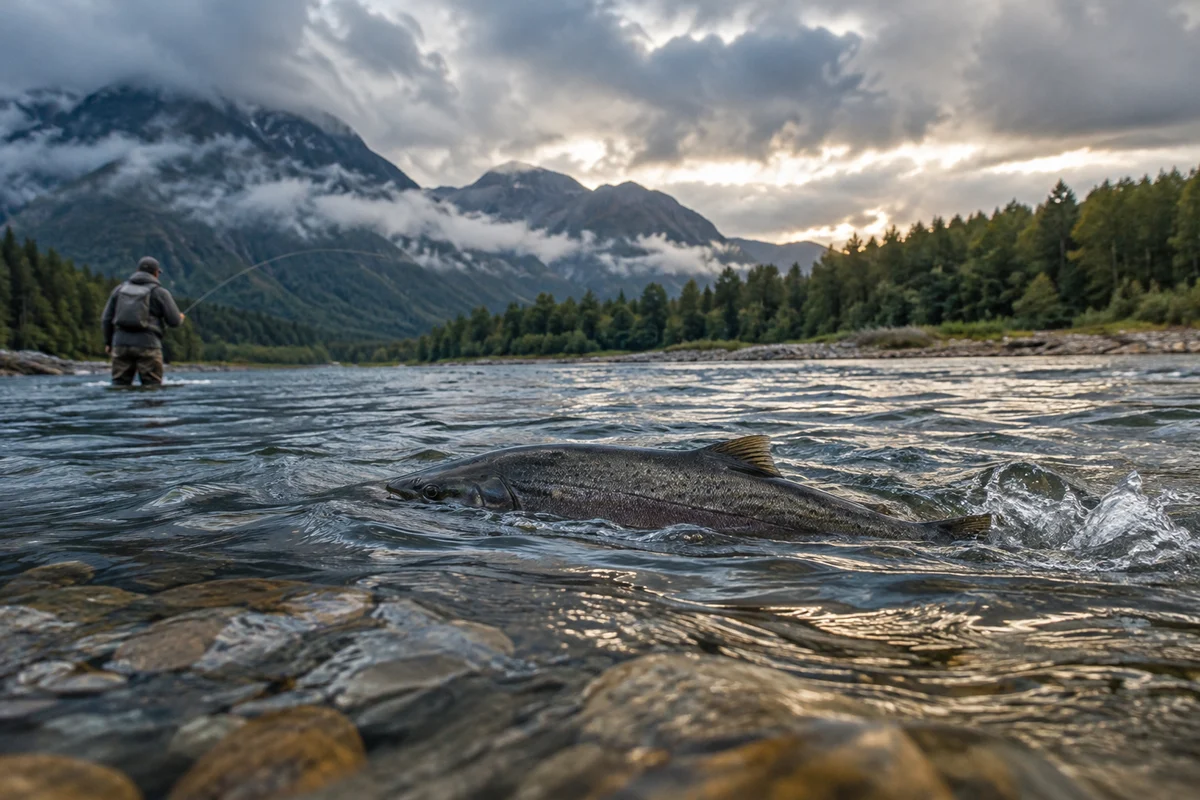
The Columbia River salmon runs are not one event with a single opening day. Chinook and coho move through different parts of the basin at different times, and the fish available in a particular place can change with water conditions, migration timing and management decisions. A useful plan starts with the species and river section you have in mind, then checks the current forecast and rules for that exact location.
The Columbia drains a vast region and crosses the boundary between Oregon and Washington. Its main stem, tributaries and estuary offer distinct settings, but access and seasons are managed under changing regulations. Historical patterns can help orient a trip; they cannot confirm that fishing is open or that a run is strong in a given year.
Which salmon run when?
Chinook—also called king salmon—include several seasonal groups. Spring Chinook are associated with an earlier migration, while summer and fall Chinook arrive later. These broad labels describe patterns, not guarantees: run timing and fishing opportunity vary among tributaries and sections of the main river. Coho generally feature more prominently in the fall, with fish moving through the lower river and into tributaries.
Run forecasts are estimates, not counts of fish waiting at a particular launch or bank. Agencies may revise expectations as monitoring information arrives. A forecast for the Columbia as a whole may not describe the reach you plan to fish, so look for updates tied to the relevant management area and species.
For background on salmon and trout fishing, visit the freshwater trout and salmon hub. If your plans center on a different cold-water species, our guide to summer trout fishing tips offers a useful contrast in seasonal approach. Anglers comparing salmon fisheries in another region can also read about early fall king salmon trolling tactics; local Columbia rules and conditions still take precedence.
A practical seasonal framework
Use this table as a planning outline, not a promise of fish or an open season. Exact dates, boundaries, gear rules and retention limits are set by current regulations and emergency notices.
| General period | Common planning focus | What to verify |
|---|---|---|
| Spring | Spring Chinook opportunities in designated areas | Current season status, reach boundaries, access and any conservation closures |
| Summer | Summer Chinook in some areas; changing conditions across the basin | Species-specific openings, river conditions and whether a fishery is actually available |
| Fall | Fall Chinook and coho movement through the lower river and tributaries | Daily updates, retention rules, boat or bank access, and tributary-specific regulations |
| Any season | Planning around a specific launch, tributary or management area | State rules on both sides of the river, notices, license requirements and safe conditions |
The table describes broad seasonal context only. Some runs are managed for conservation, and agencies can shorten, close or adjust fisheries as information changes. A past season's dates should never be treated as this year's schedule.
How to plan a Columbia salmon trip
1. Name the species and reach. “Columbia salmon” is too broad for a useful regulations search. Identify whether you are interested in Chinook or coho and narrow the plan to a river section or tributary. The relevant rules may differ even between nearby locations.
2. Check both the baseline regulations and updates. Start with the responsible state fish and wildlife agencies, then look for in-season announcements. The Columbia is a boundary river, and rules can differ by state, area, species and date. Confirm which jurisdiction governs your intended location and review license requirements before leaving home.
3. Verify conditions close to departure. Flow, visibility, weather and river hazards affect both access and fishing. Check official river-condition information and local access notices. A ramp, bank area or road that worked on a previous visit may be unavailable or unsafe under current conditions.
4. Choose a flexible method and fallback. Fishing methods vary with location, current, boat access and regulations. Before rigging, confirm that your tackle and bait are permitted in that specific fishery. Have a backup reach or a non-fishing plan in case the season closes or conditions become unsuitable.
5. Know how to identify and handle your catch. Salmon identification matters because regulations can distinguish species, stocks or hatchery status. Learn the current identification and marking rules before fishing, carry the correct measuring or identification tools if needed, and release fish carefully when required. Avoid keeping a fish until you are certain it is legal to retain.
What makes run forecasts uncertain?
A salmon forecast is a management tool, not a real-time report from every part of the river. It can be based on available monitoring and historical information, while actual migration, survival and distribution vary. Conditions in tributaries and the main stem are not interchangeable, and fish may move through an area over a short window.
That uncertainty is why the most reliable approach combines three kinds of information: a seasonal forecast for context, current notices for legal opportunity, and conditions at the exact access point for practical decisions. If the information conflicts, follow the current official regulation or agency notice—not an old article, an archived map or a social post.
Regulations, conservation and responsible fishing
Columbia salmon fisheries are managed with conservation goals as well as recreation in mind. Seasons may depend on run size, stock status, harvest allocation and other factors. Rules can include closed areas, species-specific retention limits, hatchery-mark requirements, gear restrictions or emergency changes. These details are too important to infer from a general guide.
Before each outing, review the current Oregon and Washington fishing regulations and the agencies' Columbia River updates. Pay particular attention to boundary descriptions and tributary rules. Keep a copy or accessible link to the applicable rules while on the water, and make sure everyone in the group understands what may be retained and how to report or record a catch if required.
Responsible fishing also means respecting other users, private property and sensitive habitat. Use established access, pack out line and litter, and avoid disturbing spawning areas or fish in closed waters. If conditions are hazardous or the legal status is unclear, postpone the trip.
A simple pre-trip checklist
- Choose a species, date range and specific river reach.
- Read the current regulations for that exact area and check for emergency updates.
- Confirm licenses, access, launch status and river conditions.
- Review identification and retention rules before fishing.
- Prepare a backup plan in case conditions or regulations change.
- Follow safe boating practices and leave the site clean.
The Columbia's scale is part of its appeal, but it also makes broad statements about “the run” misleading. Treat seasonal patterns as a starting point, then verify the local details. That approach makes for a better-informed trip and helps keep fishing decisions aligned with current conservation measures.
Frequently asked questions
When do Columbia River salmon runs happen?
Broadly, spring Chinook migrate earlier, summer and fall Chinook follow later, and coho are commonly associated with fall. Timing differs by reach and year, so check current agency updates.
Are Columbia River salmon seasons the same every year?
No. Seasons, boundaries and retention rules can change in response to management decisions and current information. Check the regulations and in-season notices for your specific location and date.
Where can I check whether fishing is open on the Columbia River?
Consult the current Oregon and Washington fish and wildlife regulations and their Columbia River updates. Verify the jurisdiction, reach, species and date that apply to your trip.
Does a run forecast guarantee good fishing at a particular spot?
No. Forecasts estimate run strength and do not guarantee fish presence or catch rates at an individual access point. Local conditions and current notices matter.
Sources & further information
Consult these primary sources for current regulations, technical information and local guidance.