Catching Monster Fish: A Practical Guide to Bigger Bites
Big fish are usually found by reading habitat, timing, and forage—not by simply upsizing every lure. This practical guide covers how to choose water, prepare tackle, make deliberate presentations, and land and release fish responsibly.
A giant fish can make a short strike feel like the start of a different kind of fishing. Catching monster fish is less about one secret lure than stacking sensible decisions: identify water that can support large adults, fish when those fish are likely to feed, match tackle to the species and cover, and plan the landing before the first cast. No method guarantees a trophy; weather, fish behavior, local rules, and plain luck all matter. But preparation can turn a hopeful outing into a repeatable process.
Start with the fish, not the tackle
“Monster” is a personal description, not a biological category. A large largemouth bass, northern pike, catfish, carp, or lake trout uses different habitat and responds to different presentations. Begin by naming the species you want to pursue, then learn its seasonal movements, preferred forage, and local regulations. A fish that is impressive in one waterbody may be ordinary in another, so use local fisheries information rather than a universal size claim.
Look for places where food and shelter meet. Points near deep water, weed edges, current seams, submerged timber, drop-offs, and the mouths of tributaries can concentrate prey and predators. On a river, a slower pocket beside moving water may offer a resting place with access to passing food. In a lake, a contour change near a weedline may connect feeding water to a deeper refuge. These are starting hypotheses, not guarantees: water clarity, temperature, oxygen, season, and fishing pressure change how a spot fishes.
A useful way to plan a day is to identify three kinds of water: a likely feeding area, nearby cover or a travel route, and a safe place to land a fish. If the first spot is quiet, move to another habitat type rather than repeating the same cast indefinitely. For destination planning, compare access, season, and target species with our guide to best fishing destinations.
Read conditions and choose a window
Large fish do not follow a simple clock. Low light can make some predators more active, while current, cloud cover, wind direction, water temperature, and prey movement may matter more on a particular day. Keep a brief log of location, conditions, presentation, and any follows or strikes. Over time, that record helps distinguish a genuine pattern from a memorable coincidence.
Use local forecasts and waterbody reports as context, not promises. After a cold front, fish may hold tighter to cover or feed less actively; during a stable period, they may move more. Wind can push baitfish toward a bank, but it can also make boat control and safe casting harder. If conditions become hazardous, change locations or stop. A potential trophy is never worth ignoring lightning, dangerous currents, cold-water exposure, or boating safety.
Electronics can help reveal depth, bottom contours, and schools of bait, but they do not identify every mark or tell you exactly how a fish will respond. Learn what your display can and cannot show, then confirm with observation and fishing. Our overview of fishfinder choices and interpretation offers a starting point for thinking critically about sonar.
Match tackle to fish and surroundings
Oversized tackle is not automatically better. Choose a rod, reel, line, hook, and lure that can manage the target species and the cover without making the presentation unnatural. Consider the fish’s likely size and strength, submerged vegetation or wood, current, casting distance, and whether you must control it away from hazards. Follow the equipment maker’s guidance and local rules, and inspect line and knots before fishing.
| Situation | Practical choice | Why it helps |
|---|---|---|
| Open water with moderate current | Balanced rod and line suited to the species | Allows a controlled fight without excessive strain |
| Dense weeds or woody cover | Tackle with enough strength to steer fish clear | Reduces the chance of a prolonged fight in snags |
| Clear water or wary fish | More subtle profile and careful approach | Limits disturbance and may earn a closer look |
| Unknown bottom or changing depth | Search presentation, then a slower follow-up | Helps locate fish before committing to one method |
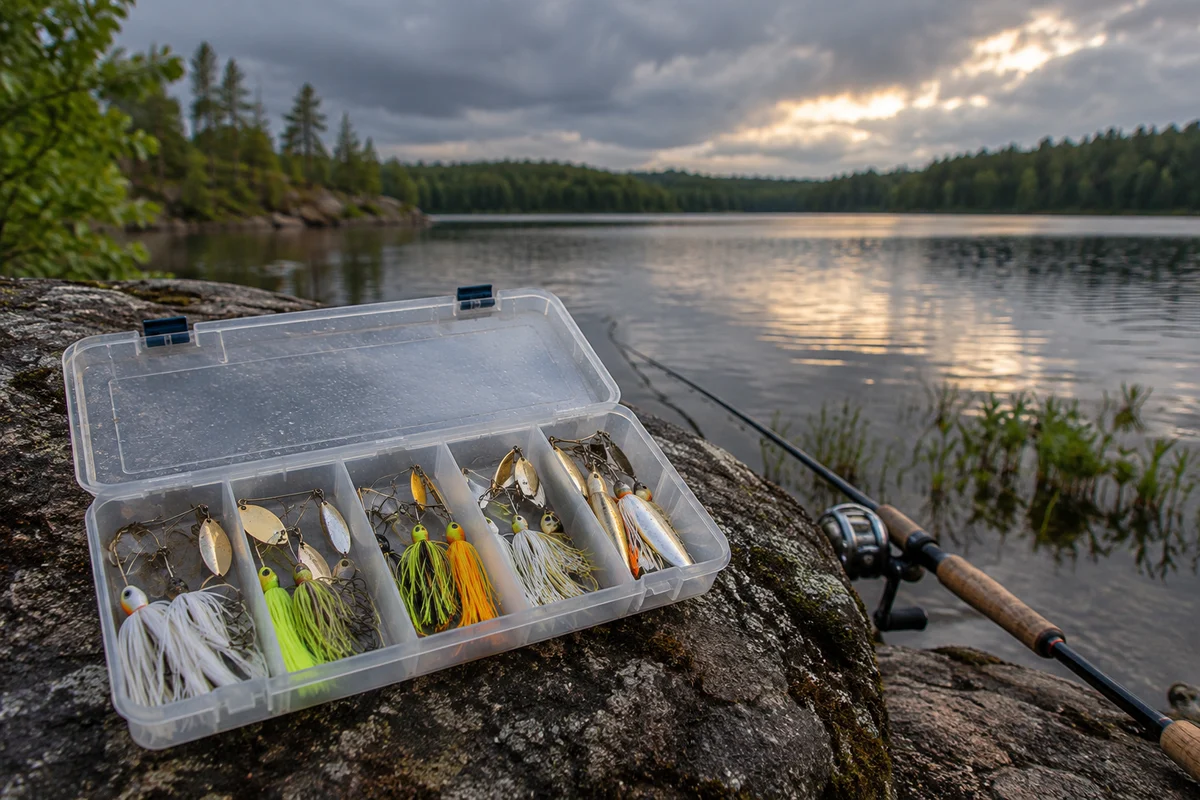
Treat this as a decision framework, not a specification chart. Exact line strength, hook style, and lure size depend on species, regulations, and conditions. For example, a spoon can cover water and imitate a fleeing baitfish, but its size and retrieve should fit the fish and the place; see our guide to the best fishing spoon. Whatever you choose, check hooks for damage and replace worn line rather than trusting gear that has been compromised.
Make each presentation purposeful
Start by covering likely water efficiently. Cast parallel to a weed edge, work a lure across a point, or drift a current seam when conditions and regulations allow. Vary one factor at a time—depth, speed, angle, or pause—so you can tell what changes the response. If a fish follows without striking, resist immediately repeating the identical cast. Alter the angle or slow down, give the fish a little time, or move on.
Large meals can attract large predators, but a bigger lure can also reduce the number of encounters. Think about the prey actually present and the fish’s likely feeding mood. A compact bait may be the right choice when forage is small; a larger profile may make sense when substantial prey is common. Avoid assuming that a single lure size or color works everywhere.
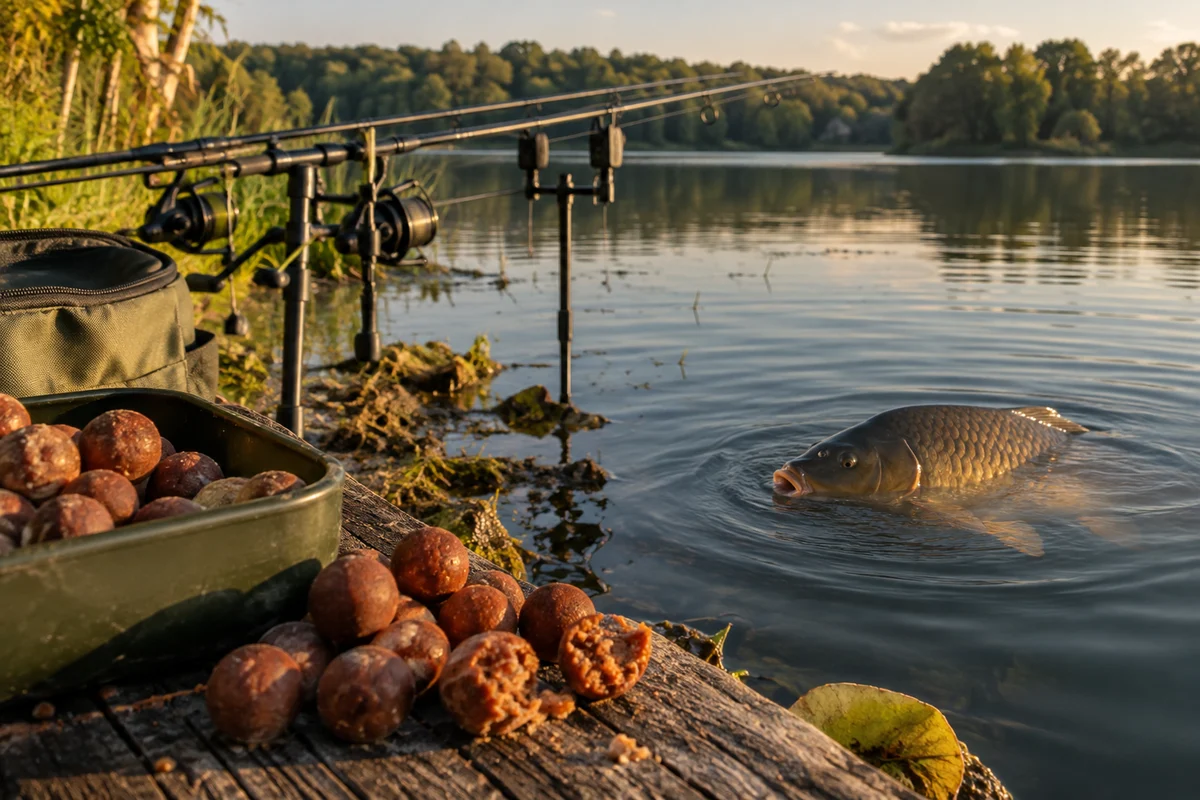
For species such as carp, success can depend on patient observation and a quiet approach as much as casting distance. Surface activity, feeding signs, and the way fish use a pond or lake can guide where to set up. The American Carp Society article provides context on organized carp fishing and the community around it.
Plan the fight before the strike
Before fishing, decide where a hooked fish can be brought under control. Clear loose gear from the landing area, prepare a net or other species-appropriate landing tool, and know how you will handle the fish. If you are in a boat, keep the deck clear and make sure the boat remains safely positioned. From shore, avoid steep banks, unstable rocks, and places where a fish could become entangled.
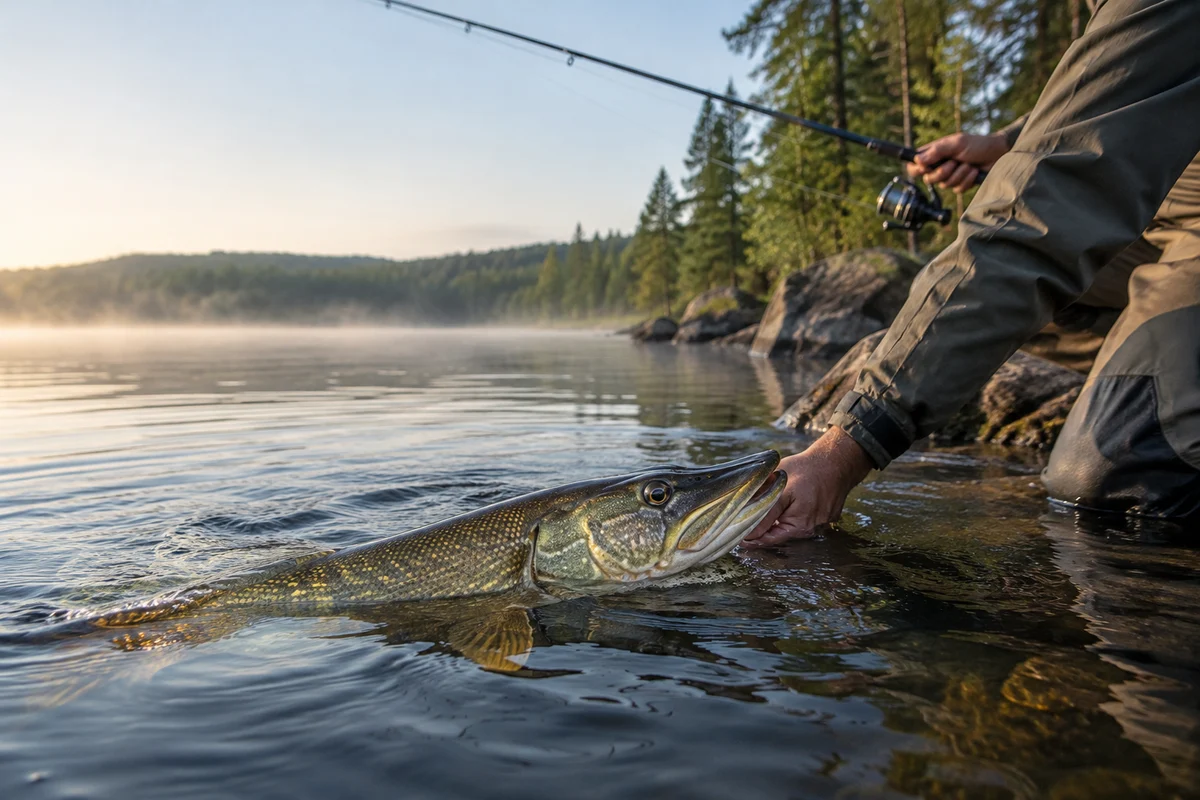
When hooked, maintain steady pressure and keep the line clear of obstacles. Avoid unnecessary force or a long, exhausting fight. Do not lift a heavy fish by its line or by a vulnerable jaw; support its body with wet hands or a suitable landing net, following guidance for the species. Barbless or otherwise appropriate hooks can make release easier where permitted, but always check local rules and choose tackle that gives you control.
If you intend to release the fish, prepare for a quick process: keep it in the water when possible, minimize handling, avoid touching the gills, and return it gently once it can swim strongly. Air exposure and rough handling can cause harm even when a fish appears fine at release. Regulations may require immediate release, specific gear, or harvest under defined limits. Confirm current rules with the relevant state or local wildlife agency before fishing.
Keep records without turning guesses into facts
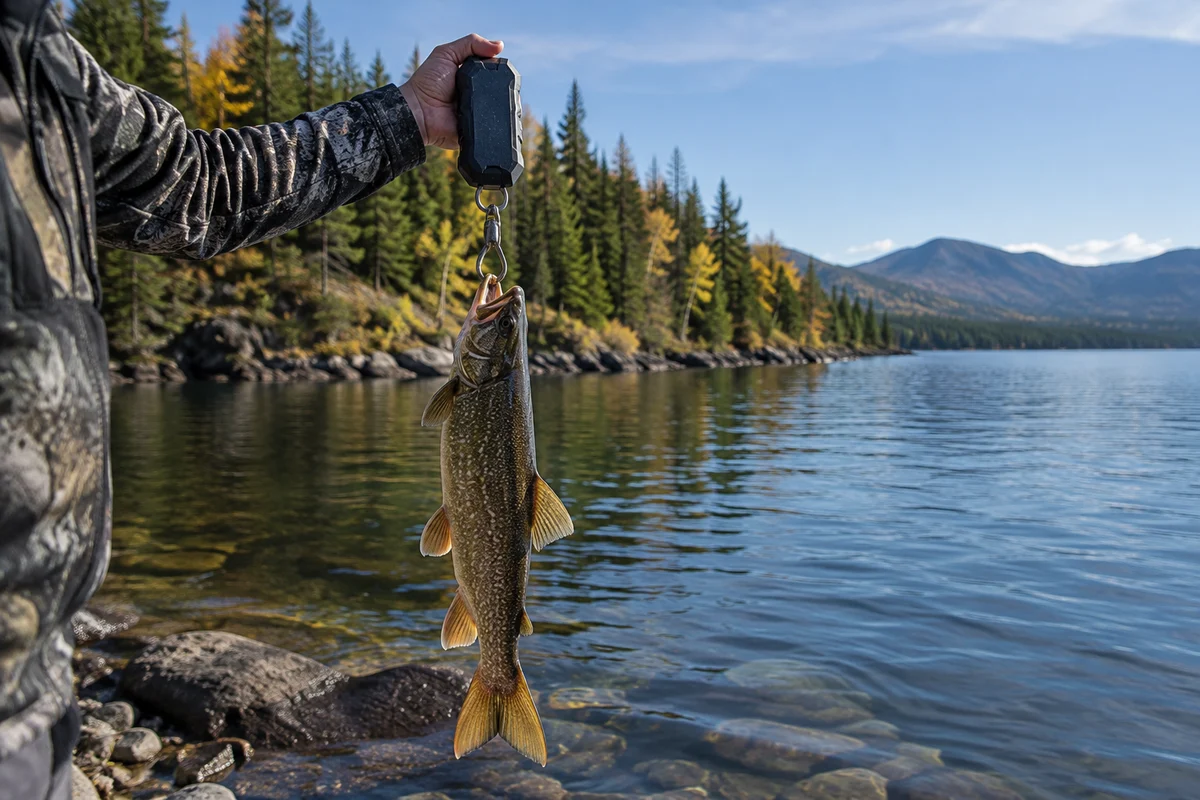
A scale reading or photograph can be misleading if the equipment is uncalibrated, the fish is not positioned correctly, or the image lacks context. If a catch may qualify for an official record, check the recordkeeper’s current requirements before handling or transporting the fish. The International Game Fish Association explains its record program and verification process; requirements vary by category and can change.
For your own log, record the species identification, waterbody, date, approximate conditions, lure or bait, and whether the fish was released or harvested legally. A clear photograph with a measuring reference is more useful than an exaggerated estimate. Never claim an official record based only on appearance, a social post, or an unverified scale.
A simple pre-trip checklist
- Identify the target species and check current seasons, limits, and gear rules.
- Review weather, water conditions, access, and any closures or advisories.
- Choose a few habitat types and a backup location.
- Inspect rod, reel, line, knots, hooks, and landing gear.
- Decide how you will control, photograph, and release or legally retain a fish.
- Bring a measuring tool and record conditions honestly; do not disturb wildlife or habitat for a photo.
Catching monster fish is ultimately a long game. Learn the water, make deliberate adjustments, and respect the fish and the place it lives. A trophy is never guaranteed, but sound preparation makes every encounter safer, more informative, and more likely to be remembered for the right reasons.
For more, explore our fishing tips fishing 2 guides.
Frequently asked questions
What is the best time of day to catch a large fish?
There is no universal best hour. Low light can help some species feed, but season, weather, water temperature, current, and local forage can matter just as much.
Should I use the biggest lure available for monster fish?
Not necessarily. Match lure size and presentation to the target species, available prey, conditions, and how many bites you are willing to trade for a chance at a larger fish.
How should I handle a large fish I plan to release?
Prepare your landing tools first, keep the fish in the water when possible, wet your hands, support its body, minimize air exposure, and follow species-specific guidance and local regulations.
How can I verify a possible fishing record?
Check the official recordkeeper’s current rules before handling the fish. The International Game Fish Association publishes record categories and verification requirements; do not treat an estimate or photograph as proof.
Sources & further information
Consult these primary sources for current regulations, technical information and local guidance.