Carp Fishing Boilies: How to Choose and Use Them
Boilies can simplify carp fishing, but no single recipe or color works everywhere. Use this practical framework to match bait and presentation to the water, season, and feeding signs.
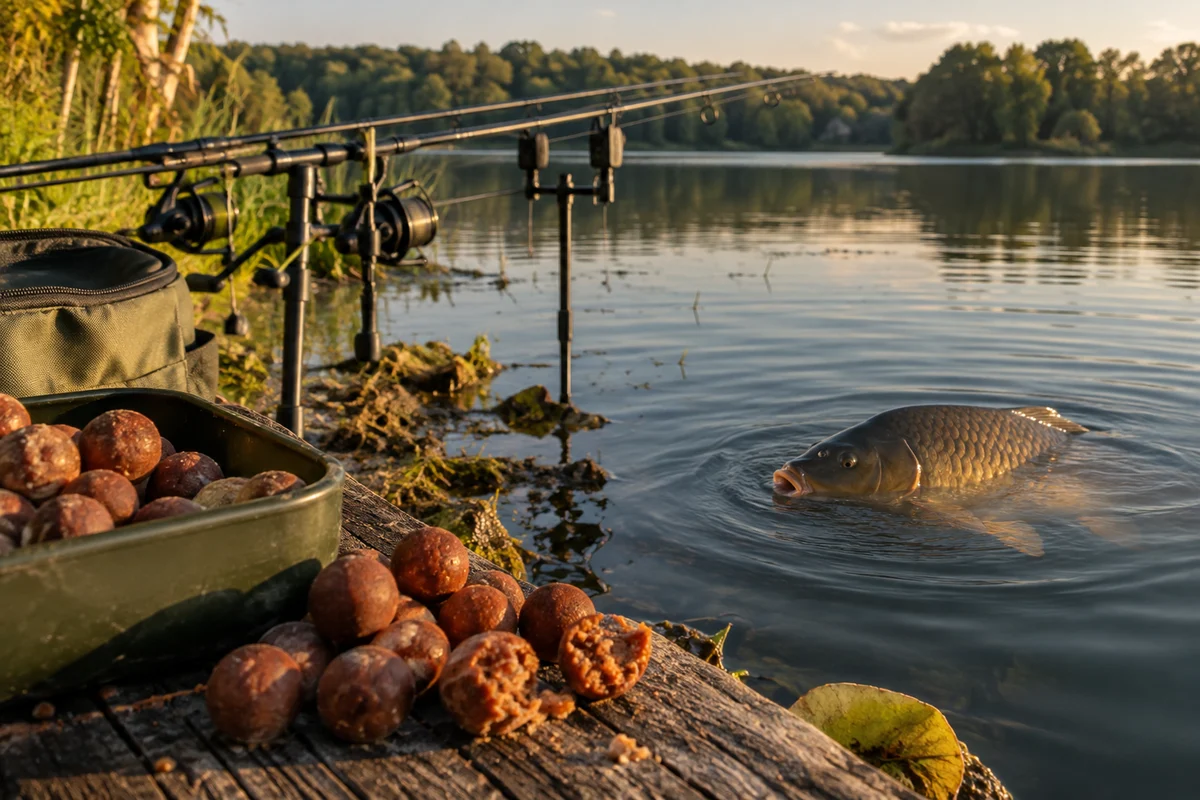
Boilies are compact, durable baits designed to attract carp and stay on a hair rig while smaller fish investigate. Choosing carp fishing boilies is less about finding a universally “best” flavor and more about matching a bait’s size, buoyancy, and scent profile to the fish, the water, and the way you plan to fish. A restrained, observant approach usually beats adding more bait simply because a session is quiet.
This guide explains the main boilie categories, how to make a sensible choice when conditions are unfamiliar, and how to introduce bait without overfeeding. Regulations and fishery rules vary, so check local requirements before fishing.
What are carp fishing boilies?
A boilie is a formed bait made from a base mix and flavoring or other ingredients, then cooked or otherwise processed to create a firm outer surface. Commercial products vary widely; ingredient lists, size, firmness, and buoyancy are not standardized across every brand. Read the package and manufacturer information rather than assuming two baits with similar names behave alike.
Boilies are commonly presented on a hair rig, where the bait sits beside the hook rather than covering its point. They can also be used as loose feed, scattered or introduced in a small, concentrated area. Use tackle and rigs suitable for the venue, and follow fishery rules on hook patterns, baiting methods, and permitted tackle.
For a broader grounding in local methods and seasonal considerations, see our freshwater fishing tips hub.
Choose a boilie by matching four things
1. Bait size and the fishery
Small boilies can be useful when fish are cautious, natural food is small, or you want to introduce only modest quantities. Larger baits may help distinguish your hook bait from tiny particles or nuisance species, but size alone does not guarantee a bite. Some venues have rules about bait dimensions or the total amount of bait allowed.
Start with a size that is easy to present reliably and appropriate for the fishery’s rules. If small fish repeatedly interfere, consider a larger hook bait or a tougher bait, provided the setup remains suitable and lawful. Do not make the hook bait so large that it impairs presentation or safe hooking.
2. Sinking, balanced, and buoyant options
A standard sinking boilie rests on the lakebed. A critically balanced or “wafter” style is designed to counter some of the hook’s weight, while a pop-up is buoyant and can sit above the bottom when rigged appropriately. Actual behavior depends on the bait, hook, rig components, water, and how it is prepared.
Think first about the bottom. On firm, clean ground, a bottom bait may present simply. In soft silt, leaf litter, or low weed, a bait that sits slightly above the debris may be easier for a fish to find—but only if the rig is suited to that situation. If uncertain, test the finished presentation in the margin or a clear container before casting. Make sure the hook remains unobstructed and the bait settles as intended.
3. Scent and food profile
Boilies are sold with a wide range of flavor and food-profile descriptions. These labels can help you organize choices, but they are not a guarantee that carp will prefer one profile on a particular day. Fish may respond to familiarity, natural food, water conditions, angling pressure, and presentation. Product formulations can also change; check current manufacturer information when ingredients matter to you.
On a new venue, a familiar, moderate choice is often a practical starting point. Avoid combining several strong flavors or changing multiple variables at once: if a fish takes, you will have little idea which change mattered. If you have reliable local information, use it as a starting clue, not a promise.
4. Color and visibility
Color is another variable, not a shortcut. A bright bait can stand out against a dark bottom, while a muted bait may blend in. Water clarity, light, bottom color, and the fish’s feeding behavior all affect visibility. When possible, look at the lakebed near shore and choose a presentation that makes sense against it. If visibility is poor, rely on accurate placement and a suitable baiting approach rather than assuming a vivid color will solve the problem.
A practical first-session decision framework
Use this sequence before changing bait repeatedly:
| What you observe | A reasonable starting choice | What to check next |
|---|---|---|
| Clean, firm bottom and signs of carp feeding | A standard sinking boilie, with a small amount of matching loose feed if permitted | Whether fish return to the area and whether the hook bait remains intact |
| Soft silt, light debris, or sparse weed | A balanced or buoyant presentation suited to the rig | Test how it settles; avoid burying the hook bait or masking the hook point |
| Small fish or nuisance species removing bait | A firmer or somewhat larger hook bait, within venue rules | Confirm the bait still presents correctly and that the hook bait is not oversized |
| Clear water and wary fish | A restrained amount of feed and a low-disturbance approach | Observe from a distance; avoid repeated recasting over active fish |
| No clear signs and unfamiliar water | One dependable bait choice and a small, controlled trial | Check location, depth, wind, and fish activity before blaming the flavor |
This is a starting framework, not a formula. Carp behavior changes between venues and through the year. Keep notes on location, weather, bait, and presentation so that future choices are based on your own observations rather than a claim that one bait works everywhere.
How much bait should you introduce?
There is no universally correct quantity. Fishery rules, water temperature, fish activity, other anglers’ baiting, and your time on the water all matter. A conservative start reduces the chance of filling a feeding area when fish are not present. You can add a little more if you see sustained feeding activity and the venue allows it; removing excess bait is not an option once it is in the water.
Spread bait only when that suits the approach and conditions. A compact patch can make sense when presenting a hook bait accurately to a known feeding area. A broader spread may help search an area, but it can make locating the hook bait less predictable. Avoid introducing bait near swimmers, waterfowl, or sensitive habitat, and never leave bait containers or packaging behind.
Presentation and careful observation
Before casting, inspect the hook bait and rig. Make sure the bait is secure, the hook point is clear, and the rig is suitable for the bottom. Where rules require barbless hooks or particular rig arrangements, comply. Handle carp with wet hands, keep fish low over a suitable unhooking mat, and return them promptly with care. Follow the fishery’s fish-handling guidance.
Then give the swim time. Recasting too often can disturb fish, while leaving a damaged or missing bait in place is unproductive. Set a reasonable check interval based on nuisance fish, water conditions, and venue advice. If you are not getting indications, assess whether carp are present and feeding before cycling through colors and flavors.
If fishery context or carp conservation is part of your interest, our article on the American Carp Society offers a related starting point. For a wider look at destination planning, see best fishing destinations.
Common mistakes to avoid
- Treating a flavor label as proof. Brand descriptions are useful for identifying a product, but local conditions and presentation still matter.
- Changing everything at once. Change one variable—such as size or buoyancy—then give the adjustment a fair trial.
- Overfeeding on a quiet session. More bait cannot compensate for fishing where carp are absent or inactive.
- Ignoring the lakebed. A bait that disappears into debris may be less effective than a well-matched presentation.
- Assuming products stay identical. Formulas, packaging, and availability can change. Consult the manufacturer for current details.
- Forgetting venue rules. Some waters restrict bait types, quantities, rigs, or feeding tools. Confirm before setting up.
A simple checklist before casting
- Confirm the venue’s bait, rig, and fish-handling rules.
- Look for signs of carp and choose a plausible location.
- Match bait size and buoyancy to the bottom and nuisance-fish pressure.
- Test the hook-bait presentation and ensure the hook point is clear.
- Introduce a restrained amount of feed, if permitted.
- Observe, record what happens, and adjust one factor at a time.
Boilies are useful because they offer durable, repeatable presentation—not because they remove the need to read the water. Begin with a sensible bait, keep feeding controlled, and let evidence from the session guide your next adjustment. For questions about a specific product’s ingredients or current formulation, consult its manufacturer; for local restrictions, consult the fishery and relevant authorities.
Frequently asked questions
What size boilie should a beginner use for carp?
Choose a manageable size that suits the venue’s rules, fish activity, and nuisance-fish pressure. There is no single size that works everywhere.
Are sinking boilies or pop-ups better?
Neither is universally better. Match buoyancy to the lakebed and rig, then test how the finished presentation settles before casting.
How much boilie bait should I put in?
Start conservatively and follow fishery rules. Add only if you observe sustained activity and conditions support feeding; excess bait cannot be retrieved.
Do bright boilies catch more carp?
Not reliably in every situation. Color visibility depends on water clarity, light, bottom color, and fish behavior, so treat it as one variable among several.
Sources & further information
Consult these primary sources for current regulations, technical information and local guidance.