Turkey Calling Tips: A Field Guide to Better Conversations
Effective turkey calling is less about performing a perfect sequence than about reading the bird, choosing a sensible setup, and keeping your calling restrained. This guide covers common calls, practical sequences, and adjustments for changing conditions.
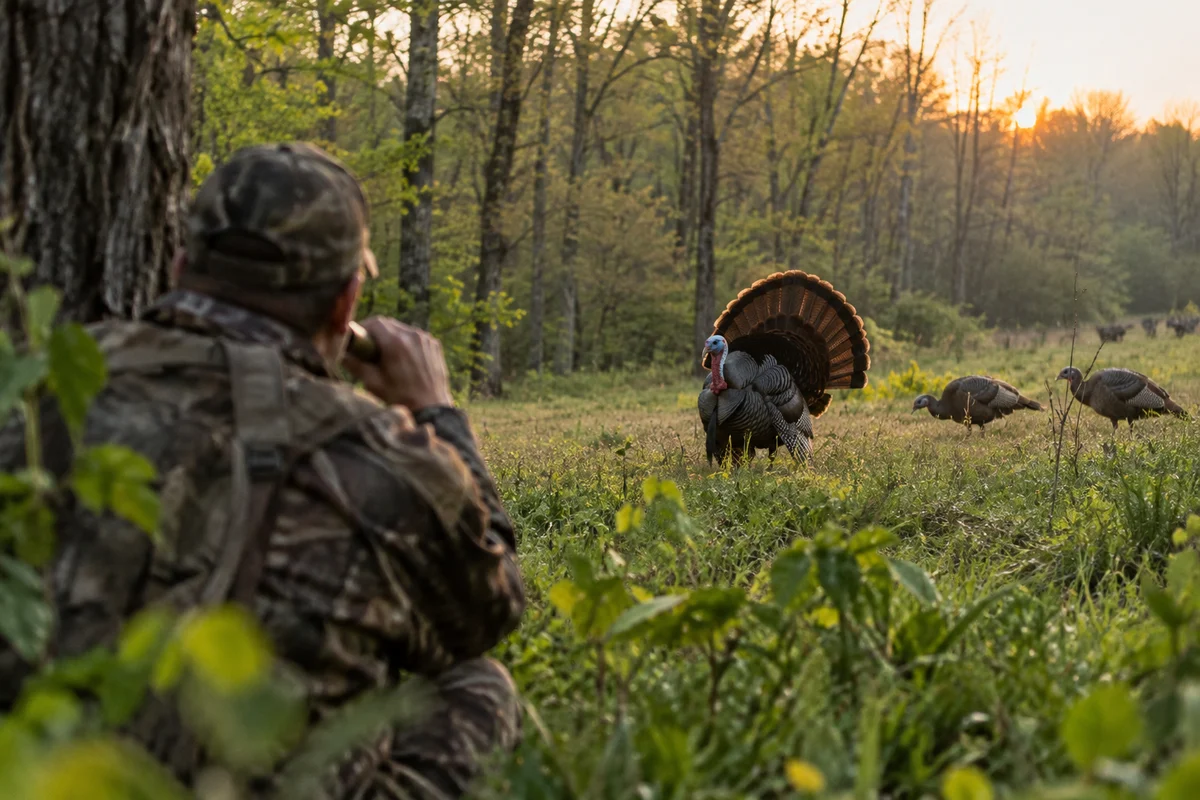
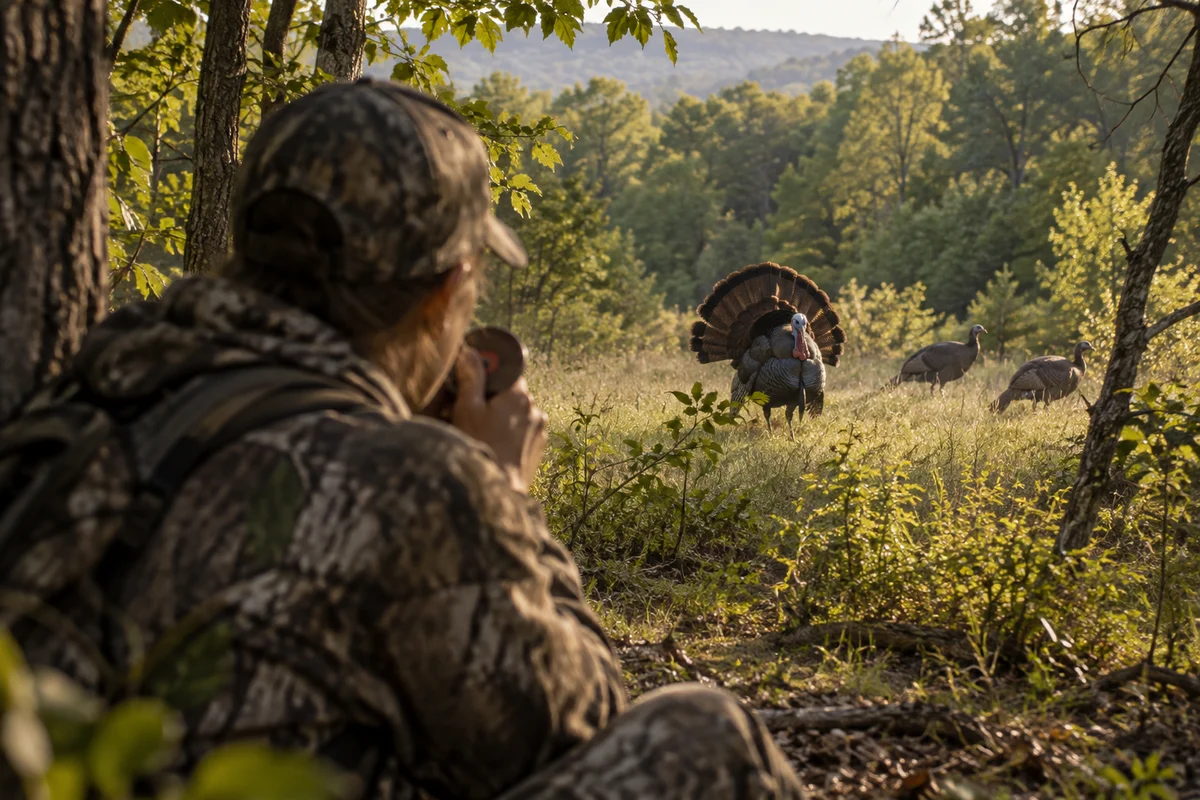
Turkey calling tips matter because a call is only one part of a hunting setup. Good woods sense, safe positioning, and patience usually matter more than a complicated string of sounds. The aim is not to make every turkey answer; it is to sound plausible, avoid pressuring a bird, and create an opportunity when local rules and conditions allow.
Start by learning what the common calls are meant to communicate, then practice enough to make a few simple sounds consistently. If you are new to the subject, our turkey hunting hub gathers related field guides, including advice on choosing a turkey call and turkey hunting strategies.
What turkey calls should you learn first?
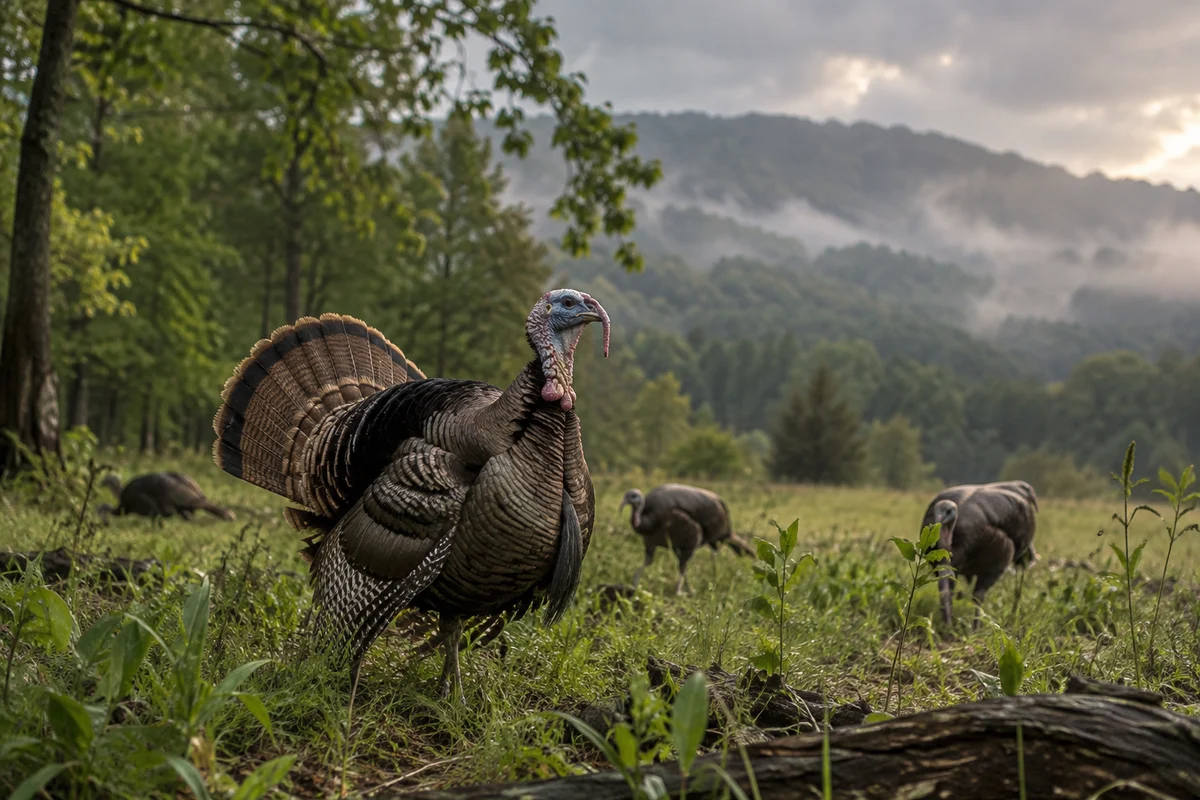
A small, dependable vocabulary is more useful than trying to imitate every sound in a turkey’s repertoire. The basic yelp is a series of notes commonly associated with contact calling. Clucks are short, separated notes; purrs are soft rolling sounds that can suggest contentment or close-range communication. A kee-kee is a whistle-like call often associated with young birds, while a gobble is a loud announcement that carries risks and is restricted in some places or circumstances.
These descriptions are useful field shorthand, not a guarantee that a particular sound has one fixed meaning. Wild turkeys respond according to season, flock composition, pressure, habitat, and what they are doing at that moment. A sound that draws a response one morning may be ignored the next.
Choose a call you can operate safely and repeatably. Box calls, pot-and-striker calls, and mouth calls each have different handling and learning curves. A handheld call can be easier to learn but occupies a hand; a mouth call can leave hands free but takes practice and should not distract you from safe firearm handling. Learn the call maker’s care instructions, and avoid practicing while driving or while attention must be on another task.
How do you practice without overcomplicating it?
Practice at home or in another safe, appropriate place before the season. Begin with a few clean yelps, then work on spacing, volume, and stopping cleanly. Record yourself if useful, but treat recordings as a practice aid rather than a definitive standard: calls vary naturally, and an exact imitation is not required.
A simple practice routine:
- Make a short series of evenly spaced yelps.
- Pause, listen, and repeat at a softer volume.
- Add a few clucks or purrs only after the basic sound is controlled.
- Practice operating the call while seated and still, with your hunting gear arranged safely.
- Stop if you find yourself rushing, scraping too hard, or making sounds you cannot reproduce reliably.
A companion can help by listening from a distance, but set clear boundaries and keep all firearms unloaded and secured during practice. Do not use live ammunition as part of practice. If using a mouth call, keep it clean and stored according to its instructions.
When should you call—and when should you wait?
Calling is a way to communicate, not a button that summons a bird. If a gobbler answers, resist the urge to answer every gobble. A brief, measured response followed by quiet can give a bird room to approach and can help you hear movement. If the bird is moving toward you, additional calling may be unnecessary. If it is moving away, repeated louder calling can sometimes increase pressure rather than solve the problem.
If you hear no response, first consider whether you have a safe, legal, and sensible position. Listen for scratching, wingbeats, drumming, and movement. Give the woods time to settle. A few calls spaced out over a period of listening are generally easier to interpret than constant calling, but there is no universal interval or sequence that works in every landscape.
Use this decision framework as a starting point, not a fixed recipe:
| What you observe | Sensible adjustment | Why it may help |
|---|---|---|
| A bird answers and seems to close distance | Lower volume, pause, and stay still | More calling may be needless and can reveal your position |
| A bird answers but remains distant | Try one restrained response, then listen | The bird may be occupied, blocked, or unwilling to approach |
| No answer after a short, quiet sequence | Wait, reassess wind and access, or move only when safe | Silence does not prove no birds are present |
| Hens are calling nearby | Avoid trying to out-shout the flock; consider waiting | A gobbler may already be with birds or moving with them |
| Another hunter may be in the area | Stop calling and identify your location safely | Calls can draw people as well as wildlife |
Never approach a sound or call toward an unseen person. Before changing locations, identify a clear route and keep the firearm pointed in a safe direction. Follow local rules for seasons, legal shooting hours, calls, decoys, and access.
How should you adjust for terrain and conditions?
Sound carries differently across open fields, timber, ridges, and wet ground. A call that seems moderate to you may travel farther than expected in quiet conditions. Start softer than instinct suggests, especially in open country or when you suspect a bird is close. In wind or steady background noise, a slightly stronger call may be easier to hear, but increasing volume should not be the automatic response.
Wind direction matters for more than sound. Set up with awareness of how a bird might approach and how your scent may travel. Avoid moving through likely travel routes simply to get closer to a responding bird. A patient setup with a safe field of view is preferable to hurrying toward a sound without knowing what lies beyond it.
Rain, leaf cover, and changing temperatures can affect both sound and movement. Rather than assuming a particular weather condition guarantees a response, use your ears and adapt to what is actually happening. If conditions make it difficult to identify targets or maintain safe control, do not take a shot.
What are common calling mistakes?
Calling too often. Continuous calling can make a setup sound unnatural and leaves less time to hear a quiet approach. Build pauses into your routine.
Changing calls without a reason. Switching tools or styles after every unanswered sequence can distract you from reading the situation. Master one reliable call before adding others.
Trying to win a volume contest. A loud call is not automatically more convincing. Close birds may need very little sound, and loud calling can make your location obvious.
Moving too soon. An unanswered bird may be approaching silently, feeding, or separated by terrain. Listen before deciding that a move is necessary.
Ignoring other hunters. A gobble or hen call does not establish that the area is free of people. Wear required safety clothing, identify your target and what is beyond it, and never shoot at sound or movement alone.
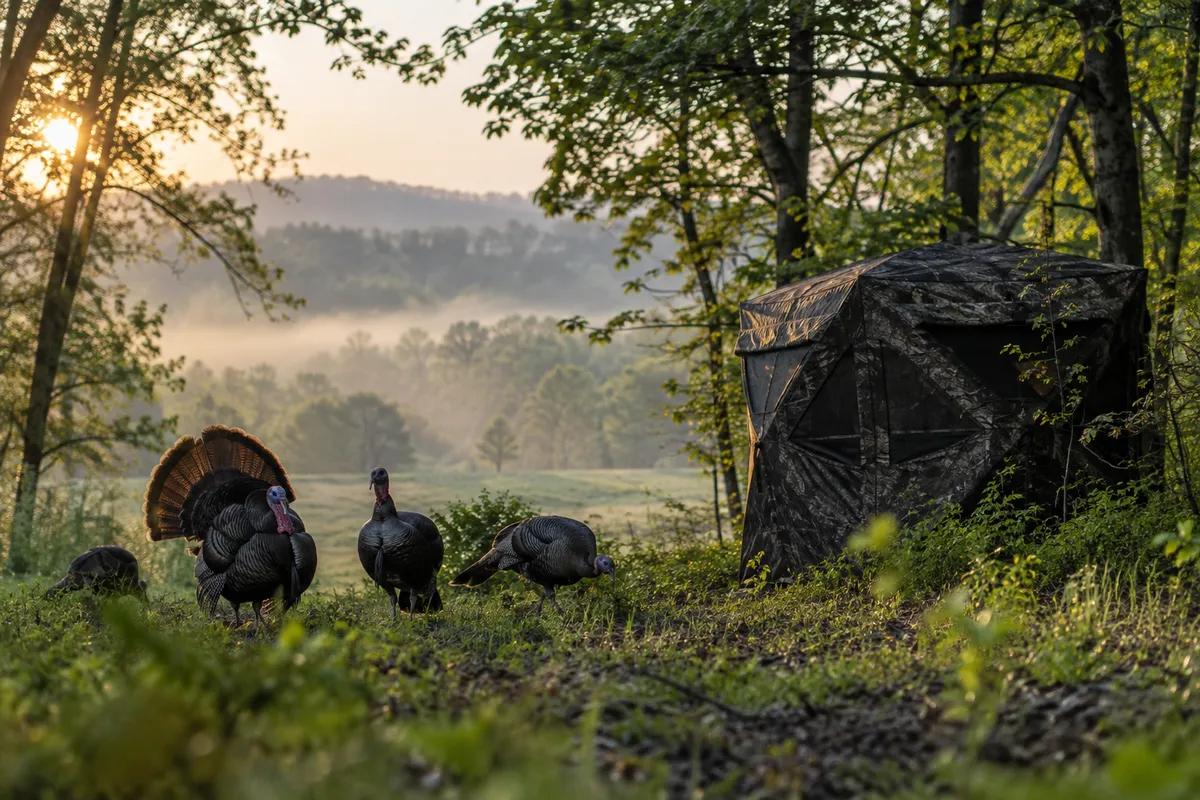
Treating a decoy as a substitute for judgment. Decoys can affect how a bird approaches, but local rules differ and visibility matters. Use them only where legal, place them with a safe background, and review our overview of turkey decoys for considerations beyond calling.
How do you combine calling with a safe setup?
Choose a location where you can sit comfortably, see the area in front of you, and keep a solid background behind you. Avoid skylining yourself. Keep the muzzle pointed in a safe direction, the safety engaged as appropriate, and your finger outside the trigger guard until you have identified a legal target and made the decision to shoot. Follow your firearm’s manual and the safety guidance provided by recognized hunting authorities.
Wear the blaze-orange or other safety clothing required by your jurisdiction, including when moving to and from a setup. Some places have specific rules about fluorescent clothing, decoys, or identifying a target; check the current regulations rather than relying on a general article. Store firearms securely when not in use, and transport them in accordance with local law.
A call should never encourage an unsafe shot. Do not shoot at a bird obscured by brush, at a sound, or toward a ridge or structure when you cannot see what lies beyond. If another hunter is nearby, stop calling and make your presence known without sudden movement or weapon handling.
A practical calling checklist
Before the hunt, confirm the season dates, legal hours, permitted equipment, tagging requirements, and access rules from the wildlife agency responsible for the location. Practice your chosen call and inspect your gear. Tell someone where you will be and when you expect to return.
At the setup, settle in before calling. Listen first. Use a small number of controlled calls, then give the woods time. If a bird answers, notice direction and changes in sound rather than focusing only on the next sequence. Keep your body still, your sight lines safe, and your decisions within the law.
After the hunt, clean and store calls as their makers recommend. Note what conditions you encountered—wind, terrain, flock activity, and how the bird responded—without assuming the same pattern will repeat. Those observations help refine your judgment far more than memorizing a supposedly perfect script.
The most useful turkey calling tips are simple: practice a few calls until they are dependable, call with a purpose, listen longer than you talk, and let safety and local regulations set the boundaries. A convincing sound can create a chance, but patience and sound decisions determine whether that chance is worth taking.
Frequently asked questions
How often should I call to a turkey?
There is no universal schedule. Use a brief, restrained sequence, then pause and listen; reduce calling if a bird is approaching or the woods are quiet.
What is the easiest turkey call for a beginner?
Many beginners find a box or pot-and-striker call easier to produce consistent sounds with than a mouth call, but comfort and practice matter. Follow the manufacturer’s instructions.
Should I answer every gobble?
No. A short response followed by silence can be more useful than answering repeatedly, especially if the bird seems to be moving closer.
Can I use a turkey call anywhere during hunting season?
No. Seasons, hours, permitted calls, decoy rules, and other requirements vary by jurisdiction and location. Check current regulations from the responsible wildlife agency.
Sources & further information
Consult these primary sources for current regulations, technical information and local guidance.