Carlyle Lake Fishing: Find White Bass by Season
Carlyle Lake can offer productive white bass fishing, but success depends on reading seasonal movement and adapting to a large, changing reservoir. Use these practical cues to plan a trip without relying on fixed hotspots or unverified catch claims.
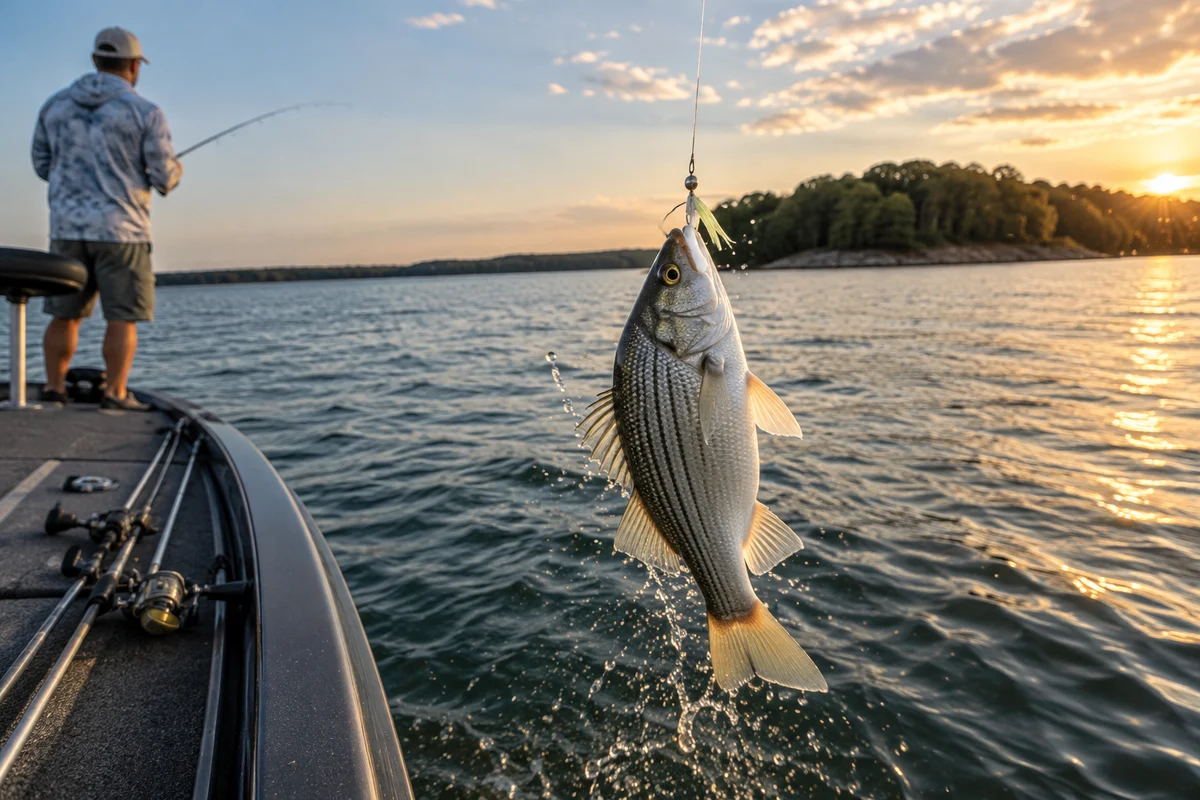
Carlyle lake fishing for white bass is less about finding one secret spot than understanding when fish move, how wind and water conditions affect access, and where baitfish activity concentrates. Carlyle Lake is a large reservoir in southern Illinois, so a plan that works on a calm morning may need revision when wind, water level, or seasonal conditions change. Treat the ideas below as a framework, then check current access, regulations, and weather before leaving.
White bass are schooling fish, and their seasonal movements can bring them within reach of shore or keep them dispersed across open water. Rather than assuming a particular cove or point will produce, look for repeatable clues: birds working over bait, surface disturbance, current or inflow, and changes in depth or cover. The Illinois Department of Natural Resources is the authoritative starting point for state fishing rules and local information; verify current regulations before fishing.
When is the best time to target white bass at Carlyle Lake?
Spring often draws attention because white bass move toward tributary areas to spawn, but timing varies with water temperature, flow, and weather. A cold spell can slow movement; rising water and spring rains can alter clarity and access. In summer and early fall, fish may feed in schools around open-water baitfish, sometimes pushing forage toward the surface. In cooler months, their location and activity can be less predictable, so use fresh observations rather than carrying over a summer pattern.
Think in terms of conditions, not calendar promises. Check the lake level and recent rainfall, note whether tributary water is rising or clearing, and watch for wind that pushes surface forage toward a bank. If you are new to the reservoir, begin near accessible areas with safe footing and an unobstructed view, then expand only when you have a reason to do so. The freshwater bass-fishing hub offers related context on reading bass waters, though white bass behavior and tactics are not identical to largemouth fishing.
Where should you look without relying on a hotspot list?
Use a simple search pattern. Start with visible evidence of forage or feeding fish. If the surface is quiet, examine transitions: a channel or creek mouth, a point that drops into deeper water, or a stretch where wind gathers floating material and bait. These are places to investigate, not guarantees. Fish can move, and a productive-looking feature may be empty at a given moment.
From shore, prioritize legal public access, safe banks, and the ability to cast without crossing other anglers. A boat gives more options but also increases the importance of navigation awareness, weather checks, and respecting restricted areas. Carlyle Lake’s size can make an ambitious search inefficient; select a manageable section and fish it methodically before moving.
| What you observe | Useful next step | What it does not prove |
|---|---|---|
| Birds repeatedly diving over open water | Watch from a safe distance and cast around the activity | That fish will remain there or bite immediately |
| Small fish dimpling or scattering near the surface | Try a moving presentation at the depth where activity appears | That every disturbance is white bass |
| Wind pushing into a bank or point | Check for bait and safe casting conditions along the windward edge | That wind always improves fishing |
| No surface activity after a short search | Probe likely depth changes with a controlled retrieve | That the area is entirely fishless |
| Rising or muddy tributary water | Reassess access, visibility, and safe footing before fishing | That spawning fish are present or accessible |
What tackle and lures make a useful starting kit?
A medium-light or medium spinning outfit is a versatile starting point for modest lures and schooling fish. Match line and tackle to the lure, local conditions, and any other species you may encounter; there is no need to overcomplicate a first outing. Carry a few compact options that cover different presentations: a small jig, a spoon or other reflective metal lure, and a small minnow-shaped hard bait. Choose sizes and colors that suit water clarity and local forage rather than assuming a single combination is universally best.
When fish are visibly feeding near the surface, a cast-and-retrieve presentation can cover water efficiently. If the activity is deeper or less obvious, let a lure sink to a chosen depth and retrieve steadily, varying pace in small increments. Keep hooks sharp and handle fish carefully, especially when releasing them. Avoid casting into a crowded school of anglers or working a boat through active fishing from close range.
The broad principles of lure selection overlap with other bass fishing, but details matter. For a comparison of another moving-lure option, see how to choose a spinnerbait for bass. It is a reference for lure decision-making, not a claim that a spinnerbait is the right white-bass choice in every Carlyle Lake condition. Likewise, early-season lipless crankbait considerations can help explain how retrieve speed and depth affect a search bait, while species, forage, and local conditions should guide your own selection.
How can you adapt when fish are not showing?
Give a location a deliberate but limited trial. Make several casts at different angles, change retrieve speed or depth, and then move to another nearby feature if there is no sign of life. Repeatedly changing lures without changing depth or location can obscure what you are learning. Keep notes on approximate time, wind direction, water clarity, and where activity occurred; a short record helps distinguish a recurring pattern from a one-off observation.
If you are fishing from shore, walk only on permitted routes and avoid unstable or flooded banks. After rain, runoff can bring debris and create slick footing. On a boat, check the forecast and lake conditions before launching, wear a properly fitted life jacket, and make a conservative plan for returning if wind rises. Do not assume that a visible point or shoreline is safe to approach simply because it looks calm from a distance.
A practical trip checklist:
- Confirm current Illinois regulations, access rules, and any site-specific closures.
- Check forecast, wind, recent rain, and lake-level information.
- Bring a small range of lure styles and appropriate tackle rather than a large, unfocused assortment.
- Identify a primary area and one or two alternatives before starting.
- Watch for baitfish and feeding activity, but verify what you see through careful observation.
- Handle fish with wet hands when possible and follow current harvest rules.
- Leave access areas clean and give other anglers room.
What regulations and local details should you check?
Rules can change, and requirements may depend on species, season, location, and method. Consult the Illinois Department of Natural Resources for current licensing and statewide rules, then check official Carlyle Lake information for access, water conditions, and any site notices. The U.S. Army Corps of Engineers manages Carlyle Lake, so its official lake pages are useful for current recreation and facility information. If a rule is unclear, seek clarification from the agency rather than relying on an old forum post or an outdated trip report.
White bass are not a reason to overlook other users or wildlife. Keep a respectful distance from nesting or feeding birds, avoid disturbing shoreline vegetation, and follow posted restrictions. A flexible plan and careful observation are more useful than treating any online location suggestion as a guarantee.
A simple field decision framework
Begin by asking three questions: Is there visible forage? Is the water or wind concentrating it in a safe, accessible place? Can you reach the likely depth with the tackle you brought? If the answer to the first two is yes, fish the activity with a controlled moving presentation. If surface signs are absent, search a nearby depth transition with a lure that can be worked at different levels. If conditions are unsafe or access is closed, change plans rather than forcing the trip.
That approach keeps Carlyle Lake fishing grounded in what the lake is showing on the day. White bass can move quickly, and no general guide can promise a bite, a particular location, or a specific seasonal date. Use official sources for rules and conditions, adjust patiently, and let current evidence—not a fixed recipe—decide your next move.
Frequently asked questions
When do white bass move toward tributaries at Carlyle Lake?
Spring is a common period for spawning movements, but timing depends on water temperature, flow, and weather. Check current conditions rather than relying on a fixed date.
What should I bring for white bass fishing at Carlyle Lake?
A light or medium spinning outfit and a few compact lures—such as a jig, reflective spoon, and minnow-shaped bait—provide a flexible starting kit. Match tackle to conditions and local rules.
Where can I check Carlyle Lake fishing rules and access information?
Consult the Illinois Department of Natural Resources for current fishing regulations and the U.S. Army Corps of Engineers’ official Carlyle Lake information for lake access and facility notices.
Sources & further information
Consult these primary sources for current regulations, technical information and local guidance.