Pulsar Digisight N550 Night Vision Riflescope: A Field Guide
A practical, non-commercial guide to understanding the Pulsar Digisight N550 as a legacy night-vision riflescope. Learn what to verify in manuals and local regulations, and how to assess condition and suitability without relying on guessed specifications.
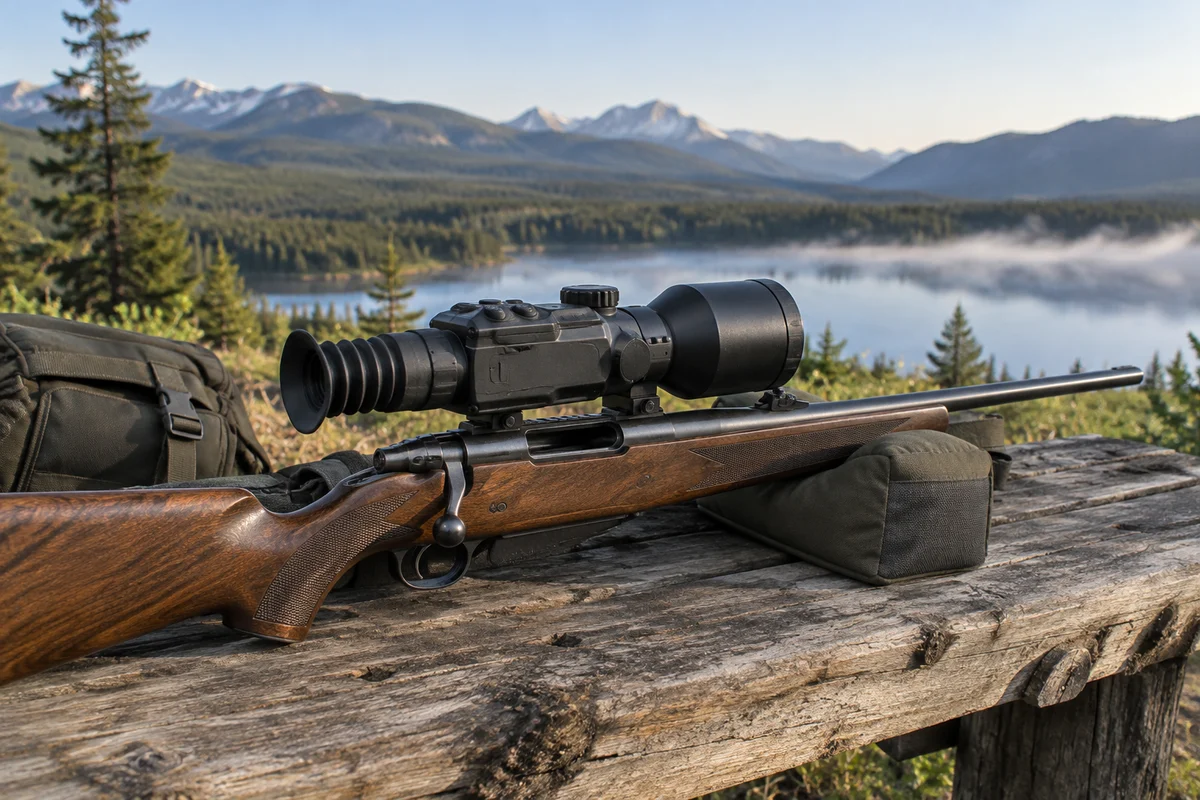
The Pulsar Digisight N550 night vision riflescope is best approached as a legacy electro-optic device: a piece of equipment whose exact capabilities, condition, and support can depend on the individual unit and its documentation. If you have encountered one in an older equipment list or are researching night-vision optics for hunting history, the useful questions are not just what the model name suggests, but what its original manual says, whether the unit is complete and functional, and whether its use is lawful where you are.
This guide is informational, not a recommendation to acquire or use a firearm accessory. It does not assume particular features or specifications for every N550. For related context, see the guns and firearm-information hub, our overview of the Armalite AR-30A1, and the guide to the Bergara chassis.
What does the Pulsar Digisight N550 name tell you?
The name identifies a Pulsar Digisight product associated with night-vision riflescope equipment. It does not, by itself, establish the condition, included accessories, software or hardware revision, operating limits, or present-day service availability of a particular unit. Nor should a model listing be treated as a substitute for its original owner’s manual.
Older optics often circulate with incomplete packaging, replacement parts, or descriptions copied from earlier listings. Two items carrying the same model designation may therefore arrive with different accessories or documentation. Treat claims about functions, compatibility, and performance as unverified until matched to a manufacturer document for the exact version.
What should you verify before evaluating an older unit?
Start with identity and documentation rather than assumptions. Record the model marking and any revision or serial information, then compare them with the available manual or manufacturer support information. Ask whether the documentation is for the N550 specifically, not a visually similar Digisight model.
A careful, non-operational review can cover the following points:
| Check | What to establish | Why it matters |
|---|---|---|
| Model identity | Exact name and any visible revision markings | Similar product names may refer to different versions |
| Documentation | Manual and supplied instructions match the unit | Operating limits and controls should not be guessed |
| Completeness | Included components are identified against the manual | Missing items can affect intended use or safe handling |
| Condition | Exterior, lenses, seals, controls, and battery area show no obvious damage | Wear or damage can make performance unreliable |
| Support | Manufacturer or qualified service channel can clarify serviceability | Legacy products may have limited parts or support |
| Applicable rules | Local hunting, night-use, and firearm regulations are checked | Rules differ by jurisdiction and species |
Do not power or operate a questionable device merely to test it. If there is corrosion, impact damage, a cracked lens, a compromised battery compartment, or uncertainty about safe mounting, seek help from a qualified service professional and follow the manufacturer’s instructions. Keep the firearm unloaded and secured during any inspection, and separate the optic from firearm handling whenever practical.
How do night-vision optics differ from ordinary scopes?
A conventional riflescope presents an optical view of available light; a night-vision device uses an electronic imaging system to produce a view under low-light conditions. The exact approach and performance characteristics vary by product generation. Ambient conditions, obstructions, weather, background contrast, and the device’s condition all influence what a user can see. An image that appears bright is not necessarily detailed enough to identify an animal or distinguish it safely from its surroundings.
That limitation matters in hunting. Positive identification, a safe background, and a clear understanding of what lies beyond the intended target remain essential; an electronic image does not remove those responsibilities. Some jurisdictions restrict or prohibit night-vision equipment for particular hunting activities. Regulations may differ by location, species, season, and method, so check the relevant wildlife agency before any field use. The U.S. Fish and Wildlife Service provides federal wildlife information, while state wildlife agencies are the primary place to confirm many local hunting rules.
How can you judge whether an N550 is suitable for a purpose?
Use a decision framework that puts documentation and legal context ahead of marketing language:
- Define the purpose. Research, collection, or historical comparison has different requirements from field use. Avoid assuming a legacy unit suits a present-day task.
- Confirm the exact version. Match markings and documentation, and ask the manufacturer or qualified service provider about unknowns.
- Check legal constraints first. Confirm rules for the location, species, season, and equipment type before considering use.
- Assess support and condition. A unit with uncertain function or unavailable service may be unsuitable even if its original specifications appear adequate.
- Compare only verified facts. Use the relevant manual and reliable manufacturer information; do not infer capabilities from a product name or another model’s listing.
For broader product context, our Armalite AR-30A1 overview and Bergara chassis guide illustrate why model-specific documentation matters: equipment descriptions are useful only when they correspond to the exact version being discussed. For safe handling and general informational coverage, the guns hub collects related articles.
What are the limits of public information about a legacy model?
A model may be discontinued, supported through a different service channel, or documented in material that is difficult to locate. Listings and forum posts can preserve useful leads, but they are not authoritative proof of specifications or operating limits. Even manufacturer material should be matched to the precise model and revision where possible.
Accordingly, this article does not assign numerical performance claims, promise compatibility with a particular firearm, or declare that parts or service remain available. If the original manual cannot be found, contact Pulsar through its official site or an authorized support channel and ask what documents apply to the specific unit. If that cannot resolve an important uncertainty, treat the feature as unknown rather than filling the gap with assumptions.
The practical takeaway is simple: understand the N550 as a legacy night-vision riflescope whose real-world condition and documented capabilities must be evaluated individually. Preserve the manual, verify local law, keep firearm safety central, and rely on confirmed model-specific information rather than the model name alone.
Frequently asked questions
Is the Pulsar Digisight N550 still supported?
Support and parts availability can change over time. Check directly with Pulsar or an authorized service channel using the exact model and revision information.
Can a Pulsar Digisight N550 be used for hunting at night?
That depends on current local rules, species, season, and method. Confirm the regulations with the relevant wildlife agency before any field use.
Where can I find reliable specifications for the N550?
Use the original manual or manufacturer documentation that matches the exact N550 version. Do not assume that information for a similar Digisight model applies.
Sources & further information
Consult these primary sources for current regulations, technical information and local guidance.