Stoeger S4000 E Review: What to Check Before Field Use
A practical, specification-conscious guide to evaluating the Stoeger S4000 E air rifle. Learn how to verify the exact model, assess its fit and operation safely, and check local rules before deciding whether it suits your needs.
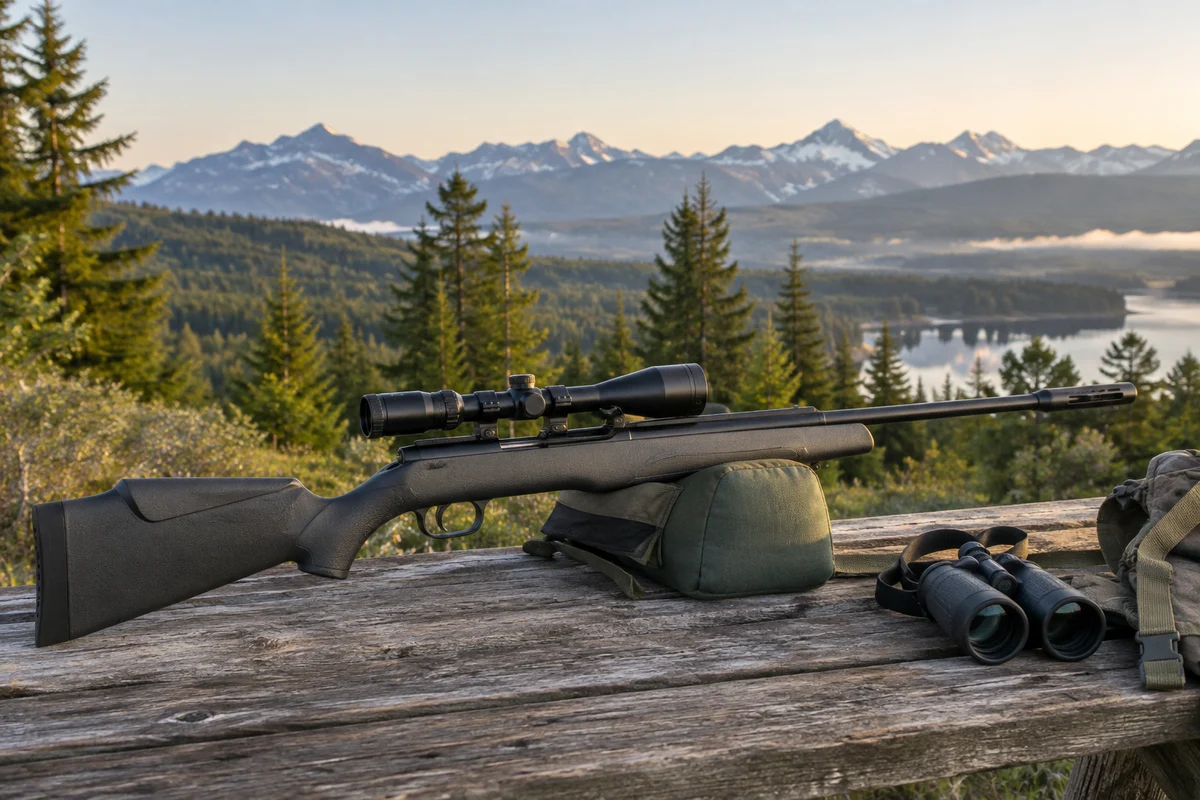
The Stoeger S4000 E review question is best approached as a model-identification and fit exercise, not a contest of unverified claims. Product names can cover different configurations across markets or production periods, and listings may omit details that matter. Before drawing conclusions, confirm the exact rifle and its documentation, then evaluate whether its handling, sights, and intended use match your needs.
This guide is informational, not a hands-on test or endorsement. It does not assign performance figures or assume specifications that may vary. Treat the original manual and current manufacturer information as the authority for the particular rifle in front of you. For the wider context, see the guns and firearms information hub, along with our background on Benjamin 392-series airguns and the Boyds At-One thumbhole stock.
What should a Stoeger S4000 E review establish first?
Start by establishing exactly what “S4000 E” means on the specific item. Read the model marking on the rifle and compare it with the box, paperwork, and manufacturer material. Note the market or country of sale if available. A retailer title alone is not enough: model descriptions can be shortened, copied, or applied inconsistently.
Next, identify the operating system, caliber, sights or optics provisions, and any included accessories from reliable documentation rather than inference. Do not assume that an “E” suffix describes a particular mechanism or package unless the official material says so. If the rifle is secondhand, ask for its manual and original configuration details, but do not rely on a seller’s recollection as a substitute for documentation.
A useful review separates three kinds of information:
| Review question | Best evidence | Why it matters |
|---|---|---|
| What exact configuration is this? | Rifle markings and manufacturer documentation | Similar names can refer to distinct versions or packages. |
| What is the prescribed operation? | Manual for the exact model and market | Controls and safe handling vary by design. |
| What are the stated specifications? | Current manufacturer page or original manual | Retail listings may be incomplete or outdated. |
| Is it appropriate where I live? | Local and national rules, plus landowner requirements | Airgun definitions and restrictions differ by jurisdiction. |
| Does it suit the intended use? | Safe, lawful assessment in an appropriate setting | Fit and usability are individual, not universal ratings. |
If the documents disagree, pause rather than filling gaps with assumptions. Contact Stoeger through its official site or a qualified local airgun professional to clarify the model and instructions.
How can you evaluate fit and handling responsibly?
Handling impressions depend on the individual and should be assessed with the rifle treated as capable of causing injury. First read the manual from beginning to end, and follow its specific loading, unloading, and handling instructions. Keep the muzzle directed toward a safe backstop, keep fingers away from the trigger except when the manual’s safe-use conditions are met, and never point the rifle at a person or animal outside lawful, humane use.
With the rifle confirmed unloaded according to its manual, assess whether you can hold it in a stable, comfortable position without straining. Check that the stock dimensions and overall balance feel manageable for your body and intended setting. Observe whether the sights are clear and adjustable as documented, and whether any supplied optic or accessory is correctly specified for the model. Do not improvise mounting or adjustment procedures; use the manual or a qualified professional.
A “review” should describe criteria, not promise results. For example, note whether the controls are understandable after reading the manual, whether the rifle feels controllable in a safe supervised setting, and whether the sighting arrangement fits the task. Avoid treating a single informal impression as a measure of accuracy or reliability. Those conclusions require a controlled, lawful evaluation and depend on the individual rifle, its condition, ammunition compatibility, and the method used.
What should you verify about condition and documentation?
For a new rifle, compare the package contents against the manufacturer’s listing and inspect it visually without attempting unauthorized disassembly. For a used rifle, look for missing paperwork, visible damage, corrosion, loose or altered-looking components, and signs that the model identification is unclear. A concern about structural condition or operation is a reason not to use it until a qualified professional has assessed it.
Do not attempt repairs, power changes, or other modifications based on online advice. Changes can make an airgun unsafe, violate local rules, or invalidate instructions and warranties. The manual and manufacturer should guide maintenance; when the document is unavailable, ask the manufacturer for the correct version rather than borrowing instructions for a similar-looking model.
Storage is part of the evaluation, not an afterthought. Secure the rifle against unauthorized access, especially by children, and store it in the manner required by local law and the manual. Keep it unloaded when not in use, with any locking or storage measures applied as directed. Transport rules can differ from possession rules, so check both before taking it to another location.
Is the S4000 E suitable for your intended use?
That depends on the lawful purpose, the exact configuration, and the user’s experience. If the intended use is target practice, identify a purpose-built, controlled location with a reliable backstop and permission to shoot. Make sure the pellet or projectile cannot pass beyond the backstop or reach people, animals, roads, or neighboring property. Use eye protection where appropriate and follow range rules.
If considering hunting, do not assume that an air rifle is legal or suitable for a particular species. Laws can specify permitted equipment, minimum requirements, seasons, licensing, and land access. Ethical use also requires the user to understand the equipment, comply with applicable standards, and be confident of a humane outcome. Consult your state or national wildlife agency and local authorities before planning any field use.
For recreational plinking, consider whether a safe place is available and whether the rifle’s operating instructions are manageable for the intended user. Age restrictions, supervision rules, and definitions of firearms or airguns vary. A parent or guardian should verify the law and provide direct, appropriate supervision rather than relying on a product listing’s age suggestion.
A practical decision checklist
Before settling on a view, work through this sequence:
- Identify it: Match the model marking to the exact manual and manufacturer information.
- Confirm the details: Verify caliber, operating instructions, included sights, and stated specifications from authoritative documentation.
- Check condition: If anything appears damaged, altered, or uncertain, do not use it pending qualified assessment.
- Check the rules: Confirm possession, transport, discharge, hunting, and age requirements for your location.
- Assess the setting: Use only a lawful place with permission and an adequate backstop.
- Consider the user: Make sure the handling and instructions are suitable, with required supervision.
- Keep expectations evidence-based: Separate documented specifications from personal impressions and claims you cannot verify.
This framework also makes comparisons more useful. Rather than ranking airguns by a single headline number or retailer description, compare documented configuration, fit, manufacturer support, safe storage needs, and whether each option is lawful and appropriate for the same activity. For a different design context, our overview of Benjamin 392-series pump airguns illustrates why identifying an operating system matters; it does not establish that the models share features.
What are the limits of this review?
This is not a hands-on test, a claim about current inventory, or confirmation of any particular S4000 E specification. No performance, accuracy, or durability conclusions should be inferred. Specifications and availability may vary by market and date; consult the current manufacturer information and the manual tied to the exact rifle. If the model cannot be matched confidently, treat that uncertainty as a reason to seek clarification before use.
The most useful conclusion is therefore conditional: the Stoeger S4000 E may be worth considering only after its identity, instructions, condition, and local legality are established. A responsible assessment relies on documents and safe handling, not an incomplete listing or an assumed feature based on the name.
Frequently asked questions
How do I confirm which Stoeger S4000 E version I have?
Compare the rifle’s model marking with its manual and official Stoeger documentation. Check the market and included configuration, and ask the manufacturer if the records do not match.
Does this review confirm the S4000 E’s performance or specifications?
No. It is not a hands-on test and does not assert unverified figures. Use the manual and current manufacturer information for the exact rifle and market.
Can I use an air rifle for hunting in my area?
Rules vary by location and species. Check current wildlife-agency and local requirements for lawful equipment, seasons, licensing, and land access before any hunting use.
Sources & further information
Consult these primary sources for current regulations, technical information and local guidance.