What Is a Coach Gun? A Field Guide to the Side-by-Side Shotgun
A coach gun is a short-barreled, side-by-side shotgun with two barrels and a break-action design. This guide explains its history, basic operation, variations, and the practical safety and legal questions to consider.
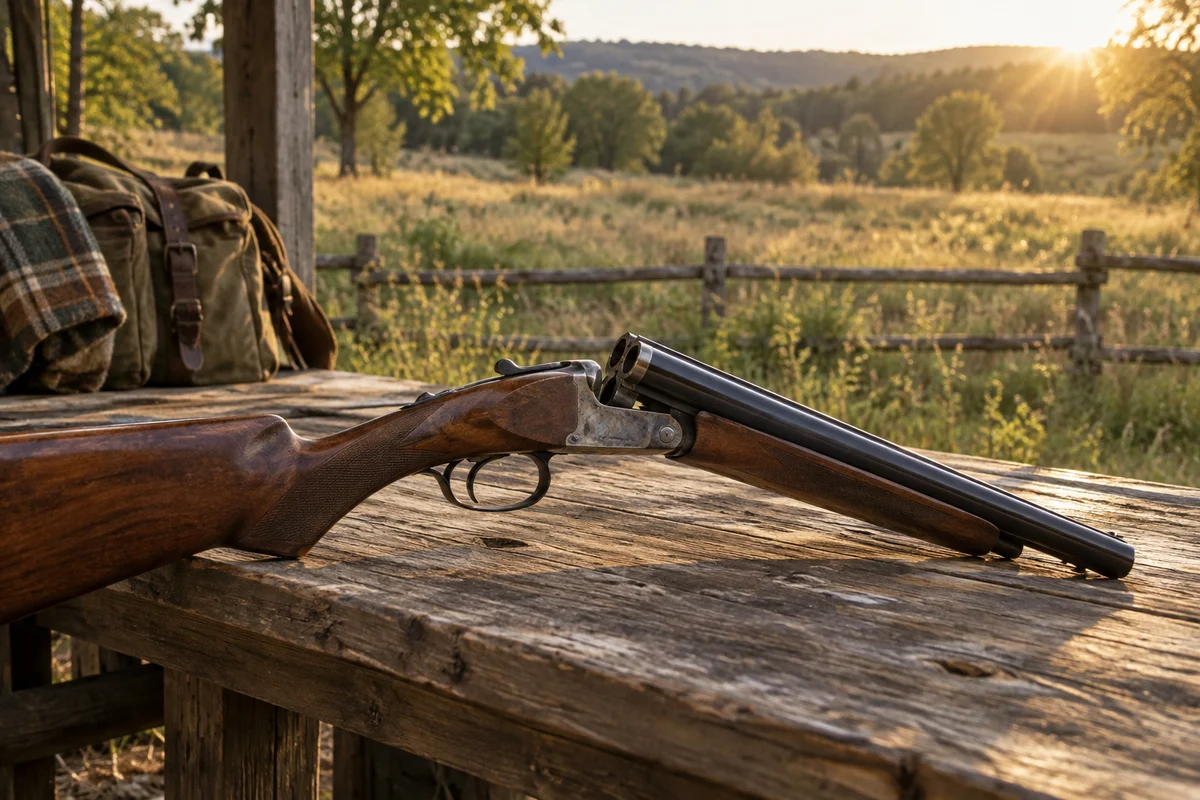
The phrase what is a coach gun usually refers to a compact, side-by-side shotgun with two barrels that hinge open for loading and unloading. The name evokes stagecoach travel in the American West, but today it describes a style of shotgun rather than one universally fixed set of dimensions or features. Barrel length, stock shape, chambering, and other details vary by model and jurisdiction, so the label alone does not tell you how a particular firearm is configured.
A coach gun is best understood as a traditional break-action shotgun with two barrels arranged horizontally. Its simple visual layout makes it easy to recognize; safe handling, legal classification, and suitability for any use still depend on the individual firearm, its condition, and local rules.
What does “coach gun” mean?
The term is commonly used for a relatively compact double-barreled shotgun, most often with barrels side by side. The design is associated with the image of armed guards protecting stagecoaches, but popular imagery should not be mistaken for a precise historical definition. Names and configurations have changed over time, and manufacturers may apply the term to different models.
Unlike a pump-action or semiautomatic shotgun, a typical coach gun has a break-action: the barrels pivot downward at the breech to expose the chambers. Many models have two triggers, while others use one trigger to fire each barrel in sequence. Some provide a selector or other mechanism for choosing a barrel, but details are model-specific. Do not infer a feature from appearance or the words “coach gun”; consult the firearm’s manual and markings.
How is it different from other shotguns?
The main distinctions are its two side-by-side barrels, break-action operation, and often compact overall profile. A conventional over-under shotgun also has two barrels and a break-action, but stacks them vertically. Single-barrel break-actions have one chamber, while pump and semiautomatic designs use different operating systems.
| Feature | Typical coach-gun pattern | What to verify on a particular firearm |
|---|---|---|
| Barrel arrangement | Two barrels side by side | Whether the model is actually a side-by-side configuration |
| Action | Break-action; barrels hinge open | How the maker specifies opening, loading, and unloading |
| Trigger arrangement | Two triggers or a model-specific single-trigger system | Trigger functions and any barrel-selection mechanism in the manual |
| Dimensions | Often shorter than traditional field guns | Exact barrel and overall length, plus applicable legal definitions |
| Intended use | Varies by model and lawful context | Manufacturer guidance, condition, local regulations, and user training |
“Compact” is not a legal category by itself. In the United States, federal and state rules may treat a firearm differently according to its configuration and dimensions. Requirements can also change, and state or local laws may be more restrictive. Check current official guidance or consult a qualified legal professional rather than relying on a product nickname.
What is the basic action, and what does it not tell you?
In a break-action design, the action opens at a hinge so the chambers are accessible. That broad description is not a substitute for the maker’s operating instructions. Opening, checking, carrying, and storing a specific firearm should follow its manual and recognized firearms-safety training. Never assume that an open action alone establishes that a firearm is unloaded; visually and physically verify its condition as instructed, keeping the muzzle pointed in a safe direction throughout.
A two-barrel layout also does not establish that both barrels share the same choke, ammunition compatibility, or point of impact. Those are model-specific matters. Confirm the exact gauge and chamber information marked on the firearm, and use only ammunition expressly compatible with it. If markings are unclear, the firearm is damaged, or its history is uncertain, keep it unloaded and ask a qualified gunsmith to assess it. Do not experiment to resolve uncertainty.
What should you consider before handling or using one?
Start with safety and fit, not the romanticized image attached to the name. Firearms should be treated as loaded until verified otherwise, kept pointed in a safe direction, and handled only by people who understand the operation and have appropriate training. Use suitable eye and hearing protection where applicable, and follow the manual’s instructions and the rules of the range or hunting area.
For a lawful sporting context, assess whether the firearm is appropriate for the activity and the person using it. A compact format can affect fit, handling, and recoil perception; individual experience varies, so no general description can promise comfort or suitability. A qualified instructor can help assess safe handling and fit without relying on assumptions based on the model name.
Before any field use, check current licensing, transport, storage, hunting-season, and permitted-equipment requirements in the relevant location. The U.S. Fish and Wildlife Service provides federal wildlife and hunting information, while state wildlife agencies publish the local rules that govern seasons and methods. Regulations differ across states and can change. See the broader guns and firearm information hub for related informational guides, including an overview of the Benelli Ethos 28-gauge model and a guide to the Browning Citori 725 Pro Trap.
How do you evaluate a specific coach gun responsibly?
Use this field decision framework before handling, transporting, or considering a particular example:
- Identify it: Read the maker, model, gauge, and chamber markings. Match them to the official manual; do not guess from resemblance or a seller’s description.
- Check its status and condition: Confirm the firearm is unloaded using the manufacturer’s method. If it is worn, modified, corroded, or of uncertain provenance, do not use it until a qualified gunsmith has evaluated it.
- Confirm compatibility: Verify that the ammunition type and chamber specification are explicitly approved by the manufacturer. If anything is uncertain, stop and seek qualified help.
- Check the law: Review current federal, state, and local rules for possession, configuration, transport, storage, and any intended hunting use.
- Assess safe fit and training: Seek instruction from a qualified firearms-safety instructor. Do not rely on the “coach gun” label as evidence that a firearm is suitable for a particular person or purpose.
- Store securely: Keep firearms locked and inaccessible to unauthorized users; store ammunition securely and follow applicable laws and the manufacturer’s guidance.
This process is deliberately conservative. A used firearm’s condition and prior history may be unknown, and legal status can turn on details that a general article cannot determine.
Is a coach gun still relevant today?
It remains a recognizable form of double-barreled shotgun, and some people encounter it through sporting, collecting, or historical-interest contexts. Its association with the Old West is part of its cultural image, not a complete account of how a specific firearm was made or used. Modern model names may also cover a range of configurations, so descriptions should be checked against primary documentation.
For product-specific details, use the manufacturer’s current documentation and consult a qualified gunsmith when condition or compatibility is in question. For regulations, use official government sources rather than forum posts or old listings. No broad label can replace those checks.
The takeaway
A coach gun is generally a compact side-by-side shotgun with a break-action, but there is no single configuration implied by the name. Identify the exact firearm, follow its manual and established safety practices, confirm ammunition compatibility and condition with qualified help when needed, and check current local law before any use or transport.
Frequently asked questions
Is a coach gun the same as a double-barreled shotgun?
Usually the term describes a compact side-by-side double-barreled shotgun, but it is a style name rather than a precise technical or legal definition. Confirm the model and configuration from its markings and manual.
Are all coach guns the same length or chambered for the same ammunition?
No. Dimensions, gauge, chamber specifications, triggers, and other features vary by model. Consult the firearm’s markings and official manual; never infer ammunition compatibility from the name.
Is a coach gun legal to own everywhere?
No single answer applies everywhere. Rules depend on jurisdiction and may consider configuration and dimensions. Check current federal, state, and local requirements or consult a qualified legal professional.
Sources & further information
Consult these primary sources for current regulations, technical information and local guidance.