Heizer Defense PS1: A Guide to Its Design and Context
The Heizer Defense PS1 is best understood through its reported single-shot format and the questions its unusual compact design raises. This guide separates general context from details readers should verify in official documentation, with safety and legal awareness at the center.
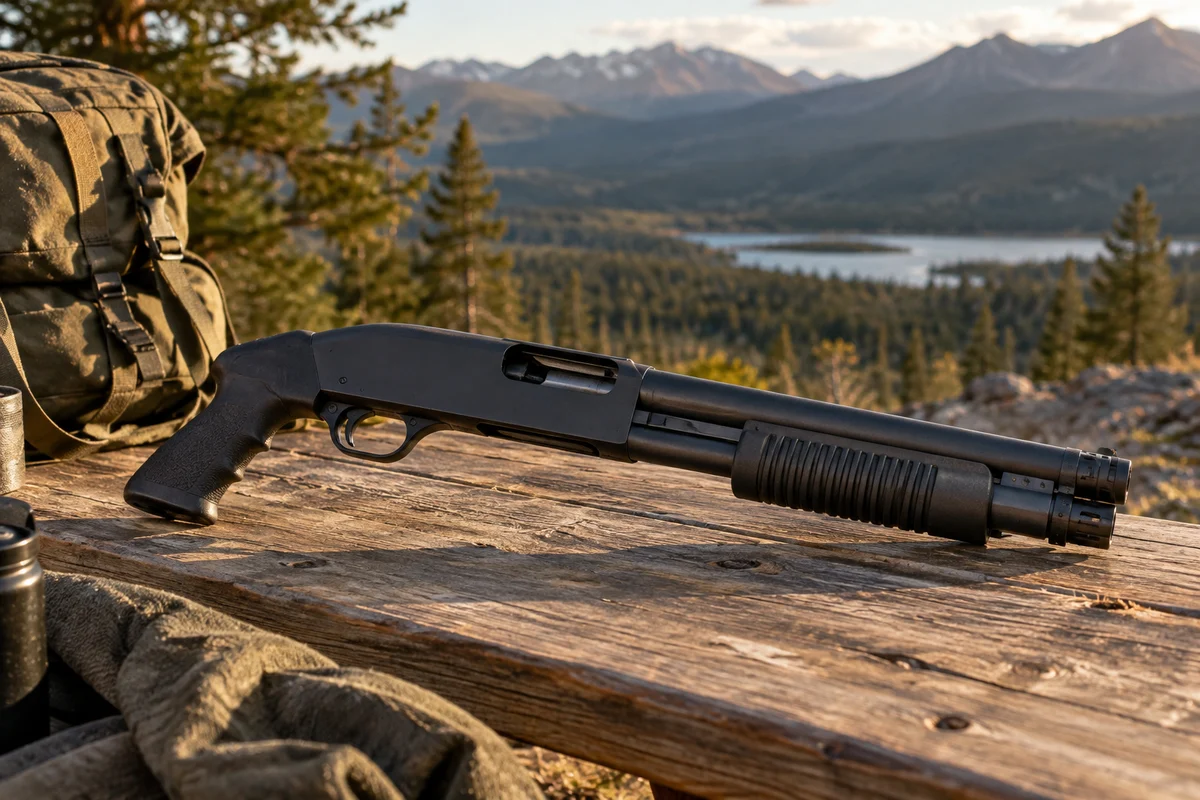
Heizer Defense PS1 is a name associated in public descriptions with a compact, single-shot firearm, often discussed in connection with .45 Colt/.410 use. Exact configuration and model-specific details should be confirmed against the firearm’s markings and original manufacturer documentation, not inferred from a nickname or a secondary listing. This guide offers context, not operating instructions: it focuses on what the design category means, what information deserves verification, and how to approach safety and legal responsibility.
What is the Heizer Defense PS1?
The PS1 is commonly described as a small-format, single-shot pistol. “Single-shot” refers to a firearm design that holds and fires one cartridge at a time before it must be prepared again for another shot; it is distinct from a revolver, which has multiple chambers in a rotating cylinder, and from a repeating firearm with a magazine. That broad distinction is useful, but it does not establish the exact configuration of an individual PS1.
The phrase “pocket shotgun” sometimes appears in discussions of compact firearms that may be associated with shotshell use. It is a nickname, not a reliable substitute for a model designation, chamber marking, or manufacturer manual. In particular, the .45 Colt/.410 pairing is frequently associated with the PS1 in public descriptions, but owners or researchers should verify compatibility from authoritative documentation for the precise variant. Ammunition that appears to fit is not proof of safe compatibility.
For more on how action types differ, see this overview of Colt and Smith & Wesson revolvers. The comparison helps place a single-shot design in context without treating different mechanisms as interchangeable.
Why does the single-shot format matter?
A single-shot action emphasizes a simple operating concept and a deliberate firing cycle rather than a multi-round capacity. In broad terms, that means the category is mechanically different from a revolver or a magazine-fed pistol. It can also make a compact firearm’s intended role and tradeoffs harder to summarize with a slogan: size, ammunition compatibility, handling, and intended lawful use all matter, and none can be safely judged from a nickname alone.
The PS1’s compact proportions are part of its public identity, but “small” does not mean easy to use safely. Shorter firearms can present different grip, sighting, and recoil-management challenges than larger sporting arms. Those are general considerations, not claims about a particular model’s performance. No responsible overview can establish how a specific specimen functions without reliable documentation and qualified inspection.
Screen portrayals can also blur distinctions among firearm types. Our piece on the Chiappa Rhino in movies offers a related reminder: a firearm’s appearance in entertainment does not tell readers how its mechanism works, what it is chambered for, or whether a portrayal is accurate.
Which details should readers verify?
When researching a PS1, separate confirmed markings and documentation from assumptions repeated in descriptions. A useful checklist is:
- Exact model and variant: Record the full designation shown on the firearm and compare it with official documentation. Similar names or photographs do not guarantee identical configurations.
- Chambering: Use only the chamber information stated by the manufacturer for that exact firearm. Do not guess based on appearance, a nickname, or another model’s specifications.
- Condition and history: A used or long-stored firearm may have wear, corrosion, damage, or missing parts that cannot be assessed from a picture. A qualified gunsmith can inspect it.
- Manual and safety information: Locate documentation from the manufacturer or a reliable archive, and make sure it applies to the specific model. If the manual cannot be verified, do not fill the gaps with forum advice.
- Applicable standards: The Sporting Arms and Ammunition Manufacturers’ Institute (SAAMI) publishes industry standards and safety information. Its materials are useful context, but they do not replace the firearm’s manual or establish that a particular cartridge is suitable for a particular specimen.
If a detail cannot be verified, treat it as unknown. This is especially important for ammunition compatibility, because cartridge names and dimensions can be confusing and a mistake can cause severe injury.
What safety principles apply?
Treat every firearm as loaded until its condition has been verified by a competent person, and keep it pointed in a direction where an unintended discharge cannot injure anyone. Keep the trigger untouched unless the firearm is being used in a lawful, controlled setting and the user is prepared to fire. Keep firearms secured against unauthorized access, particularly by children and anyone who is not trained to handle them.
For a firearm with an unfamiliar design or uncertain condition, do not experiment to determine how it works. Consult the applicable manual and a qualified firearms professional. If its condition, chambering, or safe status is unclear, keep it secured and seek expert guidance rather than attempting to test it. These are general safety principles, not a substitute for in-person instruction or the model’s own safety directions.
Safe storage should account for the household and local requirements. A locked container or other secure storage method can help prevent unauthorized access; the appropriate arrangement depends on the firearm, setting, and governing law. Transport rules can differ from storage rules, so check official guidance before moving a firearm across jurisdictions.
What legal questions should be checked?
Firearm classifications and restrictions depend on jurisdiction, configuration, and circumstances. A compact firearm’s informal label does not determine its legal classification. Federal, state, and local rules may address possession, transfer, transport, storage, and use differently; some rules also change over time. The Bureau of Alcohol, Tobacco, Firearms and Explosives provides federal information, but state and local authorities are needed for rules that apply where a person lives or travels.
Before relying on a general article, identify the exact firearm and the jurisdiction involved, then consult current official sources or a qualified legal professional. This is particularly important when a firearm has been altered, has unclear markings, or is being transported across state lines. The PS1 label alone cannot answer a legal question, and an online description is not a legal determination.
How should the PS1 be understood today?
The most useful way to understand the Heizer Defense PS1 is as a compact firearm often described in public sources as single-shot, with model-specific details that require direct verification. Its nickname and category can help frame research, but they should not be treated as technical documentation or a statement about present-day status. Avoid assuming that every PS1 has the same specifications, condition, or legal treatment.
For broader informational coverage, visit ODU Magazine’s guns topic hub. The guiding approach is simple: verify identity and compatibility from authoritative documentation, distinguish a design overview from an inspection, and put safe storage and current law ahead of assumptions. That framework is more dependable than relying on a short label to answer questions a manual, qualified professional, or public authority must resolve.
Frequently asked questions
Is the Heizer Defense PS1 a revolver?
Public descriptions generally identify it as a single-shot design, not a revolver. Confirm the exact model and mechanism through its markings and applicable manufacturer documentation.
Can a PS1 use .45 Colt or .410 ammunition?
Those chamberings are commonly associated with the PS1 in public descriptions, but compatibility must be verified for the exact firearm using authoritative manufacturer documentation. Do not infer it from a nickname or appearance.
What should I do if a PS1’s condition or chambering is unclear?
Keep it secured, do not experiment with it, and consult the applicable manual and a qualified firearms professional. Check current official federal, state, and local rules for legal questions.
Sources & further information
Consult these primary sources for current regulations, technical information and local guidance.