Magpul D60: Understanding the PMAG D-60 Drum
The Magpul D60 is a drum-format firearm magazine whose capacity and form factor make it distinct from a conventional box magazine. This overview explains the public-facing product basics, compatibility questions, and responsible legal and safety considerations without treating any model as universally suitable.
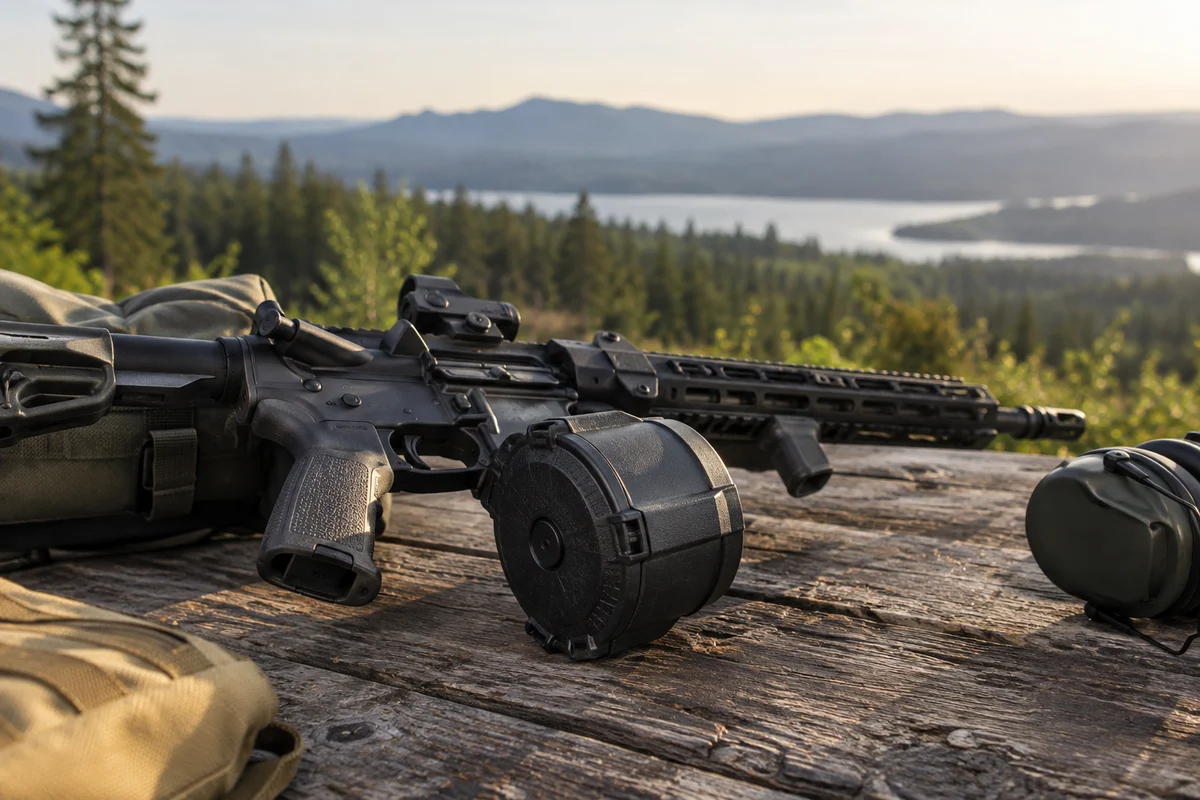
The Magpul D60 is best understood as a specific, high-capacity drum-format magazine—not as a universal accessory for every rifle that looks similar. Magpul identifies the product as the PMAG D-60, a 60-round drum for compatible AR-pattern firearms. That description is a starting point, not a guarantee of compatibility with every configuration. Readers comparing firearm components should distinguish confirmed manufacturer information from assumptions based on appearance, and should treat safe handling and local law as essential context. This guide covers the product at a general, informational level; it does not provide operating instructions.
What is the Magpul D60?
The PMAG D-60 is a detachable drum magazine made by Magpul. Its defining distinction from a conventional straight or curved box magazine is its drum-shaped body and stated capacity of 60 cartridges. The manufacturer’s product information is the appropriate reference for the model’s intended platform, cartridge designation, materials, and any current compatibility notes. Product names and broad platform labels alone do not establish that a particular firearm and magazine are compatible.
A drum’s larger, rounded profile is visually unmistakable, but appearance should not be mistaken for proof of fit or function. Firearms that share a general pattern can differ in dimensions, components, or configuration. For that reason, compatibility should be checked against the firearm maker’s documentation and the magazine maker’s current manual, rather than inferred from a photograph or a third-party description. For broader context on how product announcements can differ from a model’s confirmed details, see our overview of the Trojan Firearms upgraded TFA UL15.
How does a drum differ from a box magazine?
The most obvious difference is shape. A box magazine holds cartridges in a comparatively narrow body, while a drum uses a wider circular housing. This changes the accessory’s profile and how it occupies space; it does not change the fundamental requirement that the magazine be designed for the firearm and cartridge in question. A drum should not be assumed to be a drop-in substitute simply because it shares a familiar attachment pattern.
The form factor also brings practical tradeoffs. A drum is bulkier than many conventional magazines and can be less convenient to store or carry. Its capacity may be a relevant product characteristic, but it is not by itself a measure of suitability, reliability, or responsible use. A reader evaluating the design should consider the firearm’s documentation, the setting and lawful purpose, safe storage, and whether the larger profile is appropriate. These are general considerations, not claims about a particular person’s experience with the D-60.
Which specifications and compatibility details matter?
Start with the manufacturer’s current product page and manual. Confirm the exact model name, intended firearm pattern, and cartridge designation, then compare those details with the firearm’s own manual. Check for model-specific qualifications rather than relying on a retailer-style summary, an old article, or the fact that another similar-looking setup appears in a photo. If documentation leaves a question unresolved, ask the relevant manufacturer or a qualified firearms professional instead of guessing.
Capacity is also a legal question, not just a specification. Rules can differ by state, locality, and circumstance, and may change. A product’s stated capacity does not establish that possession or use is lawful where a reader lives or travels. Consult current official sources and local authorities for the applicable rules. The ATF’s official site is a starting point for federal firearms information, but it is not a substitute for checking state and local requirements.
This approach is useful across the broader subject of firearm components: a specification only has meaning when paired with the exact model and its documented context. Our article on mass-manufactured ammunition provides related background on why cartridge designation and manufacturer information matter, without implying that one component is appropriate for every firearm.
What should readers know about reliability claims?
A manufacturer’s stated design purpose is not the same thing as independent proof of performance in every firearm, environment, or condition. Reliability depends on the specific magazine, the firearm’s compatibility and condition, ammunition, maintenance, and other variables. Without controlled testing and a clearly described setup, sweeping claims such as “always reliable” or “works in anything” should be treated skeptically. ODU Magazine does not claim to have tested the D-60.
When reviewing claims, look for precise language and trace it to a primary source. A product manual can establish the maker’s intended use and care requirements; it cannot establish performance in every possible setup. Anecdotes and online demonstrations may show one instance but are not a substitute for the manual or a broad, independently documented evaluation. This distinction is especially important when the claim is repeated without the firearm model, configuration, or other relevant context.
Readers interested in how firearm designs and product descriptions differ across categories can also explore our informational overview of the Weatherby PA-459 shotgun. The useful lesson is to identify the exact product and consult its documentation, rather than transferring assumptions from one design to another.
What safety practices and legal context apply?
Treat any firearm as loaded until it has been handled and verified according to established safe-handling rules. Keep the muzzle pointed in a safe direction, keep fingers away from the trigger unless lawfully prepared to fire, and ensure that anyone handling a firearm understands its operation and safety requirements. Store firearms securely, with access controlled and consistent with applicable law; secure magazines and ammunition as appropriate to the household and local rules.
The D-60’s capacity and drum shape do not reduce the need for these precautions. Follow the exact firearm and magazine manuals for safe handling, inspection, and care. Do not rely on a generic video or instructions for a different model. For standardized terminology and general technical information about ammunition and firearms, consult the Sporting Arms and Ammunition Manufacturers’ Institute. Legal requirements are jurisdiction-specific, so verify current rules through official government sources before possessing or transporting a firearm or magazine.
How should the Magpul D60 be understood today?
The clearest description is also the most restrained: the Magpul D60, or PMAG D-60, is a 60-round drum-format magazine identified by its manufacturer for compatible AR-pattern firearms. Its distinctive shape and capacity explain why it attracts interest, but neither feature should be treated as a promise about performance, universal fit, or legality. The right source for product-specific information is the current manufacturer documentation; the right source for legal requirements is the relevant official authority.
That framing keeps a product overview useful without turning it into endorsement or hands-on review. Readers can use the ODU Magazine guns topic hub for more informational coverage of firearm history, specifications, safety, and legal awareness. Across all of it, exact model identification, reliable documentation, secure storage, and respect for local law matter more than assumptions based on a product label or a familiar-looking design.
Frequently asked questions
What does Magpul D60 refer to?
Magpul D60 commonly refers to the PMAG D-60, a 60-round drum-format magazine. Consult Magpul’s current product information and manual for intended compatibility and model-specific details.
Does the Magpul D60 fit every AR-pattern firearm?
No universal compatibility should be assumed. Confirm the exact magazine and firearm details against their manufacturers’ current documentation.
Is a 60-round drum magazine legal everywhere?
No. Magazine-capacity rules vary by jurisdiction and circumstance and can change. Check current state and local requirements through official sources.
Sources & further information
Consult these primary sources for current regulations, technical information and local guidance.