Leica CRF 1000R: Understanding This Hunting Rangefinder
The Leica CRF 1000R is a hunting-oriented laser rangefinder, but its usefulness depends on conditions, correct interpretation, and the specific instructions for the exact model. This guide explains what to verify before relying on a distance reading.
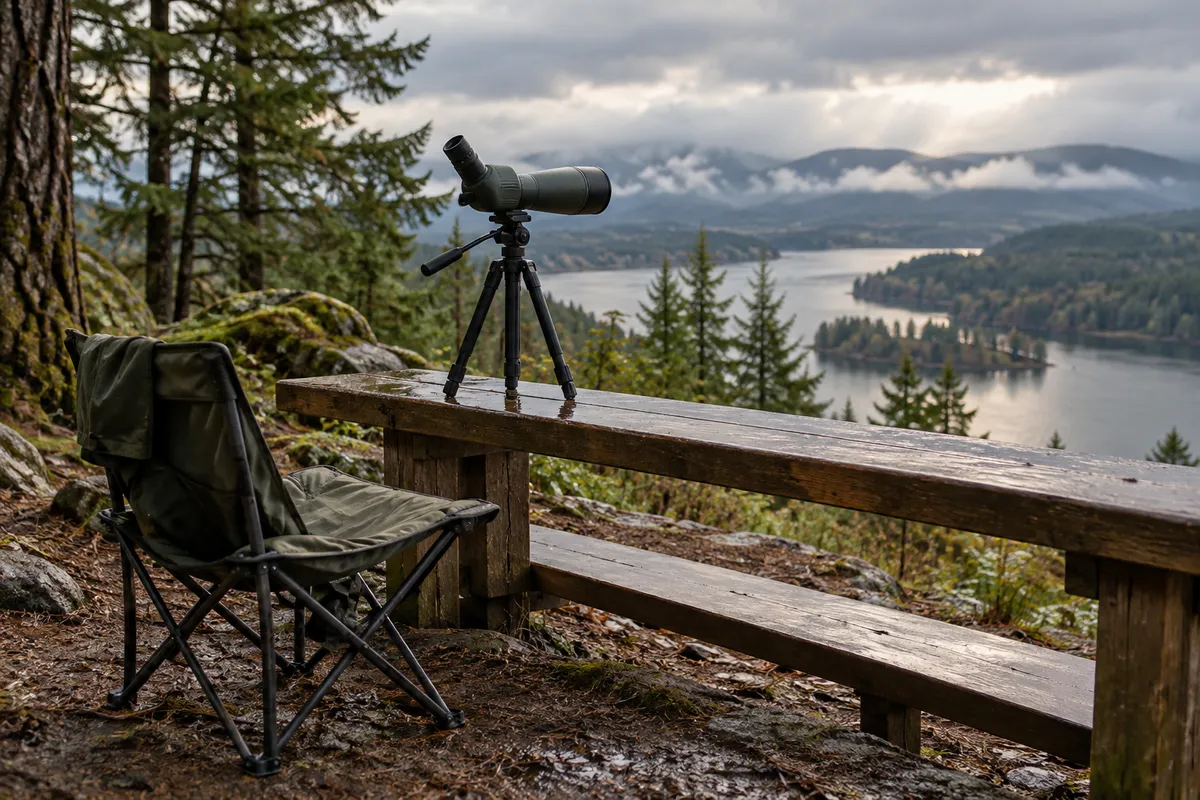
The Leica CRF 1000R is a handheld laser rangefinder associated with hunting use. Its model name alone does not tell you how reliably it will measure a particular animal, hillside, or distant landmark: visibility, target shape, terrain, handling, and the exact model’s functions all matter. Treat it as a distance-measuring aid, not a substitute for identifying a target, judging conditions, or knowing the law. The Leica model designation is also sometimes written with a hyphen as CRF 1000-R, so check the label and manual when confirming which version you have.
What is the Leica CRF 1000R designed to do?
A laser rangefinder sends a brief beam toward a surface and uses the returning signal to estimate distance. In hunting, that measurement can help a person understand the scale of a landscape or compare a known landmark with a potential shooting position. The Leica CRF 1000R belongs to this general category of handheld optical equipment; the exact functions and limits should be confirmed in the manual for the unit in hand.
Do not infer a guaranteed field range, angle-compensation feature, display behavior, measurement mode, or unit setting from the model name or a secondhand description. Product generations and regional versions can differ, and a stated maximum under favorable conditions is not a promise for every target. The manufacturer’s official information at Leica is the appropriate starting point for identifying its product documentation; match the model marking before applying any instructions.
A rangefinder reports a measurement, not whether a shot is safe, ethical, or lawful. For a wider look at firearm-related topics covered as informational material, see the ODU Magazine guns hub.
How should a hunter interpret a distance reading?
Readings are most useful when treated as one piece of context. A large, stationary, reflective surface may return a different signal from a small animal against brush or a dark background. Rain, haze, low contrast, intervening branches, and an unsteady hold can complicate measurement. A number on a display does not prove that the device measured the intended object rather than something in front of or behind it.
When a reading seems inconsistent with visible terrain, pause and check the manual’s measurement guidance rather than relying on the first result. Compare the result with a clearly identifiable landmark when possible, and avoid repeatedly ranging at an animal if doing so would disturb it or distract from safe observation. A rangefinder is not a substitute for practiced judgment about terrain, visibility, and the limits of the hunting situation.
Distance alone also says little about whether a location is appropriate. Backstops, other people, livestock, roads, property boundaries, and local restrictions matter. If any element is unclear, do not treat a plausible reading as permission to proceed.
Which field conditions can affect measurement?
The return signal depends on both the device and the surface being measured. A broad, distinct object is generally easier to identify and range than a narrow object partly hidden by vegetation. Light, weather, and the way the device is held can also affect whether a reading appears promptly and consistently. These are general considerations for laser rangefinders, not a claim that a particular CRF 1000R setting solves them.
Use a stable stance and keep the target clearly framed, following the model-specific manual. Be cautious around reflective surfaces or cluttered backgrounds, where a measurement may not correspond to the object you intended. If results vary, do not average them blindly or assume the longest reading is correct; reposition only where it is safe and lawful, then confirm the target and conditions.
Before a trip, learn the controls and display symbols in a calm setting, and check the manual for battery, care, and environmental guidance. Do not experiment with unfamiliar settings while attention should be on people, wildlife, or firearm safety. The same deliberate approach applies to other field equipment: the Rossi matched-pair rifle and shotgun overview is another example of why a product’s actual configuration should be distinguished from assumptions based on a name.
What should you check before relying on this model?
Start by confirming the exact model name and consulting its own manual. Look for the stated measurement modes, units, display indicators, environmental limits, care instructions, and any warnings. If a function is not clearly documented for that version, do not assume it exists. Instructions for a related Leica rangefinder are not automatically interchangeable.
A practical pre-field check can stay simple:
- Confirm the device powers on and the display is legible in the conditions where it will be used.
- Review the manual’s explanation of aiming, readings, symbols, and any modes you expect to use.
- Check that the battery and exterior are in the condition specified by the manufacturer.
- Practice identifying a known, safe landmark rather than learning controls during a time-sensitive moment.
- Keep lenses clean using only care methods the manufacturer permits; avoid improvised solvents or abrasive materials.
These checks establish whether the instrument is functioning as described; they do not certify accuracy for every field situation. If the device is damaged, gives persistent implausible readings, or behaves differently from the manual, stop relying on it until the issue is resolved through the manufacturer’s guidance.
What safety and legal limits still apply?
A rangefinder does not make firearm handling safer by itself. Maintain ordinary safe handling and secure-storage practices, and keep the firearm unloaded and secured when dealing with equipment if that is consistent with the firearm’s manual and the circumstances. Never point a firearm at a person or an unsafe direction. Keep attention on the surroundings, not just the display, and do not use optics to look toward the sun.
Hunting rules are set by relevant jurisdictions and can address seasons, permitted equipment, locations, and other conditions. A distance measurement does not establish that hunting is allowed, that a boundary is correctly identified, or that a shot is ethical. Check the current rules from the responsible wildlife agency for the place and species involved, and follow landowner permissions and posted restrictions. Federal information about wildlife management and conservation is available from the U.S. Fish and Wildlife Service, while state and local requirements must be checked with the appropriate authority.
For firearm handling and storage principles, consult established safety guidance such as SAAMI alongside the specific firearm maker’s instructions. Rangefinding equipment and firearms have separate manuals; neither replaces the other.
How does it fit with other hunting equipment?
The CRF 1000R should be considered one part of a field system that includes suitable clothing, navigation, binoculars or other observation equipment, and a clear plan for safe movement. It cannot identify an animal, verify a legal boundary, or compensate for poor visibility. Nor should an old product announcement or a brief model label be treated as a full specification sheet.
The same distinction between general purpose and exact specification is useful with maintenance items. For example, the Clenzoil synthetic gun grease overview concerns a separate product category; consult its manufacturer instructions and the firearm manual rather than assuming that any product is appropriate for every firearm. Keep equipment choices grounded in documented compatibility, safe handling, and the conditions in which the gear will actually be used.
Before relying on a Leica CRF 1000R, identify the exact unit, read its manual, and test your familiarity with it in a safe setting. In the field, treat readings as useful estimates that require context and confirmation. That approach preserves the rangefinder’s practical value without asking it to answer questions—about safety, legality, or judgment—that no distance display can settle.
Frequently asked questions
Is the Leica CRF 1000R a laser rangefinder?
It is a Leica CRF-series handheld laser rangefinder associated with hunting use. Confirm the precise model marking and functions in the manual for your unit.
Does the model name guarantee a particular field-measurement distance?
No. Actual readings depend on the target, visibility, terrain, handling, and the device’s condition. Check the exact model’s manual and do not treat a stated maximum as a guarantee in all conditions.
Can a rangefinder determine whether a hunt or shot is legal?
No. It measures distance; it cannot establish permission, identify applicable hunting rules, or determine whether a shot is safe or ethical. Check the relevant wildlife agency’s current rules and use sound judgment.
Sources & further information
Consult these primary sources for current regulations, technical information and local guidance.