How to Hunt Moose: Plan a Safe, Ethical Field Approach
A responsible moose hunt begins long before the first day afield: learn the rules, understand the country, prepare for demanding conditions, and make conservative decisions around a very large animal. Use this field framework to plan carefully while adapting to local regulations and conditions.
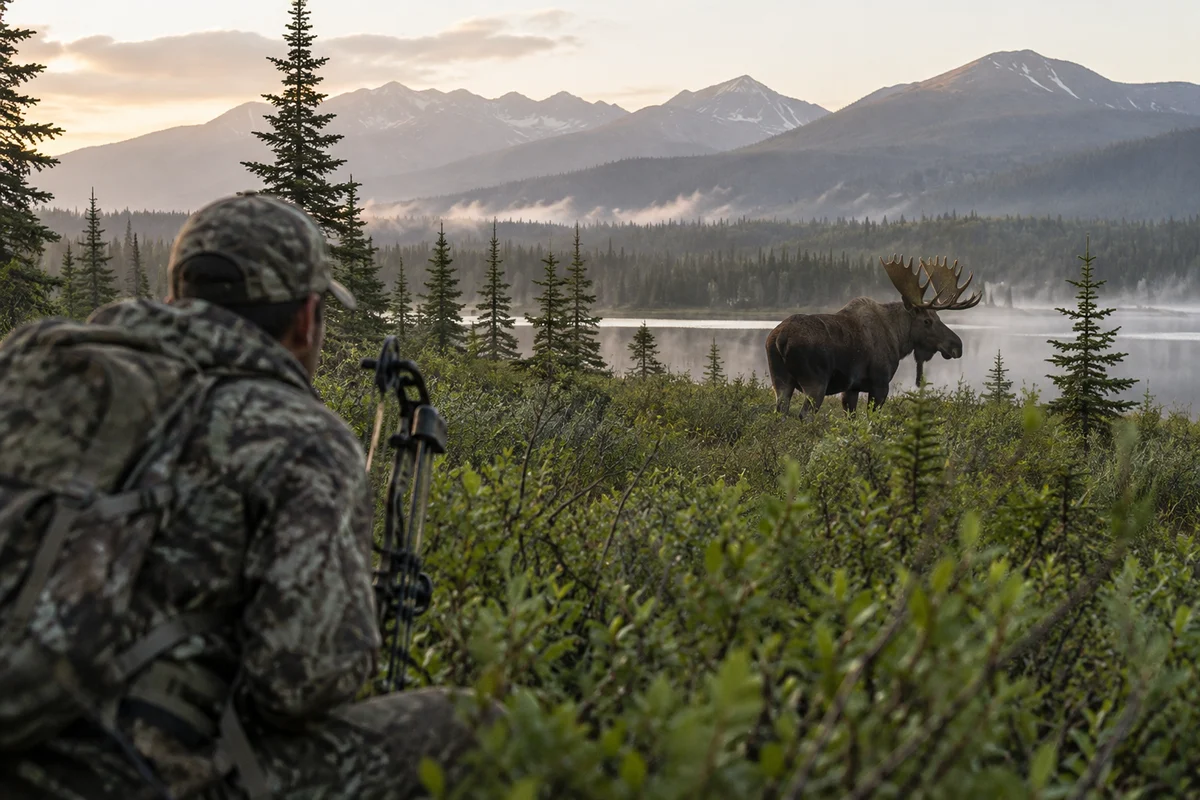
Moose hunting is a demanding backcountry undertaking, and learning how to hunt moose starts with preparation rather than a single tactic. Seasons, permits, legal methods, access, and animal-identification rules differ by jurisdiction and can change annually. Treat the current regulations for your exact hunt area as the controlling authority, then build a plan that leaves room to turn around, wait, or pass on an uncertain opportunity.
The goal is not simply to find a moose. It is to make a lawful, ethical decision and be equipped to recover and care for the animal in difficult terrain. This guide offers a general planning framework; it cannot replace local instruction, current rules, or firsthand knowledge of a specific area.
Start with the rules and the landscape
Before booking travel or scouting, identify the exact management unit, season dates, permit type, legal animal class, and authorized hunting methods. Read the current agency regulations in full, including requirements that may apply to tagging, reporting, transport, access, and meat salvage. Confirm whether land is public, private, or subject to special access conditions. If a rule is unclear, ask the relevant wildlife agency before acting.
Moose country can include wetlands, river corridors, young forest, open brush, and extensive boreal woodland. Which habitats matter most depends on season, local forage, weather, and recent disturbance. Maps and aerial imagery help build a picture, but they do not establish current access or guarantee animal presence. Use them to identify routes, drainage crossings, likely travel bottlenecks, and safe options for retreat.
For broader context on planning a large-animal hunt, see our big-game hunting hub. Its general principles are useful, but the moose regulations and local conditions still control your decisions.
Build a plan around access, weather, and recovery
A moose is large enough that recovery can become the hardest part of a hunt. Before going out, think through how an animal could be moved from likely terrain to a legal vehicle or pack-out point. Consider distance, slope, water, dense cover, daylight, temperature, and the people and equipment actually available to help. A plan that depends on ideal weather or an immediate vehicle approach is fragile.
Use a written trip plan. Give a trusted person your route, expected return time, check-in method, and emergency contact instructions. Carry reliable navigation and a way to communicate when ordinary cell service is absent. Know how to use your equipment before the hunt, and bring backups for essentials such as navigation, lighting, and fire-starting. Match clothing to changing weather and avoid relying on a single forecast.
| Planning question | What to establish before the hunt |
|---|---|
| Is the hunt legal here? | Unit, dates, permit, animal class, methods, and current reporting rules |
| Can I reach and leave safely? | Access permission, route, water crossings, weather alternatives, and turnaround point |
| Can I recover an animal? | Distance, terrain, help, transport plan, daylight, and meat-care supplies |
| What if conditions change? | Communication plan, shelter, emergency supplies, and a no-go threshold |
| Can I identify the animal confidently? | Legal criteria, visibility requirements, and a clear decision to pass if uncertain |
If any answer is unresolved, solve it before the hunt or narrow the plan. For examples of why records and claims need careful verification, our overview of official big-game recordkeeping discusses the role of defined categories and recognized recordkeepers. A record label is not a substitute for sound field judgment or legal identification.
Locate animals without letting sign make the decision
Scouting can help you understand where moose may feed, travel, or seek cover, but sign is evidence of past activity, not a promise of an encounter. Tracks, browse, droppings, and trails vary in age and can be difficult to interpret. Keep observations in context: weather, recent disturbance, season, and the direction of travel all matter.
Move deliberately and keep the wind and sound conditions in mind, while respecting local rules on access and any restrictions on equipment or methods. Glass open areas from a stable, legal vantage point when the terrain allows. In thick cover, patience and careful listening may be more useful than covering ground rapidly. Avoid pushing into unfamiliar wetlands, steep banks, or water crossings simply because sign appears promising.
Moose are powerful wild animals. Give them space, especially cows with calves and animals that show agitation. Do not approach to force a close encounter, and do not treat a vocalization or apparent lack of movement as proof that an animal is safe or approachable. A hunting opportunity is never worth creating a dangerous situation for yourself or others.
Identify carefully and make a conservative shot decision
Know the legal definition of the animal you may take before entering the field. Depending on the jurisdiction, rules may distinguish by sex, antler configuration, age, or other criteria. Do not rely on a quick impression, a distant silhouette, or another person’s unverified call. If you cannot confidently identify a legal animal and a safe background, do not shoot.
A responsible shot decision also depends on a clear view, a stable position, a known range within your practiced ability, and a safe direction. Follow the lawful methods and equipment requirements for the area. This article does not replace hands-on training; hunters should practice safely and follow all applicable firearm or archery rules. If conditions are rushed, visibility is poor, the animal is moving unpredictably, or the angle is questionable, wait or pass.
Consider what happens after the shot before taking it. You should have a realistic recovery route and enough time, help, and supplies to care for the meat. If the likely outcome would leave an animal unrecoverable or meat inadequately cared for, that is a reason to reconsider. When uncertain about what you saw or where an animal went, follow local requirements and seek qualified local assistance rather than guessing.
Recover and care for the animal promptly
Recovery is part of the ethical obligation, not an afterthought. Mark the location and your observations as accurately as possible, then proceed cautiously and in accordance with local guidance. Do not rush into dense cover without considering safety. If the animal is not immediately located, avoid trampling sign and get experienced help where available.
Once recovered, follow applicable salvage and transport rules. Warm conditions, long distances, and delays can make meat care challenging, so plan for clean handling, shade, ventilation, and timely cooling as circumstances allow. Bring enough game bags and practical supplies for the expected conditions, and know how the meat will reach a processor or safe storage. If you cannot complete the work alone, arrange help beforehand rather than improvising after the harvest.
Keep the tag and required documentation with the animal as directed by the relevant agency. Complete mandatory reporting and follow transport rules. For a useful contrast in how hunting situations differ by species and setting, read our guide to bear safety in the field; its advice is not moose-specific, but it reinforces the value of distance, awareness, and planning around wildlife.
Review the plan before you go
A good moose-hunt plan is specific enough to guide action and flexible enough to change. Check the regulations again close to departure, confirm access, share your itinerary, test communications, and make a realistic recovery plan. Set explicit conditions for turning back, waiting, or passing: worsening weather, unsafe water, unclear identification, poor visibility, fatigue, or a route that no longer looks manageable.
The most important field skill is judgment. A legal opportunity is not automatically a responsible one, and no harvest is worth a preventable injury or unrecovered animal. Prepare carefully, stay within your abilities, and let current local rules and conditions—not a generic tactic—shape every decision.
Frequently asked questions
What is the first step when planning a moose hunt?
Confirm the current rules for the exact management unit, including season, permit, legal animal class, methods, access, and reporting requirements.
How should I prepare for recovering a moose?
Plan for terrain, distance, weather, daylight, available help, transport, and meat care before hunting. Do not depend on ideal conditions.
How do I know whether an animal is legal to harvest?
Learn the jurisdiction’s current identification criteria in advance. If visibility or identification is uncertain, do not shoot.
Is moose sign proof that animals are currently in an area?
No. Tracks, browse, and other sign show activity at some point, but may be old and do not guarantee an encounter.
Sources & further information
Consult these primary sources for current regulations, technical information and local guidance.