FNS Flat Dark Earth Compact Pistol: What to Know
A careful, non-commercial guide to interpreting the FNS flat dark earth compact pistol topic, checking product claims, and understanding safety and legal considerations.
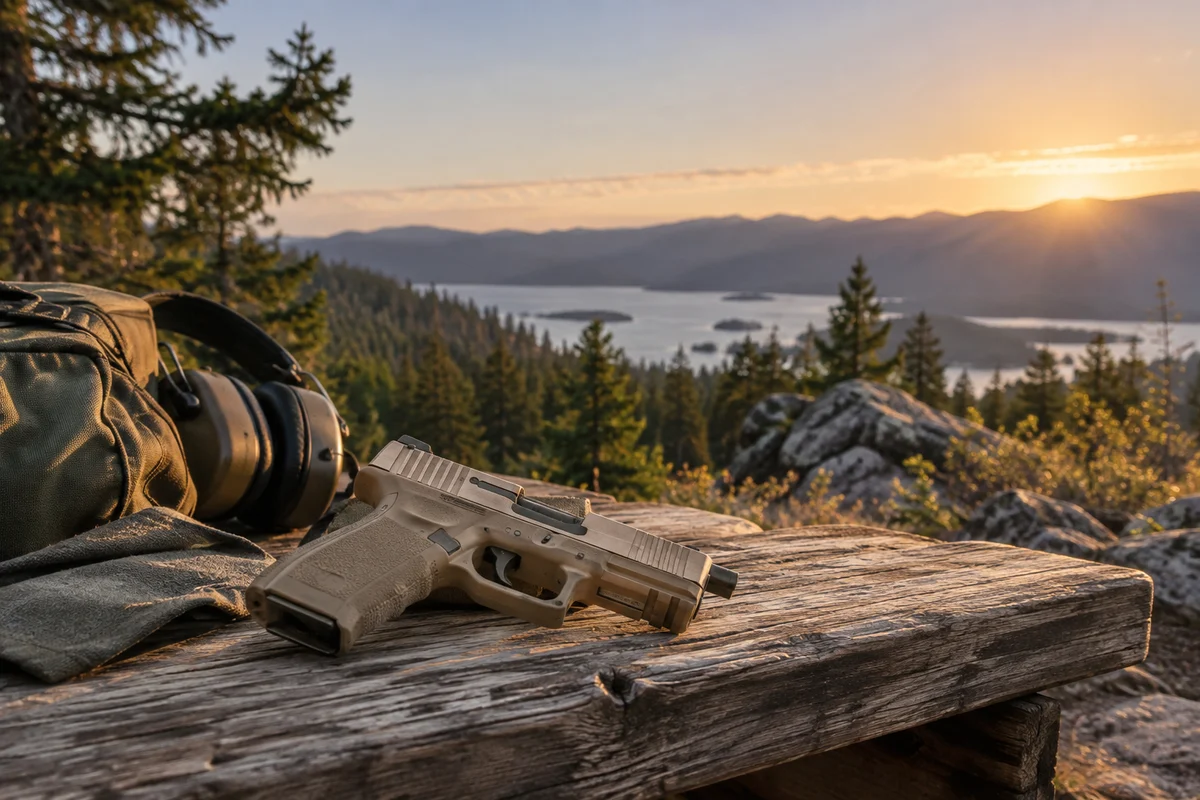
The phrase FNS flat dark earth compact pistol points to a product-style topic, but a legacy headline alone cannot confirm a launch, a particular configuration, or its specifications. Treat the wording as a starting point for research rather than proof that a specific model was announced. This guide explains how to evaluate the claim, what “compact” and “flat dark earth” generally describe, and how to approach firearm information with safety and legal awareness.
What does the headline actually establish?
A slug or headline can preserve a historical search phrase without documenting the underlying event. It does not establish a release date, exact model designation, availability, price, or feature list. Those details should be verified against current information from the manufacturer, not inferred from the wording.
FNS is a firearm model-family name associated with FN. Beyond that broad identification, the phrase here does not reliably identify a specific variant. Product names can be reused or summarized inconsistently across listings and articles, so a careful reader should look for the manufacturer’s exact designation and documentation before treating any detail as settled.
The same restraint applies to the words “new” and “expands.” They describe the old headline’s framing, not a verified present-day announcement. For a broader, informational look at outdoor firearm topics, see more outdoor coverage.
What do “compact” and “flat dark earth” usually mean?
“Compact” is a general category label, not a universal measurement standard. Manufacturers may use it to distinguish a model’s overall dimensions or intended role within a product family, but the term by itself does not tell you a firearm’s exact dimensions, capacity, weight, or compatibility. Confirm such points in official product documentation for the precise model and market.
“Flat dark earth,” often abbreviated FDE, is commonly used for a tan or earth-toned finish. Color names do not establish the material, finish process, durability, or whether every component shares the same color. Photographs can also vary with lighting, display settings, and production differences. If finish details matter, consult the manufacturer’s description and ask it to clarify any ambiguity.
Neither label is a substitute for a complete model number. When comparing descriptions, record the exact designation, the source and date of the information, and whether it comes from a manufacturer document or a third-party summary.
How can readers verify product details?
Start with the manufacturer’s official site and documentation. Look for the precise model name, product manual, safety materials, and any applicable notices. If the product page is unavailable or does not address a question, contact the manufacturer rather than relying on copied listings. The FN America website is an appropriate starting point for manufacturer information; it should not be treated as confirmation of a detail unless that detail appears in its own materials.
Next, distinguish primary documentation from summaries. A retailer listing, forum post, search snippet, or archived headline may contain useful clues, but it can omit qualifications or mix specifications from related models. Verify any consequential claim independently. Avoid assuming that a feature shown in a photograph applies to every version.
Finally, check the rules where the firearm would be possessed or used. Laws can vary by jurisdiction and may change. Official state and local authorities are the right sources for current requirements. Federal information is available from the Bureau of Alcohol, Tobacco, Firearms and Explosives, but a federal resource does not resolve every state or local question.
What should a neutral overview compare?
A public-spec overview should compare only details that are stated in reliable documentation, and should label uncertainty clearly. Useful categories include the exact model designation, listed dimensions, unloaded weight if published, stated capacity where legally relevant, materials and finish as described by the maker, and the manual or safety documentation available for that variant. Do not transfer figures from another FNS model simply because the names look similar.
Context matters more than a long feature checklist. A compact label may indicate a different balance of size and handling than a full-size counterpart, but suitability depends on lawful purpose, safe storage, the user’s training, and applicable restrictions. This is not a recommendation to acquire or use a firearm. Readers comparing other gear coverage can also see the informational overview of the MK20 SSR and our discussion of the Gamo Whisper G2.
When a source gives a claim without a document or exact model reference, mark it as unverified rather than filling in the gap. That simple habit prevents a common error: blending specifications from different generations or configurations into a model that may not exist as described.
What safety practices belong in the conversation?
Any firearm should be treated as loaded until its condition has been verified through safe handling. Keep the muzzle pointed in a direction that would not endanger anyone, keep the trigger finger outside the trigger guard until a lawful decision to fire has been made, and know what lies beyond a target. Secure storage is essential: prevent access by children and unauthorized people, and follow applicable laws and the maker’s instructions.
Training should come from a qualified, reputable instructor in a lawful setting. Read the specific manual and use the manufacturer’s safety guidance; do not assume procedures or features transfer across models. The National Shooting Sports Foundation’s firearm safety resources offer general safety information. They do not replace hands-on instruction, local law, or the firearm’s own manual.
If a question concerns a malfunction, compatibility, or a component, avoid improvisation. Stop use and consult the manufacturer or a qualified professional authorized under local law. This article is a general informational overview, not technical service guidance.
How should uncertainty and old product headlines be handled?
A responsible product explainer separates three things: what the phrase says, what an authoritative source confirms, and what remains unknown. In this case, the phrase identifies an FNS-related compact, earth-tone product topic, but it is not enough to verify a particular release or its specifications. That distinction is more useful than repeating an unconfirmed announcement as fact.
Readers may encounter old coverage that has been copied across sites or stripped of context. Do not treat repetition as independent verification. Seek a manufacturer document or a reliable official record, check the exact model wording, and note when a source does not answer the question. If no authoritative confirmation is available, leave the detail unresolved.
A practical checklist for evaluating the topic
- Confirm the exact manufacturer model designation; do not rely on a headline alone.
- Verify specifications in current manufacturer materials for that exact variant.
- Treat “compact” and “FDE” as descriptive labels, not complete technical data.
- Check current federal, state, and local requirements through official sources.
- Prioritize safe storage, the product manual, and qualified instruction.
- Keep unconfirmed launch, availability, and configuration claims clearly labeled.
These steps make a product-style headline useful without turning it into an unsupported claim. They also keep the discussion centered on responsible, lawful information rather than speculation.
Frequently asked questions
Does this headline confirm a specific FNS compact model was released?
No. A preserved headline or URL does not verify a release, exact model designation, specifications, or availability. Confirm those details in current manufacturer documentation.
What does FDE mean in a firearm description?
FDE commonly means flat dark earth, a tan or earth-toned color description. It does not by itself establish the material, finish process, or which components have that color.
Where should I check safety and legal information?
Consult the exact firearm manual, qualified safety instruction, and official federal, state, and local authorities. General safety resources from NSSF and federal information from ATF are useful starting points, not substitutes for local requirements.
Sources & further information
Consult these primary sources for current regulations, technical information and local guidance.