Diamondback DB15 Pistol: A Safety-First Overview
A neutral guide to understanding the Diamondback DB15 pistol, verifying its configuration and evaluating safe, lawful ownership considerations without assuming every version is alike.
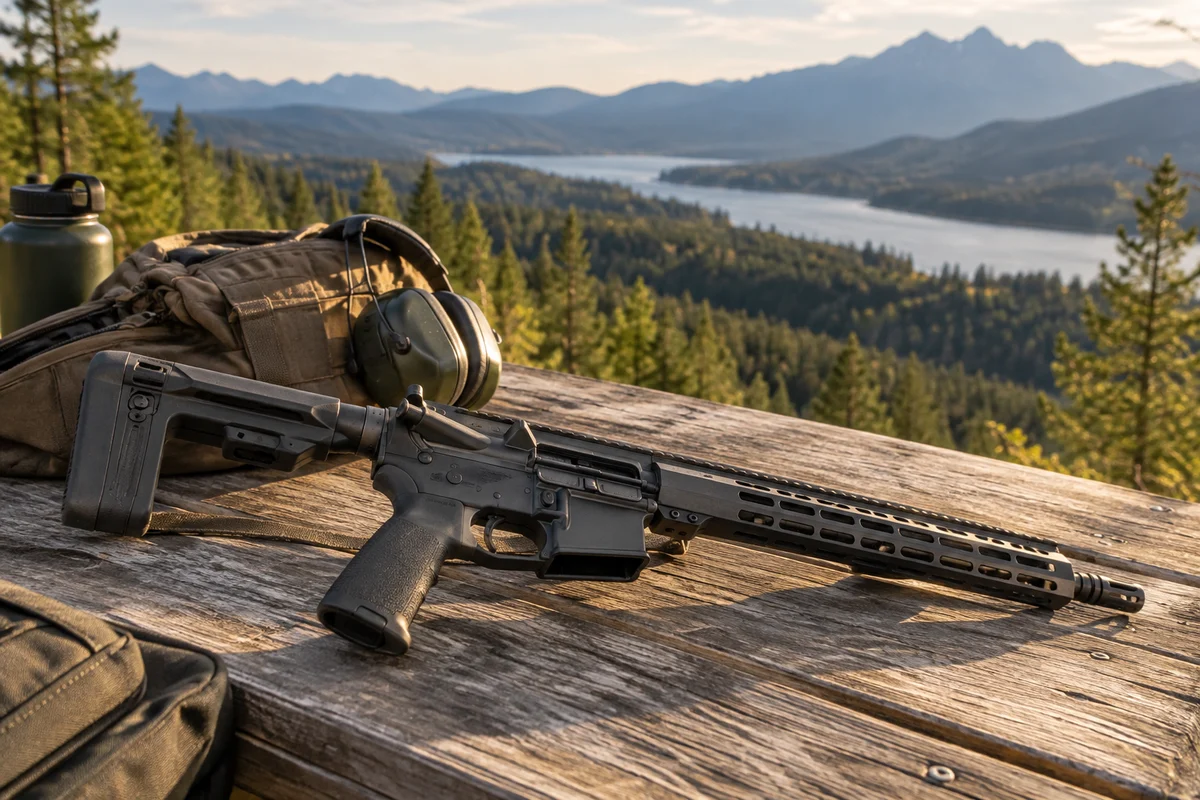
The Diamondback DB15 pistol is best understood as a product family rather than one fixed specification: configurations and details can vary, so a model name alone does not establish exactly what a particular firearm includes. This overview explains how to read public information, consider safe handling and storage, and check applicable rules. It is informational—not a recommendation or a substitute for instruction from a qualified safety professional.
What does “DB15 pistol” describe?
The name refers to a pistol-configured member of Diamondback Firearms’ DB15 line. In general, “pistol” identifies a firearm configuration and classification, not a promise that every example shares the same dimensions, controls, included accessories or legal status. Product generations and market descriptions can change, and listings may use shorthand.
That distinction matters when researching a specific firearm. Confirm the exact model designation and configuration from its markings and accompanying manufacturer documentation. Do not infer a feature from a photograph, a broad family name or a third-party description. If the label on a particular example conflicts with a catalog page, ask the manufacturer or a qualified professional to clarify rather than guessing.
For broader context on firearm topics and responsible handling, see more outdoor coverage. This site’s firearm coverage is informational; it does not direct readers to sales.
Which public specifications are worth checking?
Start with the manufacturer’s current product information and documentation for the exact model. A product-family page may summarize several configurations, while a manual or model-specific document may clarify controls, safety notices and care guidance. Diamondback Firearms’ official site is the appropriate starting point for manufacturer material; confirm that a page actually matches the designation in question.
When comparing descriptions, focus on verifiable categories rather than assumptions:
- Configuration: Identify the exact model and how the manufacturer describes it.
- Dimensions and weight: Check whether stated figures refer to the same configuration and whether they are measured with or without accessories.
- Controls and safety information: Use the relevant manual, not a generic tutorial for a visually similar firearm.
- Included equipment: Confirm what is included in official documentation; photographs can show optional or separately supplied items.
- Compatibility claims: Treat broad claims cautiously and ask the manufacturer when a specific component or accessory is in question.
Public specifications can help with identification and comparison, but they do not establish that a firearm is suitable for a particular person or activity. Nor should an online summary replace the instructions supplied with the specific firearm.
How should a reader evaluate a product description?
First, distinguish manufacturer statements from retailer copy, forum discussion and older articles. A useful source identifies the exact variant and gives a publication or revision context. If a page omits those details, its claims may not apply to every DB15 pistol.
Next, separate measurable facts from judgments. A dimension listed by the manufacturer is a specification; phrases such as “ideal,” “best” or “perfect” are opinions that depend on the reader’s circumstances. Likewise, a configuration name should not be treated as proof of legal classification in every jurisdiction. Definitions and rules can depend on details and change over time.
Readers interested in firearm design history can also consult our overview of the Dakota Model 76, which approaches another firearm topic through identification and context rather than assuming that one name tells the whole story. For a separate look at optics-related terminology, see how EyePal works. These are distinct subjects, but both illustrate why precise model and product descriptions matter.
What safety practices apply?
Treat every firearm as loaded until it has been handled and verified safe according to appropriate training and the manufacturer’s instructions. Keep the muzzle pointed in a direction where an unintended discharge would not endanger anyone, keep your finger outside the trigger guard unless prepared to fire in a lawful, controlled setting, and know what is beyond any target. These foundational rules do not replace hands-on instruction.
Use the manual for the exact configuration to understand its safety features and handling cautions. Do not rely on a video or a procedure written for a different model. If the firearm’s condition is uncertain, stop handling it and seek help from a qualified, safety-focused professional. Avoid handling firearms when impaired, distracted or under pressure.
Storage deserves equal attention. Keep firearms secured against unauthorized access, especially where children or other at-risk people may be present. Choose a secure method consistent with local law and the manufacturer’s guidance, and keep any ammunition stored separately when appropriate. A lock or container is only useful if it is used consistently and suits the household’s risks.
The National Shooting Sports Foundation provides general firearm safety information. Its materials can supplement, but not replace, model-specific instructions and qualified training.
What legal issues should be checked?
Rules governing firearm classification, possession, transport and use differ by jurisdiction and can depend on the exact configuration. A product’s marketing label is not a legal determination. Federal, state, tribal and local requirements may all be relevant, and rules can change.
Before handling, transporting or using a firearm, consult current official government guidance for the place where the activity will occur. If a legal question turns on a specific configuration or circumstance, seek advice from a qualified legal professional. Do not assume a rule described for another state—or an older online post—applies where you live.
This is especially important when crossing jurisdictional boundaries or considering a change in configuration. This article does not explain how to alter a firearm; it encourages readers to avoid assumptions and obtain authoritative clarification before acting.
Is the DB15 pistol a hunting firearm?
A model name alone cannot answer whether a firearm is lawful or appropriate for a particular hunting season. Game regulations may specify legal equipment, permitted methods, location restrictions and other conditions. Those rules vary by species and jurisdiction. Check the current wildlife agency regulations for the place and season, and do not treat a general product description as hunting authorization.
For any outdoor use, consider the setting, backstop, safe direction, other people nearby and the ability to secure equipment when not in use. If a planned activity requires specialized skills, obtain qualified instruction and follow official rules. When conditions or legal requirements are unclear, postpone the activity until they are resolved.
A practical way to reach a sound conclusion
A careful assessment begins with exact identification, not a headline or a broad product-family label. Match the model to official documentation, verify claims that matter, learn safe handling from qualified instruction, and check current local rules. Keep uncertain claims uncertain: specifications can differ by version, and an image or short description may not settle the question.
That approach is useful for the DB15 pistol and for any firearm discussed online. It keeps product information separate from opinion, safety separate from marketing, and legal awareness grounded in the place and configuration involved. When an authoritative source does not confirm a detail, ask the manufacturer or an appropriate professional instead of filling the gap with a guess.
Frequently asked questions
Are all Diamondback DB15 pistols configured identically?
No. Product descriptions and configurations can differ. Confirm the exact model using its markings and the corresponding manufacturer documentation rather than relying on the DB15 family name alone.
Where can I find reliable information about a specific DB15 pistol?
Begin with Diamondback Firearms’ official product information and the manual that matches the exact model. For safety fundamentals, consult established safety education and qualified instruction; for legal questions, check current official government sources.
Does the name “pistol” settle how a particular firearm is regulated?
Not necessarily. Legal classification and requirements can depend on the exact configuration and jurisdiction. Consult current official rules or a qualified legal professional rather than relying on a product label or general online article.
Sources & further information
Consult these primary sources for current regulations, technical information and local guidance.