Muskie Fishing Tips: Read the Water, Refine Your Approach
Muskies reward observation and deliberate adjustments more than a single magic lure. This guide lays out a repeatable approach to finding likely water, presenting carefully, and making the most of follows while putting fish welfare first.
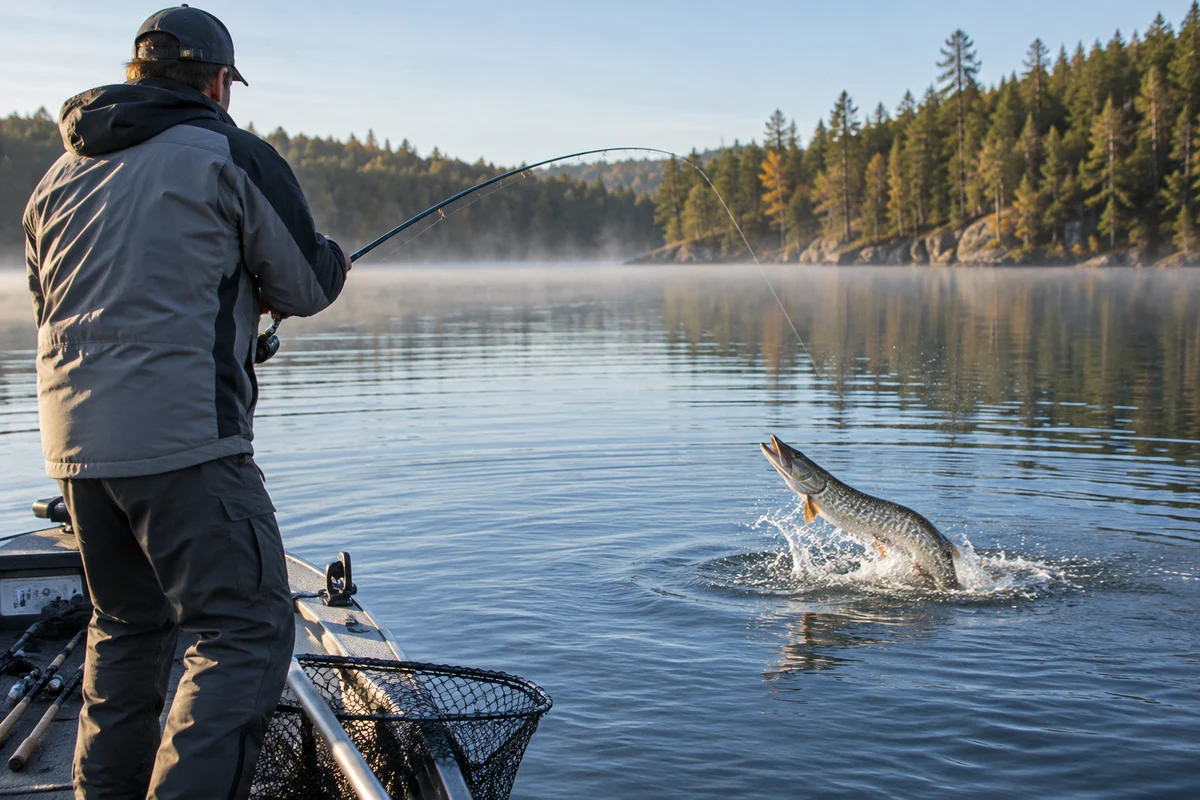
Muskie fishing tips are most useful when they help you make the next decision—not when they promise a guaranteed fish. Muskellunge are large, elusive predators, and their activity shifts with season, weather, forage, and the particular lake or river. A reliable approach starts by identifying likely habitat, then testing a manageable range of depths and presentations while paying attention to what the water tells you.
Treat each outing as a series of small experiments. If a weed edge, point, or current seam looks promising, make deliberate passes and vary one factor at a time. That creates information you can use, whether or not a muskie follows. For related species and regional context, see our guides to how to fish for pike and muskie fishing in Indiana.
Where should you look for muskies?
Begin with habitat that concentrates prey or gives a predator an ambush advantage. Depending on the waterbody, that may mean the outside edge of a weed bed, a rocky point, a saddle between structures, a windblown shoreline, a drop-off near a shallow feeding area, or a current break below a river obstruction. None is universally productive: local forage, water clarity, temperature, and fishing pressure all matter.
Think in terms of transitions rather than isolated features. A weed edge beside a deeper basin offers more options than a broad, uniform flat. A point that connects shallow feeding water with a travel route can be worth checking at different angles. In a river, look for places where current slows near cover, while observing navigation hazards and posted restrictions.
Use a map and your electronics to form a hypothesis, not to declare a spot guaranteed. Mark depth changes and cover, then compare them with visible conditions. Wind can push bait toward a shoreline, but it can also make boat control difficult. On clear water, fish may hold deeper or approach cautiously; in stained water, a closer presentation may help them locate a lure. Let repeated observations—not a rigid rule—guide your next move.
How do season and conditions change the approach?
Seasonal patterns are broad tendencies, not a substitute for current local regulations or local knowledge. In spring, shallow areas may attract fish and prey, but spawning closures and protected areas vary. Check the applicable regulations before fishing, and do not target fish where it is prohibited. As the season progresses, muskies may use deeper edges, weedlines, or other routes between feeding areas and cover. In fall, changing forage and cooling water can alter their location quickly.
Water temperature, weather, and light can influence activity, but no single reading predicts a bite. A front, a calm sunny period, or a sudden wind shift may change the best location or presentation. Keep notes on time, depth, cover, wind, water clarity, and what happened. Over several trips, a simple log can reveal patterns specific to your water better than generic seasonal slogans.
When conditions change, adjust in a controlled order:
- Revisit the location question: are fish likely to be shallow, along an edge, or near deeper water?
- Change lure depth or retrieve speed while keeping the location similar.
- If there is no response, change the lure's profile or action.
- Move to a different habitat transition and repeat the test.
This sequence helps distinguish a location problem from a presentation problem.
What should you throw, and how should you retrieve it?
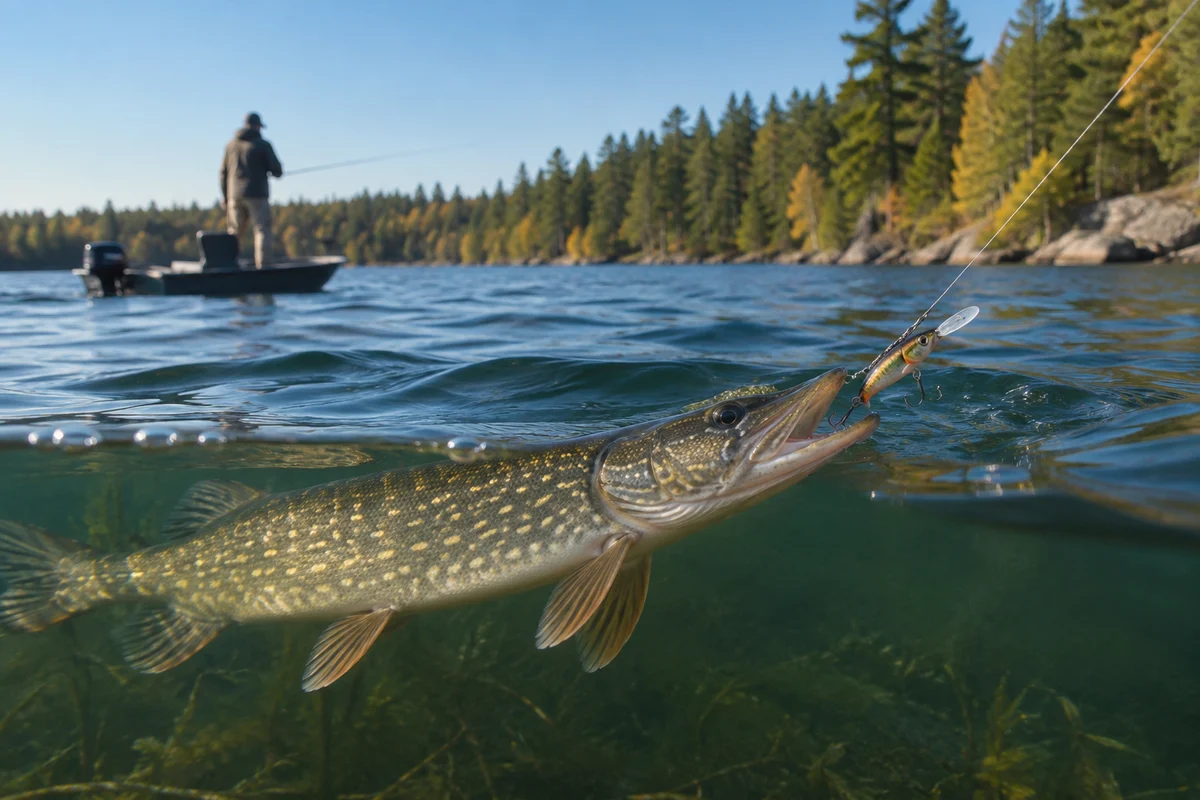
Choose tackle and lures suited to the water, the fishery, and your ability to cast and control them safely. A compact selection might include a bucktail or other moving lure, a jerkbait or glide-style presentation, and a large profile bait that can be worked at a deliberate pace. Exact choices depend on local forage and conditions; no lure category is a sure thing.
Start with a retrieve you can repeat. A steady retrieve is a useful baseline because it lets you cover water and judge depth. Then vary cadence: add pauses, accelerate briefly, or change direction if the lure allows it and you can maintain control. Keep the lure in the strike zone rather than simply retrieving as fast as possible. A lure that runs too high or too low for the fish's position may pass without being noticed.
Use a decision framework like this:
| What you observe | First adjustment to try | What to learn |
|---|---|---|
| Fish-holding cover is shallow and visible | Keep the lure near the cover; make accurate, controlled casts | Whether fish are using the edge or the interior |
| A deep edge looks promising but produces no contact | Test a presentation that reaches the edge at a repeatable depth | Whether depth, rather than location, was the mismatch |
| A fish follows but turns away | Change cadence or direction on the next pass; avoid frantic, unsafe movements | Whether a subtler or more varied presentation draws interest |
| Wind or current makes boat positioning unreliable | Choose a safer angle or protected water and regain control | Whether the original spot can be fished effectively |
Change one variable at a time where practical. If you simultaneously change spot, lure, depth, and speed, it is hard to know what made a difference. Keep casts clear of other anglers, shore users, and overhead hazards. Large lures and heavy tackle demand particular attention during casting and landing.
What should you do when a muskie follows?
A follow is useful evidence: a fish noticed the lure and came close enough to inspect it. It is not a promise that the fish will strike. Keep the lure moving predictably, stay balanced, and make a controlled turn near the boat only if there is adequate room and it can be done safely. Do not swing a rod wildly, reach toward the fish, or put hands near hooks.
Plan the landing before a fish is hooked. A large landing net, long-handled pliers or hook cutters, and a suitable measuring tool should be accessible rather than buried in a compartment. Use tackle strong enough to bring the fish in promptly, and avoid playing it to exhaustion. If you are fishing alone, consider whether you can safely manage a large fish and the boat at the same time. If not, choose conditions or company that make responsible handling possible.
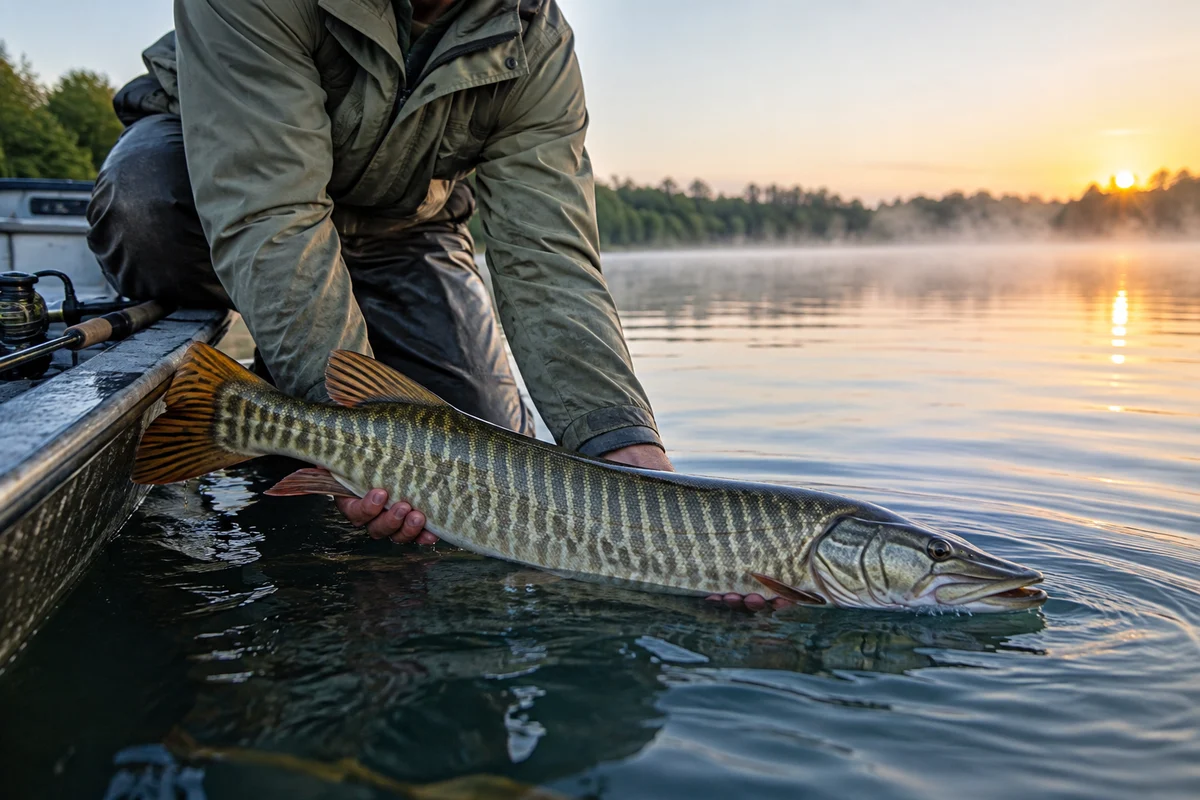
For a quick release, keep the fish in the water as much as you can, support its body horizontally, and limit air exposure. Wet your hands before touching it. Remove hooks carefully only when it is safe; if a hook is difficult to remove, cutting it may reduce handling time. Never lift a heavy fish vertically by its jaw or gill area. Follow local rules for seasons, size limits, possession, and release. Regulations can change, so confirm them with the relevant agency before the trip.
How can you make a muskie trip more productive?
Prepare for a focused session rather than packing every lure you own. Check the weather, water access, navigation conditions, and current rules. Choose a few habitat types to test, note where you fish, and decide in advance what observations would prompt a move. If you see bait, a follow, or a change in cover, record it. If you find no signs, change location after a purposeful set of passes rather than repeating the same unproductive cast indefinitely.
A short checklist helps:
- Confirm season, legal waters, size and possession rules, and any special restrictions.
- Inspect line, leaders, knots, hooks, and landing tools before launching.
- Wear a properly fitted personal flotation device and keep casting space clear.
- Have release tools ready; decide how you will control and support a fish.
- Track location, depth, cover, wind, clarity, presentation, and outcomes.
- Stop or relocate when weather, traffic, fatigue, or boat control makes fishing unsafe.
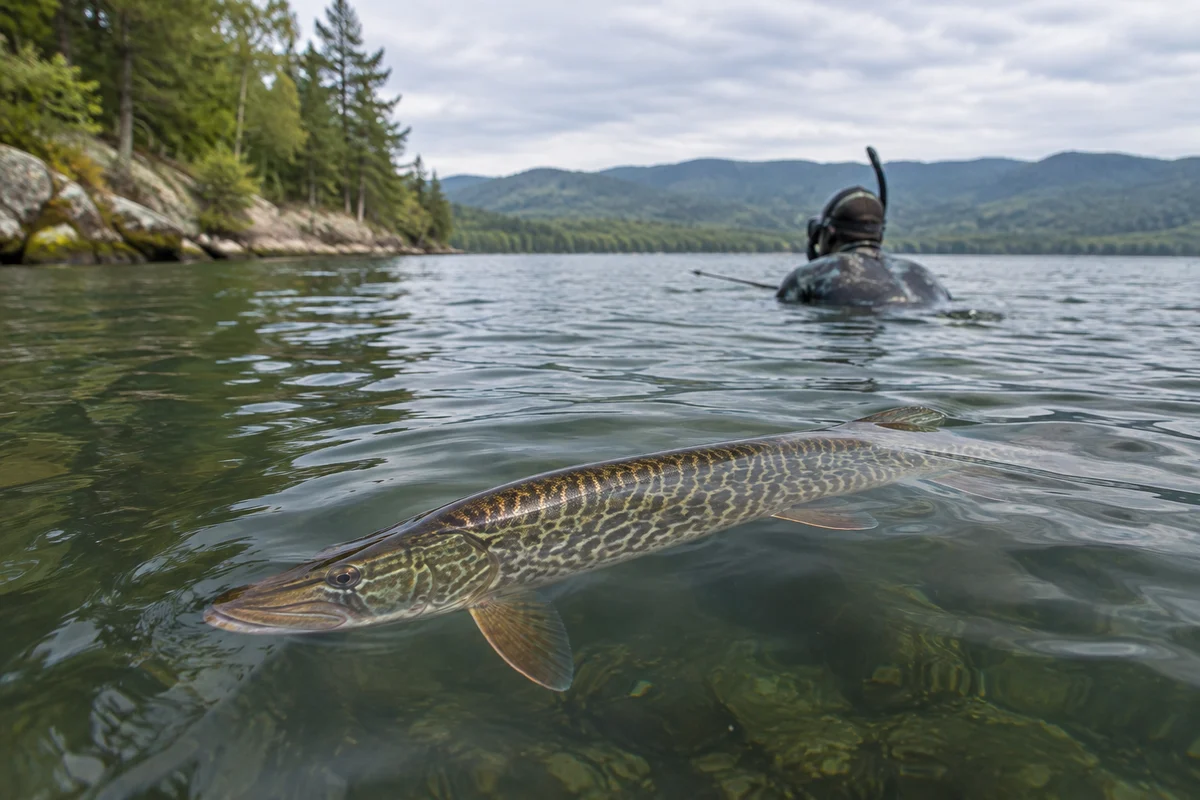
Keep expectations realistic. Muskies can be difficult to locate, and an uneventful day does not prove that a lake lacks fish. A second look at habitat and conditions may be more valuable than switching to a supposedly magic lure. To understand why reports and records need careful verification, see our overview of Illinois state record tiger muskie claims and our guide to muskie underwater video footage.
What matters most
The strongest muskie fishing tips are simple to apply and easy to revise: find transitions, cover likely water systematically, vary presentation with purpose, and treat each follow as information. Pair that approach with current regulation checks, safe boat handling, and careful fish handling. Over time, notes from your own waters will sharpen your decisions far more than any universal promise about a particular lure or hour.
Frequently asked questions
What is a good starting lure for muskie fishing?
Choose a lure you can cast and retrieve safely at a depth and speed that fit the cover. A moving bait is a practical baseline; adjust after observing conditions or fish response.
How do I respond when a muskie follows but does not strike?
Stay composed, keep the lure moving under control, and note the location and conditions. On the next pass, try a deliberate cadence or angle change rather than making a sudden, unsafe movement.
Is a specific season always best for muskies?
No. Seasonal activity varies by waterbody, weather, forage, and regulations. Check current local rules and use conditions and observations to guide where and how you fish.
How should I release a muskie safely?
Prepare tools in advance, minimize air exposure, support the fish horizontally, and keep hands away from hooks. Follow local regulations and do not attempt a landing you cannot manage safely.
For more, explore our muskie fishing guides.
Frequently asked questions
What is a good starting lure for muskie fishing?
Choose a lure you can cast and retrieve safely at a depth and speed that fit the cover. A moving bait is a practical baseline; adjust after observing conditions or fish response.
How do I respond when a muskie follows but does not strike?
Stay composed, keep the lure moving under control, and note the location and conditions. On the next pass, try a deliberate cadence or angle change rather than making a sudden, unsafe movement.
Is a specific season always best for muskies?
No. Seasonal activity varies by waterbody, weather, forage, and regulations. Check current local rules and use conditions and observations to guide where and how you fish.
How should I release a muskie safely?
Prepare tools in advance, minimize air exposure, support the fish horizontally, and keep hands away from hooks. Follow local regulations and do not attempt a landing you cannot manage safely.
Sources & further information
Consult these primary sources for current regulations, technical information and local guidance.