How to Fish for Pike: Find Them, Choose Lures, and Release Them Safely
Pike fishing becomes more consistent when you match presentations to cover, depth and season. Here’s a practical framework for finding fish, choosing tackle and handling them responsibly.
Learning how to fish for pike starts with a simple idea: search likely ambush cover, then adjust your lure’s depth and speed until you find active fish. Northern pike use weed edges, points, bays and other structure to intercept prey, but they are not always shallow or aggressive. A flexible plan—and careful handling—matters more than carrying a mountain of specialized gear.
Where should you look for pike?
Begin with a map or a slow look across the water. In lakes, identify healthy weed beds, inside turns, points, channels, drop-offs and the edges of shallow bays. Pike may use shallow vegetation to feed, while nearby deeper water gives them another place to hold as conditions change. In rivers, check current breaks such as the slack side of a point, a backwater mouth or the seam beside a slower pool. Avoid assuming every promising-looking patch holds fish; cover changes with water level, season and local habitat.
On a new water, start with a manageable stretch rather than trying to cover the whole lake. Work a weed edge or shoreline in sections, making casts that cross likely holding areas. If you have sonar, use it to understand depth and bottom transitions, not as a substitute for observing weeds, baitfish and water conditions. When a fish follows but does not strike, note where it turned away and make a different presentation through that zone.
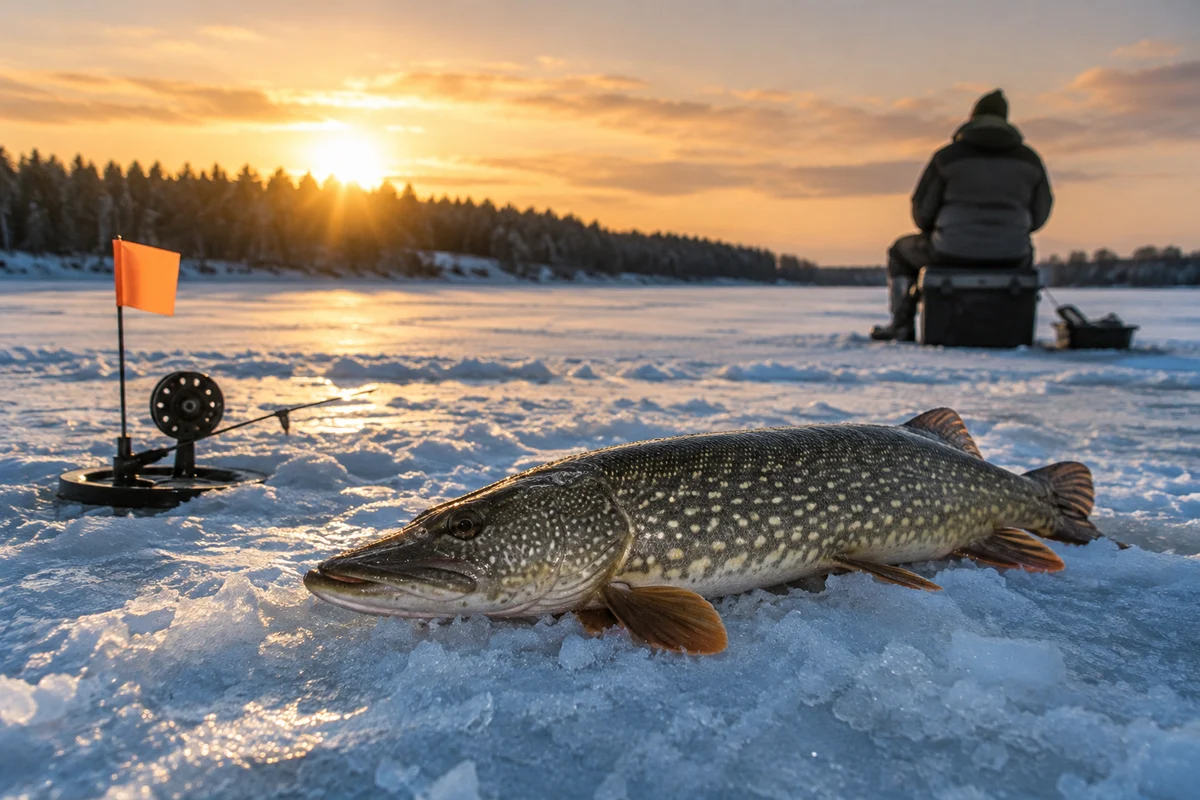
Pike behavior varies by region and waterbody. Local regulations may restrict seasons, areas or methods, and some waters have special conservation rules. Check the current fishing regulations and any advisories before heading out. For a cold-weather approach, see these ice fishing for northern pike tips; ice conditions require separate, local safety judgment.
Which lures are useful?
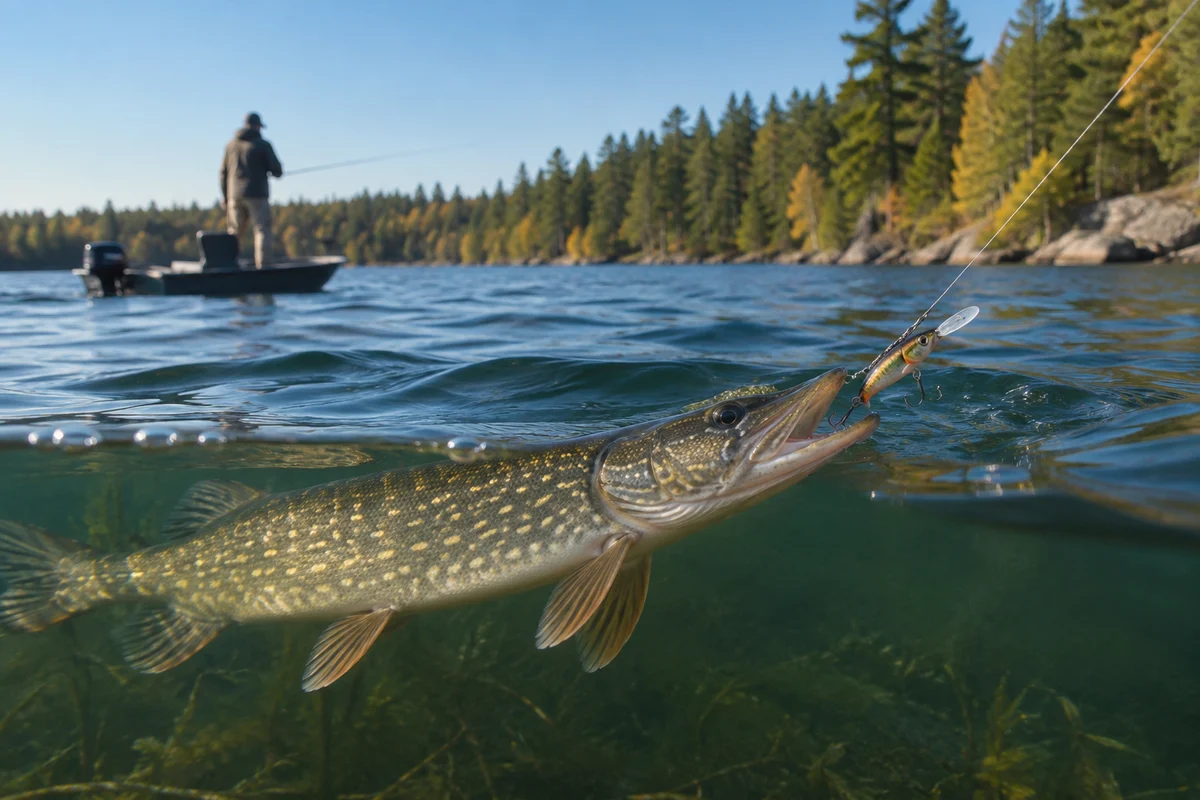
A small selection of lure styles covers many situations. Spinnerbaits and spoons create flash and vibration around vegetation. Swimbaits and other soft plastics can be worked along weed edges or over deeper structure. Crankbaits cover water efficiently, while jerkbaits let an angler vary pauses and cadence. Choose a size and profile that can be cast and controlled comfortably with your rod and reel; there is no single lure that is best everywhere.
Make the lure fit the cover. In scattered weeds, a presentation that can pass through openings without constantly fouling is useful. Along a clean edge, a more exposed hook may be practical, provided you can keep the lure clear of snags. In clear water or when fish follow without committing, try a different speed, direction or profile. In stained water, a more visible or strongly vibrating lure may be easier for fish to locate, but water clarity and light conditions should guide the choice.
Use a deliberate retrieve rather than an unchanging reel-in. Start with a steady pace that keeps the lure in the target zone. Then test pauses, brief speed changes or a change in direction. A follow is information: the fish found the lure, so change one feature at a time and repeat the cast. Keep hooks sharp and inspect them after contact with rocks, branches or weeds.
What tackle and leader should you use?
Use tackle matched to the size of the lures and fish you expect, with enough backbone to control a fish near cover. A rod that is too light can make it difficult to steer a strong fish away from weeds; a rod that is excessively heavy can make casting tiring and reduce control of smaller presentations. Reel choice and line strength should work as a balanced system, with knots checked regularly.
Pike have sharp teeth, so a bite-resistant leader is important. Wire and other purpose-made leaders are common choices; select a leader suited to the lure and fishing conditions, and inspect it for kinks, frays or damage. A damaged leader should be replaced, not trusted for another cast. A short, weak leader can fail when a fish rolls or clamps down, leaving it trailing tackle.
Carry long-nosed pliers or suitable hook-removal tools, cutters that can deal with the hooks you use, and a landing net sized for the fish and your fishing situation. Keep tools within reach before a fish is hooked. If fishing from shore, a stable, clear landing area makes the release process easier; from a boat, organize the deck so loose hooks and gear are not underfoot.
How do you set up a productive search?
Fish a route with purpose. Start near a likely edge and cast at several angles: parallel to the weedline, across it, and toward any point or opening. A lure retrieved parallel to cover stays in the strike zone longer; a cross-cover cast helps reveal whether fish are holding inside or outside the vegetation. Move after a reasonable set of casts if the area gives no signs of life.
When you find a fish, avoid crowding the spot or making repeated identical casts immediately. Give the area a short rest, then return with a changed angle or presentation. If you catch one, check the leader, hooks and lure before continuing. Pike may occupy the same kind of habitat in groups, but one catch does not guarantee that the whole area is holding fish.
For a broader look at muskie and pike-related coverage, explore more outdoor coverage. The species and fisheries are not interchangeable: identify the fish correctly and follow the rules for the water you are on. Stories about notable catches, such as this overview of a Utah tiger muskie record, are distinct from everyday pike-fishing advice and do not establish what a local fishery will produce.
How should you land and release a pike?
Prepare before the fish reaches shore or the boat. Wet your hands, have the net and tools ready, and keep the fish in the water while you make a plan. A rubberized net can help contain a fish while reducing prolonged handling. Avoid lifting a large pike by the gill covers, eyes or jaw, and do not place fingers near the teeth. If a hook is difficult to remove safely, cutting the hook or leader may be safer than prolonged struggle; follow local rules about leaving tackle in a released fish.
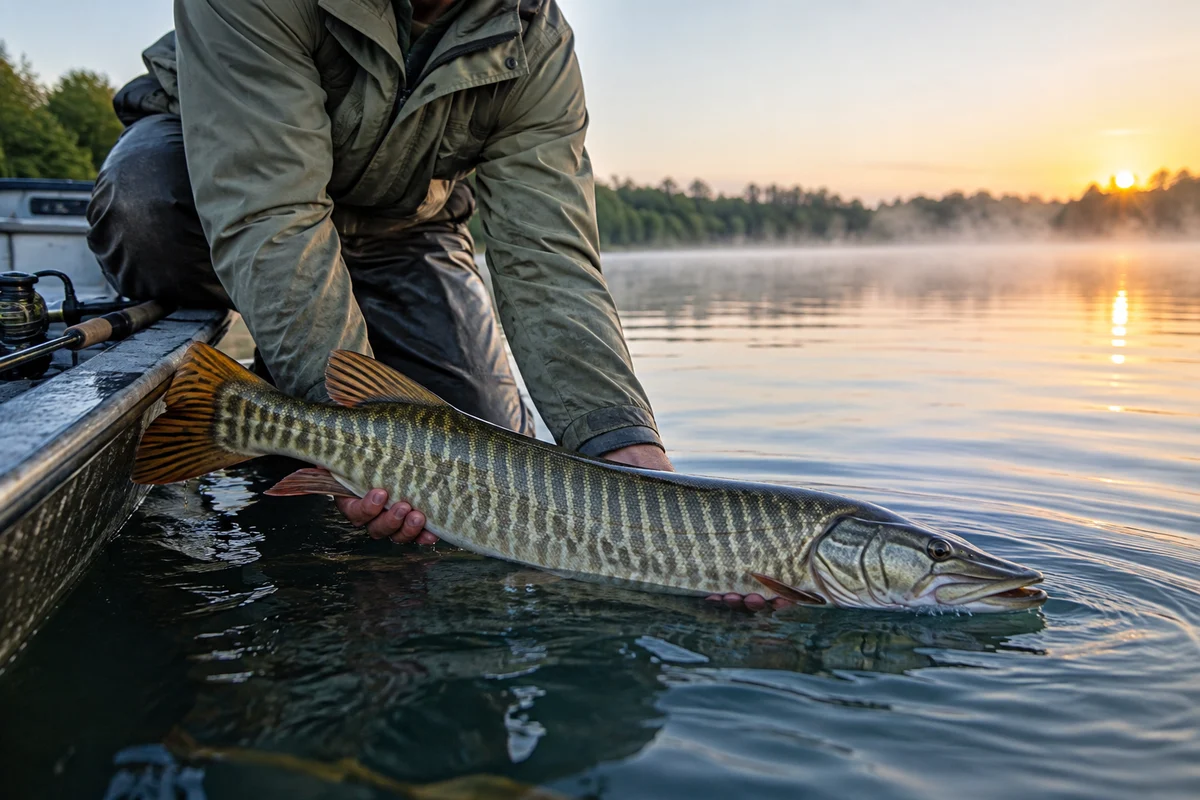
Support the fish horizontally if you need to lift it briefly for a photo. Keep the handling time short, avoid squeezing the body, and return it to the water promptly. Let the fish recover upright in calm water, supporting it gently without forcing it forward and back. Release when it can maintain its position and swim away under its own power. If the fish is deeply injured or unlikely to recover, consult local regulations and fisheries guidance on lawful harvest and dispatch.
Responsible fishing also means respecting habitat. Avoid trampling vegetation, leaving line or hooks behind, or moving fish between waters. In warm weather, long fights and extended air exposure can add stress; use tackle that lets you bring the fish in efficiently and plan for a quick release.
What common mistakes reduce success?
The first is fishing only the shallowest water. Pike may be near vegetation, but deeper edges and nearby transitions can matter, especially when conditions shift. Another mistake is changing several things at once. If you alter the lure, retrieve and location together, you learn little about what prompted a follow or strike. Make one adjustment, then test it.
Neglecting the leader and landing tools can turn a brief encounter into a lost fish or an unsafe hook-removal attempt. Inspect tackle often and keep tools accessible. Finally, do not treat a catch report or record story as a promise of local abundance. Fisheries differ, regulations change, and fish size cannot be inferred from a headline. Focus on habitat, presentation and sound fish handling.
A straightforward pike-fishing plan
Choose a legal, accessible water and check its current rules. Identify a few cover edges and depth transitions, then fish them methodically with two or three lure styles that you can control. Keep a bite-resistant leader in good condition, note follows and strikes, and adjust the retrieve or casting angle in response. Prepare for safe landing and release before the first cast. This repeatable approach gives you useful information on every outing, whether or not the fish cooperate.
Frequently asked questions
Do I need a wire leader for pike?
A bite-resistant leader is strongly advisable because pike have sharp teeth. Wire and other purpose-made options are available; choose one suited to your tackle and inspect it for damage after each fish or snag.
Are pike always found in weeds?
No. Weeds are productive ambush cover, but pike may also use points, drop-offs, channels, bays and current breaks. Search the edges and nearby depth changes rather than limiting your casts to thick vegetation.
What should I do if a pike is deeply hooked?
Keep handling brief and prioritize your safety. Use appropriate tools and follow local rules; if removal would cause serious additional injury, cutting the hook or leader may be preferable where regulations allow. Consult local fisheries guidance for the specific water.
Sources & further information
Consult these primary sources for current regulations, technical information and local guidance.