Bushnell Spotting Scope Elite: A Field-Use Guide
A practical guide to evaluating and using a Bushnell spotting scope Elite for outdoor observation, with clear advice on optics, support, conditions, and responsible field use.
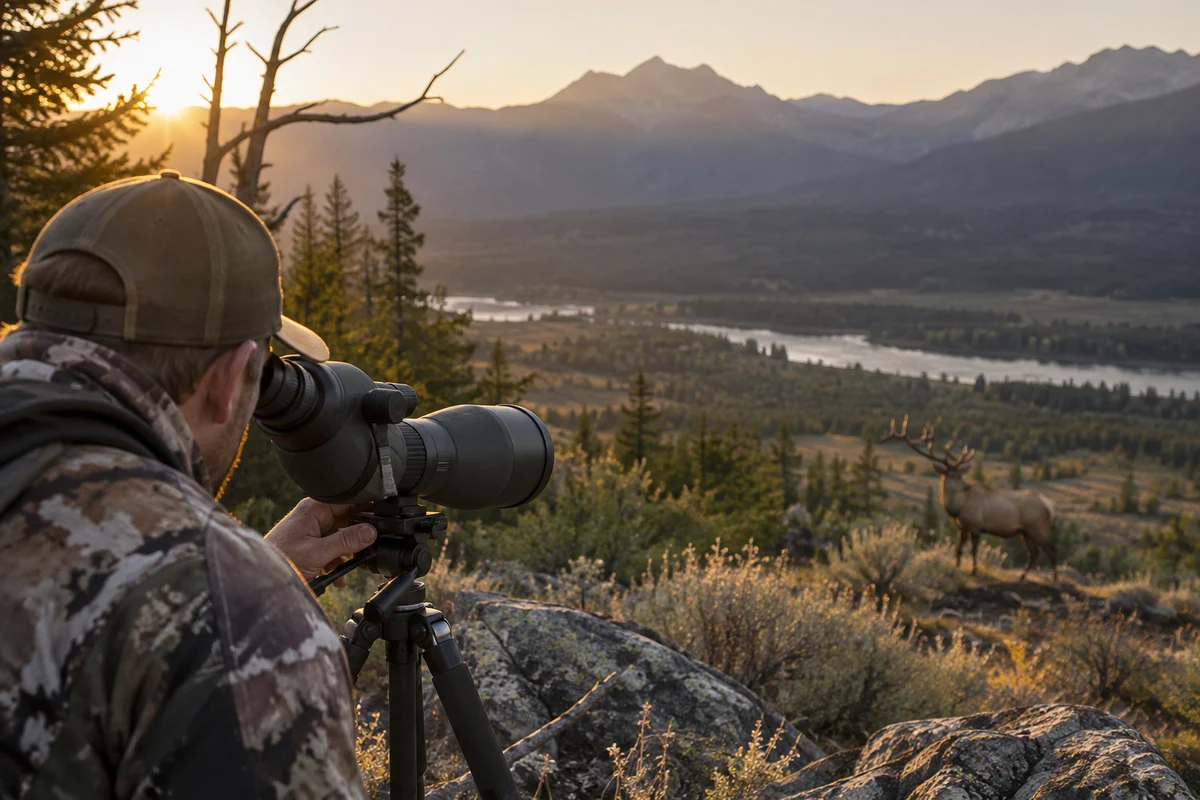
A Bushnell spotting scope Elite is best judged by how clearly and steadily it lets you observe at the distances and in the light you actually encounter. The name alone does not identify a single configuration: product lines, generations, and regional listings can differ. Before relying on any particular feature, confirm the model name and specifications with Bushnell. For hunters and archers, the useful questions are practical: what can you resolve, how much magnification is usable, and can you carry and support the optic comfortably?
What does “Elite” tell you about a spotting scope?
“Elite” is a product-family label, not a complete specification. It should not be treated as proof that every scope bearing the word has the same objective lens, eyepiece, coating, body construction, or accessories. Older product names can also appear in secondhand listings after a manufacturer has changed its catalog.
Start by identifying the exact model printed on the scope or its original documentation. Check the manufacturer’s current information or contact its support team if the listing is incomplete. Confirm the magnification range, objective-lens diameter, eyepiece arrangement, focus controls, dimensions, weight, and stated weather protection. If a seller’s description conflicts with manufacturer information, treat the discrepancy as unresolved rather than assuming the more attractive claim is correct.
This matters because two scopes with similar names may behave differently in the field. A product label is a starting point for research—not a substitute for checking the actual instrument.
How should you choose magnification?
High magnification can make distant detail appear larger, but it also magnifies hand movement, tripod vibration, heat shimmer, and atmospheric haze. It does not guarantee a sharper view. In many outdoor situations, a moderate setting gives a steadier, brighter image and makes it easier to locate a subject before zooming in.
If you can handle the scope in person, begin at the lowest setting. Find a stationary, non-sensitive object at a safe distance, focus carefully, and then raise magnification gradually. Compare the image for usable detail, not simply apparent size. If the view dims, swims, or becomes difficult to hold, back down. Do not infer a scope’s practical performance from the maximum number in a product listing.
For hunting, glassing is an observation task, not a reason to approach wildlife or disturb it. Follow local rules on wildlife disturbance, seasons, access, and lawful hunting. When observing archery equipment or a target area, maintain safe range practices and keep the optic separate from any assumption that a viewed object is safe to engage.
Why do tripod and viewing position matter?
A spotting scope is demanding to use unsupported, especially as magnification rises. A stable tripod or other manufacturer-compatible support helps you maintain a consistent image and observe without straining. Check that the head holds the scope securely, the mounting connection is compatible, and the setup remains stable on the ground you expect to use. A light support may be easier to carry but less steady in wind; a heavier one may be cumbersome on a long approach.
Set the tripod on firm ground and spread its legs securely. Avoid placing it where a small shift could send equipment downhill, into water, or into a travel route. Adjust the eyepiece and tripod height before settling into a long session. A comfortable posture can make it easier to notice detail and less likely that you will bump the instrument while focusing.
A useful field test is to view the same stationary object at a few magnification settings, first with the scope supported and then, briefly, without touching the setup. If the image jitters whenever you focus or change the eyepiece, improve the support or reduce magnification. Do not force a mount or adapter that does not fit securely.
What should you check in the image?
Look beyond center sharpness. Scan across the view for edge softness, color fringing around high-contrast outlines, glare, and uneven focus. Check whether the focus control moves smoothly and whether the image remains comfortable to view for several minutes. These are practical observations, not laboratory measurements, and they can vary with light, distance, temperature, and the observer’s eyesight.
Lighting affects what you see. Dawn, dusk, shade, and overcast conditions can make detail harder to distinguish. A larger objective lens may gather more light in principle, but actual viewing also depends on optical design, magnification, coatings, and conditions. Do not assume a scope will make a poorly lit or obscured scene reliably clear.
Heat shimmer can look like an optical flaw, especially when viewing across sun-warmed ground. Try a shorter distance, a different time of day, or lower magnification before concluding that the scope is defective. Dust, condensation, fingerprints, and a loose tripod can also degrade the view. Check the simple causes first.
Is it a practical fit for hunting and archery?
Consider the whole kit, not just the optic. Add the case, tripod, and any compatible accessories to the weight and volume you need to carry. Think about how often you will set up, how long you will observe, and whether the terrain offers stable places to stop. For a mobile hunt, a scope that is excellent on a bench may be too bulky to use consistently. For a stationary observation point, stability and viewing comfort may matter more than minimizing every ounce.
Archers comparing equipment should keep optical observation distinct from bow selection and safe handling. Our guides to Easton Deep Six arrows and the Prime Rival bow address separate equipment considerations. Confirm compatibility and current specifications directly with the relevant manufacturer; do not assume one component or accessory suits every setup.
For broader field context, explore more outdoor coverage. A scope can support observation and planning, but it does not replace binoculars for every task, a map for navigation, or sound judgment about weather, terrain, and lawful access.
How do you care for the scope outdoors?
Use the protective caps and case supplied or approved for the model, and avoid placing the instrument where it can roll, fall, or collect grit. Keep the objective and eyepiece lenses from rubbing against clothing, fingers, or loose gear. If dust is present, follow the manufacturer’s cleaning guidance and use appropriate lens-care materials; wiping grit across glass can scratch coatings.
After a cold or damp outing, allow the scope to acclimate in a way that limits condensation, and dry the exterior before storing it. Do not assume that a product is waterproof or safe to immerse because it is described as weather-resistant. Check the exact model’s stated limits. If water enters the body, a control binds, or the image develops persistent fogging, stop using it in harsh conditions and seek manufacturer guidance rather than opening the scope yourself.
Before a trip, inspect the mounting point, focus and zoom movement, caps, and case. A short check at home is easier than discovering a problem at a distant overlook. Keep the scope protected during transport, and avoid leaving it in extreme heat or cold beyond the manufacturer’s recommendations.
What is a sensible evaluation checklist?
Use a repeatable sequence when comparing a Bushnell Elite scope with another optic:
- Verify the exact model and manufacturer-listed specifications.
- Check that the scope, eyepiece, and tripod connection are complete and compatible.
- View a stationary subject at low magnification, then increase gradually.
- Assess stability, focus comfort, image brightness, and edge quality in realistic light.
- Consider carrying weight, setup time, weather limits, and protective storage.
- Ask the manufacturer to clarify uncertain specifications, warranty terms, or service options.
A careful comparison is more useful than relying on an old product name or a maximum-magnification claim. If you cannot confirm a detail, leave it open and make the decision based on verified information and your own viewing conditions.
Frequently asked questions
Does every Bushnell Elite spotting scope have the same specifications?
No. The name may cover different models or generations. Identify the exact model and confirm its features through Bushnell’s information or support before relying on a specification.
Is maximum magnification always best for wildlife observation?
No. Greater magnification can make vibration and atmospheric distortion more noticeable and may produce a dimmer or less comfortable view. Start low, stabilize the scope, and increase magnification only while useful detail remains.
Can I assume an Elite spotting scope is waterproof?
No. Weather protection can vary by model, and terms such as weather-resistant do not necessarily mean waterproof or submersible. Check the manufacturer’s stated limits for the exact scope.
Sources & further information
Consult these primary sources for current regulations, technical information and local guidance.