Bighorn Sheep World Record: How Records Are Verified
A practical guide to understanding bighorn sheep record categories, measurement standards, and verification—without confusing an impressive ram with an official record.
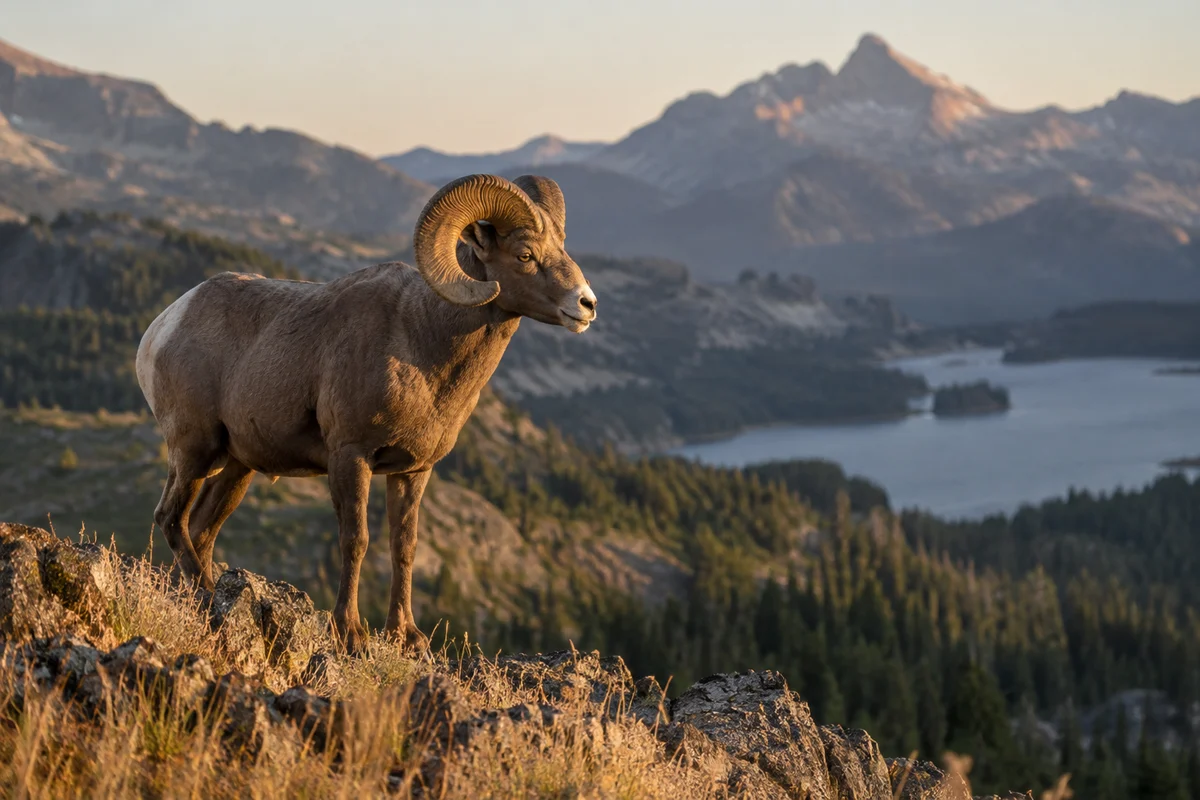
The bighorn sheep world record is not simply the animal with the longest-looking horns or the biggest spread in a photograph. Official recognition depends on the record system, the category, and measurements taken under that organization’s rules. Because rankings and accepted entries can change, the most reliable answer to “what is the record?” is the current listing from the official recordkeeper—not a recycled headline or an unverified social post.
That distinction matters to hunters, wildlife watchers, and anyone comparing rams across regions. A careful approach starts by asking which species and category are involved, then checking how the animal was measured and documented. The same habits help when evaluating a reported world record elk or an unusually large deer described as the largest non-typical whitetail deer.
What does “world record” mean for bighorn sheep?
Bighorn sheep include distinct forms found in different parts of North America. Record programs may separate entries by species or subspecies, and may also distinguish hunter-taken trophies from other classes of entries. A claim that a ram is “the world record” is incomplete unless it identifies the record book and category being used.
For North American big-game trophies, the Boone and Crockett Club maintains a widely recognized records program. Its published standards define eligible categories and measurement procedures. Other organizations may keep their own lists, apply different rules, or recognize a different class of animal. Their results should not be treated as interchangeable: a score in one program does not automatically establish a record in another.
It is also useful to separate biological size from record-book score. A ram’s horns may look massive in a field image, but perspective, lens choice, head position, and the animal’s body size all affect visual impressions. A formal score uses specified measurements rather than a general impression of bulk.
How are bighorn sheep horns measured?
Record systems use trained measurers and standardized forms. In a typical trophy-measurement process, horn dimensions and symmetry are assessed according to the organization’s current instructions. The exact points, deductions, waiting periods, and eligibility criteria depend on the program and should be checked directly in its rules.
A measurement is not just a single circumference or the widest point between the horns. Scorers record prescribed lengths and circumferences at defined locations, then apply the relevant formula. This is why a field estimate or a tape measure held against a photograph cannot establish an official score.
The process commonly includes these checks:
- Identify the animal and category. The species or subspecies and the relevant record class must be clear.
- Document the entry. The recordkeeper may require information about location, date, method of take, and supporting documentation.
- Use an approved measurer. A qualified or organization-approved scorer follows the current official instructions.
- Observe any required drying period. Some programs require a waiting period before final measurements; confirm the specific rule rather than assuming one applies universally.
- Submit for review. The record organization evaluates the measurements and documentation before accepting or ranking an entry.
A preliminary score can be useful, but it is not the same as an accepted entry. When a report says “potential record,” that wording usually signals that verification, waiting periods, or formal review may still be pending.
Why do records and rankings change?
Record books are maintained lists, not permanent declarations that can never be revised. New entries may be accepted, older entries may be reclassified, and organizations may update policies or correct documentation. A current ranking should therefore be checked at the source, with attention to the date and category shown.
Public reports may also use “record” loosely. Sometimes the claim refers to a state or provincial record, a particular subspecies, a non-typical category, a preliminary score, or an organization’s own list. Those distinctions can disappear in a headline. Before repeating a claim, find the original recordkeeper’s entry or announcement and confirm exactly what it recognizes.
For a useful comparison, keep these details together:
| Question | What to confirm | Why it matters |
|---|---|---|
| Which animal? | Species or subspecies named by the source | Different populations may be tracked separately |
| Which record book? | The organization maintaining the list | Rules and eligible entries differ |
| Which category? | Hunter-taken, other eligible class, or regional listing | Category changes what can be compared |
| What is the status? | Preliminary, submitted, accepted, or ranked | A reported score may not yet be official |
| When was it checked? | Date of the current listing | Rankings can change over time |
This simple checklist is more useful than comparing isolated numbers copied from several articles. If a report omits the organization or category, treat the “world record” wording as unverified until you can trace it to a primary source.
What makes a record claim credible?
A credible claim gives readers a route to verification. Look for the record organization’s name, a clear category, and a status that distinguishes a preliminary measurement from an accepted entry. If the claim concerns a recent harvest, the relevant state or provincial wildlife agency may provide context about licensing, seasons, harvest reporting, or the species’ management. Agency confirmation of a lawful harvest, however, is not necessarily record-book certification.
Photographs can help document an animal, but they do not substitute for official measurements. Images can be misleading because of perspective, and they rarely show all measurement points. Likewise, a news story repeating a score is not an independent verification if it traces back to the same unconfirmed claim.
For readers interested in how record books work more generally, see this overview of the Boone and Crockett record book. The important lesson is consistent across trophy topics: identify the keeper of the list, read the relevant rules, and distinguish a confirmed entry from a claim awaiting review.
Bighorn records in a wildlife context
Record-book interest is only one way to understand bighorn sheep. Rams’ horns grow over time, and horn shape and size reflect age, genetics, nutrition, and environmental conditions. A notable trophy does not by itself explain the health of a population or the quality of its habitat. Wildlife agencies monitor populations and set management measures using broader evidence, including surveys and habitat conditions.
Bighorn sheep are adapted to rugged terrain, but populations can face pressures that vary by location. Habitat change, disease, disturbance, and interactions with domestic livestock are among issues that wildlife managers may consider. The details are local, so consult the responsible agency for current information rather than applying one region’s situation everywhere.
Anyone observing sheep should keep a respectful distance and follow posted closures and agency guidance. Close approaches can disturb wildlife, especially during sensitive periods. For hunters, lawful participation requires checking the current regulations for the exact jurisdiction and unit; seasons, permits, reporting requirements, and restrictions can change. This guide explains record verification, not how to pursue or take an animal.
A practical way to check the current record
Use this sequence when a new “world record” claim appears:
- Start with the named recordkeeper. Search its current official records pages, not only news coverage.
- Match the category. Confirm the exact species or subspecies and whether the list is global, national, state, or provincial.
- Check acceptance status. Look for a final listing rather than a preliminary estimate or pending submission.
- Compare like with like. Use the same organization’s rules and category for both entries.
- Note the date. Record the date you checked the listing, since a ranking may later change.
- Use agency sources for wildlife context. Separate population or regulation information from trophy certification.
If the official recordkeeper does not publish enough detail to verify a claim, avoid presenting it as settled fact. A cautious description—such as “reported as a potential record, pending confirmation”—is more accurate than turning an early estimate into a definitive superlative.
The reliable answer is the verified one
The phrase “bighorn sheep world record” can refer to different categories, organizations, and stages of review. The soundest answer names the record book, identifies the category, and links to the current accepted listing. When those details are missing, the size claim remains uncertain, however impressive the photographs may be.
That standard makes record stories more informative, not less exciting. Readers can appreciate an exceptional ram while understanding what has—and has not—been verified. For the latest ranking and measurement rules, consult the official recordkeeping organization and the wildlife agency responsible for the animal’s range.
For more, explore our big game hunting guides.
Frequently asked questions
Who keeps the official bighorn sheep world record?
The Boone and Crockett Club maintains a widely recognized North American big-game records program. Check its current records and rules, and identify the exact category before calling an entry a world record.
Can a photograph prove a bighorn sheep record score?
No. Photographs can provide context but cannot replace standardized measurements by a qualified measurer and review under the recordkeeper’s rules.
Why might two sources give different bighorn sheep records?
They may use different organizations, species or subspecies, record categories, or acceptance statuses. Compare entries only within the same program and category.
Does a preliminary score mean the animal is an official record?
Not necessarily. Documentation, required waiting periods, measurement review, and formal acceptance may still be outstanding.
Sources & further information
Consult these primary sources for current regulations, technical information and local guidance.