Winter Jig Rigs for Crappie: A Simple Cold-Water System
A practical guide to choosing and fishing winter crappie jig rigs, with a field framework for matching jig weight and presentation to water depth, wind and fish behavior.
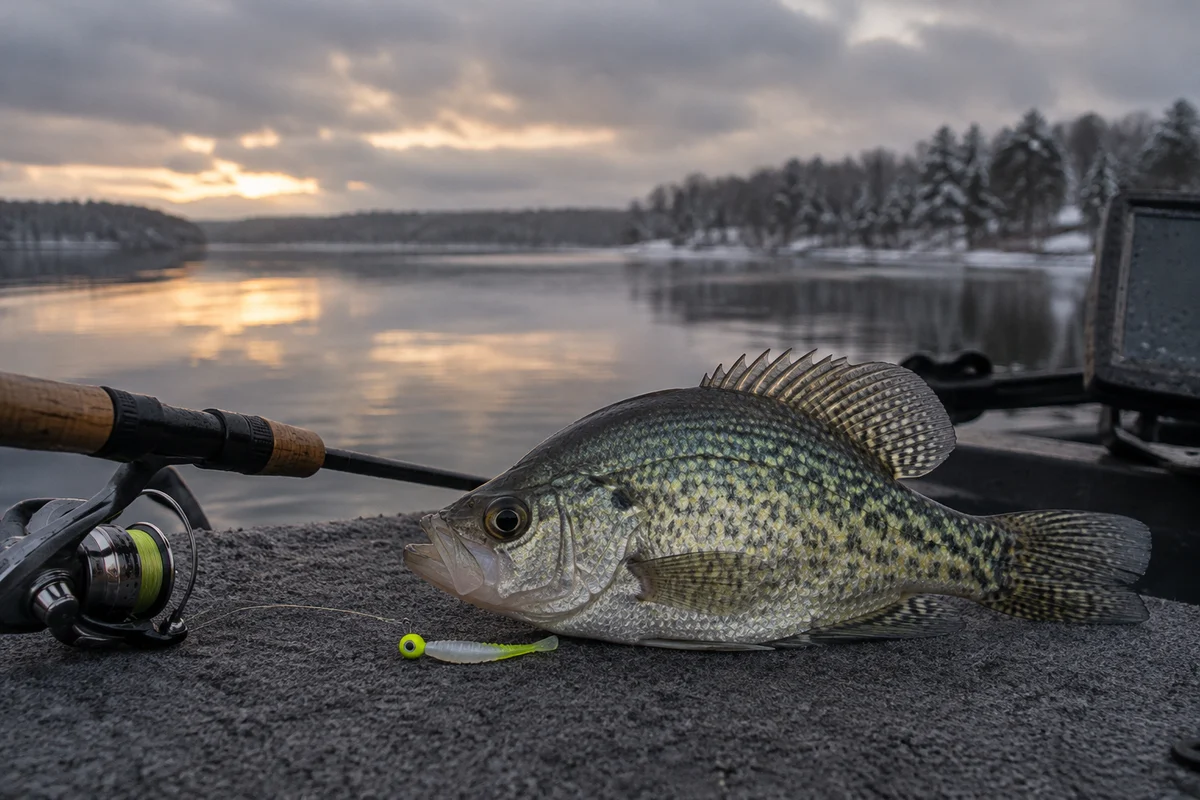
Winter jig rigs for crappie work best when they make a small bait easy to control, not when they add complexity. Cold water often calls for deliberate presentations, but depth, current, cover and fish activity matter more than the calendar. Start with a simple jig-and-plastic or jig-and-minnow setup, keep it in the fish’s zone, and change one variable at a time.
The right rig is therefore a system: line, jig weight, bait profile and presentation all affect whether you can detect a light touch and keep the offering where crappie are holding. The methods below are starting points, not guarantees; local conditions and regulations should guide your choices. For more seasonal panfish context, visit the freshwater panfish fishing hub.
What makes a winter crappie rig effective?
A useful cold-season rig balances control and subtlety. You need enough weight to reach the depth and feel or see the bait, but not so much that it falls unnaturally fast or snags constantly. A compact bait can be easier to present around brush or beneath a float; a larger profile may be worth trying when fish respond to a more visible target.
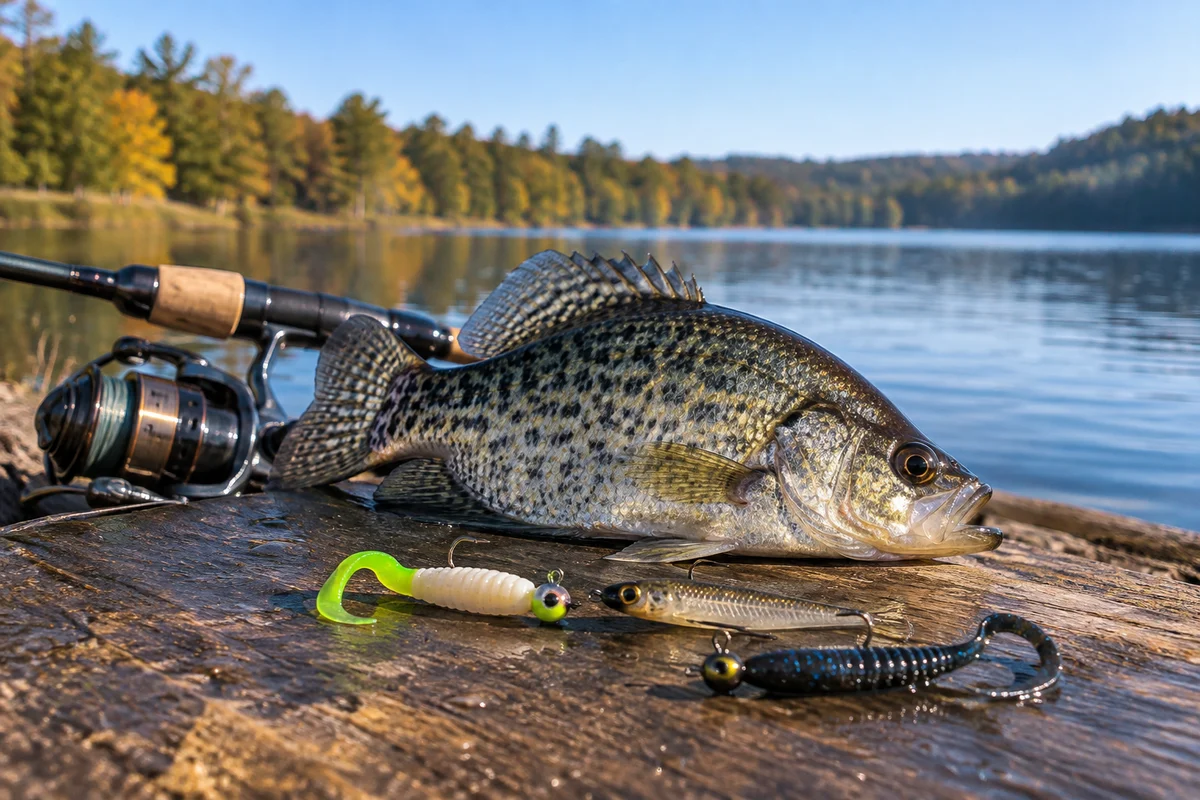
A basic setup is a light spinning outfit, a small jig tied directly to the line, and either a soft plastic or a live minnow where permitted. Choose line and tackle you can manage safely in the conditions. Lighter line can help with small offerings, but brush, docks and other snags may call for a sturdier choice. There is no universal line size: balance visibility, strength and the likelihood of recovering a snag.
Check local rules before using live bait, multiple hooks or a particular rig. Regulations can vary by water and season. The U.S. Fish and Wildlife Service provides a starting point for finding federal and state fish-and-wildlife information, but the relevant state agency is the authority for local fishing rules.
How should you choose jig weight and bait?
Begin with the lightest jig that still gives you reliable depth control. If wind bows the line, current pushes the bait away, or the jig takes too long to reach the fish, step up gradually. If it drops sharply through the strike zone or wedges into cover, try less weight or alter the angle of your presentation.
A soft plastic offers repeatability: it stays on the hook and lets you test different shapes or colors without rebaiting. A minnow may be useful when fish show interest in live bait, but it requires attention to bait-care rules and hook placement. Neither option is automatically best in winter. Let bites, follows, snag frequency and your ability to keep the bait in place make the decision.
| What you observe | First adjustment | What to watch next |
|---|---|---|
| Jig drifts away from the target | Add a small amount of weight or shorten the line angle | Does it stay in the zone without falling too fast? |
| Frequent snags in brush | Reduce weight, lift the bait higher, or change approach angle | Can you maintain contact while clearing cover? |
| No response to a steady presentation | Pause longer or make smaller movements | Do fish react to the pause or subtle lift? |
| Bites are hard to detect | Improve line visibility, reduce slack, or use a float | Can you see or feel a light take without overworking the bait? |
Treat this as a sequence, not a prescription. Change only one factor at a time; otherwise, it is hard to tell what improved the presentation.
Should you fish a jig vertically or under a float?
Vertical presentation is useful when you can position the boat or stand over a known target and keep the line nearly straight. Lower the jig beside cover or through an opening, then hold it steady or make restrained lifts. Keep enough tension to notice contact, but avoid pulling the bait away from fish with constant motion. In a boat, use stable positioning and follow safe boating and ice-safety practices appropriate to the water and season.
A float helps suspend a jig at a chosen depth and can show subtle movement when a fish takes or the bait contacts cover. It is particularly helpful from shore, a dock or a stationary position where you cannot hold the jig directly above a target. Set the depth so the bait passes close to fish without dragging through branches. Wind can move a float and create useful drift, but strong gusts may make placement difficult.
If you are refining a small-bait presentation, the Johnson Crappie Buster overview offers a related tackle topic to compare with a simple jig setup. For broader panfish approaches and seasonal considerations, see Florida panfish fishing tips; conditions there may differ considerably from your local winter fishery.
How do you present a jig in cold water?
Start near the depth where fish are visible or where local knowledge suggests they are holding. Use electronics only as a locating aid; a mark does not prove that fish will bite. Lower the bait steadily, pause, and add a small lift or short controlled movement. Give each presentation enough time to be evaluated before changing depth or location.
When fish are suspended, avoid dropping the jig far below them and repeatedly retrieving it through the wrong layer. When fish are close to cover, work the edge and openings rather than forcing the rig into every branch. A light take may feel like added weight, a faint tap or simply a change in line angle. Watch the line as well as the rod tip, and set the hook with a controlled motion rather than a sweeping strike that could pull a small hook free.
If a few fish respond and action fades, first check whether the bait has shifted or become fouled. Then make a small adjustment in depth, cadence or bait profile. Moving immediately after every pause can prevent you from learning whether fish are present but inactive.
What should you check before heading out?
Use this quick field checklist:
- Confirm current license, season, bait and tackle rules for the exact water.
- Check weather, access, water conditions and any posted closures.
- Pack a few jig weights and bait profiles rather than an oversized assortment.
- Inspect knots, hooks and line for wear before fishing around cover.
- Keep pliers and a safe place for hooks accessible; handle fish carefully and follow local harvest limits.
- If fishing from ice, verify local conditions and use established ice-safety guidance; never assume ice is safe based on appearance or someone else’s route.
The National Oceanic and Atmospheric Administration’s weather resources can help with forecasts and conditions, while local authorities provide site-specific access and safety notices. Winter conditions change quickly, so reassess rather than relying on an old forecast.
How can you diagnose a slow bite?
Work through a short decision loop. First, confirm the bait is at the intended depth and not fouled. Second, check whether wind or current is moving it out of position. Third, slow the cadence and allow a pause. If there is still no response, adjust depth or move to a nearby piece of similar habitat. Keep notes on depth, presentation and conditions; a brief record is more useful than changing several things at once.
Not every marked fish is feeding, and a quiet period does not prove the rig is wrong. If you are fishing a lake with local crappie populations or record interest, use verified agency information rather than assuming size or seasonal behavior from a report elsewhere. The Pennsylvania black crappie record report is a related example of a record-focused topic, not a forecast for your water.
The dependable winter setup
For a first pass, tie on a modest jig, choose a compact plastic or legal live bait, and use the lightest weight that stays controllable at the target depth. Fish vertically when you can hold position; use a float when you need the bait suspended at a set level. Keep movements restrained, watch for subtle changes, and alter one part of the rig at a time.
That approach will not make inactive fish feed, and no single jig profile works everywhere. It does make each adjustment informative—and helps you fish deliberately, safely and within local rules through the cold-water season.
Frequently asked questions
What is a good starting winter jig rig for crappie?
Use a light spinning outfit with a small jig and soft plastic or legal live bait. Start with the lightest weight that reaches and stays in the target zone, then adjust for wind, current and cover.
Is a float or vertical jigging better for winter crappie?
Use vertical jigging when you can hold position over a target and control the line. Choose a float when you need to suspend the bait at a set depth from shore, a dock or another stationary position.
How slowly should I fish a crappie jig in cold water?
Begin with a steady drop, a pause and small controlled lifts. If fish show no response, change cadence or depth one variable at a time; there is no single speed that works in every waterbody.
Sources & further information
Consult these primary sources for current regulations, technical information and local guidance.