What a 100 Pound Tennessee Flathead Catfish Claim Really Means
A reported giant flathead is not automatically a state record. Learn how to identify the fish, assess a claim, and find the right official record category before repeating it.
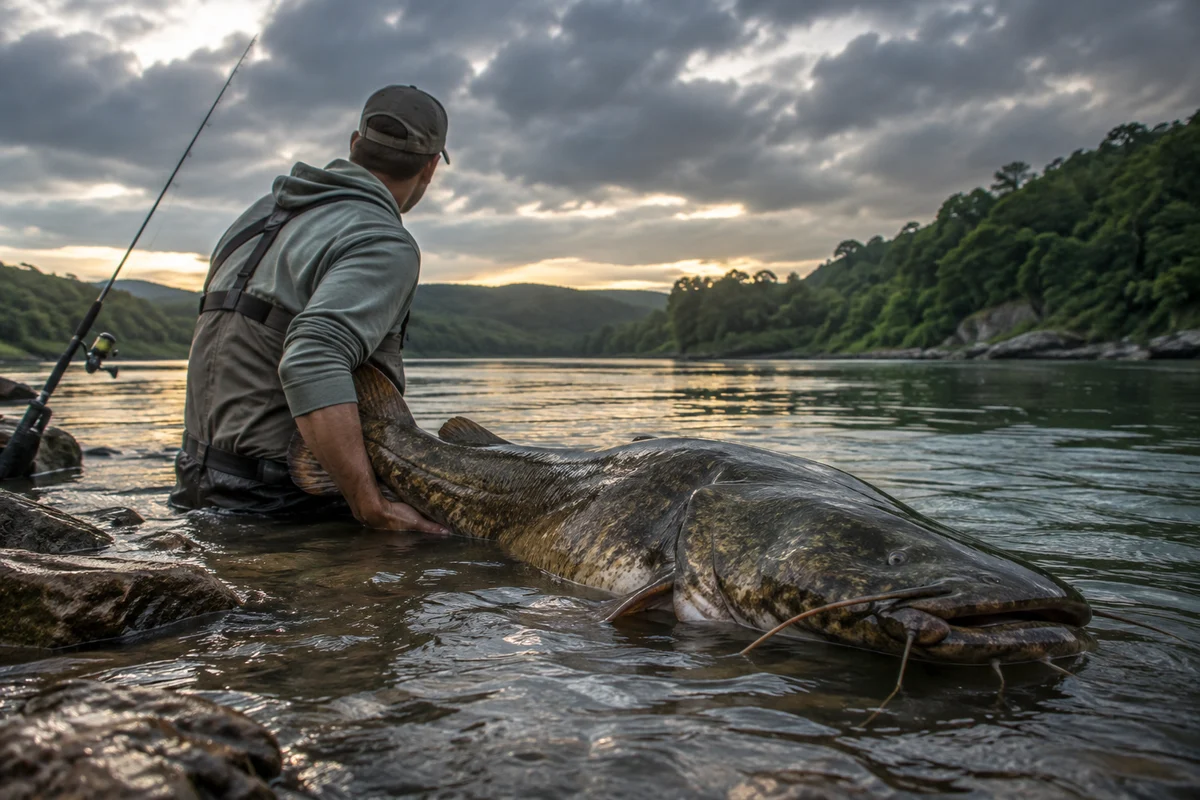
A 100 pound Tennessee flathead catfish would be an extraordinary fish, but the phrase alone does not establish that one was caught, weighed, or recognized as a record. Old headlines, retellings, and photographs can leave out the details that matter: species, verified weight, location, and the rules used to certify the catch. This guide explains how to evaluate a claim without treating an unverified story as fact—and how anglers can document an unusually large flathead responsibly.
Has a 100-pound flathead been verified in Tennessee?
A large-fish claim should be treated as unconfirmed until it can be matched to a reliable, official record or well-documented primary report. A dramatic number repeated online is not enough. The available details should identify the fish as a flathead, give the place and date of capture, state how the weight was determined, and explain whether an appropriate authority accepted the documentation.
This distinction matters because three different ideas often get blended together: a fish that someone says was caught, a fish with a documented weight, and an officially recognized record. Each is a different level of evidence. A photograph may help show the fish’s appearance and approximate scale, but it cannot by itself establish a precise weight or record status. Likewise, an account that says “over 100 pounds” may be a recollection or estimate rather than a certified measurement.
For Tennessee-specific recognition, start with the Tennessee Wildlife Resources Agency and check the current state record information or contact the agency for its accepted process. Record lists can change, and category rules matter. Until an official listing or credible documentation supports the number, describe the story as a claim—not a confirmed Tennessee record.
How can you tell a flathead from other big catfish?
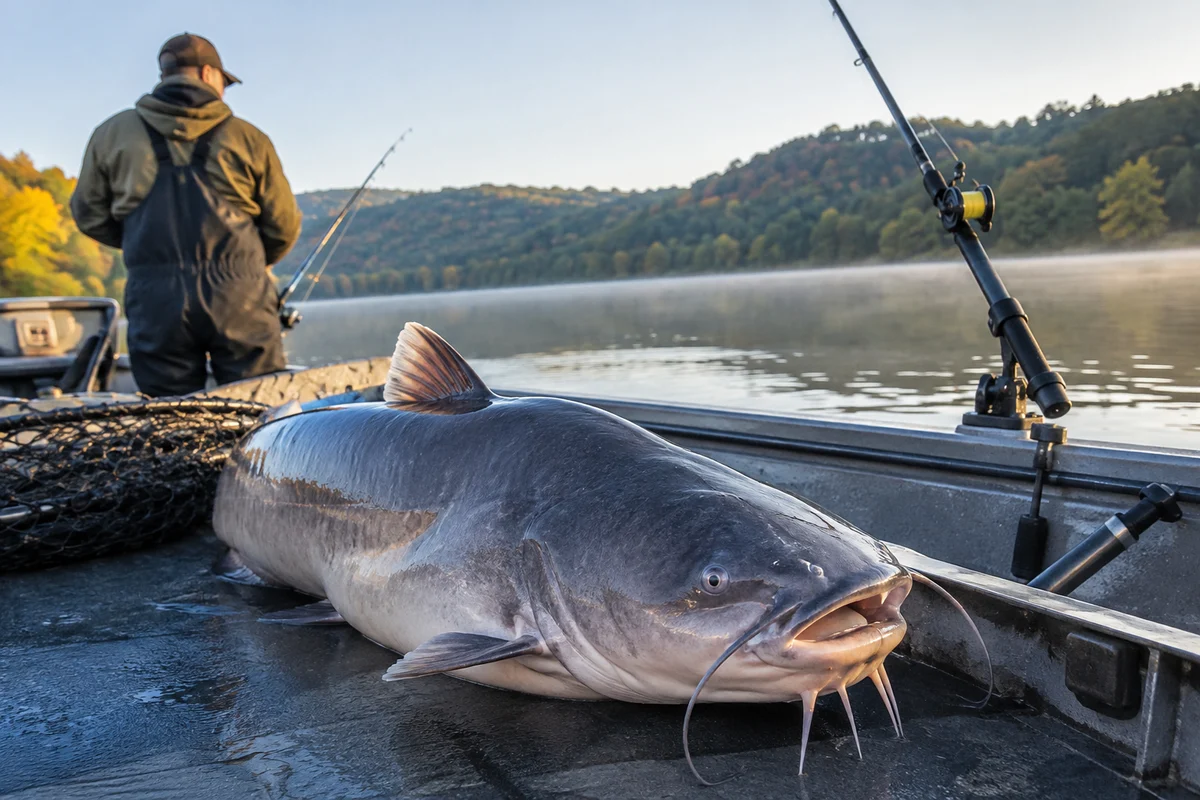
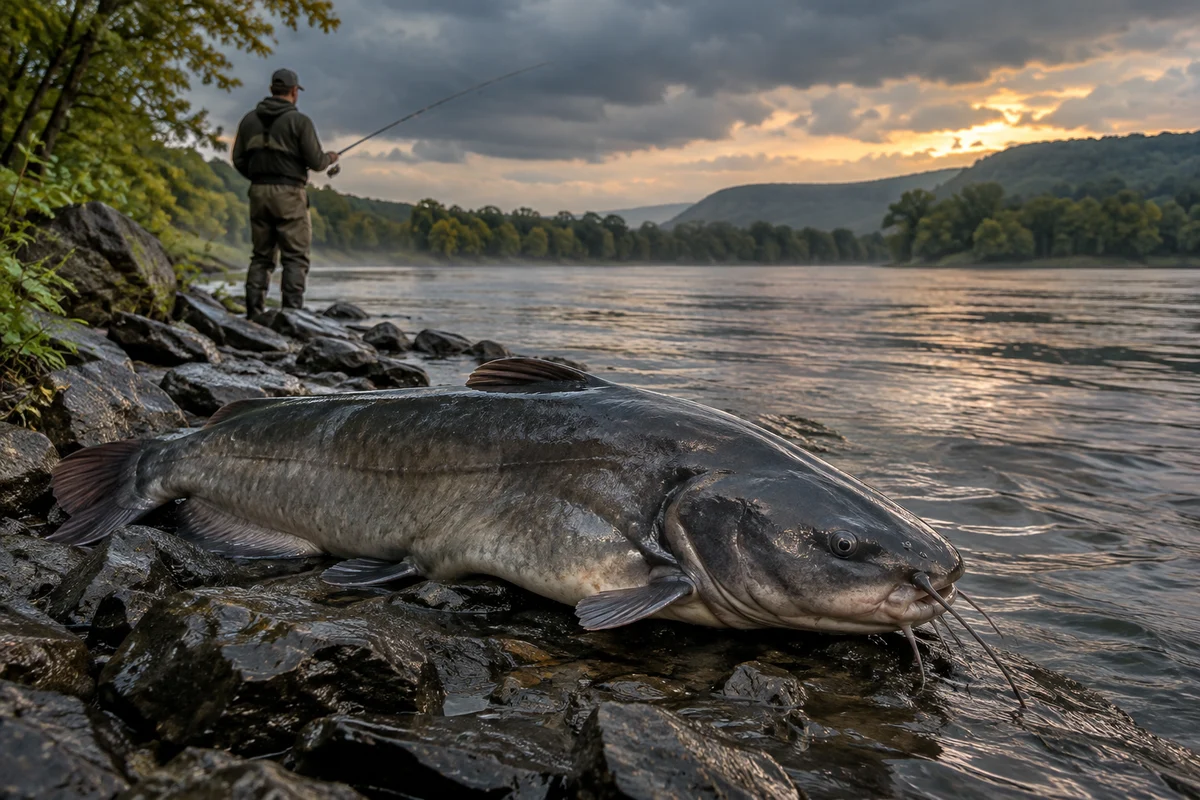
Flatheads have a broad, flattened head, a projecting lower jaw, and a mottled brown-to-yellow appearance that can vary with the fish and its surroundings. Their body shape and coloration differ from the more forked tail and often bluer or gray appearance associated with blue catfish. Channel catfish are generally more slender and may show spots, particularly when younger. Appearance can be confusing in poor light, in a photograph, or when a fish is large and its coloration is muted.
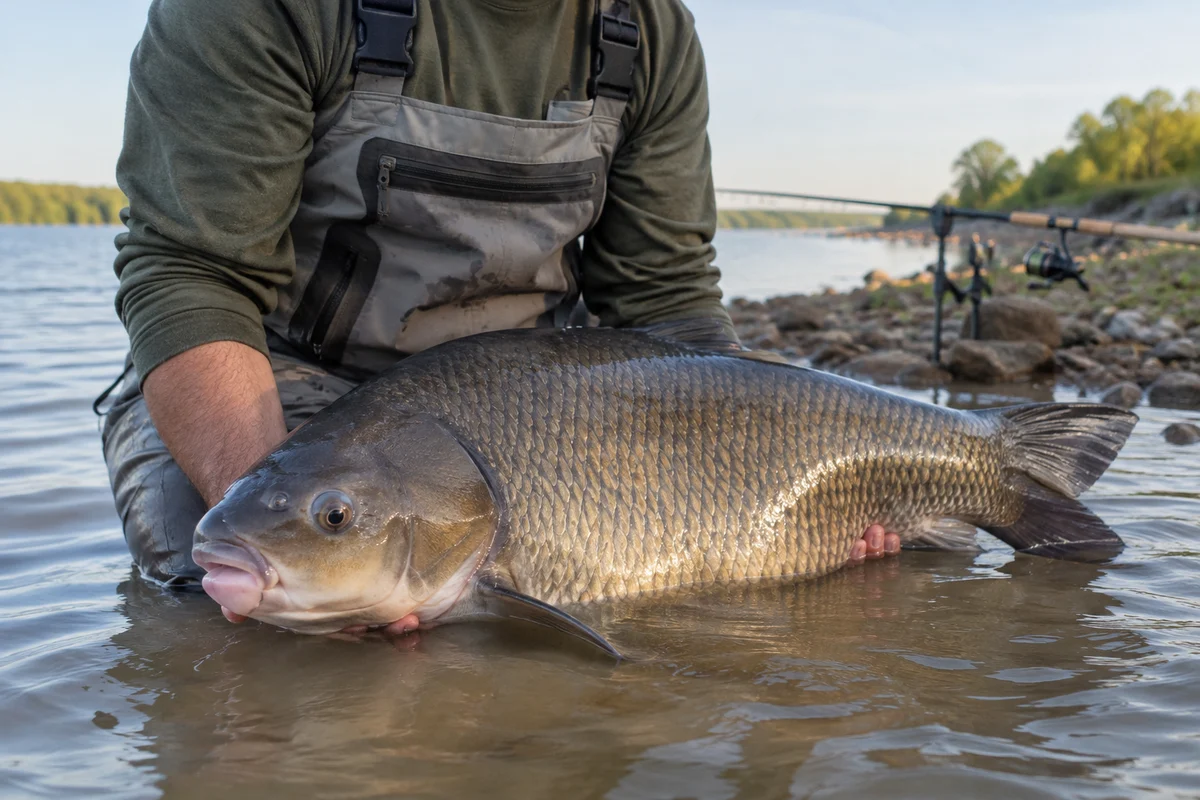
A record inquiry needs species identification, not just the word “catfish.” An image that clearly shows the head, mouth, body, and tail can help an experienced reviewer, but photographs should supplement—not replace—official identification requirements. If a claim may instead involve a blue or channel catfish, use the matching species category rather than comparing it directly with flathead records. For context on a different species and record category, see this overview of the Lake Gaston catfish record claims.
Flatheads are predators, and anglers often associate them with cover and live or natural prey. Those general habits do not tell us how large a particular fish was, where it was caught, or whether a report is true. Avoid using habitat descriptions or an imposing photograph as substitutes for evidence.
What evidence makes a giant-fish claim credible?
Good documentation is collected at the time of the catch, before details become difficult to verify. For a possible record, anglers should consult the current state requirements first; the accepted scale, witness, forms, and deadlines can differ by program. Do not assume that a home scale, a later estimate, or a photograph of a display is sufficient.
A useful record file commonly includes:
- The date and specific waterbody or location, recorded accurately and without embellishment.
- Clear photographs showing the whole fish and identifying features, along with images that establish scale without obscuring the fish.
- The weight and measurement method, including the scale or weighing facility used if required by the record program.
- Witness information and any forms or official measurements the agency requests.
- A prompt report to the appropriate authority, following its current instructions.
These are general documentation practices, not a substitute for Tennessee’s rules. Do not handle a potentially record-sized fish in a way that risks injury to the angler or fish merely to obtain a photograph. If the fish is to be released, plan safe handling and release before fishing, and follow applicable regulations. For established record categories beyond state programs, the International Game Fish Association publishes its own rules and application process; its recognition is distinct from a state record.
Why do weight and record categories cause confusion?
Weights can be estimated, rounded, or measured under different conditions. A fish may lose water or be weighed on equipment that has not been checked. Even when a reported weight is accurate, the catch may not qualify for a particular category because the organization has requirements for weighing, witnesses, tackle, or documentation. That is why a number should be reported with its source and status rather than repeated as an unqualified fact.
Record systems may separate fish by species, location, method, or other criteria. “Largest catfish” is therefore not automatically the same as “Tennessee state-record flathead.” A recognized record should be matched to the exact category and governing authority. When comparing a state record with a national or all-tackle listing, state plainly which list is being discussed.
For another example of why species and category need to stay distinct, this account of the Kentucky white catfish record concerns a different species. A record in one category cannot establish the standing of a flathead claim in another.
What should anglers know about flathead size and habitat?
Flatheads can grow large, but size alone does not identify age, growth rate, or the conditions that produced a fish. Those conclusions require reliable biological data, not a single anecdote. Water conditions, available prey, habitat, and individual variation all influence fish growth, so avoid turning one impressive catch into a claim about every Tennessee river or lake.
Anglers targeting catfish should check current local regulations before keeping a catch. Rules can specify species, length or harvest limits, seasons, or other requirements, and they may vary by water. Consult the catfish fishing hub for related species and angling topics, and confirm current Tennessee regulations directly with the state agency. A general article cannot determine the rules for a particular location or date.
A large fish may also be vulnerable during capture and handling. Keep it supported, limit time out of the water, and avoid lifting it by the jaw or gill structures. If release is intended, prepare tools and a safe plan before the fish is brought in. Follow agency guidance and local rules, especially where special protections apply.
How should you describe a Tennessee giant-catfish story?
Use wording that matches the evidence. If the source is only a circulating post or an old headline, call it an unverified report and do not attach an exact record status. If the account supplies a weight but no certification, say it was a reported or estimated weight and name the source when known. If an agency confirms the fish and category, state that precisely and link readers to the authoritative record.
A careful account should answer four questions: what species was identified, where and when was it caught, how was it weighed, and who verified the record? If any answer is missing, say so. This approach preserves the interest of a remarkable fish story without turning uncertainty into a false fact. It also gives readers a practical route to check the claim as official records and rules are updated.
Frequently asked questions
Is a 100-pound flathead catfish an officially confirmed Tennessee state record?
Do not treat the claim as confirmed unless it appears in an authoritative Tennessee record listing or is supported by documentation accepted by the state agency. Check current information with the Tennessee Wildlife Resources Agency.
Can a photograph prove that a catfish weighed 100 pounds?
A photograph can support species identification and provide context, but it cannot establish a precise weight on its own. Record programs set their own documentation and weighing requirements.
How do I report a possible Tennessee flathead record?
Contact the Tennessee Wildlife Resources Agency and follow its current record instructions. Preserve accurate details about the date, location, species identification, witnesses, and weighing method.
Sources & further information
Consult these primary sources for current regulations, technical information and local guidance.