Sun Protection for Hands: A Practical Outdoor Guide
Hands get steady sun exposure while hiking, paddling, gardening and driving. This practical guide explains how to combine clothing, sunscreen and simple routines without relying on any one method.
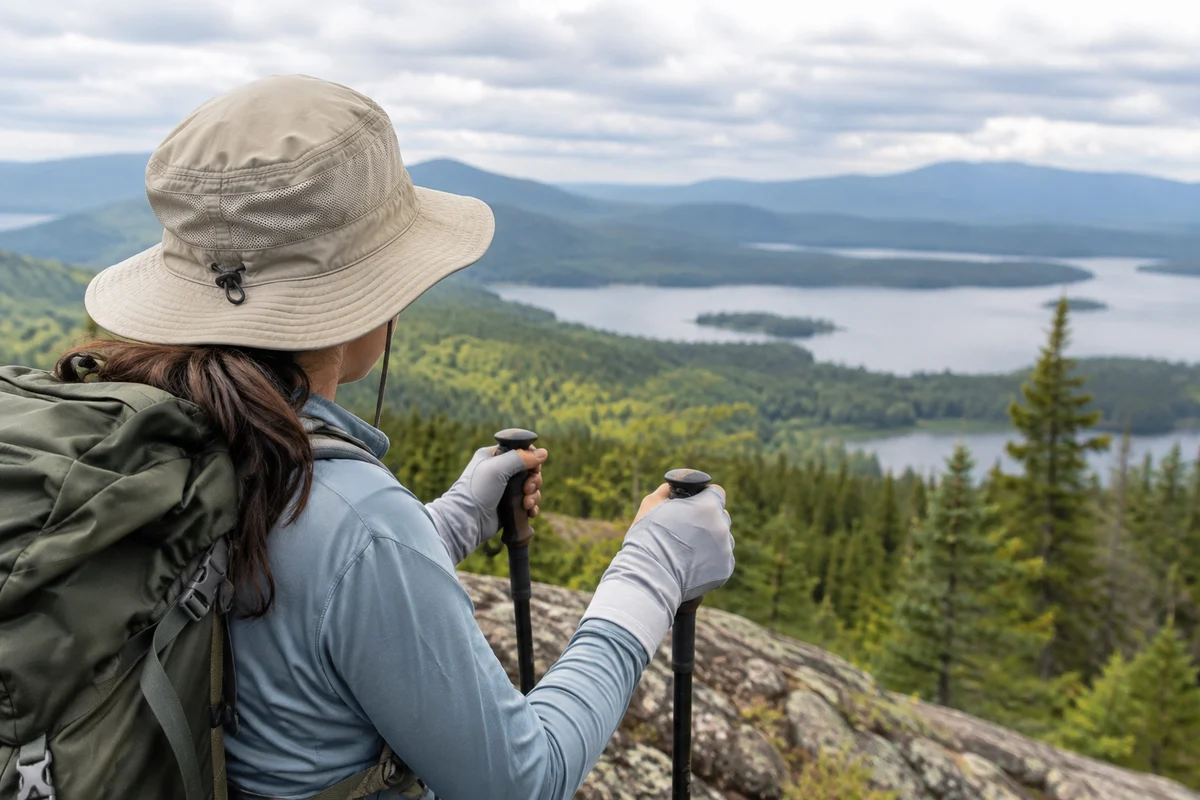
Hands are easy to overlook when packing for a hike or setting out for a day on the water. Yet they are often exposed while you walk, paddle, fish, set up camp or drive between trailheads. Effective sun protection for hands is less about finding one perfect product and more about using a few reliable layers: shade when it is available, protective clothing that you can comfortably keep on, and sunscreen on uncovered skin. Reapply after washing, sweating or swimming, and follow the product label.
Why hands need their own sun plan
The backs of the hands receive direct light during many outdoor activities, and fingers can remain exposed even when arms are covered. A hat and long sleeves help, but they do not protect skin left outside the cuffs. Water, sand, snow and pale surfaces can also reflect sunlight, so shade may not eliminate exposure. Conditions vary with time, location, cloud cover and surroundings; a cool or overcast day is not a dependable signal to skip protection.
Build hand care into the same routine as protecting your face and neck. Check the UV index for your location, consider how long you will be outside, and think about what your activity allows. A paddler needs a secure grip and dexterity; a hiker may want breathable fabric and quick access to fingers for knots or map reading.
Choose a combination, not a single fix
| Situation | Useful first choice | Add or adjust |
|---|---|---|
| Long, exposed hike | Lightweight sun gloves or gloves with a stated UPF rating | Apply broad-spectrum sunscreen to exposed fingers and any uncovered skin; use sleeves that overlap cuffs |
| Paddling or fishing | Gloves designed for the activity, with a secure, comfortable grip | Reapply sunscreen after water exposure according to its label; keep a small tube accessible |
| Short camp chores | Shade or gloves for the task | Cover exposed skin with sunscreen before returning to sun |
| Cold-weather outing | Insulating gloves that cover the hands | Check that cuffs do not leave a gap when reaching or using poles |
| Driving to a trailhead | Covering sleeves or gloves if comfortable and safe for vehicle control | Sunscreen can help protect exposed skin; never wear anything that interferes with a safe grip |
The table is a starting point, not a guarantee. Fit, fabric, wear, wetness and how much skin a garment covers all affect real-world protection. Avoid choosing gloves solely by appearance or assuming every pair blocks the same amount of ultraviolet radiation.
What to look for in sun gloves
If you want clothing to provide a defined level of ultraviolet protection, look for a garment labeled with a UPF rating and follow its care instructions. UPF is a rating for fabric protection; it is not the same as SPF, which describes sunscreen. Coverage matters just as much as the label: gloves should cover the backs of the hands and fit well at the wrist without interfering with the activity.
For warm-weather use, consider breathable fabric, comfortable seams, a secure fit and a cuff that can overlap your sleeve. For paddling, cycling or fishing, test the grip and finger movement in a safe setting before committing to a long outing. Fingerless designs can improve dexterity, but they leave fingertips and parts of the fingers uncovered. Treat those areas as exposed skin rather than assuming the glove protects them.
Gloves are useful only if they stay comfortable enough to wear. If they become wet, stretched, damaged or heavily worn, the protection may differ from what you expect. Check the maker’s care guidance, inspect seams and fabric, and replace a pair when it no longer fits or functions as intended. Do not infer a UPF rating from fabric color, thickness or price.
Apply sunscreen to exposed areas
Use a broad-spectrum sunscreen on uncovered skin, including the backs of hands, fingers and any area left bare by a cuff. Broad-spectrum labeling indicates coverage against both UVA and UVB radiation. Choose a product you can apply and reapply as directed, and check its directions for water resistance and any activity-specific cautions. No sunscreen blocks all UV radiation, and sunscreen does not make unlimited time in direct sun risk-free.
Apply before heading out, following the product label for amount and timing. Cover the full exposed surface, including between fingers if those areas are uncovered. Reapply as the label directs, and sooner when the product instructions call for it after swimming, sweating or towel-drying. Washing hands can remove sunscreen, so refresh it afterward when continued exposure is expected. Keep the container accessible rather than buried at the bottom of a pack.
Sunscreen can make palms slippery. Apply it to the backs of your hands and other exposed areas while avoiding the palms when a secure grip is important, then allow it to dry as directed. If you need protection on the palms too, consider gloves or shade during tasks where grip is safety-critical. Follow the label and use care around eyes, cuts or irritated skin.
Make protection fit the activity
On a hike: Put gloves and sunscreen where you can reach them during a rest stop. If you use trekking poles, check that the glove grip feels secure and that a cuff does not bunch or expose a strip of wrist. When stopping for navigation or snacks, use the pause to check for uncovered areas and reapply as needed.
On the water: Choose gloves that maintain control of your paddle, rod or other equipment. Water exposure and repeated wiping can remove sunscreen; use the product’s directions rather than assuming a water-resistant label means all-day protection. Keep a dry, reachable supply for reapplication.
At camp: Gloves can help during sunny chores, but remove them when the task requires precise handling or when they become uncomfortable. For breaks, move into shade when practical. When heading back into open sun, cover exposed skin again.
In changing weather: Clouds and cooler temperatures do not tell you how much UV reaches your skin. Use the local UV forecast as one input, while accounting for time outdoors and reflected light. If conditions, route or schedule change, reassess instead of relying on the morning plan.
A broader outdoor routine can make these habits easier to keep. Before departure, use a camping preparation checklist to gather essentials and place sunscreen where it is easy to find. For a long day on foot, compare your plans with this guide to different types of hikers and consider how pace, stops and exposure affect what you can comfortably carry. If ticks are also part of your route planning, see how to remove ticks easily and check current local guidance for prevention.
A quick pre-trip checklist
- Check the local UV forecast and expected time outdoors.
- Pack gloves suited to the activity; look for a stated UPF rating if you want a fabric rating.
- Check that gloves fit, cover the backs of your hands and do not compromise grip.
- Pack broad-spectrum sunscreen and read its application and reapplication directions.
- Identify which areas will remain exposed, including fingers, wrists and gaps at cuffs.
- Make sunscreen reachable for breaks, and remember that washing hands can remove it.
- Use shade when practical and reconsider your plan if the outing becomes longer or more exposed.
Limits, sensitivities and when to ask for help
Clothing and sunscreen reduce exposure but cannot eliminate it. Labels and real-world performance are not interchangeable: garment coverage, condition and fit matter, while sunscreen must be used as directed and renewed when needed. Shade is helpful but can still allow reflected or scattered UV to reach skin. Combine methods rather than treating any one as complete protection.
If sunscreen irritates your skin, stop using that product and consult its label; a healthcare professional can help if a reaction persists or is severe. People with a history of skin cancer, photosensitivity, or medicines that increase sun sensitivity may need individualized advice from a clinician or pharmacist. Seek medical advice for a new or changing skin spot, a persistent sore, or a severe sunburn. This guide offers general outdoor information, not a diagnosis or substitute for professional care.
The most dependable routine is straightforward: cover what you can, apply sunscreen to what remains exposed, reapply according to its directions, and use shade when available. A small check of your hands before leaving camp—and again after washing or getting wet—can keep an overlooked part of your outdoor kit from being an afterthought.
For more, explore our camping hiking guides.
Frequently asked questions
Do hiking gloves provide sun protection?
They can provide coverage, but protection varies by fabric, fit and condition. Look for a stated UPF rating if you want a rated garment, and use sunscreen on uncovered skin.
Should I put sunscreen on my hands before hiking?
Apply broad-spectrum sunscreen to exposed parts of your hands before going outdoors, following the product label. Reapply as directed, including after washing or water exposure when needed.
Are fingerless sun gloves enough?
They leave fingertips and portions of the fingers exposed. Protect uncovered areas with sunscreen or choose gloves with more coverage if they suit your activity.
Does cloudy weather mean my hands do not need sun protection?
No. Clouds and cooler air do not reliably indicate UV exposure. Check the local UV forecast and consider time outside, surroundings and reflective surfaces.
Sources & further information
Consult these primary sources for current regulations, technical information and local guidance.