Best duck dog breeds: choosing a partner for the blind
The best duck dog breeds are not interchangeable: water conditions, household life, training time and the individual dog matter as much as breed reputation. Use this guide to compare common retrievers and spaniels, and plan a thoughtful selection.
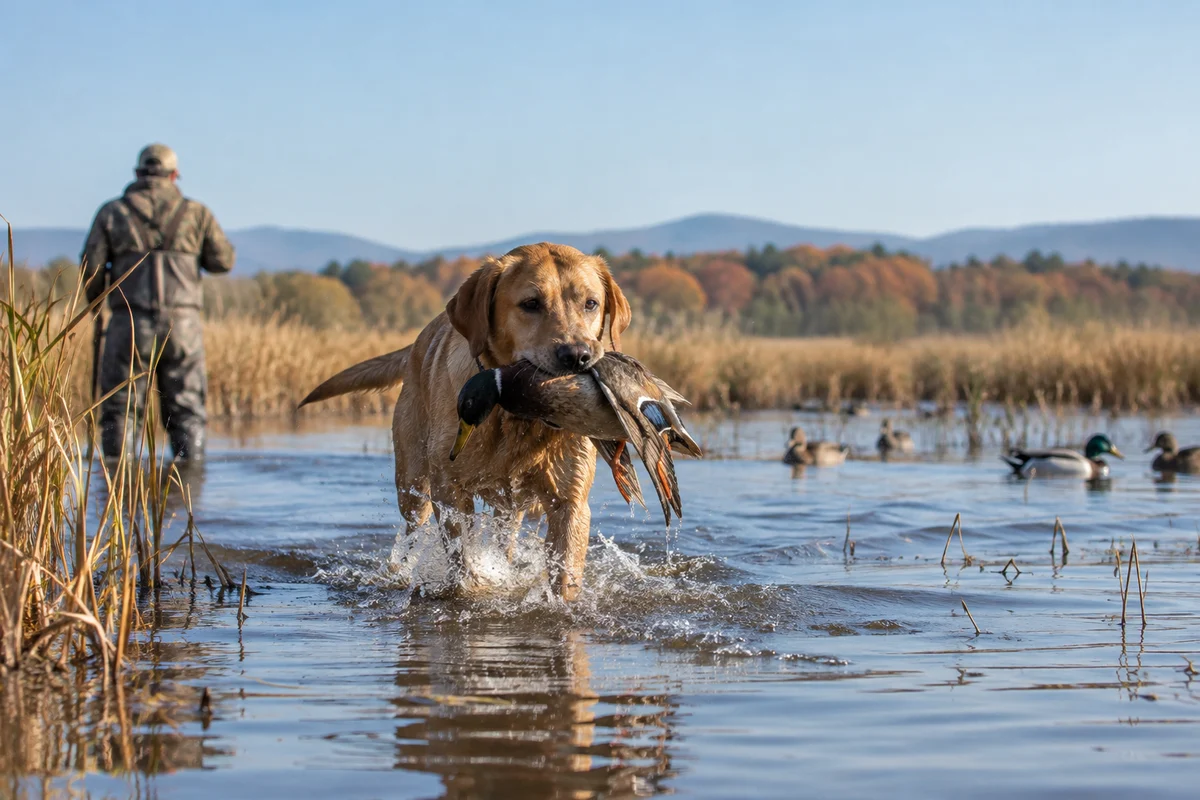
Choosing among the best duck dog breeds is less about finding a universally superior retriever and more about matching a dog’s build, temperament and needs to your hunting conditions and home. A capable waterfowl dog must learn to work calmly, retrieve safely and return reliably—but breed alone cannot guarantee those skills. Individual disposition, early socialization, careful training and veterinary care all matter.
Before you contact a breeder or rescue, picture a full season: cold water, long waits, travel, muddy gear and the dog’s life on the other days of the year. If you are new to waterfowl hunting, start with the duck and goose hunting hub for broader planning. This guide compares widely used sporting breeds and gives you a framework for deciding what fits.
What makes a good duck dog?
Waterfowl work combines steadiness, cooperation and physical resilience. A dog may need to remain settled near people and equipment, respond to cues despite distractions, and retrieve on land or in water. Those are trained behaviors, not automatic breed features. A dog that loves swimming still needs a gradual introduction to cold, deep or moving water; enthusiasm is not a substitute for judgment.
Consider the entire setting. A small marsh, a large open-water retrieve and a walk-in hunt impose different demands. So do a household with young children, apartment living, frequent travel or limited time for exercise. Coat type affects grooming and comfort, but no coat makes a dog immune to hypothermia, exhaustion or unsafe conditions. Plan to monitor the dog, provide a warm and dry place to rest, and end work when conditions are beyond its ability.
Common breeds to consider
Labrador Retriever
The Labrador is a familiar choice for waterfowl work because many lines combine a strong retrieving interest, trainability and an athletic build. Labs can be enthusiastic and energetic, and their size, coat, drive and temperament vary considerably by line and individual. Ask what a breeder prioritizes—field ability, companionship, conformation or a balance—and meet adult dogs when possible.
A Labrador is not automatically an easy first dog. Young dogs need patient structure, exercise and consistent boundaries. Some working-line dogs may have more energy and intensity than a household expects; some show-oriented dogs may have different working traits. Discuss the specific parents and relatives rather than relying on a label.
Chesapeake Bay Retriever
The Chesapeake is a sturdy sporting breed associated with retrieving in challenging water. Its dense, protective coat and substantial build may appeal to hunters who spend time in cold, wet settings, but coat does not remove the need for safe exposure and close supervision. Individual dogs can be independent and strong-minded, so thoughtful socialization and consistent training are important.
Meet adult Chesapeakes and ask owners how their dogs behave at home, around unfamiliar people and during training. A breed’s reputation for toughness should never be mistaken for permission to push a dog past its limits.
Golden Retriever
Golden Retrievers are often valued for their sociable nature and willingness to work with people. Many enjoy retrieving and can become versatile companions, though coats, energy levels and working aptitude differ. A longer coat may collect burrs and mud, so routine grooming and post-hunt checks are part of ownership.
If you want a dog that will also spend substantial time as a family companion, consider how the individual dog handles excitement, rest and everyday household routines. Do not assume that friendliness alone means a dog is ready for noisy, crowded or demanding field situations.
Flat-Coated Retriever
Flat-Coated Retrievers are active, cheerful sporting dogs that may suit a person seeking both a field partner and an energetic companion. Their longer coat calls for grooming, and their exercise and engagement needs deserve honest consideration. Ask about maturity and the parents’ working style, then assess whether your schedule can provide daily activity and structured learning.
American Water Spaniel
The American Water Spaniel is a smaller sporting dog that can be an option for hunters who value a more compact companion. Individual dogs vary in retrieving interest, coat and temperament. Seek out knowledgeable breed sources and meet dogs in person; a breed name by itself cannot tell you whether a particular dog will suit your work, household or climate.
Other spaniels and retrievers may also be suitable depending on the hunt and the dog. The right shortlist is the one that accounts for the actual individual, not a ranking copied from a list.
Compare fit before choosing
| If your priority is… | Consider… | What to investigate |
|---|---|---|
| A widely available retriever with many working-line options | Labrador Retriever | Energy level, line goals, health screening and the adult dogs’ steadiness |
| A substantial dog for wet, cold work | Chesapeake Bay Retriever | Temperament, socialization, coat care and safe cold-weather limits |
| A people-oriented field and home companion | Golden Retriever | Grooming, working aptitude, exercise needs and family fit |
| An energetic dog with a longer coat | Flat-Coated Retriever | Coat maintenance, daily activity and the individual dog’s maturity |
| A smaller sporting-dog option | American Water Spaniel | Availability, health information, working traits and the dog’s confidence |
This is a starting point, not a performance guarantee. Ask a veterinarian about health considerations relevant to the breed and individual, and request appropriate health documentation from a responsible breeder. If adopting an adult, ask the rescue or previous caregiver what is known about the dog’s behavior, training and medical history.
A practical puppy or adult-dog checklist
Before committing, work through these questions:
- What will the dog actually do? Describe your typical terrain, water, weather, travel and retrieve demands. Be realistic about how often the dog will hunt.
- How much training time can you protect? Short, consistent sessions and good daily manners matter. Consider whether a qualified, humane trainer or local retriever club can help.
- Can the dog thrive at home? Plan for exercise, companionship, grooming, veterinary expenses and a quiet place to rest—not just hunting days.
- What evidence supports the match? Meet the dog and, where practical, its parents or close relatives. Ask about temperament, health screening, early experiences and the breeder’s support after placement.
- What is the backup plan? Identify a veterinarian, safe transport, cold-weather precautions and a way to keep the dog out of unsafe water or situations.
For a puppy, prioritize a responsible source that welcomes questions, provides clear health records and matches puppies thoughtfully to homes. Avoid choosing solely by color, size or a promise of future hunting performance. For an adult dog, request a gradual introduction to new environments and allow time to learn its signals.
Training and safety are part of the choice
A dog’s first season should not be its first exposure to every field condition. Build skills gradually in safe, controlled settings, using humane methods and professional guidance when needed. Teach calm handling and reliable everyday cues before adding distractions. Do not force a nervous dog into water or use hunting pressure to solve a training problem.
Water can be hazardous even when a dog is eager. Cold, wind, current, debris, ice, distance and fatigue all change the risk. Keep a close watch, provide recovery time and warmth, and be prepared to stop. Follow local hunting rules and land-access requirements, and make sure the dog is legally handled where you hunt. For trip planning, see these duck hunting in the rain tips and consider how weather affects both people and dogs.
Equipment and concealment are separate decisions from breed selection. If you are comparing field setups, read about the Delta Waterfowl Legend layout blind; a blind does not replace safe space and attentive handling for a dog. Keep the dog clear of hazards, secure it during transport, and check paws, ears and coat after a hunt.
The best match is an individual dog
The best duck dog breeds are those whose typical traits align with your needs—but the best dog for you is an individual that can thrive in your home and learn the work at a safe pace. Compare several breeds, speak with experienced owners and trainers, and be candid about your time and conditions. Choose for the whole life of the dog, not a single morning in the blind. That approach gives both hunter and dog a better chance of building a steady, rewarding partnership.
Frequently asked questions
What is the most common breed for duck hunting?
Labrador Retrievers are a familiar waterfowl choice, but suitability depends on the individual dog, its training and the hunter’s needs.
Are Chesapeake Bay Retrievers good in cold water?
They have a dense coat and are associated with water work, but no breed is immune to cold stress. Supervise closely and limit exposure to safe conditions.
Can a Golden Retriever be trained for duck hunting?
Many Goldens enjoy retrieving and can learn field skills. Temperament, health, training and the individual dog’s interests determine the fit.
Should I choose a puppy or an adult dog?
Either may work. A puppy offers the chance to build skills from an early age, while an adult’s known temperament may help you assess household and field fit.
What should I ask a breeder before choosing a hunting dog?
Ask about health screening, temperament, the parents’ behavior and working history, early socialization, placement practices and ongoing support.
Sources & further information
Consult these primary sources for current regulations, technical information and local guidance.