Deep Water Crappie Fishing: Find and Catch Suspended Fish
When crappie move away from the bank, finding their depth matters more than casting farther. This guide covers seasonal patterns, sonar clues, presentations, and a simple plan for adapting on the water.
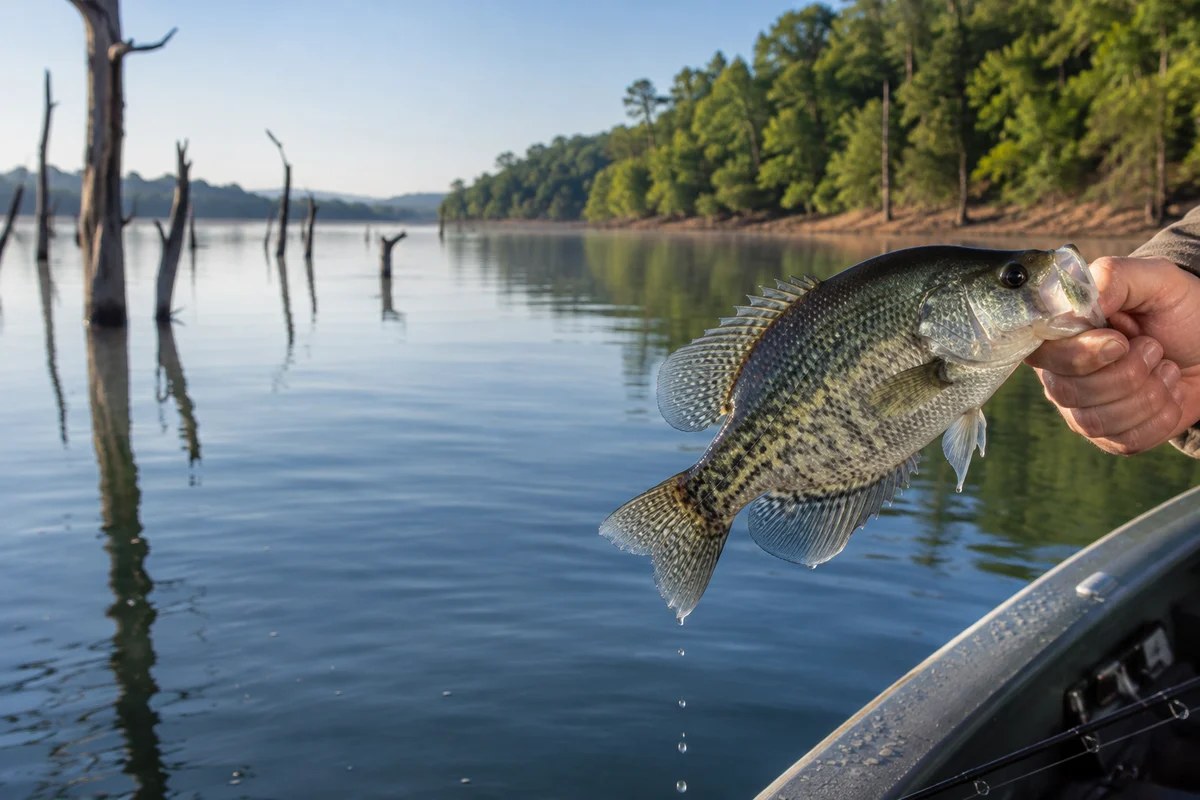
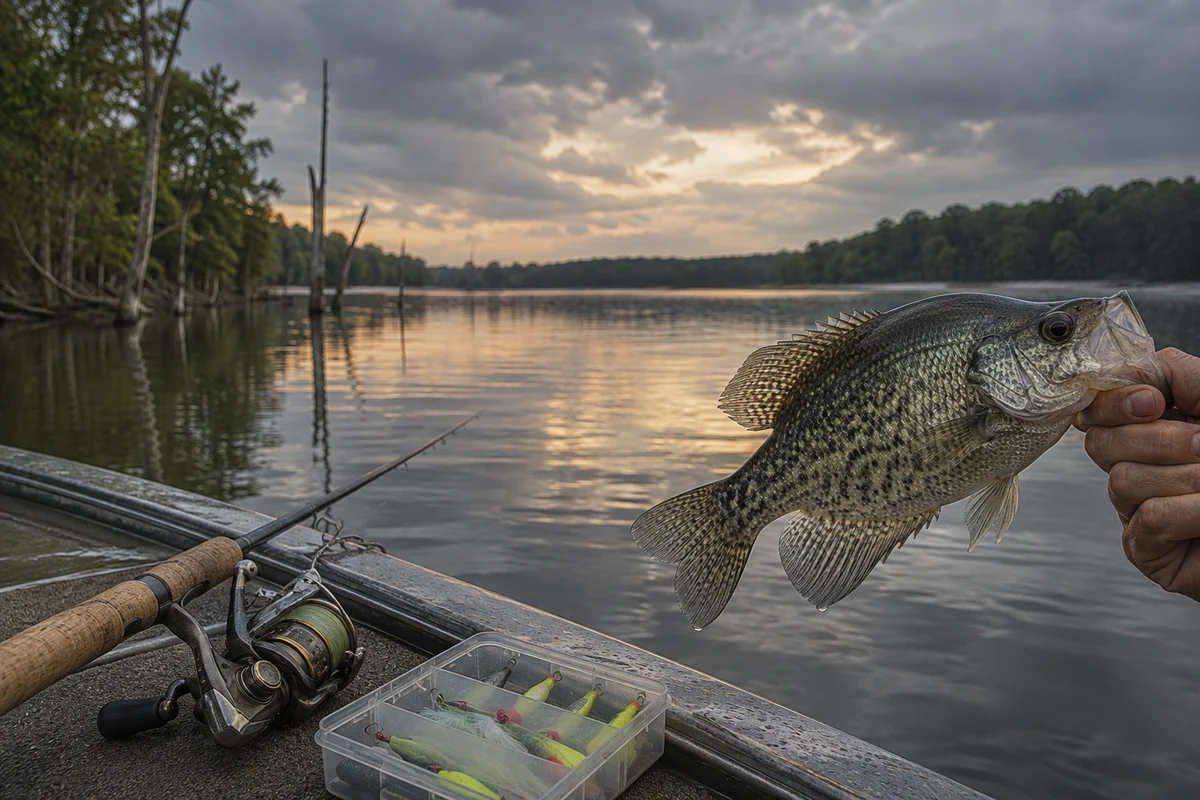
Crappie do not have to be shallow to be catchable. In summer, during changing weather, or whenever forage and cover shift offshore, deep water crappie fishing can mean working suspended fish over a channel, brush pile, submerged point, or basin edge. The key is to locate the fish’s actual depth and keep a small offering in that zone long enough to earn a response—not to assume that “deep” means bottom-hugging.
Depth is relative to the lake. A productive offshore spot might be a modest drop in one reservoir and a much deeper basin in another. Start with the map, confirm what is beneath the boat, and let the fish’s position guide the presentation. For more panfish context, see the freshwater panfish hub; related approaches include cold water crappie fishing and crappie fishing from a kayak.
What makes crappie move into deeper water?
Crappie use depth to find suitable temperature, light, food, and security. Those needs change with season, weather, water clarity, and the lake’s structure. In warm months, fish may suspend above deeper water where baitfish gather, or hold near submerged timber and brush. A fish showing over 30 feet of water may be only 12 feet below the surface; the depth of the water and the depth of the fish are different measurements.
In cooler periods, crappie can also occupy deeper edges and basins, though their exact position varies. A cold front, wind shift, or changing water level can move fish vertically or horizontally without making them abandon an area entirely. Treat seasonal patterns as a starting hypothesis, not a guarantee. A nearby shallow flat, creek arm, or protected pocket may still hold fish, so it pays to compare locations rather than commit to a single seasonal rule.
How to locate deep crappie
Begin with a lake map or chart. Look for channel bends, points that extend into deep water, creek-channel edges, submerged brush, standing timber, and transitions where a flat drops into a basin. These features concentrate habitat and give you a manageable area to search. Local regulations and lake maps may also identify restricted areas or navigation hazards; check them before fishing.
Use sonar, if available, to distinguish bottom, cover, bait, and possible fish marks. Fish arches and suspended returns are clues, not proof of species. Dense cover can obscure individual fish, and display settings, boat speed, transducer placement, and water conditions affect what appears. Move slowly over promising structure, note the depth of marks, then make a controlled pass or hold position to test the zone.
Without electronics, use a map and a systematic depth search. Probe the edge of a point or channel with a weighted jig, count it down consistently, and repeat at several depths. A long rod or slip float can help keep bait at a measured level. If bites stop, or you catch fish only at one depth, adjust in small increments rather than changing several variables at once.
A simple depth-and-presentation framework
| What you observe | First adjustment | What to check next |
|---|---|---|
| Fish-like marks suspended over deep water | Present above or through the marked band | Recheck depth after a drift or boat move |
| Marks tight to brush or timber | Keep the offering controlled and close to cover | Reduce snagging by lifting rather than dragging |
| Bait marks but no clear fish | Make a short, quiet pass nearby | Test a nearby depth or adjacent structure |
| No marks on a promising feature | Search another edge or depth | Confirm sonar settings and map position |
| Bites at one level, then a lull | Recheck the productive depth first | Account for wind, boat drift, and changing light |
The framework is deliberately conservative: sonar cannot identify every mark, and fish may move while you are fishing. Treat each pass as a fresh sample, not a fixed reading.
Choose a presentation you can control
A small jig is useful because it can be placed at a known depth and worked vertically or on a short cast. Pair its weight and line with the depth, wind, current, and tackle you can comfortably manage. The goal is a slow, controlled fall or steady hold—not maximum weight. In a breeze, a slightly heavier offering may help maintain contact; in calm conditions, a lighter presentation may fall more naturally. There is no universally best color or size, so begin with a visible, manageable option and change one element at a time if fish do not respond.
A live bait under a slip float can also keep an offering in a chosen band while allowing it to drift over cover. Set the stop so the bait reaches the target depth, then watch how the float behaves as wind or current moves it. Keep bait handling and any required gear consistent with local rules. Regulations differ on bait use, hooks, and harvest, so consult the governing state or provincial agency before fishing.
For vertical fishing, lower the bait steadily and pause at the fish’s level. Avoid dropping it through the school repeatedly if fish appear unsettled. For a cast, let the lure reach the intended depth and retrieve slowly enough to stay in the zone. If the lure keeps rising above suspended fish, use a slower retrieve or adjust the rig; if it hangs in cover, lift and reposition rather than pulling hard.
Boat position, quiet, and repeatable passes
Boat control can matter as much as lure choice. Wind may push a boat across a small brush pile before you finish a presentation. Use safe, legal positioning and make short passes that let you repeat the productive angle. Where permitted, anchoring or a controlled drift can reduce movement. Avoid running directly over a tight school when an approach from the side will do; noise and pressure may alter fish behavior, although the effect varies by conditions.
If you find a group, mark the location privately and note the depth, nearby feature, and presentation that produced a bite. This is more useful than recording only a GPS point: water level, wind, and fish position can change. Revisit the area from a different angle if the first pass goes quiet, and check nearby structure before assuming the fish have left the broader area.
Common mistakes—and practical corrections
Fishing the bottom by default. Suspended crappie may be far above it. Watch the fish or bait marks and work that band first.
Changing everything at once. If you swap location, depth, lure, and speed together, you will not know what helped. Change one variable, then give it a fair test.
Trusting one sonar image too much. A return could be cover, bait, or another species. Verify with repeated passes and a presentation that can test the suspected depth.
Ignoring boat drift. A lure that began in the right zone may be carried away. Recheck line angle and depth, and reposition when control becomes poor.
Assuming every deep spot is productive. Structure is useful only when fish or forage use it. Search adjacent depths and features rather than repeatedly fishing an empty mark.
Keep fish and anglers safe
Deep water fishing often happens far from shore, where weather and wind changes can make a return trip difficult. Wear a properly fitted life jacket, check the forecast, carry required safety equipment, and follow navigation rules. Handle fish carefully, keep only what you will use, and follow current size, creel, and seasonal regulations. If you plan to release fish caught from substantial depth, minimize air exposure and handle them gently; survival can depend on depth, temperature, handling, and other conditions, so no single method guarantees a successful release.
Build a repeatable plan
On your next trip, identify two or three offshore features on a map, then search each for bait and possible fish marks. Record the depth where activity appears, test it with a controlled jig or float presentation, and adjust only when evidence points to a change. If the fish are absent, move to the next feature rather than treating deeper water as the answer by itself.
That process—map, scan, test, and refine—is the durable advantage in deep water crappie fishing. Depth is not a destination; it is one variable in a moving pattern. Let the lake and the fish tell you where to spend your time.
Frequently asked questions
How deep should I fish for crappie?
There is no universal depth. Search the structure and suspended marks available on your lake, then test the depth where fish or forage appear.
Do crappie stay on the bottom in deep water?
Not necessarily. Crappie often suspend above the bottom, so measure the fish’s depth separately from the total water depth.
Is sonar necessary for deep water crappie fishing?
No, but sonar can help locate structure and suspended activity. A map and a systematic depth search can still guide presentations when electronics are unavailable.
What presentation works for deep crappie?
A controlled jig or bait under a slip float can hold a chosen depth. Select a setup you can manage in the wind and conditions, then adjust one variable at a time.
Sources & further information
Consult these primary sources for current regulations, technical information and local guidance.