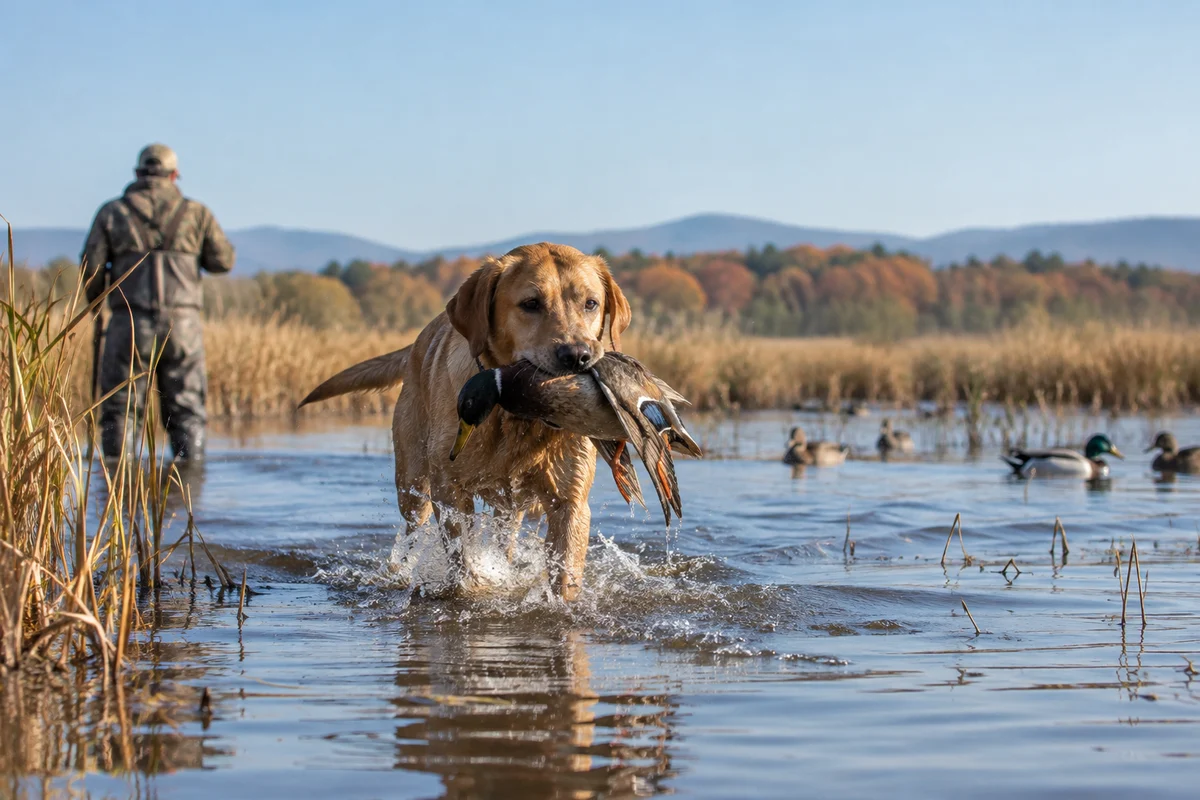
How to Choose and Use Duck and Goose Decoys
A useful decoy spread is less about having the most pieces than about presenting a believable scene for the birds and conditions at hand. This guide covers decoy types, setup, maintenance, and the limits of what decoys can do.
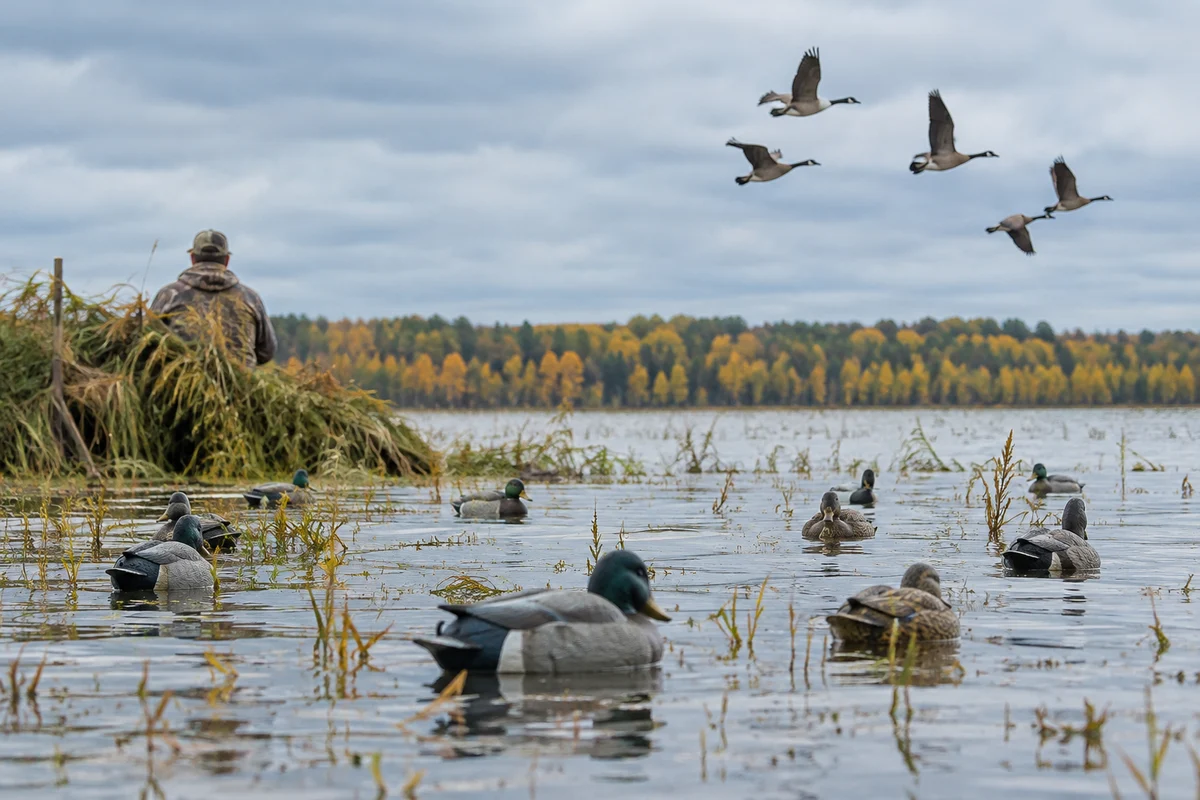
Duck and goose decoys are artificial representations of waterfowl used to make a hunting site look occupied and reassuring to passing birds. A convincing spread does not require a mountain of gear: it depends on matching the species and habitat, arranging decoys with room for birds to land, and adapting to wind, visibility, and local regulations.
Decoys can influence a bird’s approach, but they cannot guarantee one. Waterfowl may ignore a spread because of pressure, weather, feeding patterns, or other factors beyond a hunter’s control. Treat decoys as one part of a lawful, safe hunt, alongside scouting, concealment, and careful identification.
What kinds of duck and goose decoys are available?
Most decoys are molded plastic, foam, or another durable material, and many are designed to float. Some are full-body field decoys with stakes, while silhouette decoys present a flat profile for use in fields. Motion decoys add movement through spinning wings, water agitation, or a jerk cord. Each format has trade-offs in realism, transport, storage, and suitability for a particular site.
A floating decoy’s posture and paint are meant to suggest a species and a behavior—resting, feeding, or alert. Full-body field decoys can show a complete standing profile, while silhouettes are lighter to carry and can look effective from a distance when placed thoughtfully. Motion can attract attention, but in some settings it may look unnatural or be restricted. Check current rules before using powered or mechanically moving devices.
When selecting a set, consider the birds you actually see in the area, the water or field conditions, how far you must carry equipment, and how you will store it. Avoid relying on a product label alone to establish suitability: designs and specifications vary, and manufacturers may change models. For field gear and concealment considerations, see our overview of hardcore waterfowl gear and durability and the guide to a layout blind for waterfowl hunting.
How many decoys do you need?
There is no universal number. A small, well-placed spread may be more practical than a large one when birds use a compact pond, a narrow marsh opening, or a pressured location. A larger spread can help suggest a flock in broad water or open fields, but it takes more time to transport and arrange, and it can be difficult to keep realistic.
Let observations guide the scale. Note how many birds are using the area, how they group, and where they settle. Then use enough decoys to make a recognizable scene without filling every available landing lane. Start with a manageable core set and add pieces only when the site and observed bird behavior justify it.
| Situation | Practical starting approach | What to watch |
|---|---|---|
| Small pond or narrow opening | A compact group with a clear open pocket | Whether the spread crowds the usable water |
| Broad water with visible flocks | A wider arrangement, scaled to the setting | Wind drift, visibility, and safe retrieval distance |
| Field use | A mix of full-body or silhouette profiles suited to the site | Whether the layout looks natural from likely approach directions |
| Heavily pressured area | A restrained, believable arrangement | Sudden changes in bird response and local activity |
These are planning cues, not guaranteed formulas. Local conditions and species behavior should determine the final setup.
How should a decoy spread be arranged?
Begin by identifying the wind direction and the likely approach route. Waterfowl often respond to wind when landing, but approaches vary with terrain, weather, and disturbance. Keep the intended landing area open and position the spread so birds have a plausible place to settle without being forced over an obstruction.
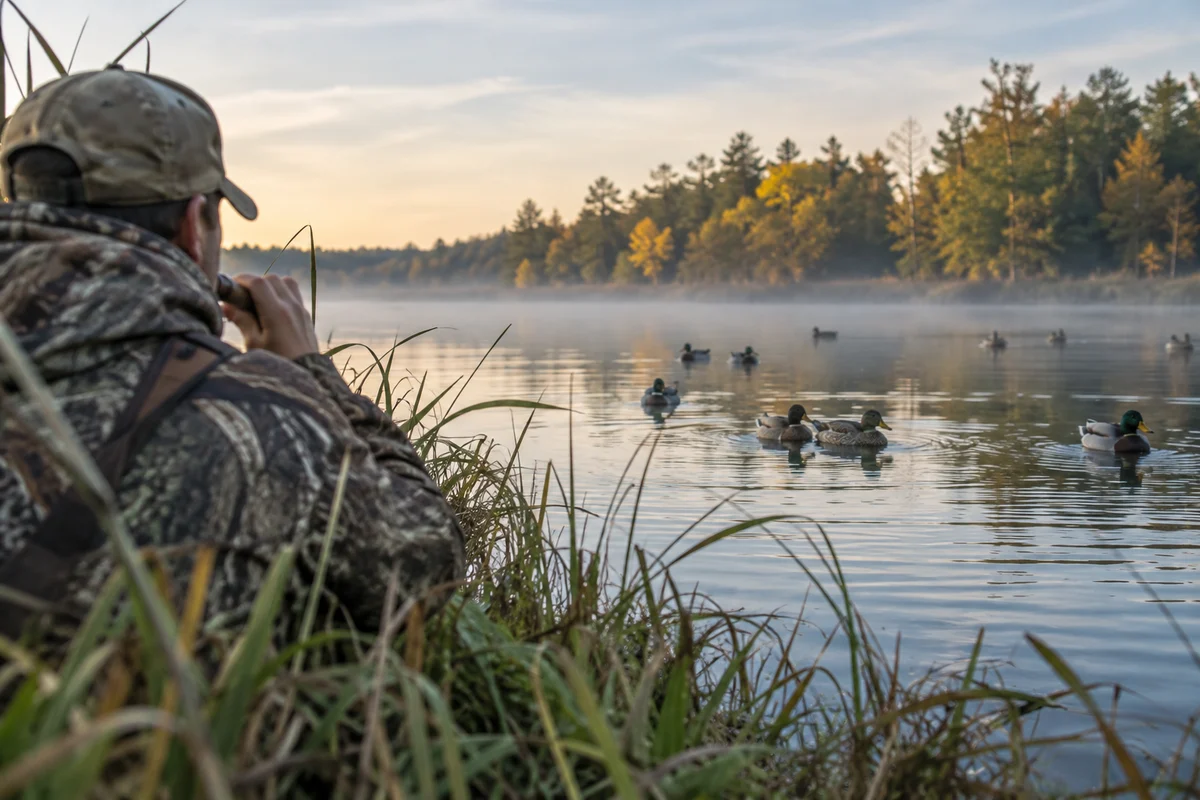
On water, avoid arranging every decoy in a tight, uniform line. A few loose groups with natural gaps can suggest birds resting or feeding. On land, vary spacing and orientation rather than setting every profile at identical intervals. The goal is an impression of ordinary waterfowl activity, not geometric perfection.
A jerk cord or other motion option may add movement to floating decoys, but use it only where legal and appropriate. Too much movement can appear suspicious, especially on calm water. Motion devices can also create entanglement hazards or drift into unsafe areas, so secure equipment and account for other users of the water.
Before settling into position, check the spread from the direction birds are most likely to see it. Consider whether the decoys are visible against the background and whether the open pocket is actually accessible. If birds repeatedly approach from another direction, reassess wind, concealment, and layout rather than assuming that adding more decoys is the answer.
Match species, habitat, and conditions
A mixed spread can make sense where multiple species feed or rest together, but it should reflect what is present. In a location dominated by one species, a large assortment of unrelated profiles may look less coherent. Regional migration and habitat use change through the season, so scouting is more reliable than assuming the same arrangement will work everywhere.
Water depth, current, shoreline vegetation, and bottom conditions affect how floating decoys sit and how securely they can be anchored. In a field, crop residue, stubble, snow, and uneven ground affect the visibility and stability of stakes or silhouettes. Strong wind can tangle lines or shift decoys; poor light can make subtle paint details less important than the overall shape and contrast.
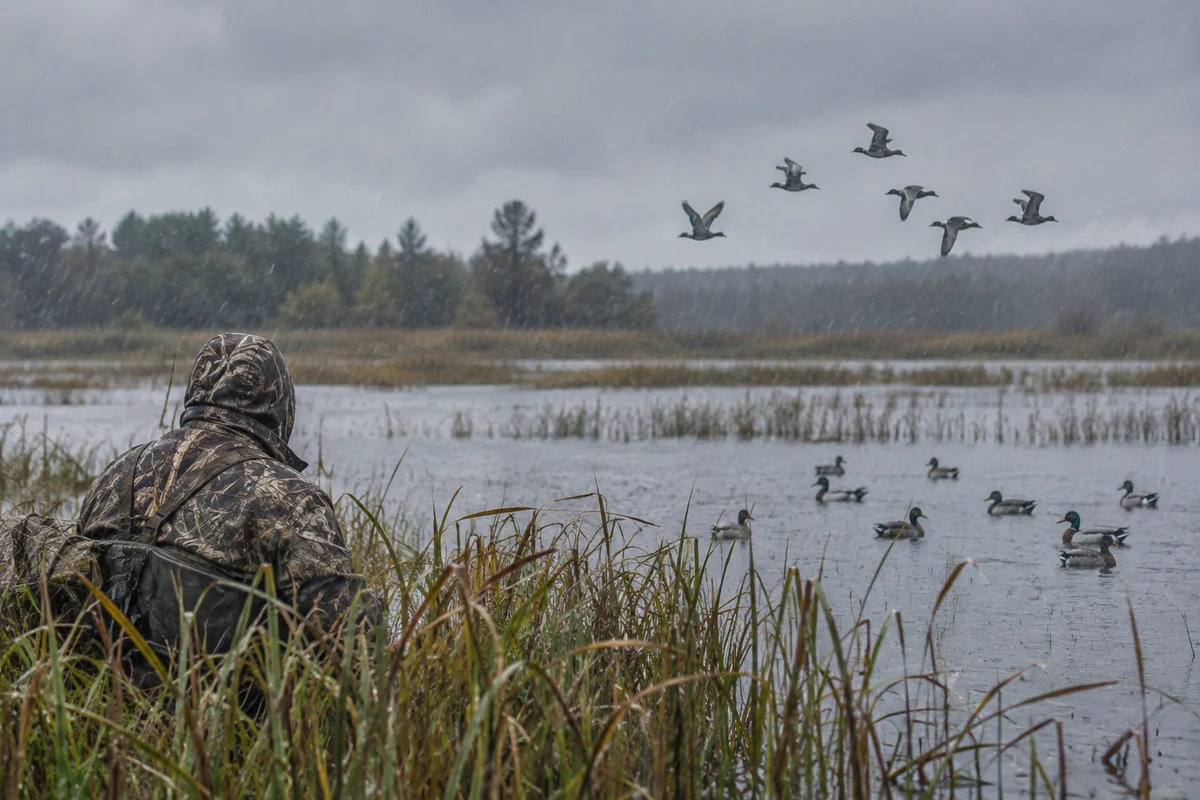
Weather changes both bird behavior and human risk. Rain can reduce visibility, make footing slippery, and complicate gear handling. Review our practical advice on duck hunting in the rain before setting out in wet conditions. Always make sure every person in the group can identify the safe direction of fire and the boundaries of the hunting area; decoys do not replace safe identification or sound judgment.
Set up, retrieve, and maintain decoys safely
Inspect lines, anchors, stakes, and moving parts before each outing. Replace damaged or tangled lines, and keep hooks and clips controlled during transport. In cold conditions, wet equipment can freeze together, while exposed water and unstable banks can create serious hazards. Do not wade or reach beyond a safe position to recover a decoy; plan retrieval around conditions and use appropriate flotation and a partner where needed.
After a hunt, rinse off mud and vegetation when practical, allow decoys to dry, and store them so paint and bodies are not crushed or abraded. Check for cracks and leaks, and repair or retire damaged pieces as appropriate to the manufacturer’s guidance. Keep field stakes and cords bundled separately from decoy bodies to reduce scratches and tangles. Store equipment away from fuel, solvents, and other materials that could damage surfaces.
Use a checklist to make setup more consistent:
- Confirm current season dates, species rules, legal shooting hours, and any local restrictions on decoys or motion devices.
- Match decoy profiles to the species and habitat you have observed.
- Check anchors, lines, stakes, and moving components before leaving.
- Plan an open landing pocket and a safe route for retrieving equipment.
- Reassess wind and visibility after arriving; change the arrangement if conditions differ from the plan.
- Pack out damaged material and leave the site as you found it.
Regulations vary by jurisdiction and can change. Consult the relevant state or provincial wildlife agency for current requirements, including rules for public lands and water access. Federal migratory bird rules may also apply in the United States; start with the U.S. Fish and Wildlife Service’s migratory bird hunting information.
Common mistakes and realistic expectations
The first common mistake is treating decoy count as a substitute for scouting. A spread cannot make an unoccupied or unsuitable location productive. The second is failing to leave an obvious landing space. Birds may circle but decline to finish if the arrangement appears crowded or the approach is blocked.
Another mistake is ignoring concealment and movement. Even a carefully arranged spread can be undermined by an exposed outline, repeated motion, or gear that stands out against the setting. Likewise, a newly placed spread may not overcome hunting pressure or changing food availability. Make small, deliberate adjustments and observe what changes rather than moving everything at once.
Finally, don’t assume a particular brand or style is universally superior. Manufacturing details, availability, and model specifications vary. If you need exact material or care information, consult the current manufacturer’s product documentation. The best set is the one you can transport, maintain, use legally, and arrange convincingly for the places you hunt.
A practical way to build a spread
Start with a modest set of decoys representing the species commonly present in your area. Learn how they look on the water or ground from different angles and in different light. Add specialized shapes or motion only when you can explain what problem they solve. Keep notes on wind, location, visibility, and bird response, without mistaking one outing for a universal rule.
That measured approach keeps the focus on observation and safe decisions. A believable spread is an adaptable tool—not a promise of success—and good preparation includes knowing when conditions call for a different location or no hunt at all.
For more, explore our duckgoose hunting guides.
Frequently asked questions
How many duck and goose decoys should I start with?
Start with a manageable set suited to the site and the birds you observe. Use enough to suggest activity while leaving a natural landing area; there is no number that works everywhere.
Should I mix duck and goose decoys?
Use a mixed spread where those species naturally share the area and your observations support it. In a location dominated by one species, a more focused arrangement may look more coherent.
Do motion decoys always improve a spread?
No. Motion can add visibility in some conditions, but it may look unnatural or be restricted by local rules. Check regulations and use movement only when it fits the setting.
How should I care for floating decoys?
Inspect them and their lines before use, then clean off mud and vegetation when practical, dry them, and store them to prevent crushing, abrasion, tangles, and freeze-related damage.
Sources & further information
Consult these primary sources for current regulations, technical information and local guidance.