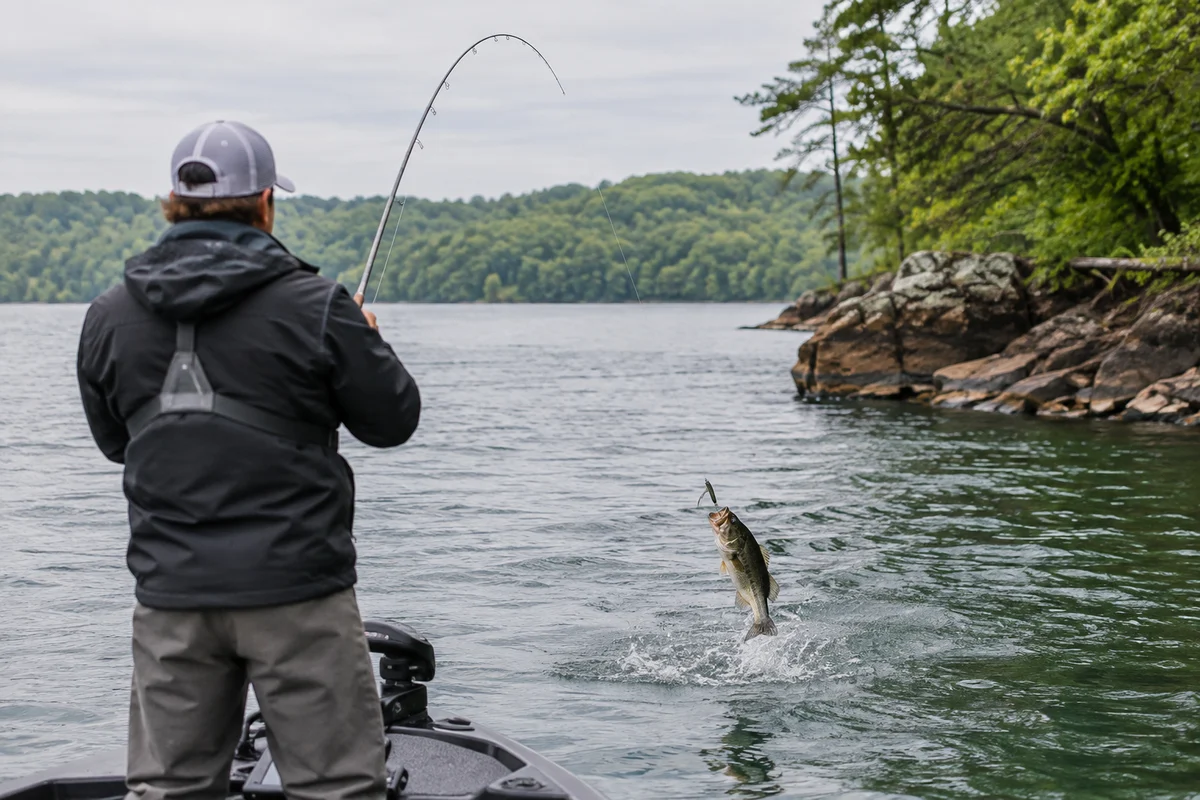
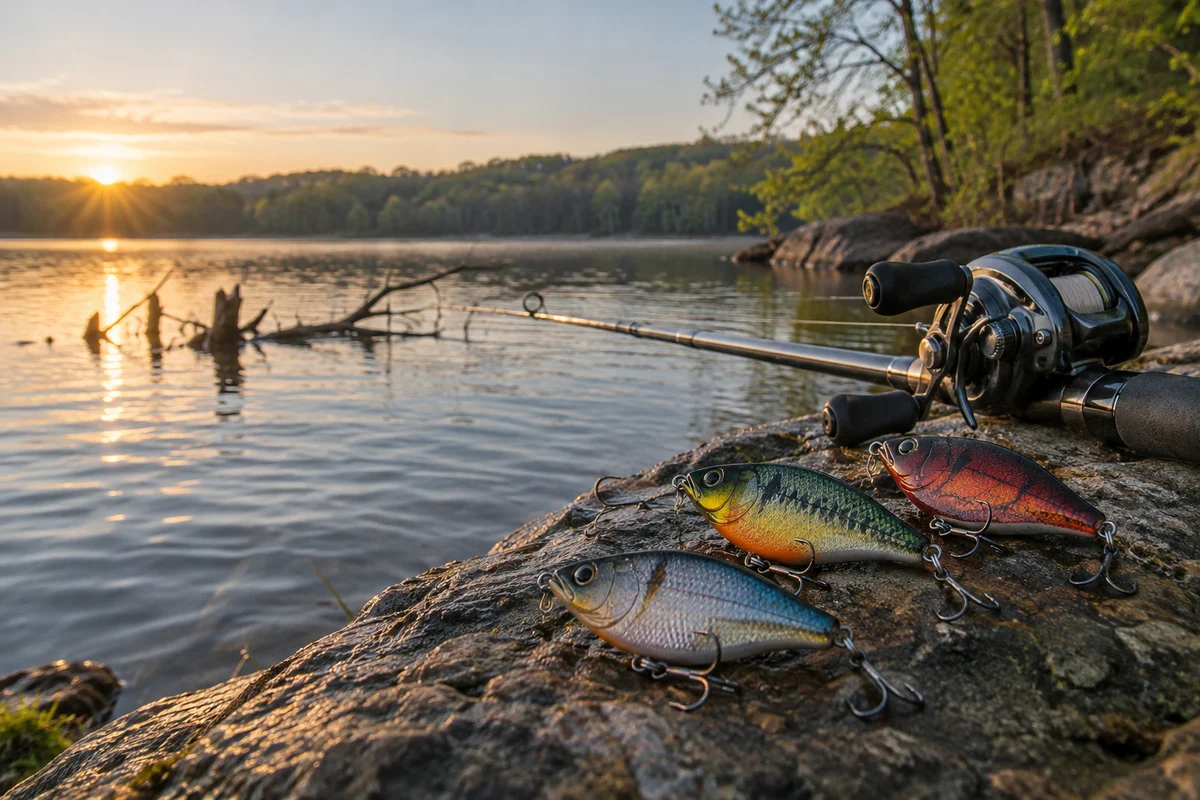
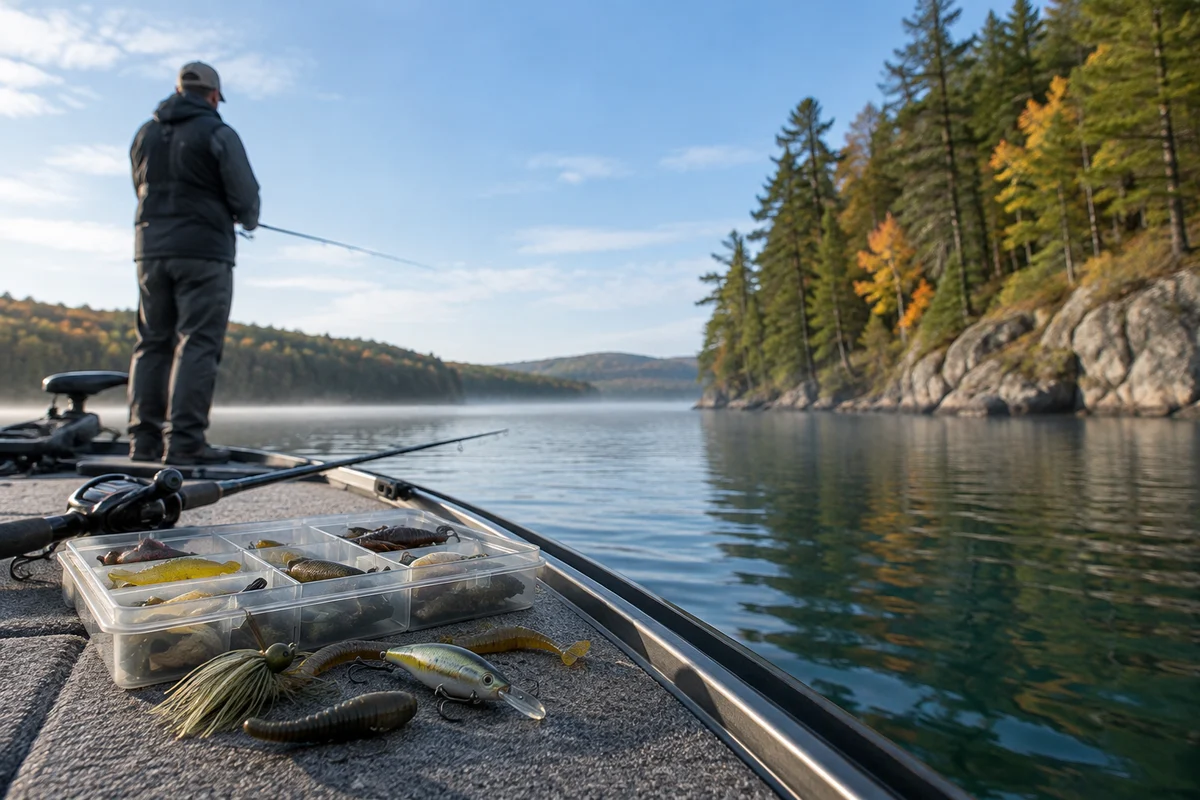
How to Walk the Dog Topwater: A Bass Fishing Guide
Learn the side-to-side cadence behind walk-the-dog topwater fishing, how to choose conditions and tackle, and how to make each cast more controlled and effective.
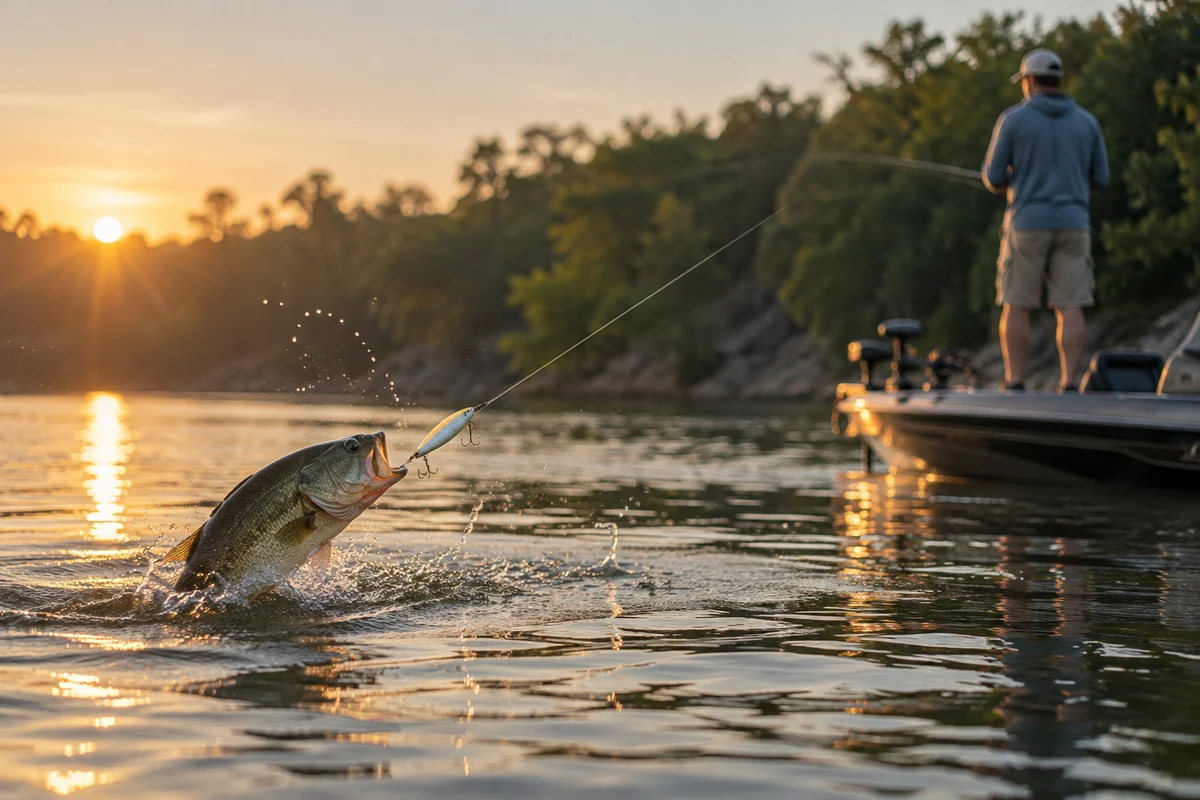
The walk the dog topwater retrieve makes a floating lure glide from side to side across the surface, imitating vulnerable prey while keeping it in a bass’s strike zone. The technique is simple to describe but takes a little practice: rather than continuously reeling, you use short rod-tip movements and recover slack between them. A steady rhythm, suitable tackle, and thoughtful positioning matter more than speed or force.
This guide covers how the action works, how to practice it, and when to switch approaches. It is a general fishing method, not a guarantee of a strike; bass behavior varies with water temperature, light, forage, pressure, and local conditions. For broader context, browse our freshwater bass fishing hub and related guides to bass fishing for beginners and plastic worm rigs for bass.
What does “walk the dog” mean?
“Walk the dog” describes a repeated, controlled zigzag made by a floating, usually cigar-shaped topwater lure. With each short twitch, the lure turns or slides to one side; the next twitch sends it the other way. The result is a surface presentation that can suggest an injured baitfish or other struggling prey.
The lure’s shape, balance, line connection, and the angler’s cadence all influence its action. Some lures respond to subtle inputs, while others need a sharper twitch. Wind, waves, line diameter, and the angle of the rod can also change how easily the lure turns. Start with small movements and adjust rather than assuming every lure wants the same treatment.
How to make the side-to-side action
- Cast beyond the area you want to cover. Aim past a likely holding feature—such as a weed edge, dock shade, or open-water edge—so the lure can settle before it reaches the target.
- Let the surface settle. After the lure lands, pause until the splash rings fade. This makes the start deliberate and gives nearby fish a moment to locate it.
- Point the rod tip down. A low rod position helps direct short twitches into the lure instead of lifting it. Keep enough clearance from the water and nearby cover to control the line.
- Twitch and recover slack. Use a brief wrist-led movement, then take up only the slack created. The lure should turn; the rod should not sweep a long distance on every stroke.
- Find a repeatable cadence. Begin with evenly spaced movements. Watch the lure, not just the rod tip, and make small changes to pause length or twitch strength until it tracks consistently.
- Pause near likely targets. A brief pause can help when the lure reaches an edge or opening. If a fish boils or follows without taking it, try a pause or a slower rhythm on the next cast rather than accelerating automatically.
A common early problem is reeling continuously while twitching. That pulls the lure forward and can make it skate rather than zigzag. Another is using large, forceful rod sweeps: these often create excess slack, disturb the rhythm, or pull the lure out of a productive area. Keep the movement compact and let the rod recover between inputs.
Tackle and setup: a practical starting point
There is no single rod-and-line combination that suits every topwater lure or fishing situation. Use the lure maker’s stated recommendations as a starting point, then account for the cover and your ability to cast and control the presentation. The goal is responsive lure movement and dependable control—not maximum force.
| Setup choice | Practical starting point | What to consider |
|---|---|---|
| Rod | A medium-power rod with a tip that can make short, controlled movements | A rod that is too stiff or too long for your space may make precise twitches difficult. |
| Reel | A reel that retrieves slack smoothly | You need to take up slack without dragging the lure between twitches. Choose a comfortable retrieve speed and maintain a relaxed grip. |
| Line | Line suitable for the lure and conditions | Floating line is commonly used for surface presentations; diameter and material affect casting, slack, and lure movement. Follow the lure maker’s guidance. |
| Knot and connection | A secure knot that allows the lure to move freely | Check that the knot is sound and the connection does not bind the lure’s action. Retie if the line is damaged. |
| Hooks | Sharp, sound hooks appropriate to the lure | Inspect for rust, bent points, or fouling before fishing. Handle treble hooks carefully and use appropriate tools when unhooking fish. |
A baitcasting outfit can make slack management and accurate placement convenient for many anglers, while spinning tackle is a useful choice when it suits the lure weight, wind, or the angler’s preference. Neither is mandatory. Use tackle that casts the lure safely and lets you keep a controlled line angle.
When and where to try it
Topwater presentations are often worth trying when bass are feeding near the surface or when a surface lure can pass close to cover without snagging. Low-light periods can be productive, but there is no universal best hour. Cloud cover, wind, water clarity, season, forage, and fishing pressure all influence what fish may respond to. Observe local conditions and treat surface activity as a clue rather than proof that bass will take this particular lure.
Look for edges and transitions: the outside of vegetation, a clear pocket in weeds, a shaded bank, a point, or an open lane beside cover. A walking lure needs room to turn, so dense vegetation may favor a different presentation. In chop, a larger or more visible lure may be easier to track, but heavy waves can make its action difficult to maintain. In calm water, a quieter, measured cadence may be less disruptive. Adjust based on what you can see and control.
Cover water methodically. Make a cast parallel to an edge, then another that crosses it at a different angle. If a fish follows, note where it lost interest and repeat the cast with a changed pause or cadence. If there is no sign of activity after a reasonable set of presentations, move on or try another depth or lure style. You can compare surface options with a floating buzz bait overview; a buzz bait creates a different, more continuous surface disturbance and is not a substitute for the side-to-side walk.
A quick decision framework
Use this simple sequence to decide what to change:
- The lure moves straight: Reduce the twitch, point the rod lower, and recover slack more consistently. Confirm the lure is not fouled and that the line connection is not restricting it.
- The lure darts too far forward: Use a smaller wrist movement and pause to remove only the slack, not pull the lure toward you.
- The lure is hard to see or control: Change casting angle or position, and consider whether wind or waves make this presentation impractical.
- A fish follows but does not strike: Try a modestly slower cadence or a short pause near the target. If it still refuses, change the presentation rather than repeating the same retrieve indefinitely.
- The lure repeatedly catches cover: Choose a clearer lane or a lure style better suited to that cover. Do not force a treble-hooked bait through vegetation where it cannot run cleanly.
Common mistakes and how to avoid them
Setting the hook at the splash. A surface strike can be startling. Keep contact with the line, but wait until you feel the fish’s weight before making a controlled hook set. Pulling immediately at the visible splash can move the lure away before the fish has it.
Changing everything at once. If you alter rod angle, speed, pauses, and casting direction together, it is hard to tell what helped. Change one variable at a time and pay attention to the result.
Ignoring lure condition. A damaged line, fouled hook, or loose hardware can compromise the presentation and safety. Inspect regularly, keep hooks covered when not fishing, and handle them with care.
Fishing only the surface despite clear clues otherwise. A topwater lure is one option, not a rule. If fish are not showing near the surface, or conditions make the lure hard to work, try another depth or approach. Our plastic worm rigs for bass guide outlines a slower subsurface alternative.
Practice, safety, and local rules
Practice the cadence in open water where you can watch the lure. Short, consistent movements are easier to repeat than elaborate rod sweeps. Keep casts clear of people, pets, overhead wires, and obstacles; treble hooks can cause serious injuries. Wear eye protection, use a suitable hook-removal tool, and avoid reaching toward a hooked fish without controlling the hooks. Follow local fishing regulations, including license, season, and area rules, and handle fish in a way that minimizes unnecessary stress.
The most useful measure of progress is not a perfect metronome rhythm. It is being able to make the lure turn predictably, place it near a target, and alter the cadence without losing control. Once that foundation is steady, you can experiment with pauses and speed while keeping track of what conditions are present.
The takeaway
Walking a topwater lure is a compact rhythm of twitch, slack recovery, and observation. Start with small inputs, choose open lanes where the lure can turn, and adapt to wind, cover, and fish response. A deliberate approach makes the method easier to learn—and helps you recognize when a different presentation is the better choice.
Frequently asked questions
How do you walk the dog with a topwater lure?
Point the rod tip low, make short wrist-led twitches, and recover the resulting slack between them. Adjust the rhythm until the lure turns side to side rather than skating straight ahead.
Should you reel while walking a topwater lure?
Reel only enough to take up slack after each twitch. Continuous reeling can pull the lure forward and interrupt its side-to-side action.
What rod action works for walking topwater lures?
A responsive rod that allows compact, controlled movements is a useful starting point. Match the rod and line to the lure maker’s recommendations and your fishing conditions.
When is a walk-the-dog lure effective for bass?
It can be worth trying when bass are feeding near the surface and there is room for the lure to move, including along edges and open lanes. Conditions vary, so change approach if fish do not respond.
Sources & further information
Consult these primary sources for current regulations, technical information and local guidance.