Fishing Cold Weather: A Practical Guide to Finding Fish
Cold conditions change fish behavior, access, and angler safety—but they do not end the season. Learn how to adjust timing, location, presentation, and trip planning when temperatures drop.
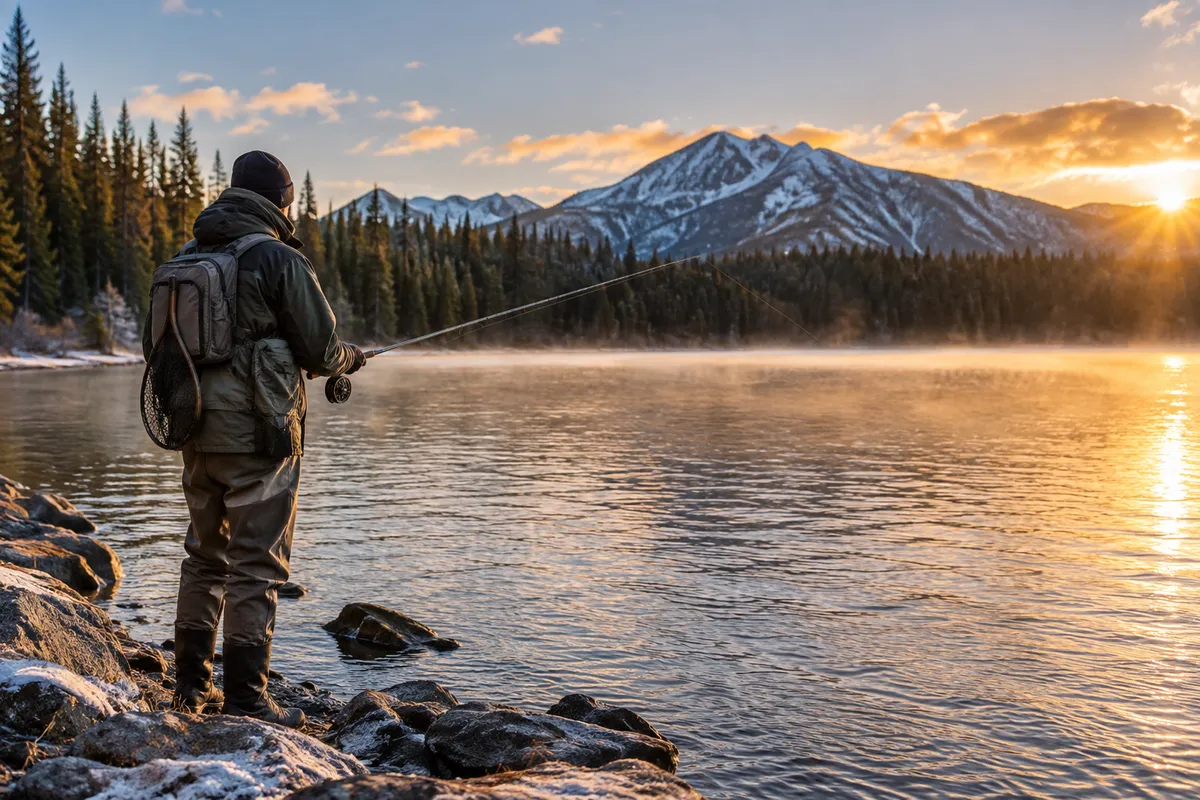
Cold-season fishing rewards patience and preparation more than a frantic search for summer patterns. When the air turns sharp and the water cools, fish often conserve energy and feed in shorter windows, but their needs do not disappear. Understanding the local water, choosing a manageable plan, and staying alert to changing conditions can make fishing cold weather both more comfortable and more productive.
The first principle is to distinguish cold air from cold water. A sunny afternoon may feel mild while the lake remains cold; a wind shift can quickly make a comfortable bank hazardous. Water temperature, species, depth, and recent weather all matter, so there is no universal temperature at which fish stop feeding or one presentation that works everywhere. Treat seasonal advice as a starting point, then observe the conditions in front of you.
How cold weather changes fish behavior
Fish are ectothermic: their body temperature is closely tied to their surroundings. As water cools, many freshwater species become less active and may feed less often. They can still feed, but the best opportunity may be a brief period rather than a steady all-day bite. The response differs by species and waterbody. A shallow pond, a deep reservoir, a flowing river, and a spring-fed creek can each change at a different rate.
Cooling water also changes where fish can be found. Some move toward deeper or more stable water; others remain near shallow cover when forage or suitable temperature conditions keep them there. Current seams, weed edges, channels, points, and transitions between shallow and deep water are useful places to investigate—not guaranteed holding spots. In rivers, current and water level may matter as much as temperature. In lakes, wind can push warmer surface water and food toward a shoreline, though the result depends on the lake and the weather.
Use a fishfinder as a mapping and observation aid, not a promise of a catch. Learn the limits of your electronics and verify what you see with time on the water. For more on interpreting sonar and comparing systems, see this overview of Lowrance vs. Garmin fishfinders.
Choose a short, focused search
A cold-weather outing is easier to manage when you start with a small area and a clear reason for fishing it. Look for a nearby depth change, a sheltered bank, a current break, or cover adjacent to deeper water. Pick two or three candidate zones rather than trying to cover an entire lake. If the first area has no signs of activity, make a deliberate move to the next one instead of changing everything at once.
Sunlight can make a difference in shallow water, especially after a run of cold nights, but do not assume that the warmest-looking bank must hold fish. A protected shoreline may be more comfortable for you; a wind-exposed shoreline may collect food or warmer surface water. Wind direction, cloud cover, water clarity, and recent temperature trends all affect the picture. Keep notes on what you observe so a pattern can be tested on a later trip.
Planning a destination trip? Compare the type of water, season, access, and target species before traveling; this guide to best fishing destinations offers a broader way to think about matching a trip to your goals.
Slow down without fishing blindly
A common adjustment is to present a bait or lure at a more measured pace, allowing fish time to respond. This is not the same as moving so slowly that the presentation loses its purpose. Make controlled casts, keep contact with the lure or bait when appropriate, and pause long enough to notice subtle bites. In moving water, a natural drift can be more useful than repeatedly retrieving against the current.
Choose tackle that lets you detect a light take and control a fish without forcing the fight. Line visibility, lure size, and hook choice should suit the water and species rather than follow a fixed cold-weather formula. When fish are sluggish, downsizing or simplifying can help you make a more restrained presentation, but changing size is only one variable. Try to identify whether depth, location, speed, or timing is the more likely issue before changing several things at once.
| What you observe | A reasonable adjustment | What to check next |
|---|---|---|
| No activity in a shallow area after a cold night | Test a nearby deeper edge or sheltered water | Whether fish or forage are visible and whether the area is accessible |
| A few brief bites | Stay in the zone and vary pauses or retrieve speed | Whether bites occur at a repeatable depth or time |
| Wind makes line control difficult | Choose a protected bank or a manageable casting angle | Whether the change also alters access or shoreline safety |
| Water is unusually high, muddy, or fast | Reassess the location and avoid unsafe banks | Local flow, water-level, and access advisories |
| Conditions are comfortable only during a short window | Plan around that window and keep the route simple | Forecast changes, daylight, and a safe return plan |
This is a decision aid, not a guarantee. Species, local regulations, and waterbody conditions can make a different choice more appropriate.
Use a simple trip checklist
Before leaving, check the forecast for air temperature, wind, precipitation, and the timing of any front. Confirm access hours, seasonal closures, fishing rules, and whether a launch or trail is open. Tell someone where you are going and when you expect to return, particularly if you will be alone or heading to remote water.
Pack layers that can be adjusted as activity and weather change. A moisture-managing base layer, insulating middle layer, and wind- or water-resistant outer layer are generally more adaptable than one bulky garment. Bring dry gloves or a spare pair, a hat, drinking water, and a way to keep essential items protected. Avoid cotton as the only layer next to the skin in wet, cold conditions because it can remain damp and increase discomfort.
On a boat, wear a properly fitted, appropriate life jacket. Cold-water immersion can quickly impair movement and judgment, even near shore. Do not treat a short distance from land as protection. Check local boating guidance and postpone the trip if wind, ice, visibility, or water conditions exceed your experience or equipment. Never walk onto ice based only on its appearance; ice safety depends on changing local conditions, and no single visual check can establish that it is safe.
For shore access, watch for slick rocks, muddy banks, and hidden drop-offs. Keep hands warm enough to manage hooks and tools safely. Use pliers or other suitable tools to handle hooks, and keep a clear space around casting. If cold, fatigue, or numbness makes it hard to control equipment, take a break or end the outing.
Match expectations to the water
A productive trip does not always mean catching a lot of fish. In cold weather, a short feeding window may be the main opportunity, and conditions can change before it arrives. Set a practical goal: locate fish, learn how a particular bank responds to a wind shift, or test a presentation at a specific depth. That approach builds useful information even on a quiet day.
Pay attention to the whole system. A recent warm spell may briefly change shallow-water activity, while a rapid temperature drop can make fish less predictable. Rain can affect clarity and current; snowmelt can change flow and access. If conditions differ sharply from your expectations, adapt the plan rather than forcing a summer approach into a different season.
Where regulations require it, identify fish correctly and follow size, season, possession, and handling rules. Handle fish as briefly and carefully as practical, especially when conditions make your hands cold or the fish’s condition uncertain. Local wildlife agencies are the best source for current rules and water-specific advisories.
A practical way to keep learning
After the trip, record the date, approximate conditions, waterbody area, depth, presentation, and what happened. Keep observations factual: “one bite near the channel edge after the sun reached the bank” is more useful than concluding that all fish were feeding shallow. Over several trips, notes may show which conditions matter on your water.
Cold weather can make fishing quieter and more demanding, but it also encourages deliberate decisions. Start with a safe, focused plan; look for transitions and stable conditions; make measured adjustments; and be willing to leave when the weather or water turns unsafe. The most reliable seasonal pattern is not a secret lure or magic temperature. It is observing carefully, learning the specific water, and letting safety set the limits of the day.
For more, explore our fishing tips fishing 2 guides.
Frequently asked questions
Is fishing good in cold weather?
It can be. Many fish feed less often as water cools, but activity varies by species, waterbody, and conditions. Focus on likely transitions and short feeding windows.
What is the best time of day to fish in cold weather?
There is no universal best hour. A sunny afternoon may help in some shallow waters, while current, depth, wind, and species can matter more. Track conditions on your local water.
Should I fish deeper when the weather gets cold?
Deeper or more stable water can be worth checking, but fish do not always move deep. Compare nearby depths, cover, current, and signs of forage rather than assuming one location.
How can I stay safe while cold-weather fishing?
Check weather and access advisories, dress in adjustable layers, tell someone your plan, and wear a suitable life jacket on a boat. Avoid unsafe ice and leave if cold or conditions compromise control or judgment.
Sources & further information
Consult these primary sources for current regulations, technical information and local guidance.