Biggest Fish Caught in Oklahoma: How Records Are Verified
Oklahoma’s biggest-fish stories span several species and record categories, so a headline alone rarely tells the whole story. Learn how to check official listings, identify likely contenders, and understand what a record claim actually means.
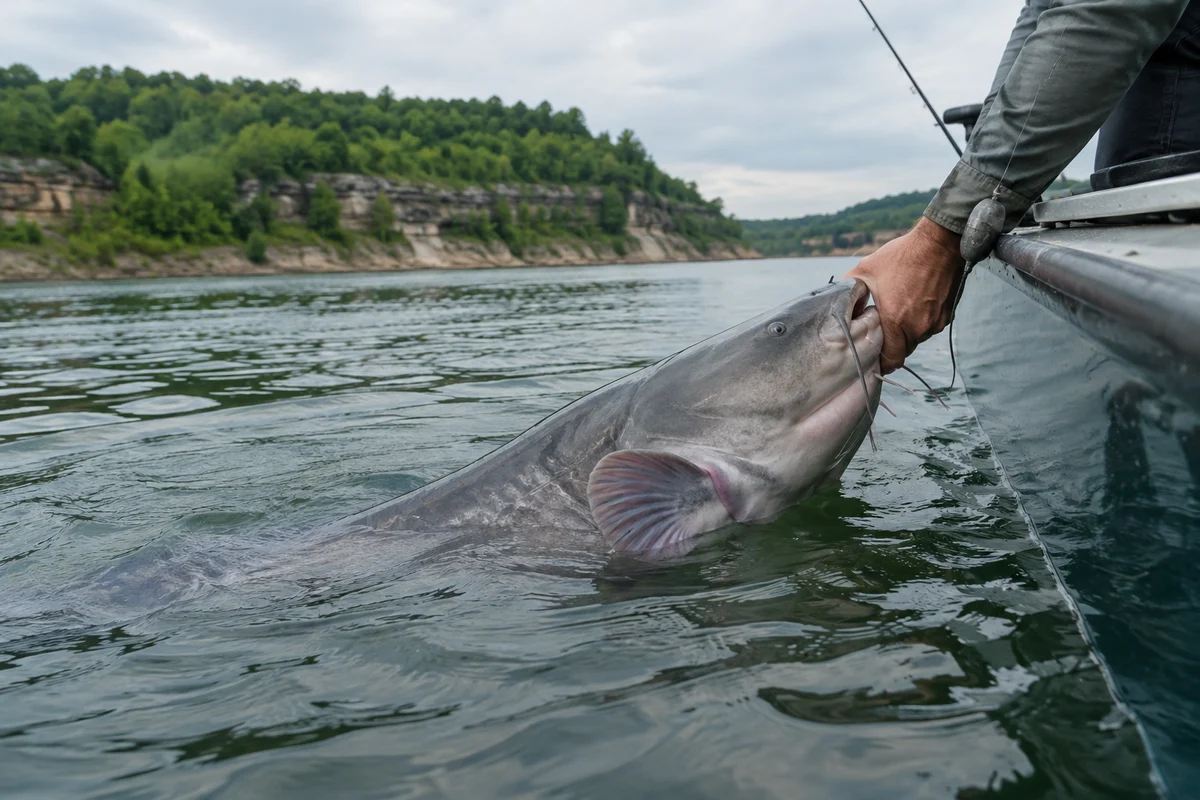
A search for the biggest fish caught in Oklahoma can produce dramatically different answers because “biggest” may mean heaviest, longest, caught by rod and reel, taken by bow, or recognized under a particular state program. A memorable fish in a photograph is not automatically a state record, and a record from one category does not settle every comparison.
The most dependable way to answer the question is to start with the recordkeeping authority, identify the species and category, then check the required documentation. Oklahoma’s lakes and rivers support many kinds of large fish, but the title belongs to a verified entry in a defined category—not to a number repeated without context.
Why there is no single simple answer
Freshwater fishing records are organized in ways that make direct comparisons tricky. A state may maintain separate lists for different species, methods, or recognition programs. One entry might be a rod-and-reel state record; another may be a length-based catch-and-release recognition; another could be a bowfishing record. Those are all meaningful, but they answer different questions.
A fish’s weight is also not a universal measure of size. Species have different body shapes, and a long, slender fish can weigh less than a shorter, heavier-bodied one. Measurements may be taken under distinct rules, while records can change when a new catch is submitted and approved. That is why a responsible answer names the species, record category, and source—and avoids presenting a remembered number as current fact.
For the latest accepted listings, consult the Oklahoma Department of Wildlife Conservation. Its official information is the place to begin for state fishing regulations, record procedures, and current recognition programs. If an online post does not identify an official listing or explain its category, treat it as an unverified claim rather than a settled record.
What kinds of fish become record contenders?
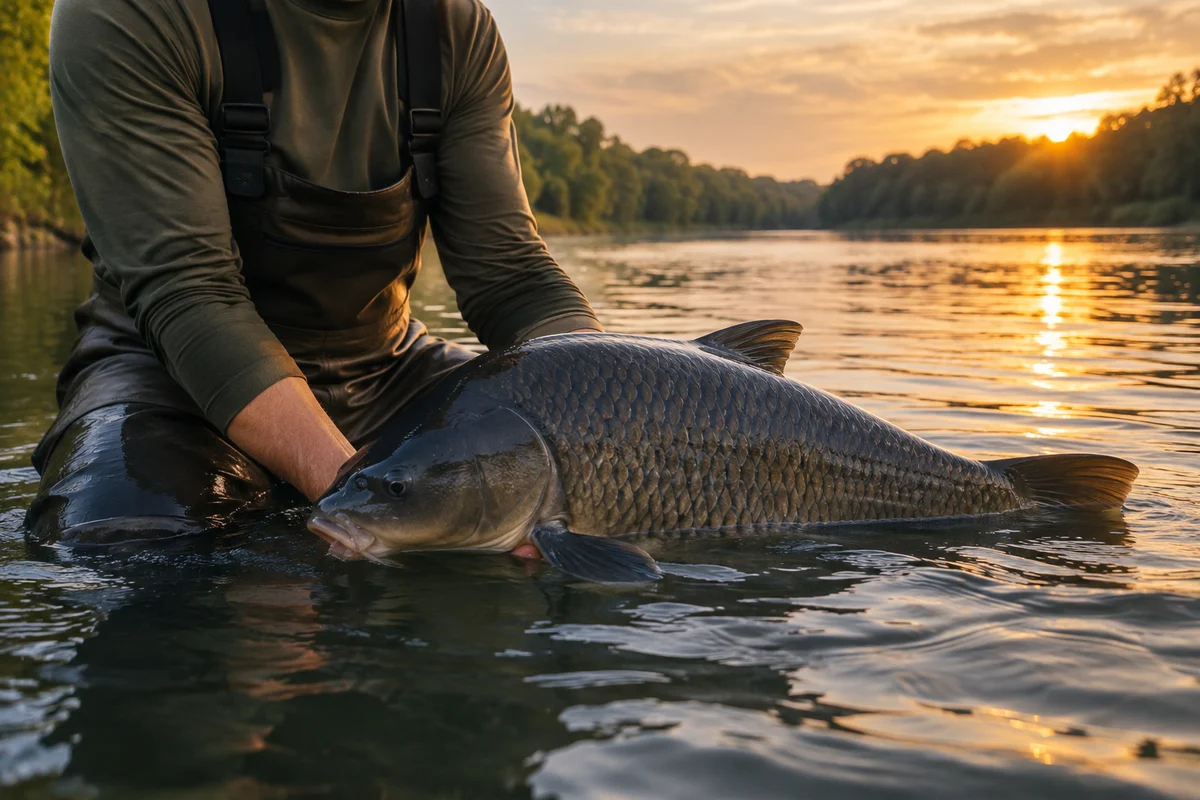
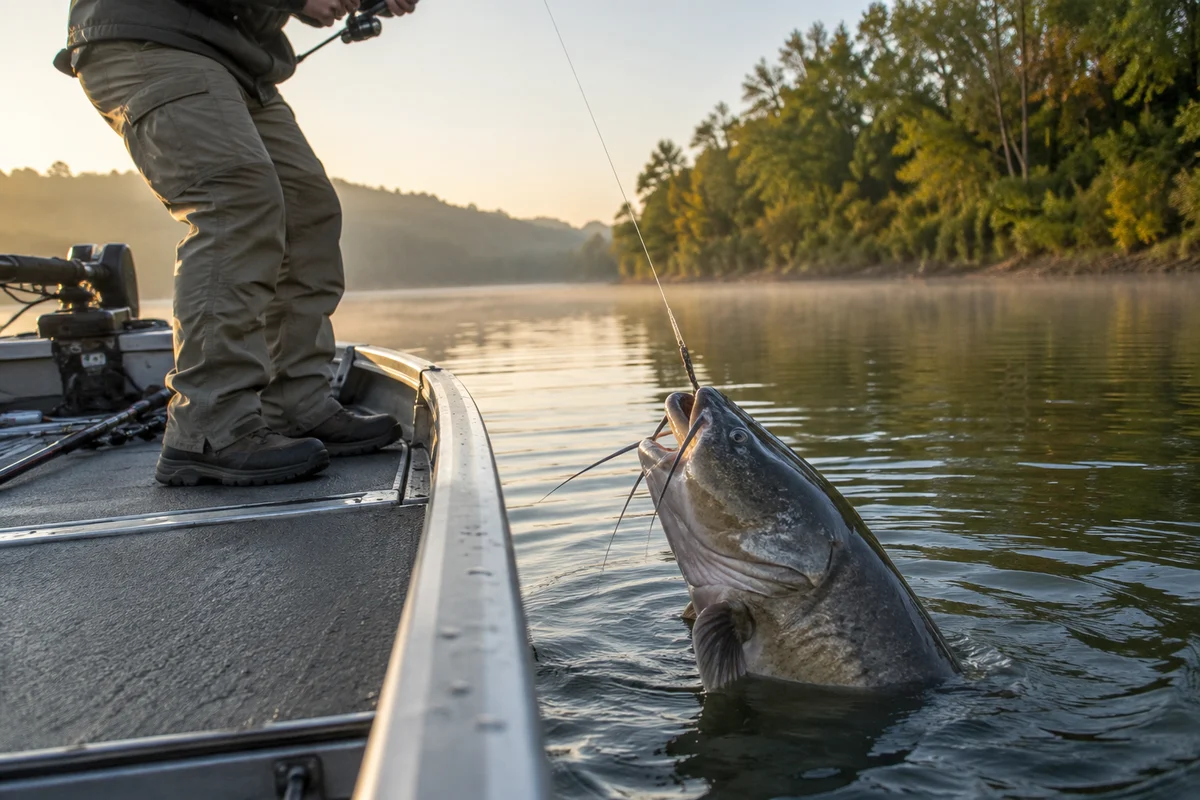
Oklahoma waters include large members of several familiar freshwater groups. Catfish are a natural focus because species such as blue, flathead, and channel catfish can reach substantial sizes. Paddlefish are another notable native fish, while bass, striped bass, and other species have their own record histories and rules. Carp and buffalo are also capable of becoming impressive catches and may appear in discussions of large fish.
This is a list of plausible categories, not a ranking. Which species holds a particular official record depends on the latest accepted catch and the record program’s rules. A fish that looks enormous in a photo might be a different species than viewers assume; perspective, lens distance, and the absence of a scale can make size especially difficult to judge.
When comparing candidates, ask four questions:
- What species was identified? A common name can refer to more than one fish, and look-alike species can be confused.
- What does “biggest” measure? Weight, length, or another measurement may be used.
- Which method or program applies? Angling, bowfishing, and catch-and-release recognition may be separate.
- Was the catch officially accepted? A reported catch is not necessarily a verified record.
For a broader look at the variety of freshwater fishing, browse our freshwater fishing tips and guides. The same habits that help anglers identify species and choose appropriate methods also make record claims easier to evaluate.
How an official record is verified
Recordkeepers need enough evidence to establish that a fish meets the rules for a particular listing. Exact requirements can change, so anglers should read the current instructions before fishing with a record attempt in mind. Common elements in record systems include a reliable measurement, identification of the species, details about the catch, and documentation submitted within the stated time frame.
A scale matters, but so does its accuracy and suitability. A large fish can be difficult to weigh safely and consistently in the field. Length measurements also need a clear reference point and the method specified by the program. Photographs can help document the fish and measurement, but a photograph alone usually cannot establish a verified weight.
A practical record-check workflow:
| Check | What to look for | Why it matters |
|---|---|---|
| Official listing | The state agency’s current record or recognition information | Confirms whether a claim has been accepted |
| Species | A clear identification, not just a broad nickname | Different species have different records and rules |
| Category | Weight, length, method, and any program distinction | Prevents unlike records from being compared |
| Documentation | The agency’s required measurements and supporting evidence | A catch may be impressive but ineligible or unverified |
| Date and status | When the listing was checked and whether it remains current | Records can change after a new submission is approved |
If information is missing, avoid filling the gap with assumptions. Contact the relevant agency or check its current instructions. The goal is not to dismiss a remarkable catch; it is to describe accurately what has—and has not—been confirmed.
Why record claims circulate without enough context
Social media compresses a complicated story into a photo and a short caption. A post may call a fish “the biggest ever” when it means the largest one seen locally, the largest reported that season, or a personal best. Sometimes the number refers to a different state or record category. Reposts can strip away the original source, and old claims can continue circulating after a record changes.
Photographs pose their own challenges. A fish held close to a camera can look much larger than it is. A hand, rod, or cooler is not a calibrated measuring device. Even a visible tape can be hard to interpret if the fish’s position, endpoints, or units are unclear. These details do not prove a claim false; they show why official verification matters.
For international record context, the International Game Fish Association maintains its own rules and record system. An IGFA world record and an Oklahoma state record are separate recognitions, each governed by its own criteria. One does not automatically establish the other.
Finding large fish responsibly
Anglers interested in catching large fish should first choose a species and learn its habitat, seasonal patterns, and applicable regulations. Use current state guidance for seasons, limits, licensing, special waters, and any species-specific rules. Conditions vary across Oklahoma, and regulations may differ by waterbody or change over time.
Prepare for the fish you hope to encounter. Use tackle appropriate to the species and setting, bring a dependable measuring method, and plan how to handle a large fish without unnecessary stress or risk. If releasing it, keep handling brief, support its body, and follow current fish-care guidance. If a record submission is a possibility, know the official process before the catch; improvised documentation after the fact may not meet the requirements.
The best fishing destinations conversation is another useful reminder: a good place to fish is not simply a place rumored to hold a giant. Access, regulations, habitat, weather, and the kind of fishing experience you want all matter. Check local information before traveling and respect private property and posted access restrictions.
A different species can require a different approach. Our guide to the black buffalo carp record offers a species-specific lens on how large-fish records attract attention and why the exact record category should be part of the story. Treat every record page as a dated reference, and verify current status directly with its keeper.
So, what is the biggest fish caught in Oklahoma?
The accurate answer is the fish listed by Oklahoma’s official recordkeeper as the current record for the specific species and category being discussed. Without checking that live listing, it would be misleading to name one fish, weight, angler, or date as the definitive statewide answer. The official record page is the source for current details; secondary articles and social posts can help point you toward a claim, but they should not replace verification.
That careful answer is also the useful one. It helps readers distinguish an impressive catch from an accepted record, compare like with like, and understand why a state can have many “biggest” fish across its species and programs. When a new claim appears, identify the fish, check the category, and confirm it with the agency before repeating it as fact.
By ODU Magazine Staff
Frequently asked questions
What is the biggest fish ever caught in Oklahoma?
There is no single answer across all species and record categories. Check the Oklahoma Department of Wildlife Conservation’s current listings for the verified record in the specific category you mean.
Where can I check Oklahoma fishing records?
Start with the Oklahoma Department of Wildlife Conservation’s official website and its current record or recognition-program information.
Does a large fish photo prove a state record?
No. A photo may help document a catch, but official records typically require evidence and measurements that meet the recordkeeper’s current rules.
Are bowfishing and rod-and-reel records the same category?
Not necessarily. Record programs may separate catches by method or recognition type, so check the official category before comparing entries.
Sources & further information
Consult these primary sources for current regulations, technical information and local guidance.